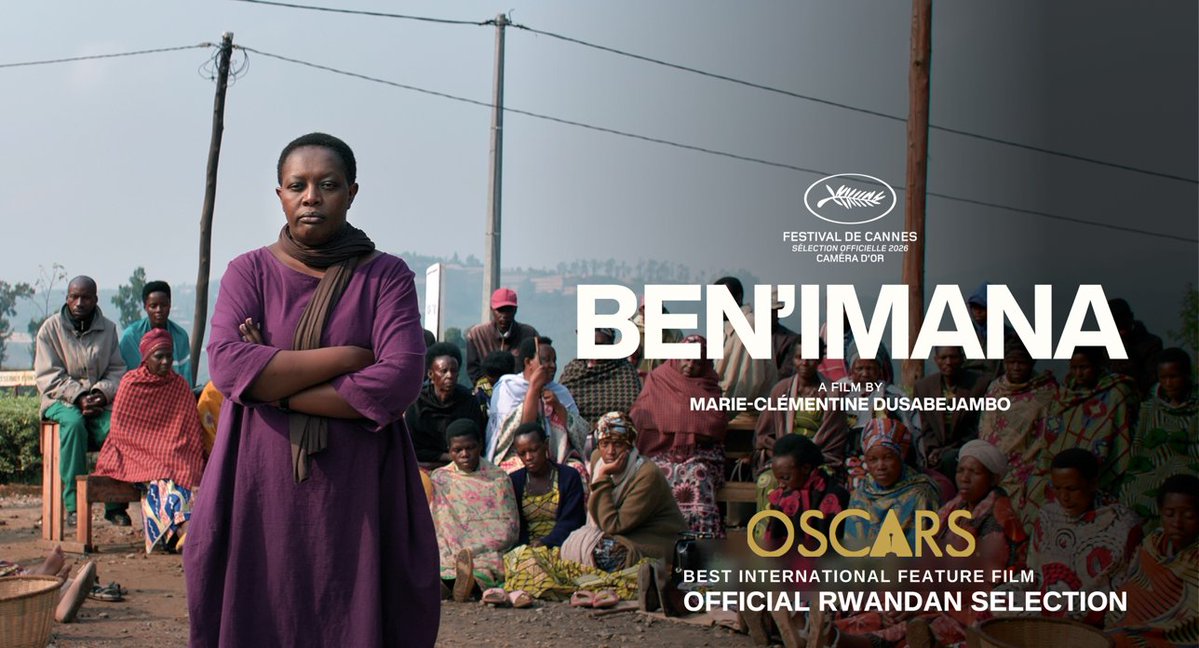
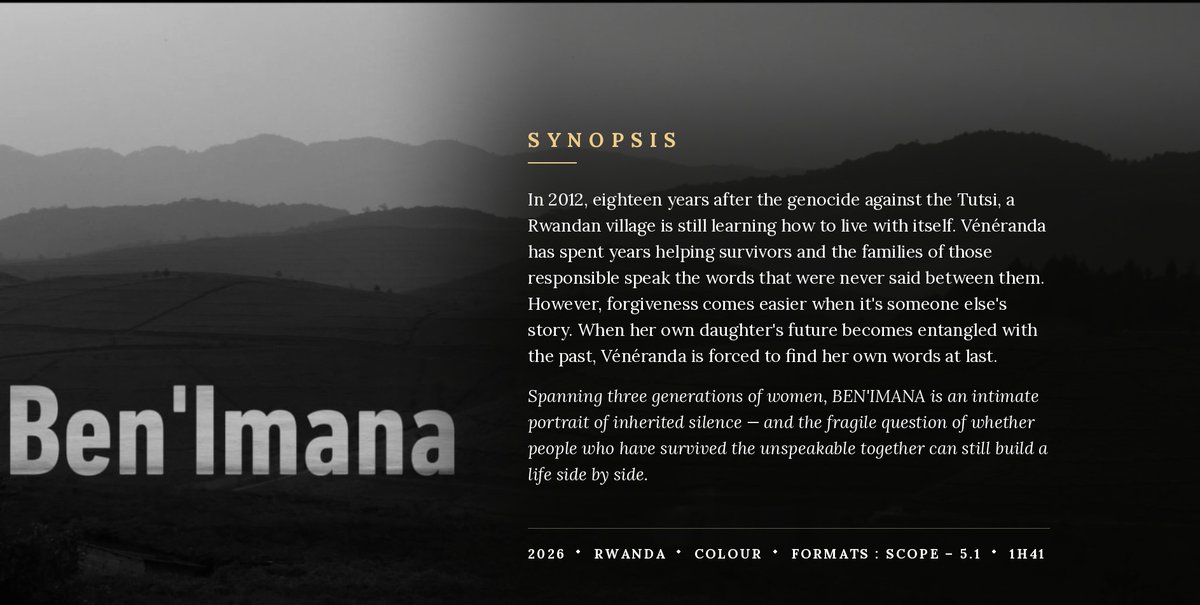
Behind this milestone are years of hard work, perseverance, and unwavering belief in a dream.
Congratulations to Clémentine @dusabejambo and the entire Ben’Imana team for honoring our mothers and doing justice to their stories.
May this journey remind every young dreamer that some dreams take years to become reality, so keep believing, and never stop creating. 🇷🇼🎬
#ÀNosMères ❤️
ABA NI BO BAGIZE AKANAMA NKEMURAMPAKA MU IRUSHANWA CREATIVE TALENTS 2026 !
Ni impuguke mu bijyanye no gukora content, itumanaho n’itangazamakuru!
Ni irushanwa ritegurwa na CANAL+ rigamije guteza imbere urubyiruko rufite impano mu gukora content muri Afurika!
🚨 | BREAKING!
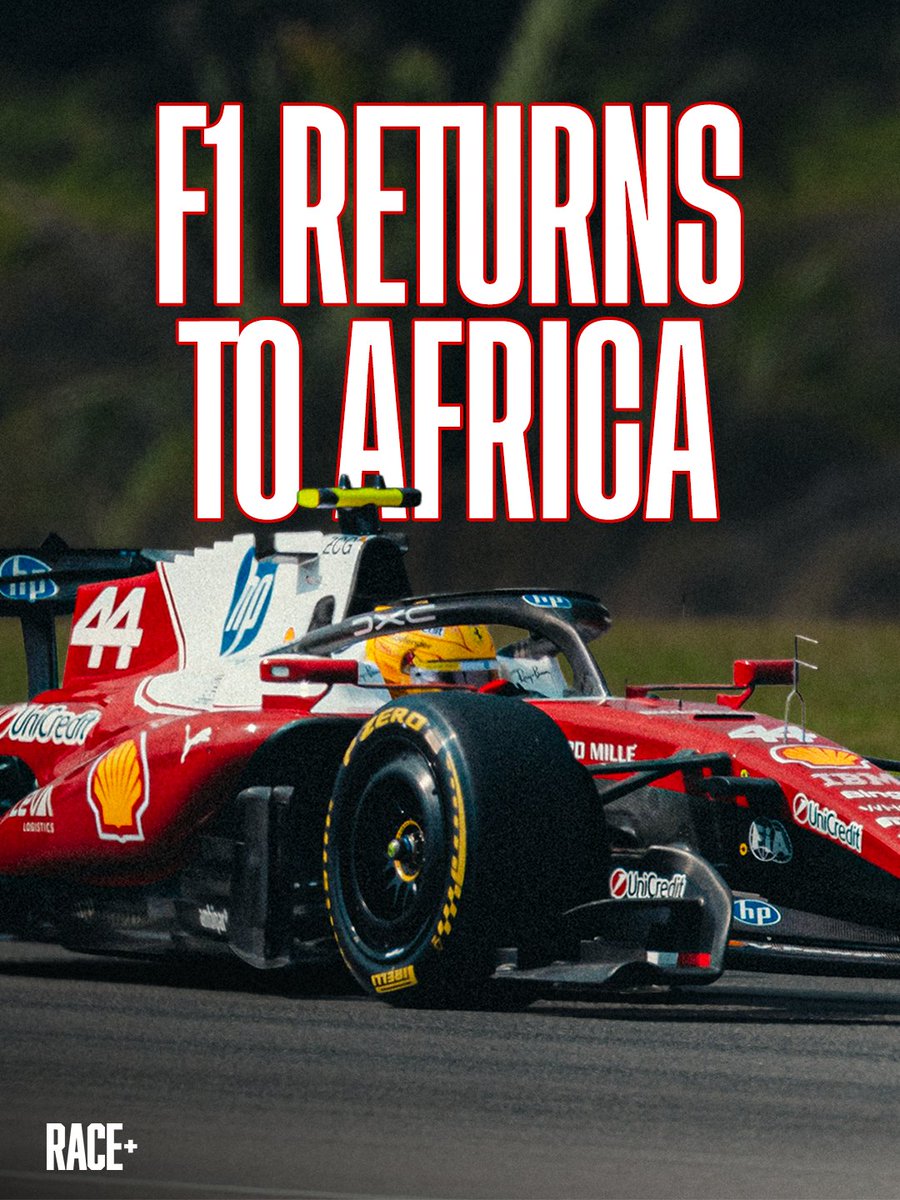
F1 is set to return to Africa after 37 years, with Rwanda expected to join the calendar in 2030.
An agreement has reportedly been reached for a new permanent circuit to be built around 40km from Kigali.
An official announcement could come later this year.
📰 @Racingnews365c
The spark that is Africa’s creative economy.
Growing up in the 80s and 90s, many of the international music stars my generation looked up to came from the West. Africa already had extraordinary artists, but we rarely saw African stars command the kind of global cultural reach we are witnessing today.
That is why seeing @heisrema perform at BK Arena this past @Kwitaizina weekend felt so powerful.
Afrobeats has become a global force. And today, young Africans can see those stars celebrated right here on the continent, in venues capable of hosting major international entertainment and sporting events.
And in that proximity lies true power. What young people can see, they can more easily imagine for themselves.
It was equally important to see our Rwandan artists command that stage. From Kivumbi King feat. Kirikou, Juno Kizigenza, Kenny Sol, Sarah Phenom, DJ Marnaud, Ruti Joel, Massamba, to DJ Senshi, and our talented MCs Rocky and Lucky, our ambition must be both to attract Africa’s biggest artists, and build the platforms and ecosystem that enable our own talent to grow here, across Africa and beyond.
And that ecosystem is much bigger than the artist.
It includes managers, promoters, producers, musicians, dancers, technicians, designers, content creators, hospitality and security professionals, and many others. As our talent professionalizes, the professional infrastructure around it must mature too.
Lastly, seeing children from the @SherrieSilver Foundation perform for Rema, who took time to encourage them, spoke to the power of possibility when we nurture talents from a young age. One can only imagine what that encounter like that has planted in those children’s minds.
This is why investing in our cultural and creative industries matters: talent, livelihoods, professional ecosystems must all come together for the sake of our youth seeing African creativity as something they too can build a future in, proudly. 🇷🇼🌍
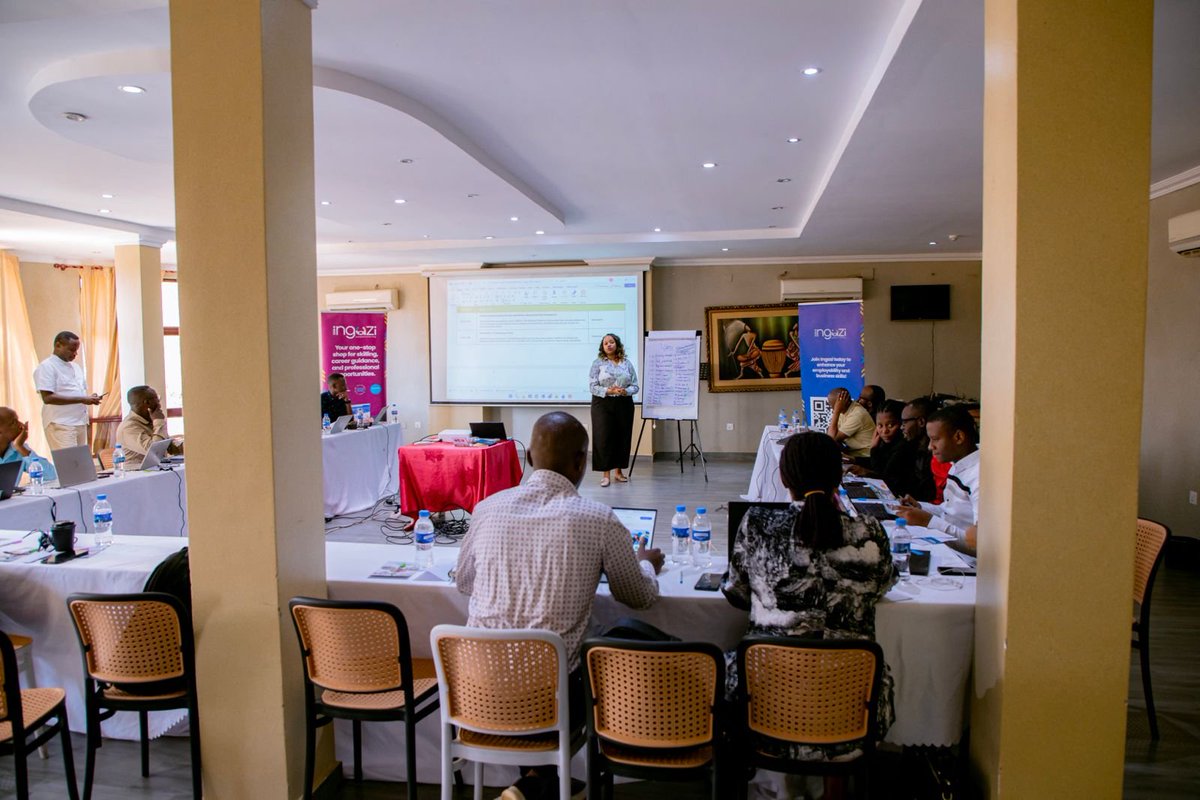
The INGAZI Technical Workshop wrapped up today inBugesera!
Stakeholders from @RwandaLabour@RwandaYouthArts , and @unicefrw gathered for a five-day workshop aimed at aligning priorities and finalizing implementation plans for the next phase of the INGAZI Programme.
#IngaziRw
I have been reflecting on the debate around how some of our young people dress, and I wonder whether we are asking ourselves the deeper questions.
When concerns are raised about increasingly revealing fashion trends, the conversation quickly becomes: “Why does the State want to police our bodies?”
But perhaps we should also ask: who is shaping these trends in the first place, and why?
Parents in different parts of the world have pointed out something interesting: clothes marketed to little girls are often shorter, tighter or more appearance-conscious than equivalent clothes for little boys of the same age.
Why?
Why are girls introduced so early to the idea that femininity is connected to displaying the body? And why, as they grow older, is that message reinforced through fashion, advertising, music, dance, films, music videos and social media, where the female body is so often presented through the lens of sexual desirability?
This is not an argument that the female body is inherently provocative. It is not. Nor should women and girls be made responsible for managing other people’s sexuality by simply being told to cover themselves.
The question is not what is wrong with the female body. The question is why our culture and commercial industries so persistently commodify it.
And there is another dimension to this conversation that matters to me: cultural identity.
For many years, much of what we wore was imported—not only the clothes themselves, but increasingly the ideas of what was fashionable, modern, attractive or desirable.
But modernity does not have to mean cultural erasure.
Across our continent, we can see powerful examples of societies that have made their cultural identity part of contemporary fashion. Nigeria, among others, has demonstrated how local fabrics, patterns, craftsmanship and aesthetics can be worn with pride and continuously reimagined for modern lifestyles.
That should challenge us too.
What does contemporary Rwandan fashion look like when it is confident enough to draw from who we are, while remaining creative, youthful and open to the world?
This is not about freezing culture in the past, prescribing one acceptable way of dressing, or rejecting influences from elsewhere. Culture has always evolved. The question is whether we are participating in that evolution as creators, or simply consuming what others create for us.
Industries manufacture aspiration. Algorithms amplify it. Celebrities normalize it. Markets profit from it. And when we do not produce enough of our own cultural references, other people’s definitions of beauty, desirability and modernity can very easily become our own.
So before reducing every conversation about these trends to “the State wants to control our bodies,” perhaps we should encourage our young people—girls and boys alike—to exercise something even more important than the freedom to choose: the critical thinking to interrogate the choices being presented to them.
Who benefits from this trend?
Who defined this as desirable?
Why is sexual visibility so disproportionately expected of the female body?
What parts of ourselves are we losing when we imitate without questioning?
And what could we create if we looked at our own culture not as something belonging to the past, but as material for the future?
Freedom is not only the ability to choose. It is also the ability to understand what is shaping our choices—and the confidence to create alternatives of our own.
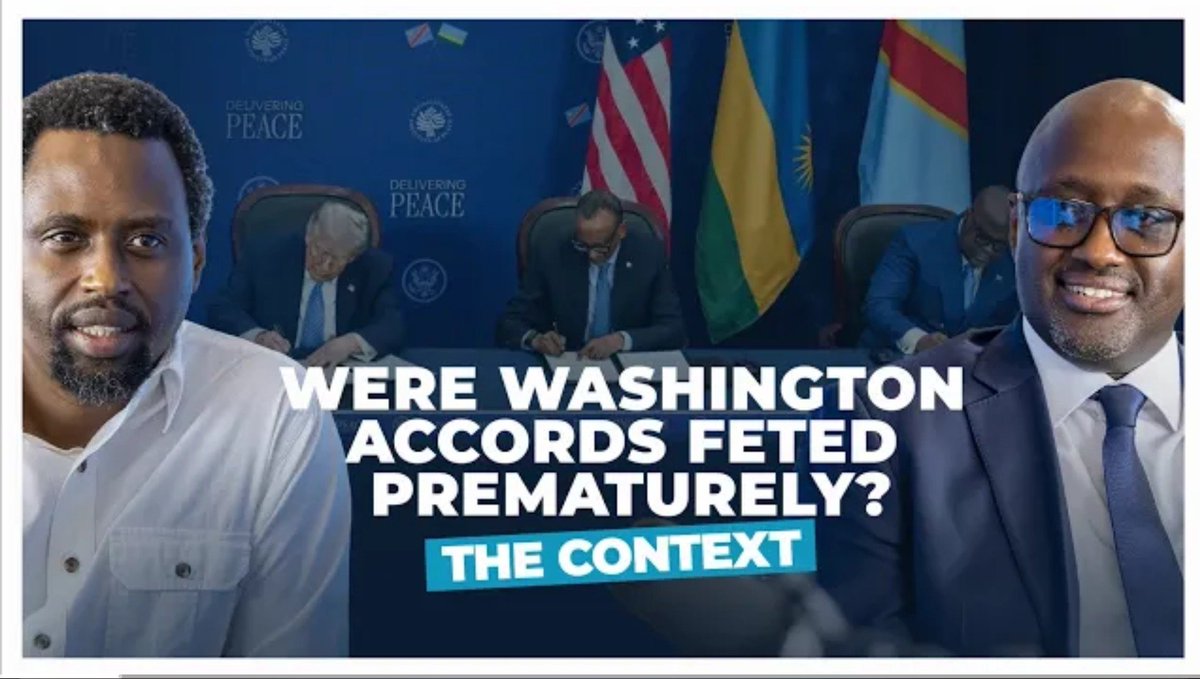
Rwanda's relations with Botswana, Tanzania and South Africa; conflict in eastern DRC and the implementation of the Washington Accords; tensions with Burundi; as well as the campaign for the reelection of Louise Mushikiwabo as Secretary General of the Francophonie were all addressed in my 54-minute interview with @JMunyaneza in "The Context" of @NewTimesRwanda.
https://t.co/xFB2xQu7lZ
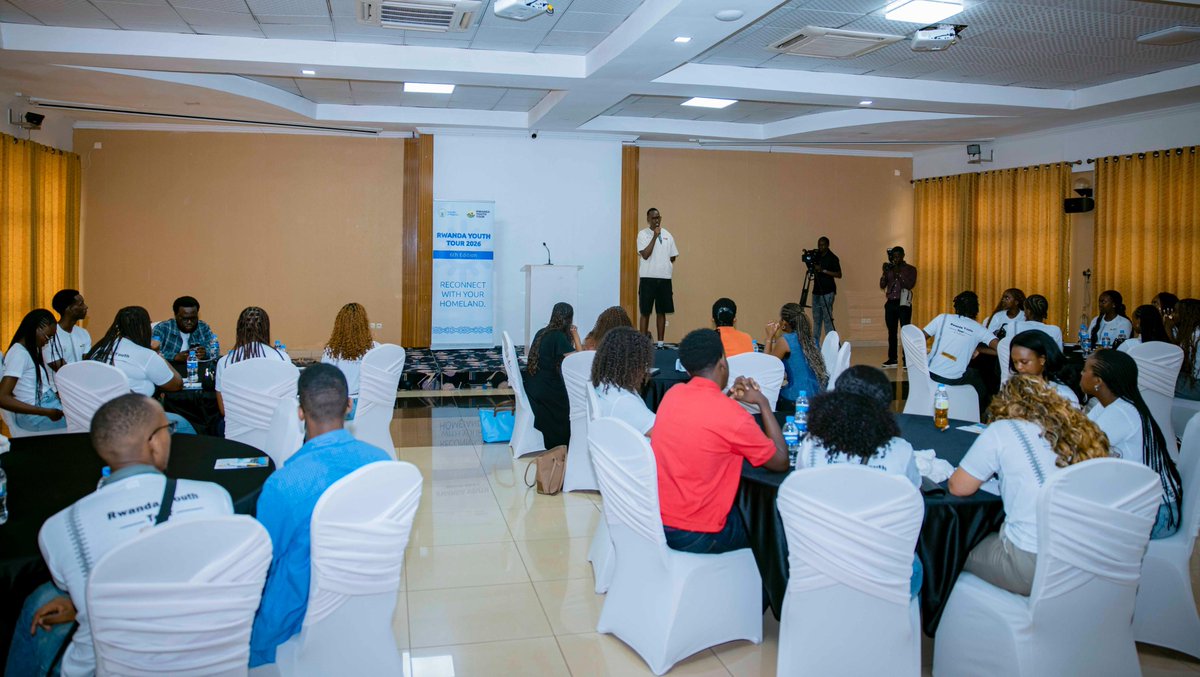
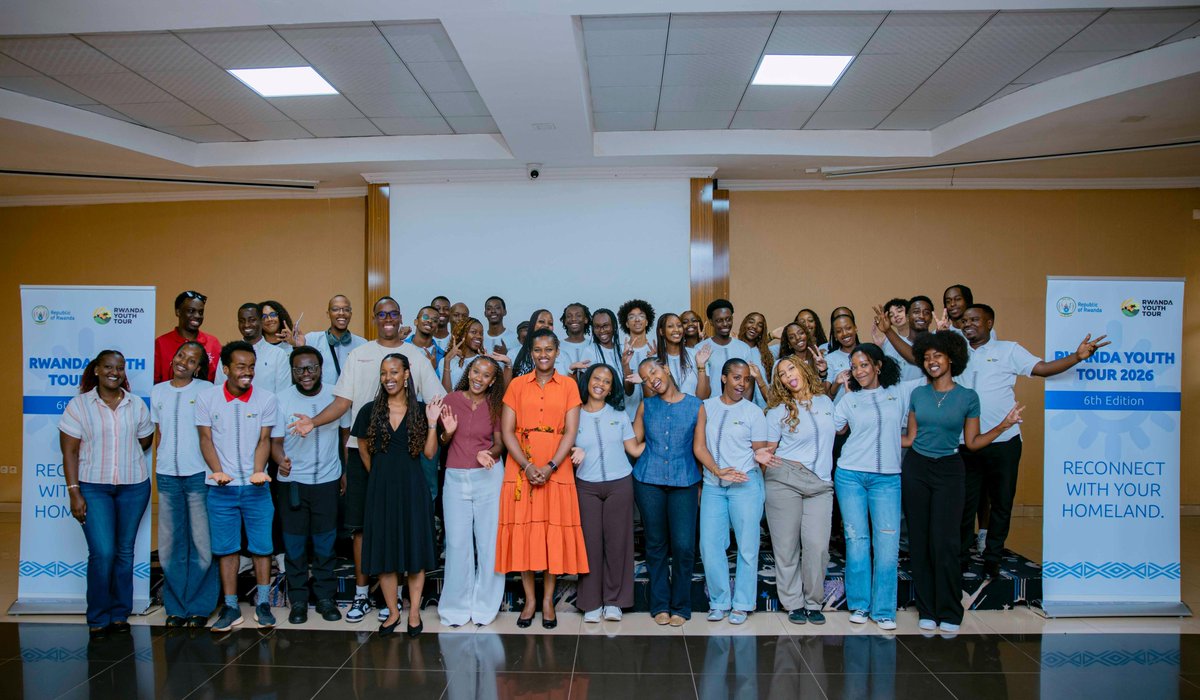
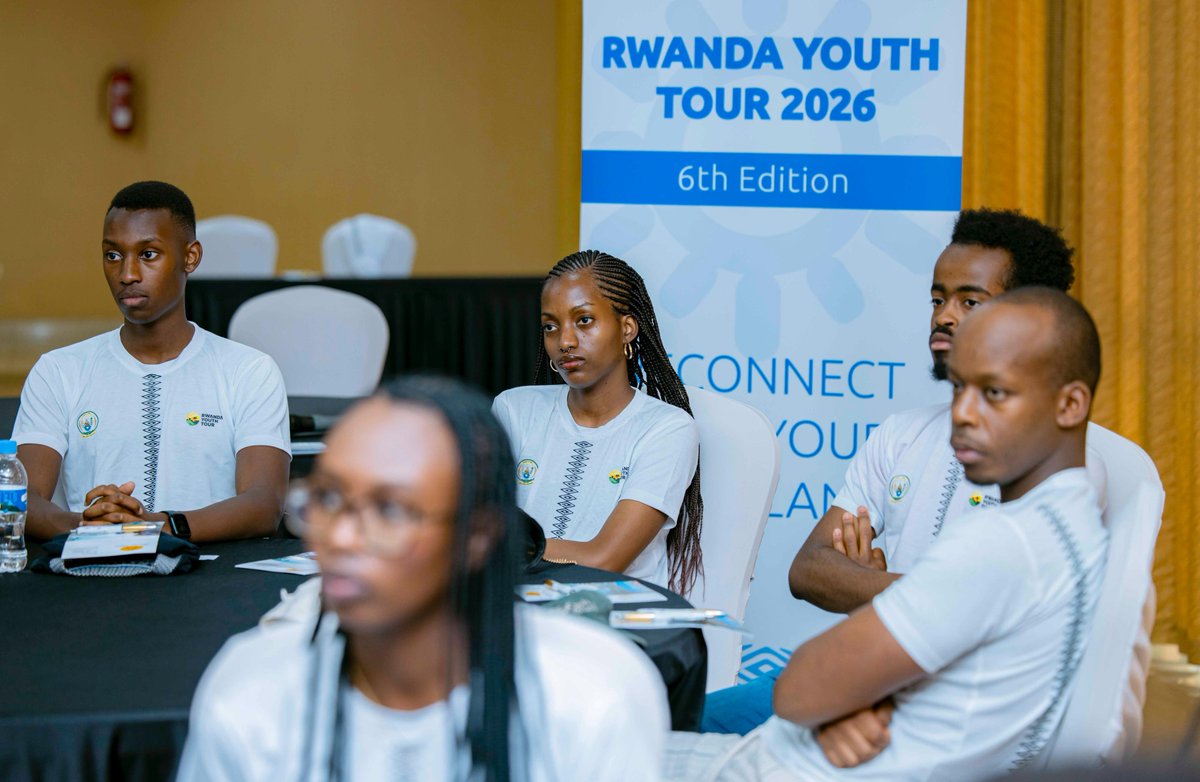
Today, the 6th Edition of the #RwandaYouthTour officially kicked off, organized by @RwandaMFA, MoYA, @Rwandapolice & @RwandaYouthClub. The programme brings together young Rwandans from the diaspora to reconnect with Rwanda's history, culture, development journey & opportunities.
✭ Happening TODAY, June 29! ✭
Join the #YouthConnekt Hangout to learn how to turn your creative passion into a bankable business! We're covering financial readiness, digital monetization, and scaling talent.
🕑 2:00 PM - 4:00 PM
📍 EAUR, Kigali Campus
Don’t miss out! 🇷🇼🎨