Deep learning models really shine with large amounts of data.
Having enough labeled data is a constant challenge in the field, especially in NLP.
A successful approach that has yielded great results in the last couple of years is of 𝙩𝙧𝙖𝙣𝙨𝙛𝙚𝙧 𝙡𝙚𝙖𝙧𝙣𝙞𝙣𝙜.
Thread:👇
@ramsri_goutham Sounds interesting! I recently implemented it. I needed a json output from LLMs.
The struggle was that the output was not consistent. After a lot of experimentation with the prompt, made it to work. But I'm looking for a more neat way to do this.
MLOps and Challenges
• MLOps is gradually becoming a critical component in data science projects.
• For sustainable ML deployments, it is essential to understand and apply MLOps concepts.
Let's dive ↓
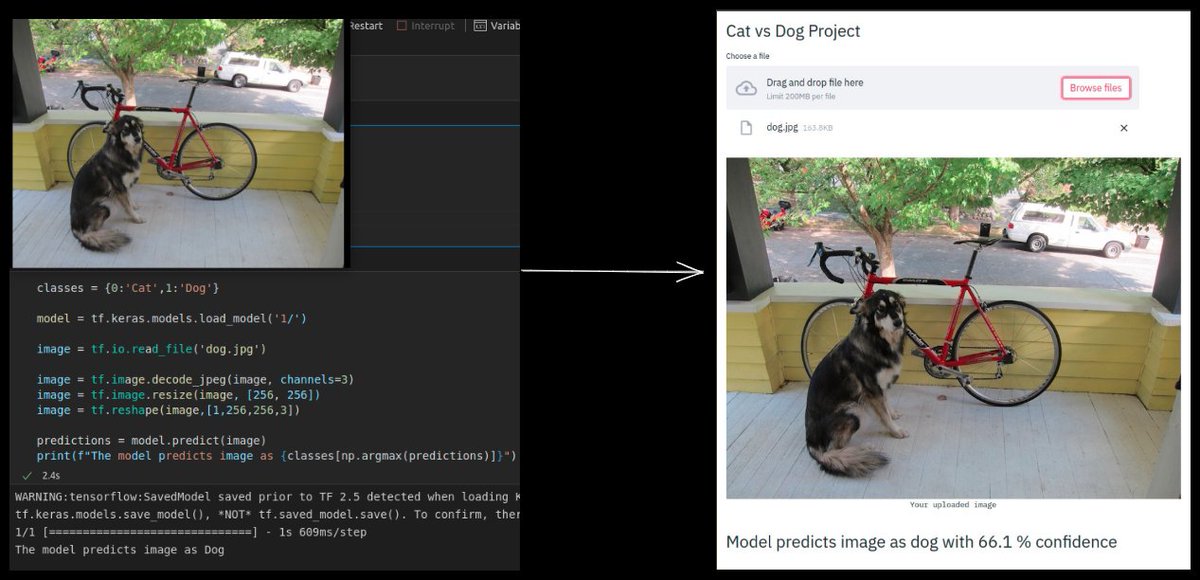
When you want to present your Machine Learning Solution in various hackathons or POCs in significantly less time, with fewer lines of code and nice looking UI.
Here is a better idea instead of setting your solution in a notebook, Streamlit helps in a pretty good way with python.
What is a dead neuron?
Today’s thread is based on concepts, drawbacks, and rectification around the topic of the dead neuron.
Keywords of thread - Sigmoid, Vanishing Gradient, Relu, Leaky Relu, and much more
1/10
‣ AUC-ROC curves are crucial in deciding the threshold part for binary classification problems.
‣ In most cases, we take a 0.5 score as the threshold
‣ But what if I told you that there is a mechanism that is used to select the best threshold
Concepts and Visualization🧵
Introducing Imagen, a new text-to-image synthesis model that can generate high-fidelity, photorealistic images from a deep level of language understanding. Learn more and and check out some examples of #imagen at https://t.co/RhD6siY6BY
Machine Learning | Mathematical Resources
Here are some of the resources that I went through for understanding mathematics relevant to machine learning understanding ↓
With its viable framework for pre-training and transfer learning in NLP, ULMFiT was able to provide the missing element to take transformers to the next level.
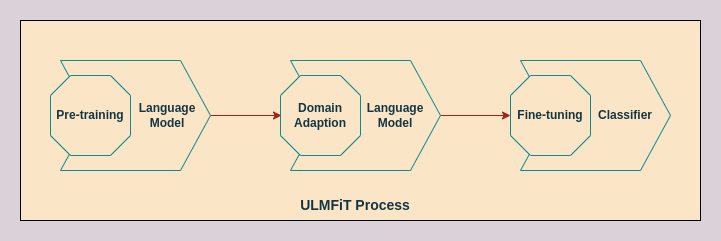
Universal Language Model Fine-tuning 📈
ULMFiT is a method to enable transfer learning for any NLP task, providing great results.
And all of this without having to train your models from scratch. Isn't it interesting?
Let's see how: 👇
3. Fine-tune (fine-tuning the classifier on the target task)
In this step, the language model is fine-tuned with a classification layer for the target task (e.g., classifying the product reviews given by the users).