New paper Alert!
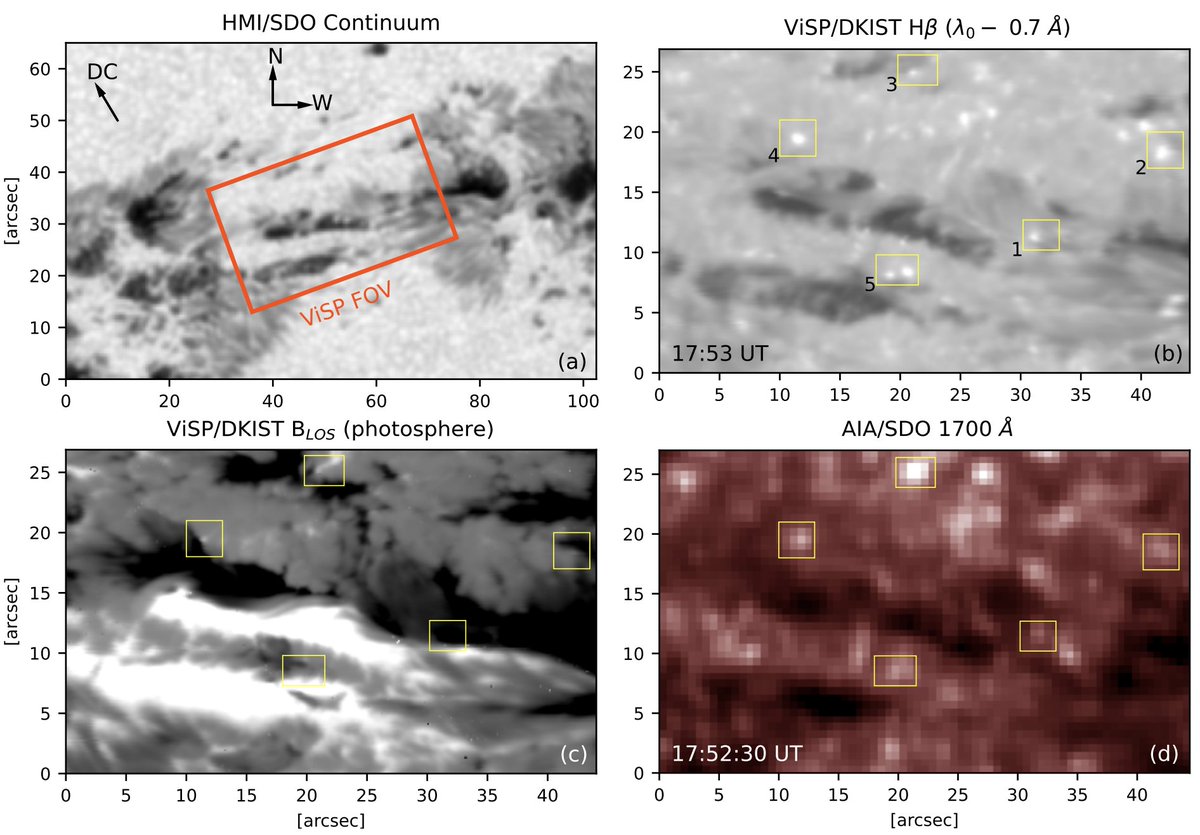
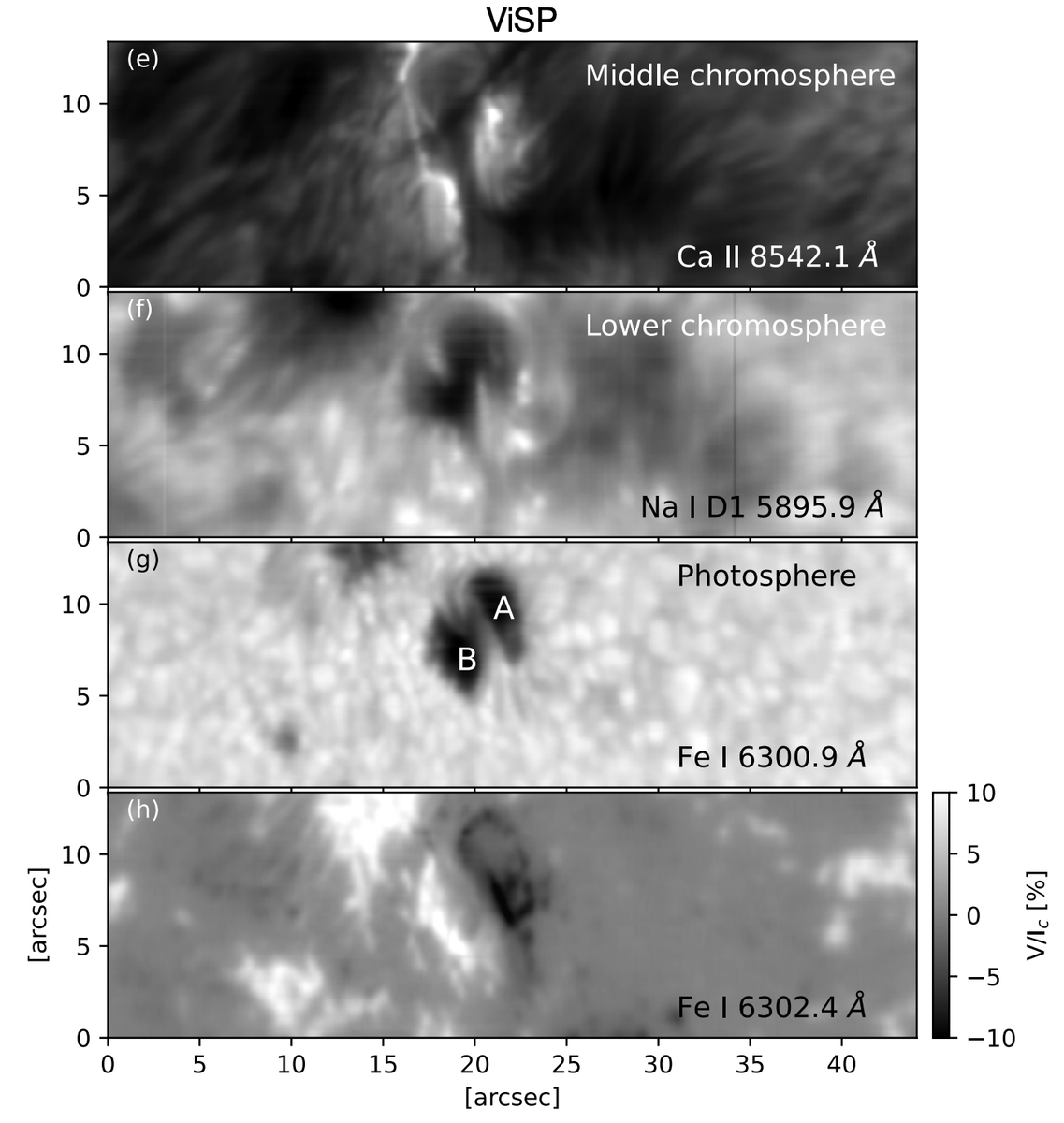
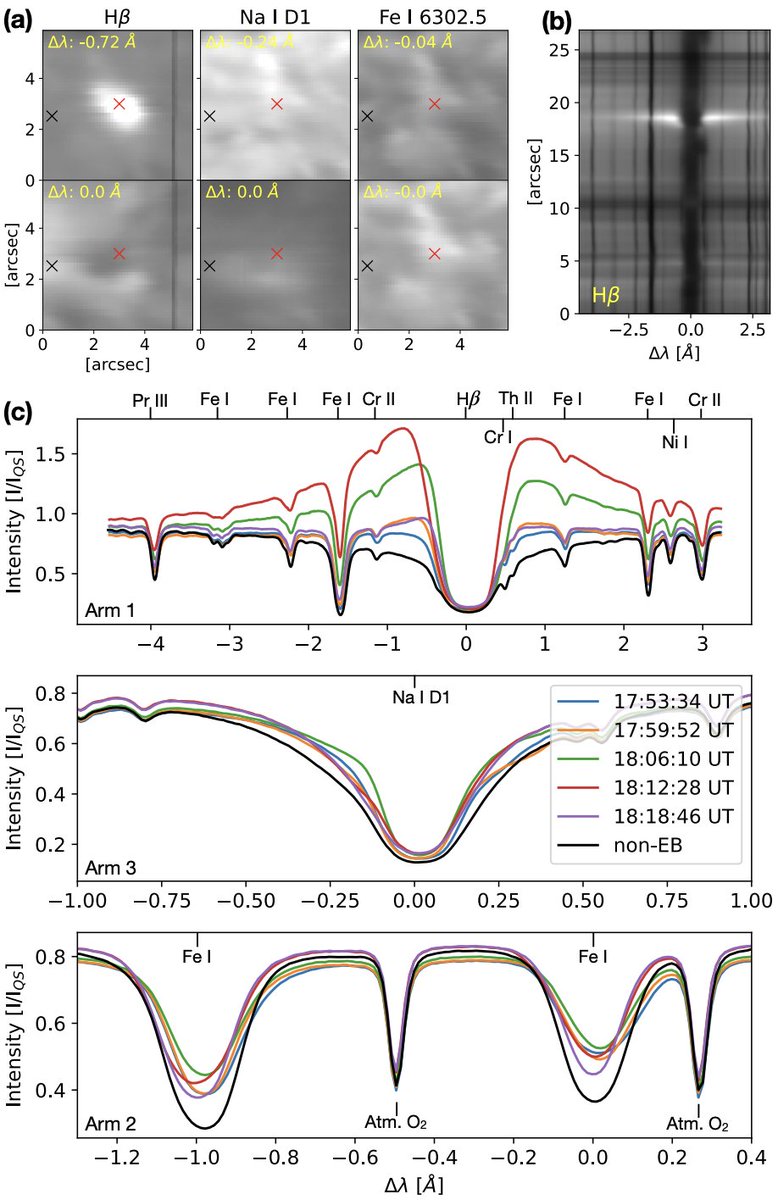
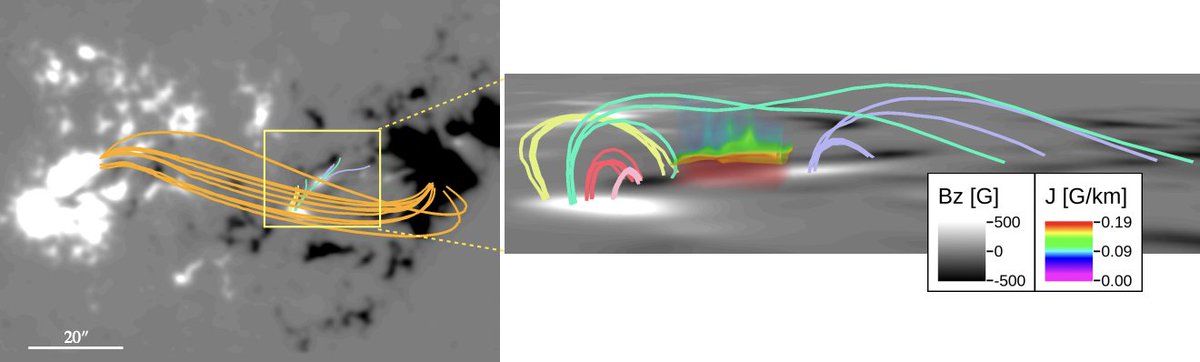
Check out our new paper on “Multiline Spectropolarimetric Evidence for Photospheric Reconnection in Ellerman Bombs from DKIST”. Accepted for publication in the ApJL. Read the full paper on arXiv: https://t.co/wt5LY7MvNL
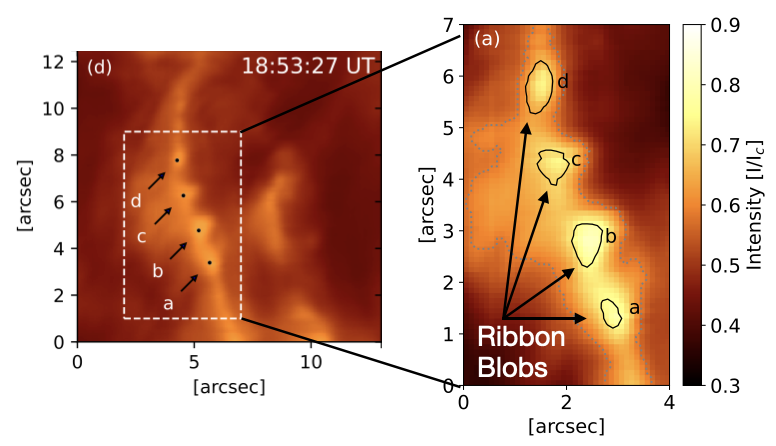
☀️ Scientists using the @NSF Inouye Solar Telescope captured the sharpest view of solar flare “ribbons.” They saw tiny, dynamic hot spots—“ribbon blobs”—that show how magnetic fields snap & reconnect, giving clues to flares & better space weather forecasts https://t.co/oVJmYrCXJH
Paper Alert!!!
Check out our recent paper on Multi-line Spectropolarimetric Observation of Flare Ribbon Fine Structures with ViSP/DKIST. Accepted in ApJ, available on Arxiv: https://t.co/A3c44PB8AD #SolarFlare
A recent study using data from @NSF Inouye Solar Telescope documents the unprecedented rotation of two small, dark features on the Sun's surface, known as pores, which are very small sunspots and appear to be linked to a less powerful C-class solar flare: https://t.co/To9VIqKC7y
Paper Alert !!!
Check out our recent paper on "Photospheric Pore Rotation Associated with a C-class Flare from Spectropolarimetric Observations with DKIST" accepted for publication in ApJL. Available on arxiv: https://t.co/gl9Ec8Y3VD
Paper Alert !!!
Check out our recent paper on "Photospheric Pore Rotation Associated with a C-class Flare from Spectropolarimetric Observations with DKIST" accepted for publication in ApJL. Available on arxiv: https://t.co/gl9Ec8Y3VD
Aditya-L1 Mission:
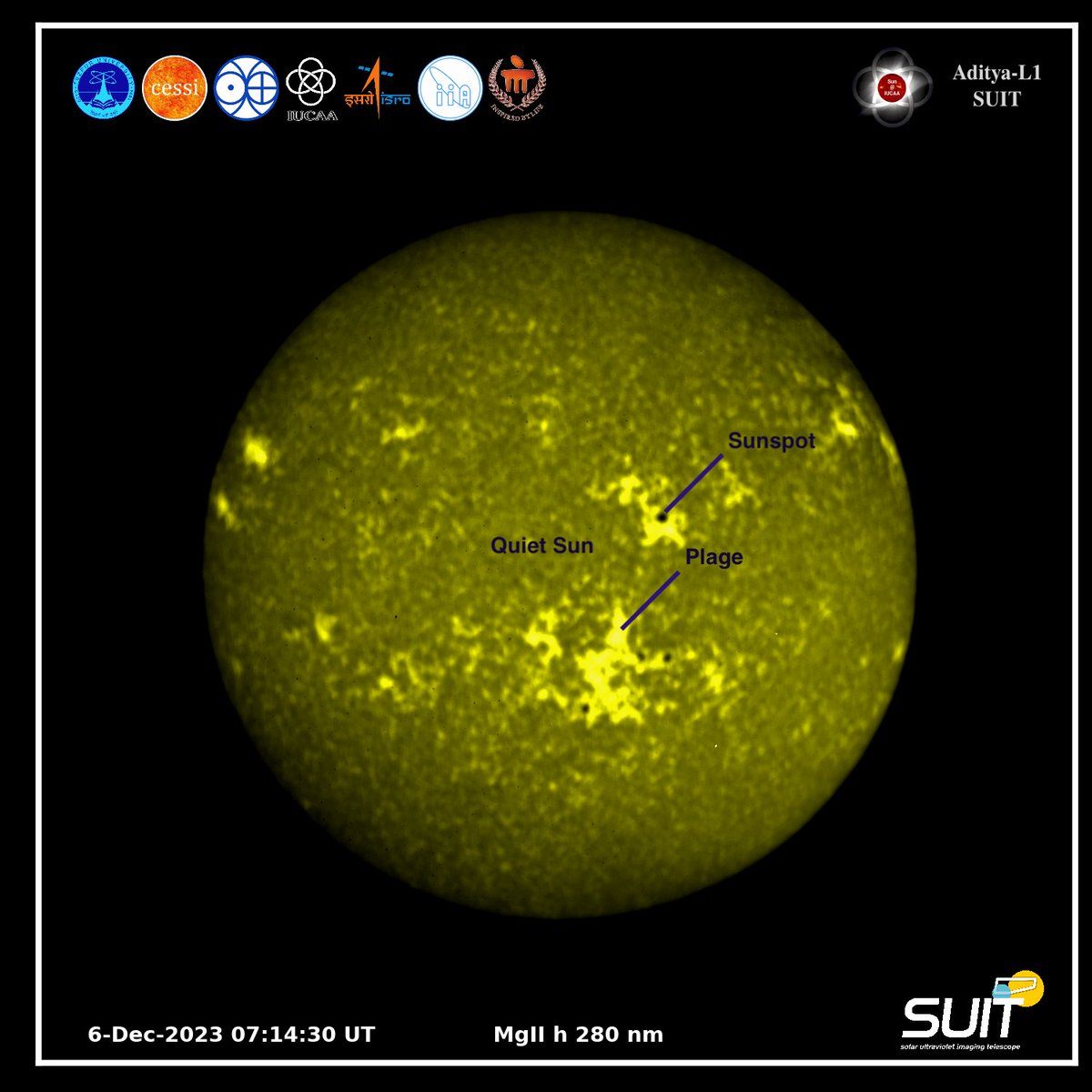
The SUIT payload captures full-disk images of the Sun in near ultraviolet wavelengths
The images include the first-ever full-disk representations of the Sun in wavelengths ranging from 200 to 400 nm.
They provide pioneering insights into the intricate details of the Sun's photosphere and chromosphere.
https://t.co/xD8M0wJ1be
All images on our Instagram https://t.co/Nz1i1nph8V
@IUCAAstro
Aditya-L1 Mission:
The Solar Wind Ion Spectrometer (SWIS), the second instrument in the Aditya Solar wind Particle Experiment (ASPEX) payload is operational.
The histogram illustrates the energy variations in proton and alpha particle counts captured by SWIS over 2-days.
https://t.co/X6C8BGvF3q
Aditya-L1 Mission:
HEL1OS captures first High-Energy X-ray glimpse of Solar Flares
🔸During its first observation period from approximately 12:00 to 22:00 UT on October 29, 2023, the High Energy L1 Orbiting X-ray Spectrometer (HEL1OS) on board Aditya-L1 has recorded the impulsive phase of solar flares.
The recorded data is consistent with the X-ray light curves provided by NOAA's GOES.
🔸Commissioned on October 27, 2023, HEL1OS is currently undergoing fine-tuning of thresholds and calibration operations. The instrument is set to monitor the Sun's high-energy X-ray activity with fast timing and high-resolution spectra.
🔸HEL1OS data enables researchers to study explosive energy release and electron acceleration during impulsive phases of solar flares.
HEL1OS was developed by the Space Astronomy Group of the U. R. Rao Satellite Centre, ISRO, Bengaluru. More:
https://t.co/Rhuna6rjoe
@NWSSWPC
#AdityaL1
Aditya-L1 Mission:
Off to Sun-Earth L1 point!
The Trans-Lagrangean Point 1 Insertion (TL1I) maneuvre is performed successfully.
The spacecraft is now on a trajectory that will take it to the Sun-Earth L1 point. It will be injected into an orbit around L1 through a maneuver after about 110 days.
This is the fifth consecutive time ISRO has successfully transferred an object on a trajectory toward another celestial body or location in space.
Aditya-L1 Mission:
Aditya-L1 has commenced collecting scientific data.
The sensors of the STEPS instrument have begun measuring supra-thermal and energetic ions and electrons at distances greater than 50,000 km from Earth.
This data helps scientists analyze the behaviour of particles surrounding Earth.
The figure displays variations in the energetic particle environment, collected by one of the units.
https://t.co/5KFIsaCAXl
#AdityaL1
Our latest paper on 'Solar Atmospheric Heating Due to Small-scale Events in an Emerging Flux Region' has just been accepted (within 5 days) for publication in ApJ! Read the full paper here: https://t.co/41IA8IQU0U
PSLV-C57/Aditya-L1 Mission:
The launch of Aditya-L1 by PSLV-C57 is accomplished successfully.
The vehicle has placed the satellite precisely into its intended orbit.
India’s first solar observatory has begun its journey to the destination of Sun-Earth L1 point.
PSLV-C57/Aditya-L1 Mission:
The launch of Aditya-L1 by PSLV-C57 is accomplished successfully.
The vehicle has placed the satellite precisely into its intended orbit.
India’s first solar observatory has begun its journey to the destination of Sun-Earth L1 point.
PSLV-C57/Aditya-L1 Mission:
The 23-hour 40-minute countdown leading to the launch at 11:50 Hrs. IST on September 2, 2023, has commended today at 12:10 Hrs.
The launch can be watched LIVE
on ISRO Website https://t.co/kL1ncOCjPY
Facebook https://t.co/Q3K7buUYqg
YouTube https://t.co/YrDq896Xl1
DD National TV channel
from 11:20 Hrs. IST