Cybersec alert: AI-powered fake invoices are surging—realistic scams mimicking vendors (tiny tweaks like https://t.co/rV0acmK4FF) hitting freelancers/SMBs hard.
Built @Zap59 to defend: Forward invoices → AI extracts safely → Auto-screens fraud/duplicates → Flags for review (no risky auto-approve).
Seen this? Tips/DM for early access!
#CyberSecurity #InvoiceFraud #BEC
I’ve watched too many sharp founders waste months “optimizing their #LinkedIn presence.” Posting daily carousels, chasing comments, turning their actual work into content bait.
Meanwhile the real stuff? It happens in ugly Google Docs, late-night customer calls, and messy Notion pages no one will ever see.
#X is chaotic, sure. But it’s where the actual conversation lives. You drop an idea at 2am, get roasted or inspired in real time. Newsletters? That’s where people who actually read go. No algorithm deciding your worth by how many “This!” reactions you get.
Building in public on LinkedIn feels like performing for your old boss who still thinks “disruption” is a PowerPoint slide.
LinkedIn is the last place where people still pretend a fancy title and a polished feed equals progress. Ex-corporate folks LARPing as founders, posting “hustle” quotes while their actual startup is just a landing page and a dream.
Real builders don’t need the validation of a blue check and 50 “Congrats!” comments. They need momentum, ugly prototypes, and customers who pay.
The craziest part? The people I respect most barely post on LinkedIn anymore. They’re too busy shipping. Their “personal brand” is the product they keep improving, not the highlight reel.
If your feed feels like a never-ending job interview… maybe it is. Just not the one you want.
So yeah. Real builders live on X, in newsletters, or just… y’know… building.
LinkedIn is corporate cosplay for people who miss the 9-5 validation.
Layer3x is shipping something next week that removes the biggest friction point we hear from developers.
If you’re building AI agents that touch payments — you’ll want to see this.
https://t.co/xLH8C35MJk
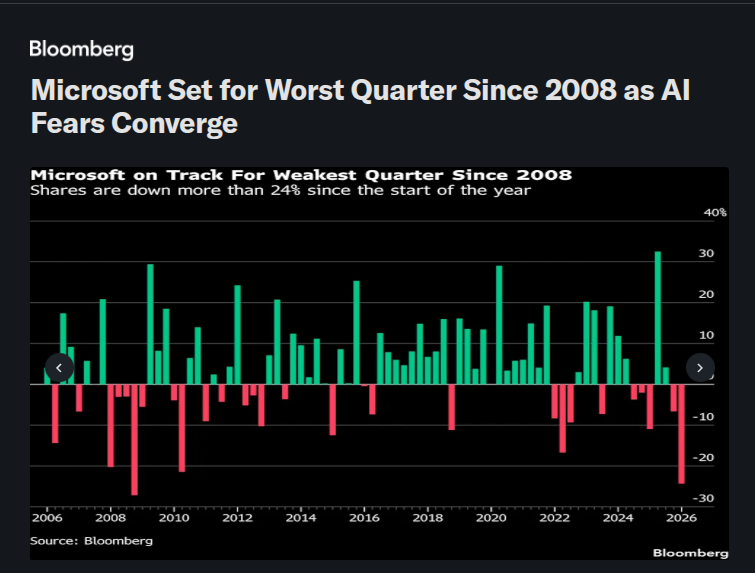
Bloomberg: Microsoft is heading for its worst quarter since 2008 as 2 AI fears hit at once.
- Heavy AI spending without clear revenue payoff, and
- Frontier model builders like OpenAI and Anthropic threatening parts of its core software business.
---
bloomberg. com/news/articles/2026-03-27/microsoft-set-for-worst-quarter-since-2008-as-ai-takes-two-bites
The only MCP-native execution authorization layer built specifically for AI agents handling payments and financial operations.
Not identity. Not OAuth. Not a generic policy engine.
A synchronous GO/NO-GO/EXCEPTION signal — before the payment executes. Never after.
One URL in your Claude connector settings. 60 seconds. No SDK. No code.
Built for multi-agent reality — parent and child agents, scoped policies per hierarchy level, full audit trail.
Auth0 tells you who the agent is. Layer3X tells you whether it should be allowed to move that money, to that vendor, for that amount, right now.
That decision was missing. We built it. Ready to find your gap? Free 90-day Authorization Risk Review — https://t.co/LAK0riRGdu
https://t.co/nEt5WTlxOp
@gregisenberg This shouldn’t be controversial. You can’t advise founders from the outside if you’ve never carried payroll, missed targets, and fought to survive a real startup. It's unfortunate that majority of the VCs are made of inexperienced folks.
@AIHighlight@nikil Exactly right. The rails exist. We're building the guardrails.
Authorization policy — what the agent can do, to whom, how much, under what conditions — before execution, not after.
That's Layer3X. https://t.co/xcy0i24NMt
"No human required" is the pitch.
"AI vulnerable to scams" in the replies is the product requirement.
The x402 standard handles payment rails. It doesn't handle authorization policy — what the agent is permitted to pay, to whom, up to how much, under what conditions.
That layer is still missing. That's what we're building at https://t.co/nEt5WTkZYR.
Most teams deploying #AIagents in #payment workflows have the same gap.
The agent calls the payment API.
Nothing sits between that call and execution.
No policy check. No authorization layer. No audit trail.
It works fine — until it doesn't. And when it doesn't, it doesn't fail quietly.
This is the authorization gap. It's in production right now at companies that would be horrified to know it.
I've been mapping it for the last several months. Happy to share what we're seeing.
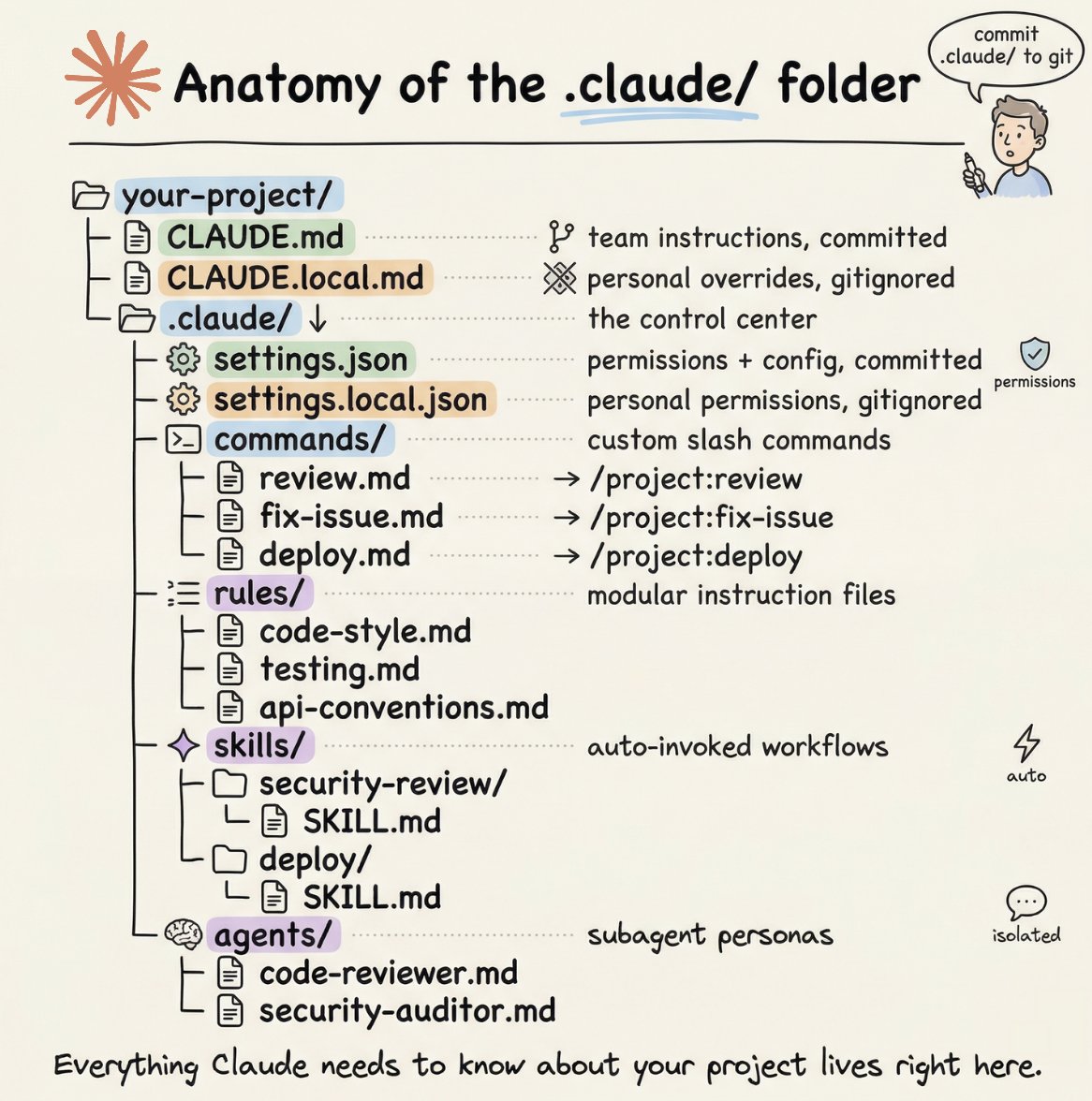
How to setup your Claude code project?
TL;DR
Most developers skip the setup and just start prompting. That's the mistake.
A proper Claude Code project lives inside a .𝗰𝗹𝗮𝘂𝗱𝗲/ folder. Start with 𝗖𝗟𝗔𝗨𝗗𝗘.𝗺𝗱 as Claude's instruction manual. Split it into a 𝗿𝘂𝗹𝗲𝘀/ folder as it grows. Add 𝗰𝗼𝗺𝗺𝗮𝗻𝗱𝘀/ for repeatable workflows, 𝘀𝗸𝗶𝗹𝗹𝘀/ for context-triggered automation, and 𝗮𝗴𝗲𝗻𝘁𝘀/ for isolated subagents. Lock down permissions in 𝘀𝗲𝘁𝘁𝗶𝗻𝗴𝘀.𝗷𝘀𝗼𝗻.
There are two .𝗰𝗹𝗮𝘂𝗱𝗲/ folders: one committed with your repo, one global at ~/.𝗰𝗹𝗮𝘂𝗱𝗲/ for personal preferences and auto-memory across projects.
The .𝗰𝗹𝗮𝘂𝗱𝗲/ folder is infrastructure. Treat it like one.
The article below is a complete guide to 𝗖𝗟𝗔𝗨𝗗𝗘.𝗺𝗱, custom commands, skills, agents, and permissions, and how to set them up properly.
Most teams deploying AI agents in payment workflows have the same gap.
The agent calls the payment API.
Nothing sits between that call and execution.
No policy check. No authorization layer. No audit trail.
It works fine — until it doesn't. And when it doesn't, it doesn't fail quietly.
This is the authorization gap. It's in production right now at companies that would be horrified to know it.
I've been mapping it for the last several months. Happy to share what we're seeing.
Over the next five years, #Washington’s war portfolio in #Ukraine, #Israel/#MiddleEast, and Iran is quietly turning into a hidden line item on every #America balance sheet. Using only rough public ranges, a “low‑intensity” path comes out to around 185 #USD US per person per year – or about 345 USD US per taxpayer per year. A more realistic “status‑quo grinding war” path is closer to 370 USD US per person and 690 USD US per taxpayer annually. And if we drift into a high‑escalation world, you’re looking at roughly 655 USD US per person and 1,220 USD US per taxpayer every year for just these three theaters. None of this shows up as a line on your tax form; it’s buried in appropriations and future interest on the debt – but the math says American taxpayers are effectively long a multi‑hundred‑#billion‑dollar war portfolio whether they like it or not.
8.3 billion people now officially drowning in AI-generated 'breaking news,' deepfake outrage, and clickbait so bad even the bots are embarrassed.
Social media companies? They're not just okay with this bullshit—they're printing money on it.
Algorithms love drama. Truth? Optional premium feature.
#FakeNews #SocialMedia #InformationOverload #SendHelp"