Postdoctoral fellowship opportunity in the School of Maths at University of Edinburgh! The early career 4-year Flora Philip fellowship is for individuals that are under-represented in the academic community. For more info see: https://t.co/E9PC3XYNA9 (deadline is 24th November)
Thanks @koustubh_sharma for this excellent summary and support! Our free online SCR course is at https://t.co/FJPX2yf3Vk, and for acoustic SCR check out https://t.co/2htsPsWIcG
Do you use #CameraTraps for wildlife abundance? Do you feel intimidated by the complex models & codes that statisticians come up with to help design & analyze camera trap data?
If your answer is yes to any of the above, follow this thread with a new resource that is pure gold:
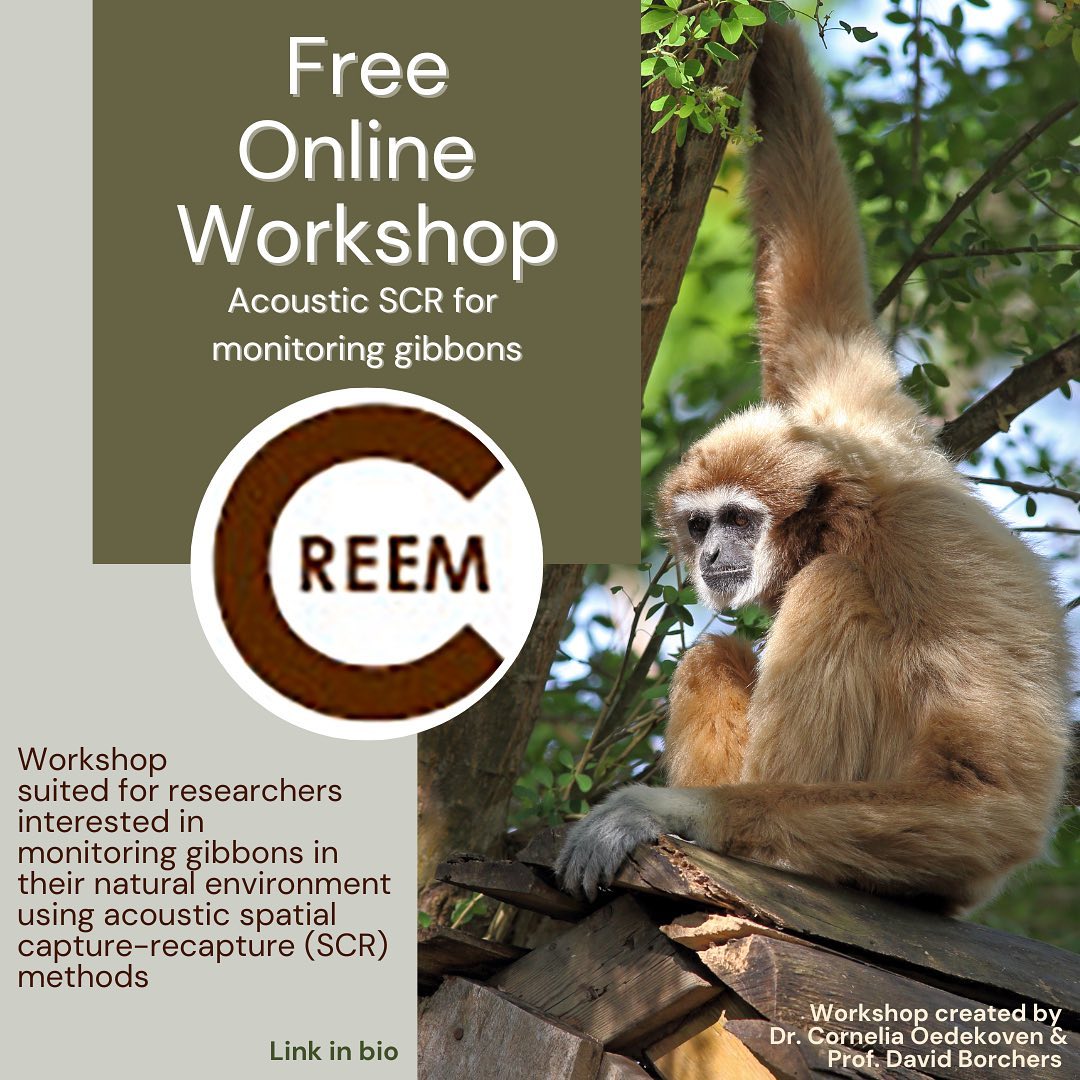
Amazing FREE online workshop by Dr. Cornelia Oedekoven & Professor David Borchers @univofstandrews. Acoustic spatial capture-recapture (SCR) is for estimating animal population density using calls. Great for gibbons. https://t.co/DsYummWjbx @IPS_PrimateNews@PrimateSociety
New publication alert (and my *10th* publication🥳)!!
https://t.co/e71nhvJVWd
Minke whales around Hawaii make a (very odd) boing call (if you have never heard this before: https://t.co/eGqlCs0Byi) 1/3
New paper with @PhilipEbert comparing risk perceptions of backcountry skiers and non-skiers. We found most differences can be explained by standard risk results on expert/layperson differences. https://t.co/3GRFc6DVUY
For e.g., skiers were affected by numerical info like fatality risk and skill level, while non-skiers were more swayed by emotive factors, like if an activity was done for charity. That's a common expert/layperson difference shown in other contexts.
A quick shout out to @ResAltwegg and his amazing fantastic team of superheroes. They have been the heart and soul of this @ISEC_stats_ecol conference and we owe them the previledge of having just had such an amazing conference. I felt there even if far away. Thank you all!
Fantastic biodiversity, and amazing outdoor lifestyle, collaborating on cutting edge NASA-funded remote sensing projects - all while doing exciting science that will directly impact conservation actions on the ground. Come join us!
New paper 📄⚠️ We compared 12 CNNs in a large number of different transfer learning combinations to guide researchers on best approaches for PAM when dealing with scarce audio (e.g. 25 or 50 calls). Multi-country team
@indurbach@Carly_Batist@RubenFoquet
https://t.co/KIwzrevbHl
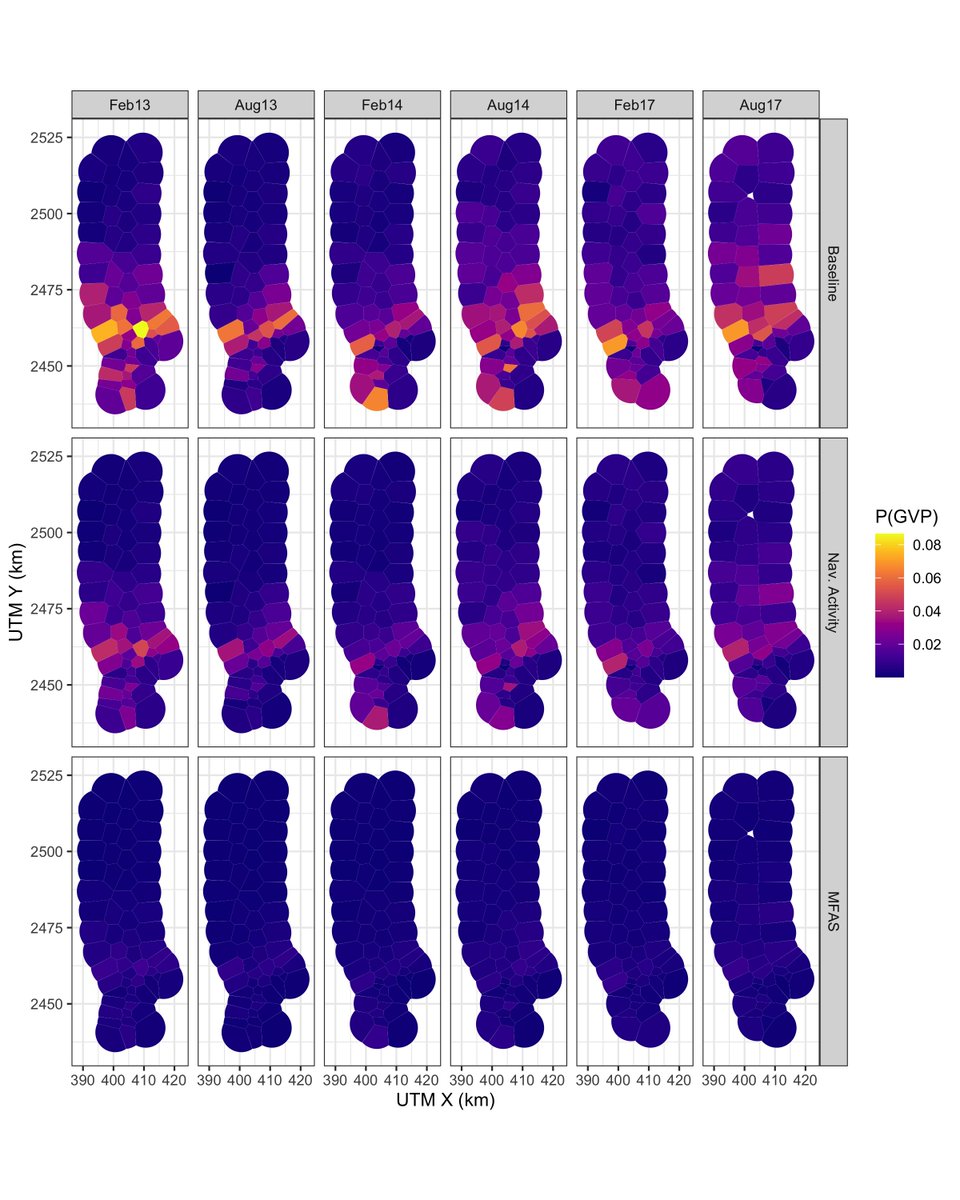
New 🐋🔊🛳📉 paper alert! We used data from a cabled hydrophone array and found that beaked whale detections decrease not only with MFA sonar emitted by navy ships, but also with other navy training activities https://t.co/kNr6QZ2iva