A groundbreaking remote surgery in China
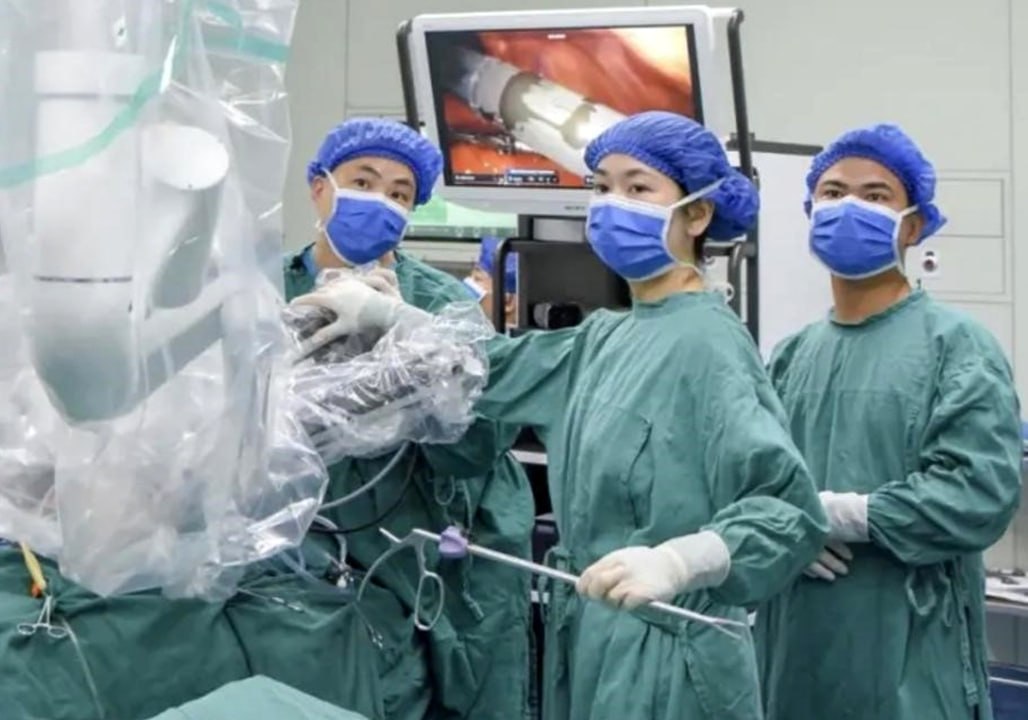
A Chinese surgeon performed a successful operation on a patient located 220 km away.
Dr. Zhang Xue, a distinguished urology specialist, remotely removed a prostate tumor from a 57‑year‑old patient who was lying in an operating room in Jingzhou, while the doctor himself was in Ürümqi.
Using endoscopic imaging, the surgeon controlled the robotic system via a 5G network. The system recorded an ultra‑low data‑transmission delay of just 0.009 seconds, enabling precise real‑time surgical manipulation.
@Aidan_Regan All the suckers lap this nuclear stuff up..just build renewables,it's the cheapest unit of electricity and you can build it fast..cut the crap lads, stop navel gaziing and build the solution..its staring us in the face for 10 years now
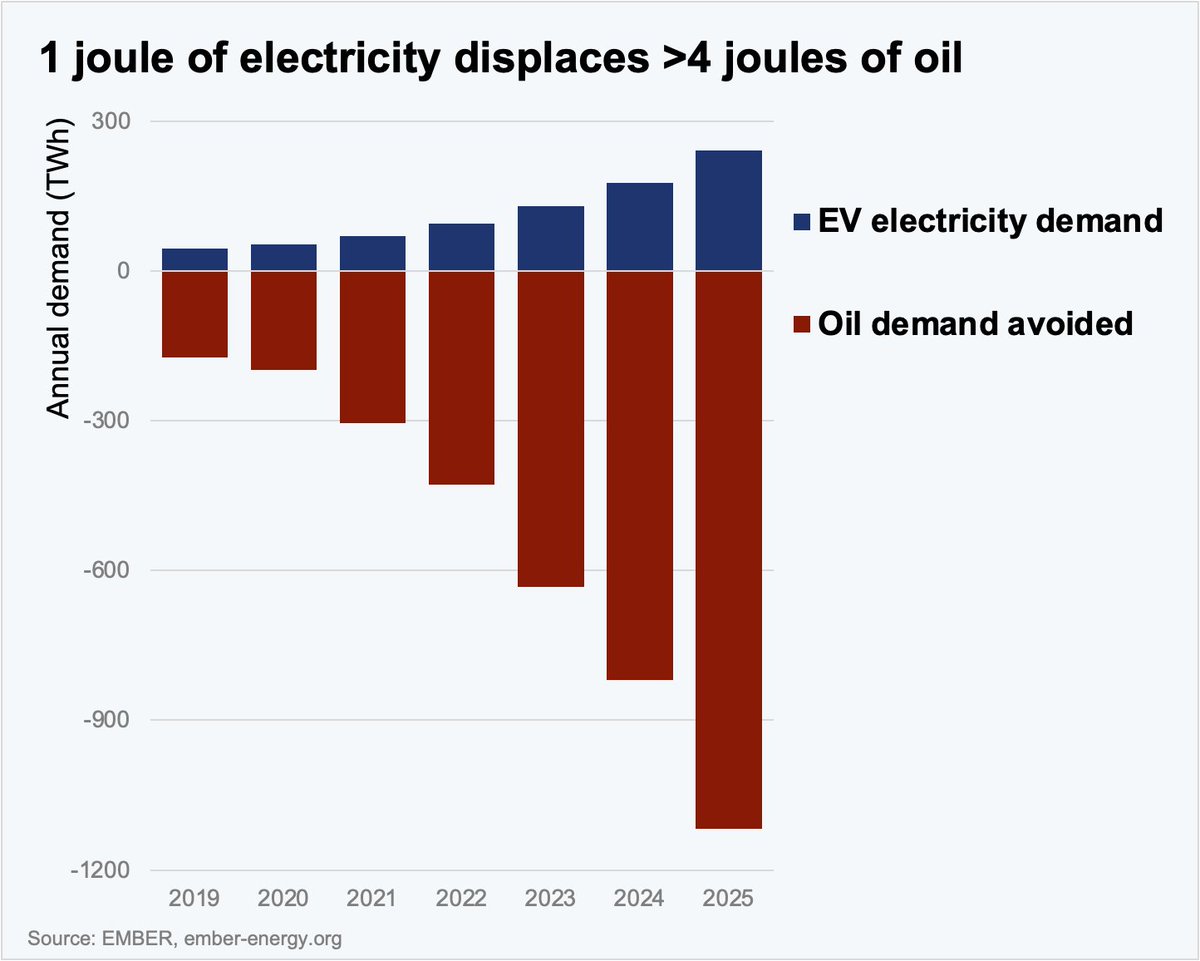
Electric vehicles are an extremely powerful tool for reducing oil demand.
This is so obvious when you use the same units.
There is a ton of chemical energy in the oil we burn to move cars, but you only need a small fraction in electrical energy for EVs to do the same job.
España tiene claro el camino: electrificación, energías renovables y autonomía energética. Desengancharnos de los combustibles fósiles no es solo una apuesta climática: también es una apuesta por nuestra soberanía y nuestra competitividad.
Y esa transformación necesita de más inversión en interconexiones y en descarbonización.
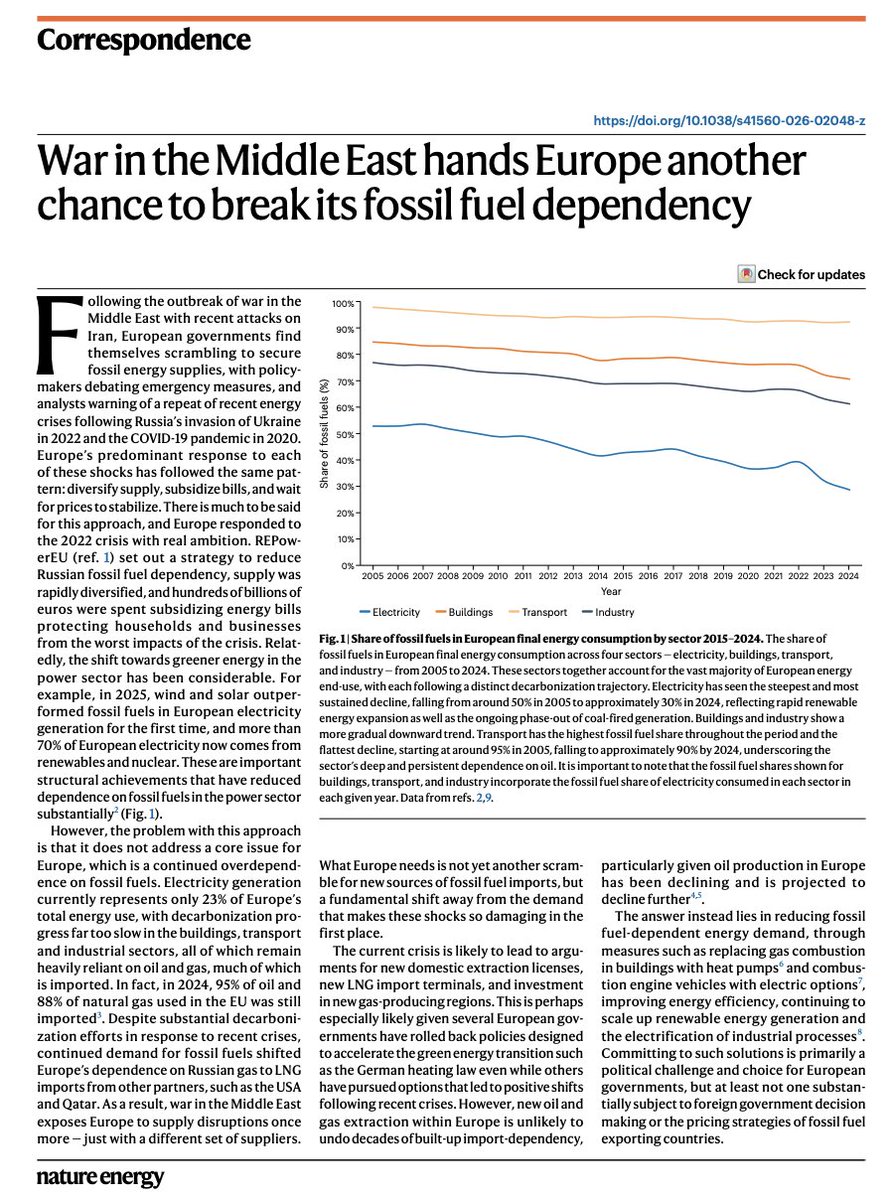
NEW ANALYSIS: My new article in @NatureEnergyJnl argues Europe keeps responding to energy crises by changing supplier.
95% of EU oil and 88% of gas was imported in 2024.
The structural fix: reduce fossil fuel demand through electrification + efficiency.
https://t.co/vA5UUg9a5z
@Aidan_Regan "The Men who know" i.e perceive themselve as "serious & pragmatic" are actually deeply unserious ppl, magical thinking about bringing back fossil fuels , or Brexit in UK or Trumpism in US. Reality is gonna have to snap them back to earth some day soon.
@Aidan_Regan They didn't actually price it, they talked about and double down on what was already in play. china had imagination to look to the future. A
To this day turn on Irish or British TV and the consensus is still sneers renewables as a nonsense"wot happens when d wind don't blow"
44% of evening peak met by batteries. In California, world’s 4th largest economy. Not some tiny pilot project or a niche experiment, a global industrial powerhouse
If you’re still sitting in boardrooms or parliament banging on about baseload and the intermittency of renewables, you’re not just wrong, you’re a dinosaur
California's 44% isn't an anomaly. It's a preview of the 2027-2030 reality for every major grid overbuilding renewables
The "technical barriers" the fossil fuel lobby loves to cry about are gone. We are shifting solar and wind into the night at a massive, industrial scale. We don't need expensive, inflexible coal or gas to keep the lights on; we need more storage and we need it now - everywhere
https://t.co/geHZpe7hNA
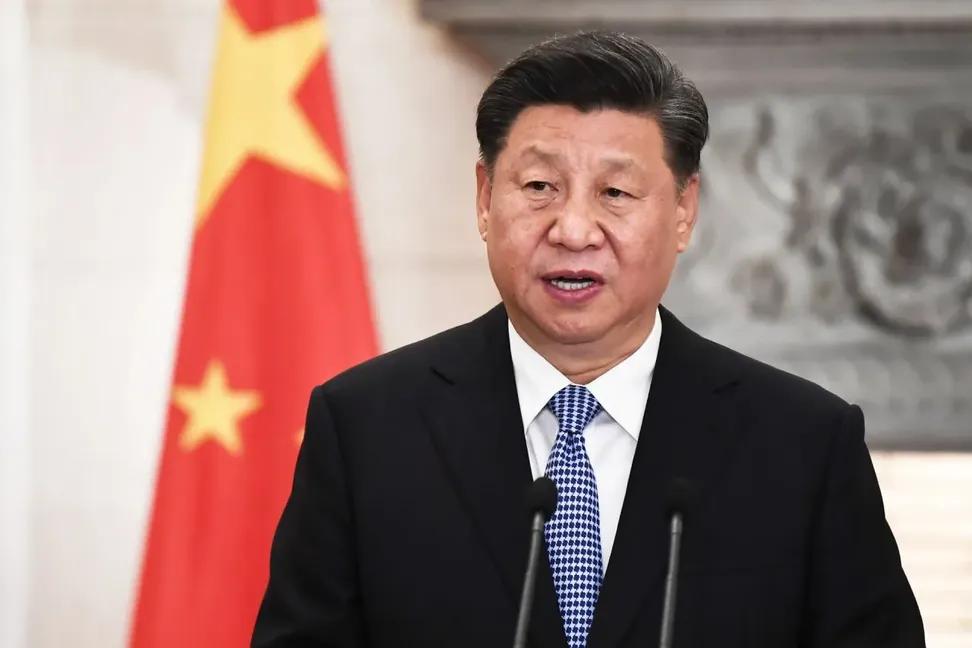
BREAKING: 🇨🇳 President of China, Xi Jinping:
“A certain country, obsessed with maintaining its hegemony, has done everything possible to cripple emerging markets and developing nations. Whoever progresses rapidly becomes a target of containment; whoever catches up becomes a threat. But all of this is futile. The world we live in today is a community with a shared future. People do not want a new Cold War; they want a world of lasting peace and universal security."
Life expectancy measures wealth and demographics, not health infrastructure which is in here. Ireland has the highest bed occupancy in the OECD, 43% fewer beds than the EU average, 900,000 on waiting lists, and 75% of GP lists closed to new patients. Education attainment is high yes, but 35,000 of those graduates emigrated last year because they can't afford to live here. The graph measures what the state builds and delivers, not outcomes that succeed despite it.
South Australia wasn’t supposed to move this fast. Models assumed slow, steady, controlled change. Instead it’s already at ~74% renewables, hitting 100% around 74% of the time. Beyond targets. Beyond plans. When cost curves hit, the system doesn’t transition… it flips.
That’s where the models start to break. They assumed renewables would gradually take share. Instead they’re already setting the behaviour of the grid. Price, flow, stability… all increasingly driven by wind and solar. That shift wasn’t meant to happen this early.
And here’s the part most people still miss. Demand isn’t sitting back waiting for the grid to catch up. It’s starting to move toward it. What used to be a ~3.3 GW system is now planning for 6.5 GW and beyond, with long term thinking pushing toward ~25 GW.
SA already has way more generation capacity than it needs most of the time, which is why you’re seeing 100%+ renewables periods, negative demand events, exports to other states, and a surge in new battery plants. That’s a classic sign of a system moving into energy surplus mode.
That’s not normal growth. That’s a system being rebuilt for something bigger. Mining, green metals, data centres. Energy-intensive industries don’t wait around. They move to where energy is cheapest, most abundant, most reliable.
At the same time, the old intermittency argument quietly collapsed. Not through debate, but through deployment. Storage scaled. Batteries moved from experiment to infrastructure. Multi-hour systems are becoming standard, not exception.
Now the grid is doing things it wasn’t supposed to do this early. Negative demand. Excess generation. Exporting energy instead of scrambling for it. These aren’t edge cases anymore. They’re signals the system has already flipped.
This is why calling it a transition doesn’t quite fit anymore. It implies something slow, linear, predictable. What this looks like is a phase change. The models assumed gradual adoption. Reality followed cost curves.
China is winning on scale. No question. But South Australia is showing something just as important… what the end state actually looks like. A grid where energy becomes abundant at times, local by default, and detached from fuel markets.
https://t.co/oOkYMLPSnZ
@GTCost Exactly...& you'll notice all the same people are told to think nuclear is a good idea & you could say that's because the private sector gets a nice juicy long term contract at the expense of the taxpayer. Hence why there's a sudden mania around nuclear among "the men who know"
Planning will take EUR5B in legal & consultancy bills & swallow 17 years. Construction will eat up EUR73B & run 28.6 years. Starting the plant will cost EUR12B, require 10 years worth of pensions negotiations for the unions. By which time & spend the new plant will be obsolete.
Norwegian Nuclear Committee says no to nuclear power in Norway
It is too expensive, Norway lacks the necessary expertise, and the process takes too longm, according to the Committee. It unanimously rejects nuclear power.
https://t.co/seMlLLAMQp
Ha-Joon Chang compares mainstream economics to Catholicism in the Middle Ages.
“Economics today resembles Catholic theology in medieval Europe: a rigid doctrine guarded by a modern priesthood who claim to possess the sole truth. Dissenters are shunned.”
Britain is presently generating 71% of electricity from renewables and is exporting some to boot.
Nuclear plus renewables is presently 85% of all electricity being generated.
Good things are possible. Ignore the boomer Murdoch press.
With oil above $100 per barrel and UK energy prices up 50%, governments must respond with mission-oriented green industrial strategy - not double down on fossil fuels driving price volatility.
Spain capped gas costs at source and built renewables, and now they see electricity prices 57% lower than the European average.
New piece for @ProSyn ➡️
https://t.co/Rx4RvDZqVI