INEDITUM is an independent content production platform focusing on Turkiye’s institutional decision-making processes, multilateral foreign policy reflexes, and governance structures.
It provides in-depth analyses of:
•The dynamics of decision-making mechanisms,
•Shifts in institutional capacity, and
•Institutional responses to regional crises.
Operating with a strictly analytical approach, INEDITUM does not offer recommendations or prescriptive solutions. Instead, it describes and examines the existing landscape with methodological precision and impartial rigor.
📩 Contact: [email protected]
🌐 Website: https://t.co/6D7lx87VQL
@TheEconomist 👉Did you ever use the same language for other major monopolies? When @Microsoft was at the height of its dominance, did you describe Bill Gates as building “a form of capitalism that Adam Smith would hate”? Did you say it about Walmart? About #StandardOil AT&T, @amazon , @Google , @Meta or other companies accused of market dominance? If not, why are you choosing to use that headline specifically for @elonmusk
The AI race isn't just creating new companies.
It's creating a new economic superpower.
Most investors are watching Nvidia.
Very few are watching India.
That could be a trillion-dollar mistake.
Here's why India is emerging as the leading alternative to China for global technology investment:
https://t.co/qDaTyUOi6B
#AI #India #China #Investing #Tech #Geopolitics
The article argues that in the era of artificial intelligence, strategic power is no longer determined solely by the ability to manufacture advanced semiconductors. Increasingly, it depends on controlling the software platforms that transform massive volumes of data into actionable intelligence, giving governments a decisive edge in defense, intelligence, and strategic decision-making.
Accordingly, Peter Thiel ‘ s influence extends far beyond the private sector. The article contends that his ideas, investments, and technology ecosystem have become an integral part of the United States’ defense architecture, foreign policy, and long-term technology strategy.
At its core, the article’s thesis is that Peter Thiel’s greatest source of power is not his wealth, but his role in building the technological infrastructure that merges artificial intelligence, data analytics, and state power. #AI #palantir #MAGA
🌍 INEDITUM Global Brief — July 13, 2026
Global markets are entering a new phase where geopolitical escalation, inflation risk, and strategic realignment are simultaneously reshaping the global economic outlook.
The Middle East has once again become the primary driver of global market sentiment.
Renewed military exchanges between the United States and Iran, together with attacks affecting commercial shipping in the Strait of Hormuz, have significantly weakened confidence in the current ceasefire framework. While diplomatic mediation continues through regional partners, investors are increasingly focused on whether maritime security can be restored before energy markets experience a more prolonged disruption.
Oil has reacted accordingly.
Prices moved higher as traders reassessed supply risks, although gains moderated as markets continued to expect that neither Washington nor Tehran has an economic incentive to sustain a prolonged regional conflict. Rather than pricing a full-scale supply shock, investors are increasingly pricing recurring operational disruptions across one of the world's most critical energy corridors.
The return of energy volatility is once again influencing monetary policy expectations.
Higher oil prices have revived concerns that inflation could remain above central-bank targets for longer than previously anticipated. The International Monetary Fund has warned that renewed instability in the Middle East could weaken global growth while extending inflationary pressures through higher energy, transport, insurance, and supply-chain costs. Investors are now closely watching upcoming U.S. inflation data and Federal Reserve guidance for signals on the future path of interest rates.
Wall Street is approaching another critical test.
The second-quarter earnings season begins this week with major U.S. financial institutions reporting results. Investors will focus on credit quality, consumer resilience, investment-banking activity, and whether continued artificial intelligence investment can justify elevated equity valuations in a higher-interest-rate environment.
Europe is confronting mounting structural pressures.
Governments are simultaneously increasing defense spending, accelerating industrial modernization, and strengthening energy security while facing weak economic growth and tightening fiscal constraints. The cost of long-term strategic resilience is becoming one of Europe's defining economic challenges.
China remains central to the global industrial landscape.
Export-led manufacturing continues to support economic activity despite persistent weakness in domestic demand and the property sector. As Beijing expands its industrial capacity in electric vehicles, batteries, semiconductors, and advanced manufacturing, European policymakers face growing pressure to protect industrial competitiveness while reducing strategic dependencies.
Political transitions are also reshaping the international landscape.
The United Kingdom is preparing for a new political chapter under expected Labour leadership, while Ukraine is implementing a major government restructuring to strengthen wartime governance, defense procurement, and international coordination as the conflict with Russia continues.
Financial markets are increasingly adapting to a structurally different environment.
Technology remains the long-term growth engine, but capital continues rotating toward defense, cybersecurity, critical infrastructure, energy security, and advanced manufacturing. Investors are increasingly prioritizing resilience, strategic autonomy, and geopolitical stability over maximum efficiency.
The global investment narrative has fundamentally changed.
Markets are no longer reacting to isolated geopolitical events.
They are increasingly pricing the interaction between conflict, inflation, industrial policy, technological competition, and political credibility.
Assessment
• Renewed Gulf tensions have restored Hormuz as the world's most important short-term geopolitical and energy risk.
• Energy volatility is once again complicating the global inflation outlook and central-bank policy.
• The U.S. earnings season will provide a critical test of corporate resilience in a high-rate environment.
• Europe faces simultaneous pressure from higher defense spending, industrial competition, and fiscal constraints.
• China's export-driven industrial expansion continues to reshape global manufacturing and trade dynamics.
• Political transitions in the United Kingdom and Ukraine are becoming increasingly relevant for European economic and security policy.
• Artificial intelligence, defense, energy infrastructure, and advanced manufacturing remain the dominant long-term investment themes.
The defining challenge is no longer avoiding geopolitical crises.
It is sustaining economic resilience in a world where strategic competition has become a permanent feature of the global economy.
🔗 https://t.co/iBnmE0tD5a
#ineditum #globaleconomy #geopolitics #markets #economy #monday
🌍 INEDITUM Global Brief — July 10, 2026
Global markets are navigating a renewed phase of geopolitical uncertainty as tensions in the Middle East once again reshape expectations for energy, inflation, and monetary policy.
The Strait of Hormuz remains the world’s most critical strategic chokepoint.
Recent military exchanges and security incidents have placed renewed pressure on the U.S.–Iran ceasefire framework. Although diplomatic contacts continue, investors remain cautious, questioning whether regional stability can be sustained.
Oil initially climbed on renewed geopolitical concerns before retreating as markets judged that neither Washington nor Tehran appears willing to trigger a prolonged disruption of Gulf energy exports. Rather than pricing a full-scale supply shock, markets are increasingly pricing persistent operational risk.
Attention has also shifted back to central banks.
While lower energy prices have eased immediate inflation pressures, policymakers remain cautious. The IMF has warned that renewed instability in the Middle East could weaken global growth while prolonging inflation through higher energy, transport, insurance, and supply-chain costs.
Following the NATO Summit, Türkiye has further strengthened its strategic position within the Alliance. As NATO expands its focus beyond collective defense toward cyber resilience, artificial intelligence, critical infrastructure, and defense industrial capacity, Türkiye’s geopolitical importance continues to grow.
Meanwhile, U.S.–China competition remains the defining long-term force shaping the global economy. Artificial intelligence, semiconductors, critical minerals, and advanced manufacturing continue to drive industrial policy and global capital allocation as governments increasingly prioritize resilience over efficiency.
Financial markets are adapting accordingly. Technology remains the long-term growth engine, while defense, cybersecurity, energy security, and strategic infrastructure continue attracting capital in an increasingly fragmented geopolitical environment.
⸻
Assessment
• The U.S.–Iran ceasefire remains under significant pressure.
• Hormuz continues to dominate global energy risk.
• Central banks remain constrained by geopolitical inflation risks.
• Türkiye’s strategic role within NATO continues to expand.
• U.S.–China competition remains the primary long-term driver of global investment.
The defining challenge is no longer preventing every geopolitical crisis.
It is preserving economic stability in an era of permanent strategic competition.
🔗 https://t.co/iBnmE0tD5a
#ineditum #globaleconomy #geopolitics #markets #economy
AFTER THE NATO ANKARA SUMMIT!
Why the West Fell Behind?
Political scientist @EsenErmisErturk examines the strategic mistakes that eroded the West's relative dominance and explains how Asia emerged as the world's new center of economic and geopolitical power.
Read the full analysis: https://t.co/zYKUtJEQMQ
#NATO #Türkiye #NATOSummit #NATO2026Ankara #AnkaraSummit26 #NATOSummit2026 #Geopolitics #Asia #GlobalPower #INEDITUM
#NATO Ankara Zirve Bildirgesi Yayınlandı öne çıkan başlıkları sizler için derledik ve seslendirdik!
🇷🇺 Rusya, NATO’nun uzun vadeli temel tehdidi olmaya devam ediyor.
💶 Avrupa, ittifakın savunma yükünde daha fazla sorumluluk üstleniyor.
🤖 NATO, yapay zekâ ve ileri teknoloji odaklı yeni bir döneme giriyor.
🇺🇦 Ukrayna’ya 2026 için 70 milyar avroluk askerî destek taahhüdü veriliyor.
🇮🇷 İran ve Hürmüz Boğazı, NATO’nun stratejik gündeminde daha görünür hâle geliyor.
🏭 Savunma sanayii ve ortak üretim, ittifakın yeni öncelikleri arasına giriyor.
🇹🇷 Türkiye, NATO’nun güney kanadındaki stratejik konumunu bir kez daha teyit ediyor.
📍 Sonuç olarak Ankara Bildirgesi, NATO’nun gelecek on yılının stratejik yol haritasını ortaya koyuyor.
🎙️ Ayrıntılı değerlendirme için Dijital Diplomasi’nin yeni bölümünü dinleyebilirsiniz.
Apple Podcasts:
https://t.co/SkS6ern7GS
Spotify:
https://t.co/R3zeytOOdE
#NATOsummit #WeAreNATO #StrongerTogether
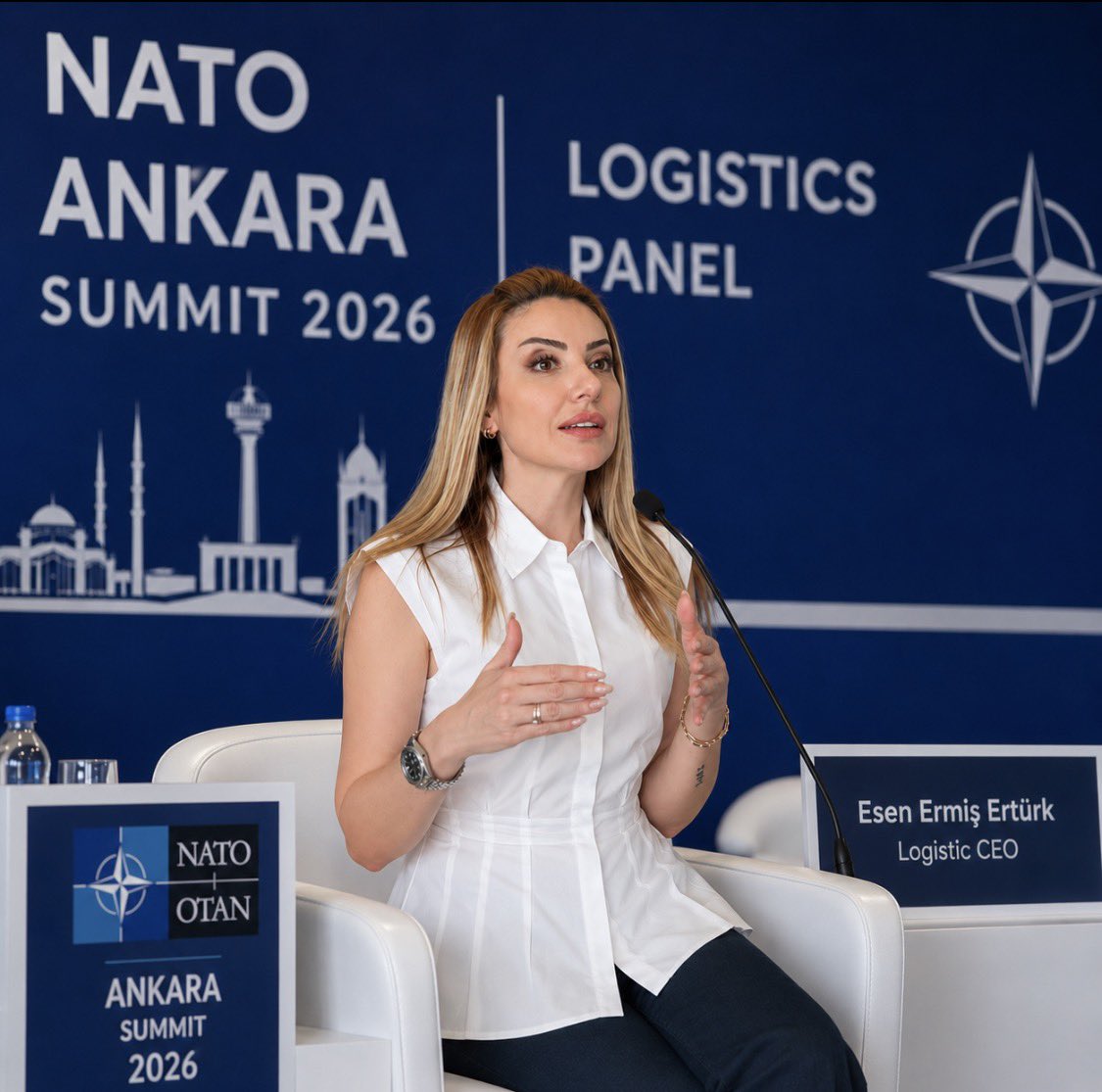
We are proud to share that Ms. Esen Ermiş Ertürk participated as a speaker in the Strategic Logistics panel at the 2026 NATO Summit in Ankara, contributing to discussions on the future of resilient logistics and global supply chains.
The panel highlighted the growing strategic importance of military mobility, critical infrastructure protection, and supply chain resilience in strengthening both security and economic stability.
Read more:
https://t.co/avLEdDJlLM
#NATO2026 #NATOSummit #StrategicLogistics #Türkiye #INEDITUM #NATOsummit
Beştepe'de Erdoğan-Trump görüşmesi başladı: ABD Başkanı, CAATSA yaptırımlarının kalkacağını açıkladı
CAATSA yaptırımları, Türkiye’nin S-400 hava savunma sistemi tedarikinin ardından ABD tarafından savunma sanayii alanında uygulanan kısıtlamalardı.
Bu yaptırımlar; Savunma Sanayii Başkanlığına yönelik ihracat lisanslarının durdurulmasını, ABD finans kuruluşları üzerinden kredi ve finansman imkanlarının sınırlandırılmasını ve kritik savunma teknolojilerine erişimin kısıtlanmasını içeriyordu.
Kaldırılması ise stratejik açıdan önemli sonuçlar doğuracaktır.
• Savunma sanayiinde teknoloji ve tedarik kanallarının yeniden açılması,
• F-35 sürecinin yeniden gündeme gelebilmesi,
• KAAN ve diğer milli platformlarda kritik alt sistemlere erişimin kolaylaşması,
• Türkiye-ABD savunma iş birliğinin yeniden güç kazanması,
• NATO’nun güney kanadındaki caydırıcılık ve koordinasyonun artması.
Bu gelişme, yalnızca yaptırımların sona ermesi değil; Türkiye’nin savunma sanayii, bölgesel güvenlik mimarisi ve stratejik konumu açısından yeni bir dönemin başlangıcı niteliği taşımaktadır. #NATOsummit #NATOSummit #NATOAnkaraZirvesi
NATO 2026: Strategic Logistics
At the logistics panel held during the 2026 NATO Summit in Ankara, we had the opportunity to discuss the future of logistics and supply chains—one of the most critical pillars of today’s global security architecture.
As a family-owned company with more than 42 years of experience in international logistics, serving some of the world’s leading brands, we have witnessed wars, regional conflicts, economic crises, and unprecedented disruptions to global supply chains. These experiences have led us to one fundamental conclusion:
In the years ahead, the resilience of nations will be defined not only by their military capabilities but also by the strength, reliability, and sustainability of their logistics infrastructure.
Military mobility, the protection of critical infrastructure, supply chain resilience, and multinational logistics coordination—key priorities on NATO’s agenda—are no longer essential solely for defense. They are equally critical to safeguarding global trade, economic stability, and long-term prosperity. In today’s interconnected world, resilient supply chains have become a strategic asset underpinning both national security and sustainable economic growth.
Today, logistics extends far beyond the movement of goods. It has become a strategic enabler of industrial continuity, energy and food security, economic competitiveness, and the uninterrupted flow of international commerce. Resilient logistics networks are indispensable for mitigating crises, strengthening international stability, and ensuring continuity during periods of geopolitical uncertainty.
With its unique geostrategic position at the crossroads of Europe, Asia, and the Middle East, advanced port infrastructure, an extensive road transport network, maritime expertise, and growing air cargo capabilities, Türkiye is uniquely positioned to become one of the world’s foremost logistics hubs. As global supply chains continue to evolve, Türkiye is well positioned to connect continents, facilitate international trade, and strengthen the resilience of global supply networks.
Drawing on more than four decades of industry experience, we remain committed to investing in technology, infrastructure, innovation, and international partnerships that will further strengthen Türkiye’s position as a global logistics leader while contributing to a more resilient global supply chain ecosystem.
As emphasized throughout the 2026 NATO Summit in Ankara, security resilience and supply chain resilience are now inseparable. The nations that will shape the future will be those capable of building resilient logistics ecosystems, protecting critical infrastructure, and maintaining uninterrupted supply chains.
In the 21st century, logistics is no longer merely a business function—it is a strategic capability that underpins security, economic resilience, and lasting peace.
#NATO #Türkiye #NATOsummit
#NATO2026Ankara #AnkaraSummit26 #NATOSummit2026
LIVE: NATO Secretary General Mark Rutte is holding a press conference at the Presidential Complex in Ankara on the upcoming NATO Summit.
#NATOSummit#NATOsummit
NATO Ankara Summit: Reshaping the Future of Transatlantic Security
The NATO Ankara Summit is about far more than the war in Ukraine.
It marks a pivotal moment for the future of the Alliance, transatlantic security, European defense, and Türkiye’s strategic role in an evolving global security environment.
In this analysis, I examine the summit’s key strategic questions:
• How will NATO adapt to the long-term challenge posed by Russia?
• How will the balance of responsibility between the United States and Europe evolve?
• Why is Europe accelerating its defense industrial transformation?
• What role will Türkiye play in NATO’s emerging security architecture?
• What strategic direction will the decisions announced on 8 July set for the Alliance over the next decade?
This discussion goes beyond the headlines to examine the strategic forces shaping NATO’s future and the broader evolution of the transatlantic security order.
Watch the full analysis and join the discussion.
#NATO #Türkiye #NATOsummit
#NATO2026Ankara #AnkaraSummit26 #NATOSummit2026
The Ankara #NATOsummit : Defense Industry and the Future of Deterrence!
How is #NATO adapting to a more complex security environment? In this episode, we examine the strategic priorities of the Ankara NATO Summit, from defense industrial capacity and military readiness to Europe's evolving role, long-term support for Ukraine, and Türkiye's growing importance within the Alliance.
https://t.co/3uOtxNRsJv
Question: Can NATO preserve its political cohesion in an increasingly unstable international environment?
Answer: NATO’s challenge is not perfect political unity but sustaining credible military capability despite political differences. The Ankara Summit will test Allied interoperability, resilient logistics, and collective deterrence.
Question: Can the Ankara Summit truly reshape NATO’s future?
Answer: Yes—if it shifts NATO’s focus from defence spending to defence production. Sustainable capacity for ammunition, air defence, unmanned systems, and electronic warfare will define long-term deterrence.
Question: Can Europe guarantee its own security without the United States?
Answer: Not in the short to medium term. Europe still relies on the United States for strategic enablers, including ISR, missile defence, long-range strike, nuclear deterrence, and command and control. The goal is greater resilience, not independence.
Question: Is long-term support for Ukraine sustainable?
Answer: Yes—but only through joint production, long-term procurement, maintenance infrastructure, and industrial integration rather than stockpile transfers. Political commitments alone are insufficient.
Question: Are developments involving Iran and the Middle East changing NATO’s strategic priorities?
Answer: Yes. NATO must address Russia and Middle Eastern instability—including missiles, drones, energy infrastructure, and maritime security—within a single strategic framework.
Question: Is the 5% defence spending target the right benchmark?
Answer: Not alone. Readiness depends on sustaining combat operations through ammunition production, interceptor replacement, resilient logistics, and force regeneration.
Question: Can the European defence industry achieve sufficient production capacity?
Answer: Yes—but only through coordinated procurement, standardisation, industrial integration, and predictable demand. Fragmentation remains the main obstacle.
Question: Can NATO manage both eastern and southern threats simultaneously?
Answer: It must. Türkiye’s position linking the Black Sea, Eastern Mediterranean, Caucasus, Balkans, and Middle East makes it essential for logistics, intelligence, force projection, and regional deterrence.
#NATOsummit #NATO
🌍 INEDITUM Global Brief — June 29, 2026
Global markets are entering a phase where geopolitical stability is no longer measured by the absence of conflict, but by the credibility of the institutions expected to preserve it.
The Strait of Hormuz has once again become the world’s most consequential strategic chokepoint.
Recent security incidents involving commercial shipping have reminded markets that the post-ceasefire environment remains fragile. While energy exports continue, maritime security, insurance costs, and shipping confidence have returned to the center of global risk assessment. Investors are increasingly pricing implementation risk rather than the likelihood of another full-scale war.
Oil reflects that transition.
Crude has stabilized well below its wartime highs, yet recent price movements demonstrate that the geopolitical premium has not disappeared. Instead, markets are reacting to operational disruptions rather than fears of prolonged supply collapse, reinforcing a more selective approach to energy risk.
Attention is also returning to monetary policy.
As energy-driven inflation pressures moderate, investors are once again focused on the Federal Reserve and the trajectory of interest rates. Higher-for-longer expectations continue to support the U.S. dollar, while raising questions about valuations across rate-sensitive sectors. At the same time, capital is becoming increasingly selective within the artificial intelligence sector, reflecting a broader shift toward sustainable earnings rather than momentum alone.
The post-NATO environment reinforces a structural transformation.
Defense production, cyber resilience, artificial intelligence, critical infrastructure, and supply-chain security are becoming permanent pillars of Western economic and security policy. Within this framework, Türkiye continues to strengthen its role as a strategic connector linking Europe, the Black Sea, the Middle East, and the Eastern Mediterranean.
Meanwhile, competition between the United States and China remains the defining force shaping the global economy.
Artificial intelligence, semiconductor manufacturing, critical minerals, advanced robotics, and technological sovereignty continue to drive industrial policy and long-term capital allocation. Governments are increasingly prioritizing resilience, security, and strategic autonomy over traditional globalization.
Financial markets are adapting accordingly.
Technology remains the principal engine of long-term growth, while capital continues rotating toward defense, cybersecurity, infrastructure, energy security, and advanced manufacturing. Investors are increasingly positioning for resilience in a structurally fragmented world.
Assessment
Hormuz remains the world’s most critical geopolitical and energy chokepoint.
Markets are shifting from pricing escalation to pricing the credibility of diplomacy.
Oil has stabilized, but implementation risk remains embedded in energy markets.
Higher-for-longer interest rate expectations continue to influence global asset allocation.
U.S.–China technological competition remains the defining structural force behind long-term investment.
The next phase of the global economy will not be determined by peace alone.
It will be determined by whether diplomacy can withstand recurring geopolitical shocks.
🔗 https://t.co/iBnmE0tD5a
#INEDITUM #GlobalEconomy #Hormuz #Geopolitics #Markets #StrategicIntelligence
The reported agreement between the United States and Iran should be approached with cautious optimism. While the announcement itself is significant, agreements of this magnitude are rarely shaped solely by the parties directly involved. The broader regional security environment remains a critical factor, and the positions of key stakeholders, including Israel, will inevitably influence both implementation and sustainability. For that reason, although reports indicate that a signing ceremony is planned for 19 June, it would be premature to conclude that all outstanding issues have been fully resolved. The coming days are likely to provide a clearer indication of whether the political and security conditions necessary for the agreement’s formalization are genuinely in place.
#Türkiye
#MiddleEast #Iran
#UnitedStates
#Geopolitics