AI-coding for me in 2025:
- 13 Cursor windows
- 8 Claude Code sessions across random Terminal windows
- Ports 8001-8005 all mysteriously occupied
- Moved project to a new folder → lost Cursor/Claude history
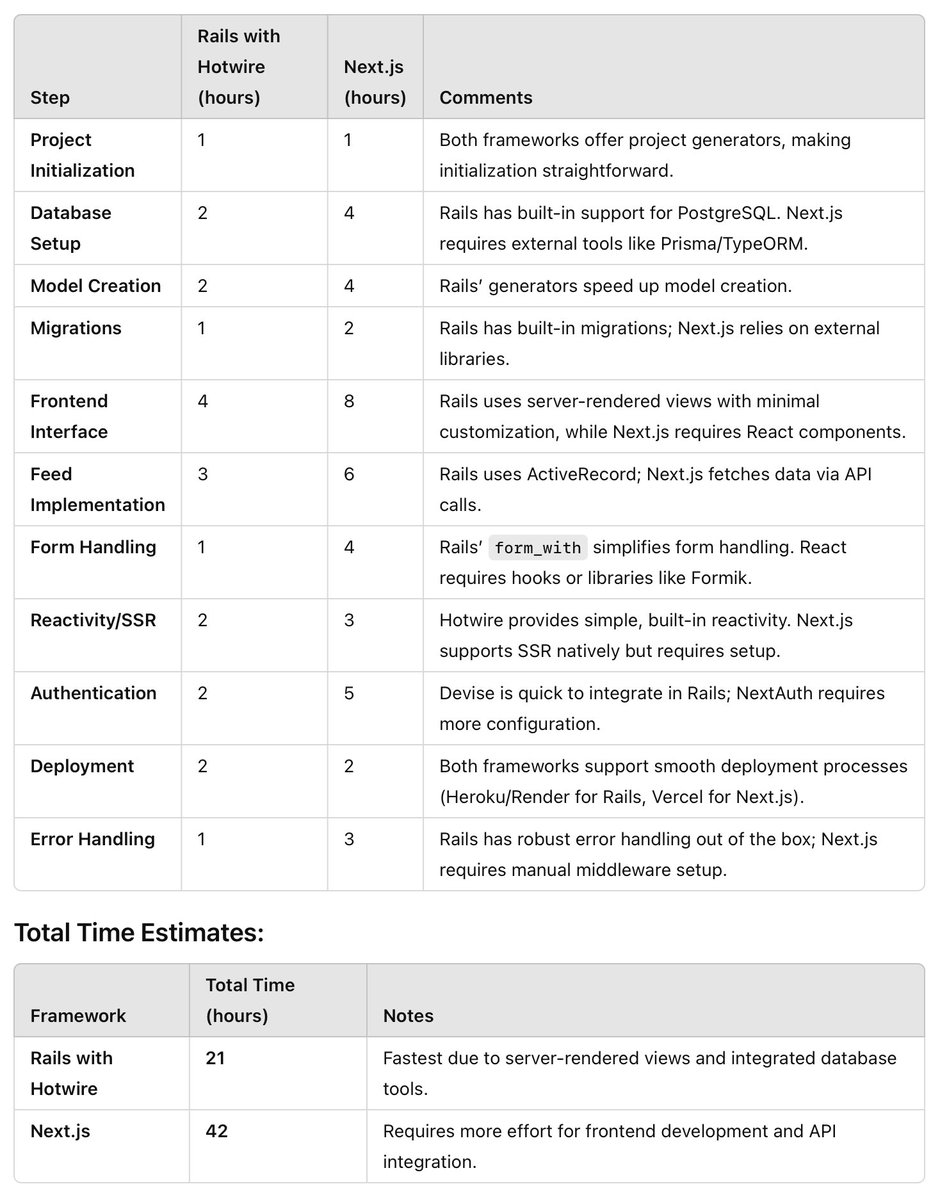
Development on Rails is 2 times faster than with Next.js?
I have never tried Next.js, but I am curious about all the fuzz around it. So I decided to ask ChatGPT to compare amount of work needed to develop primitive Twitter clone using both. Here’s what I’ve got:
It seems it boils down to whether you’re building a frontend-centric product or not.
If you are, and you have an experienced frontend team, you might achieve development speed comparable to Ruby on Rails.
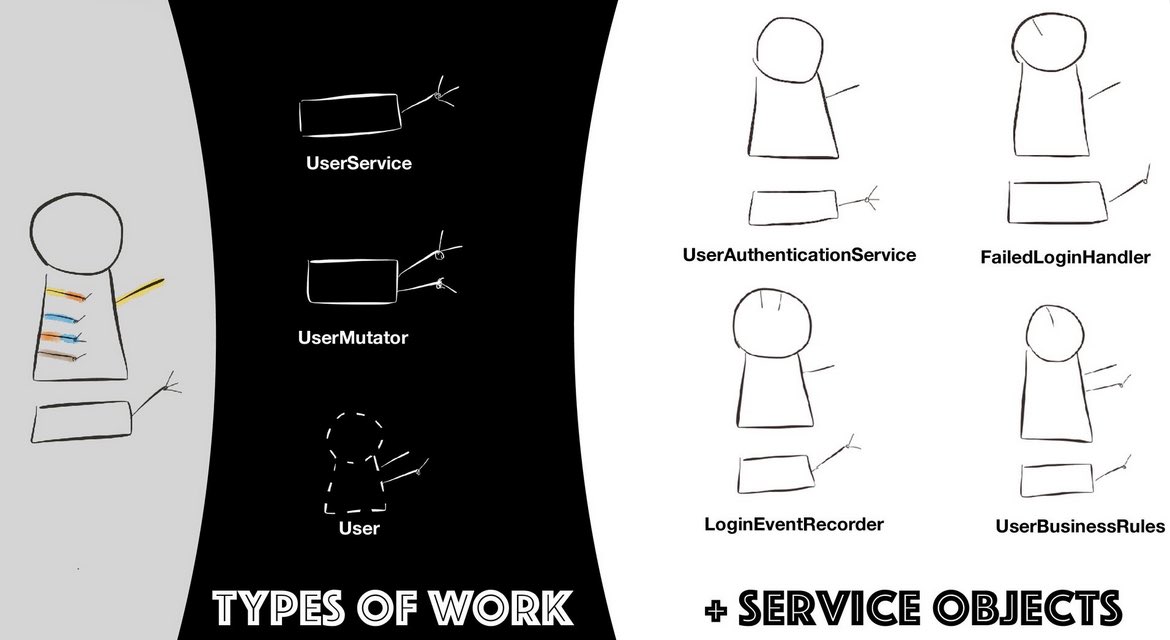
The only idea of Service Objects is their shape. And because of the similarity of the shape, developers consider them a meaningful type of building block in their apps, which they are not.
@rockatanescu Yes, of course. I am not questioning 95% of what she’s saying. My only concern is that the framework _could_ do something to help organize large codebases, but it doesn’t.
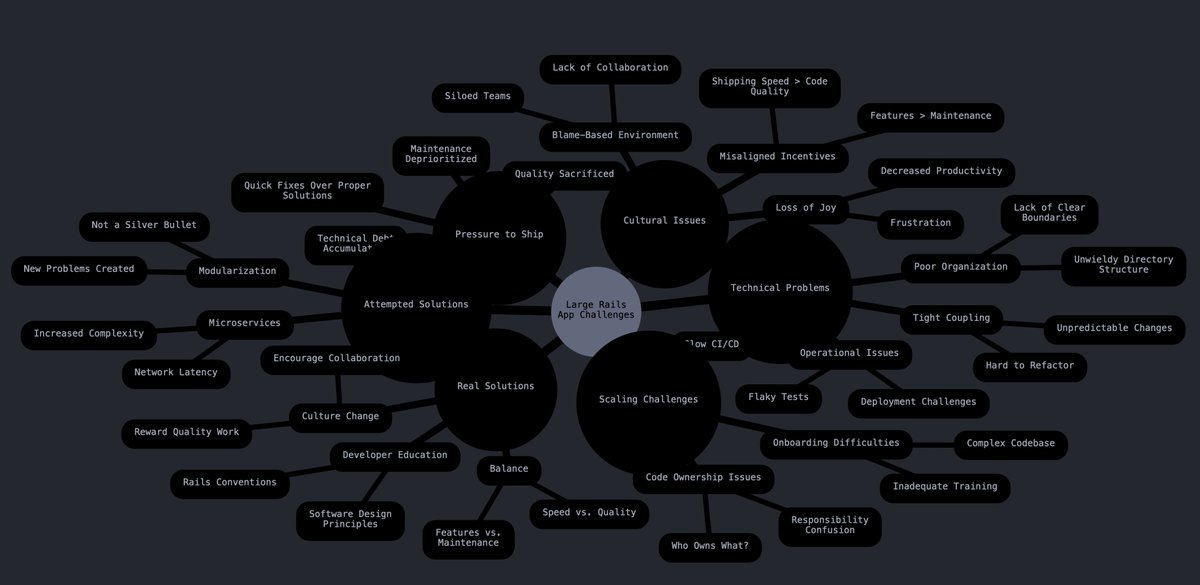
Here’s mindmap of @eileencodes talk about Modularised Monolith at #RailsWorld 24. I wasn’t lucky (or I was?!) to work on a codebase similar in size to @ShopifyEng, but many things sound familiar. Many teams start facing such issues with Rails when they reach 50-100 models.
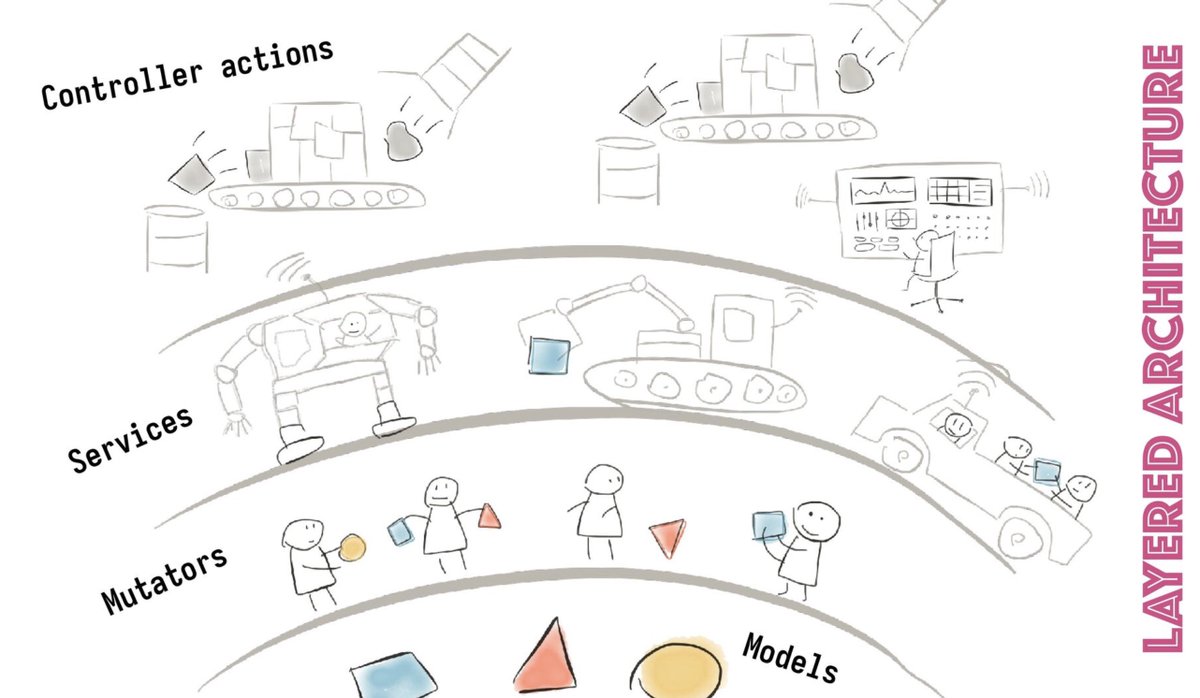
3 Painless Rails complexity management principles you need to adopt while your app is still small:
1. Use distinct building blocks for each type of work your code is doing
2. Ensure your layered architecture is truly layered
3. Stick to the single level of abstraction principle!
The best thing you can do in this situation is to think about such guiding principles yourself.
Hint: To wrap everything into service objects is not a good guiding principle.
3 Painless Rails complexity management principles you need to adopt while your app is still small:
1. Use distinct building blocks for each type of work your code is doing
2. Ensure your layered architecture is truly layered
3. Stick to the single level of abstraction principle!
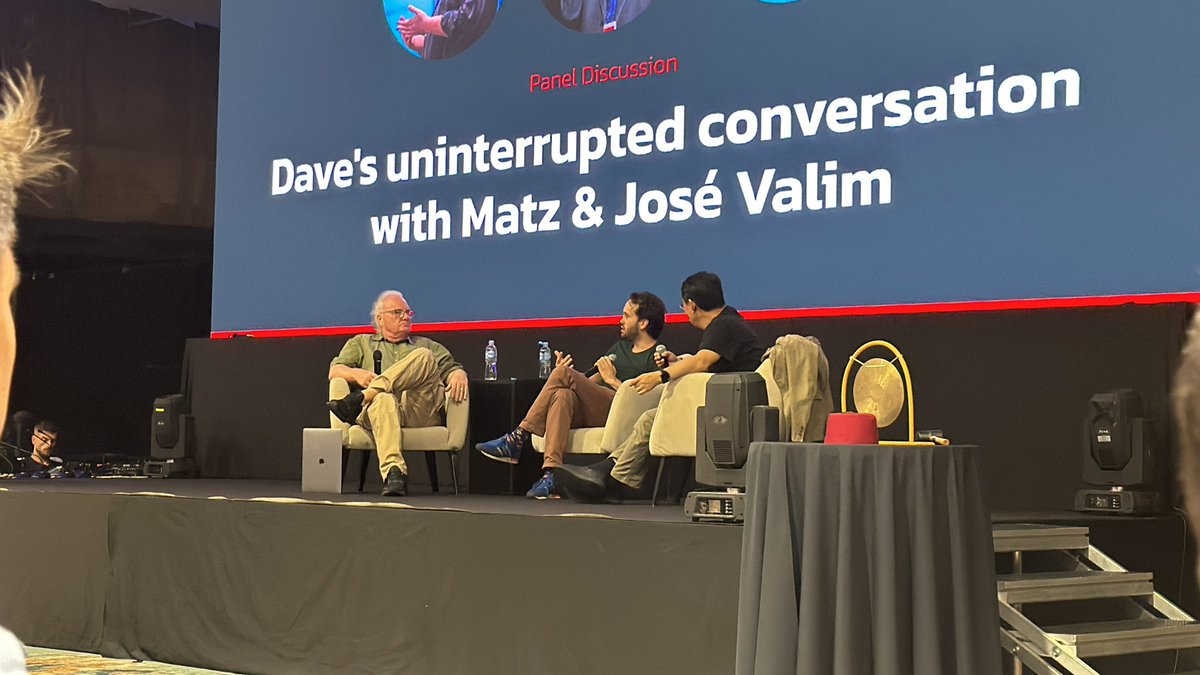
At a certain scale, a company may ask: 'Should we stay the course with a monolith or migrate to microservices?' At @Shopify they chose to modularize their monolith, but after 6 years @eileencodes wonders in her #RailsWorld Day 2 Opening Keynote: 'Did that fix what it set out to fix? Is this better than before?' https://t.co/qPYcMCKJcN
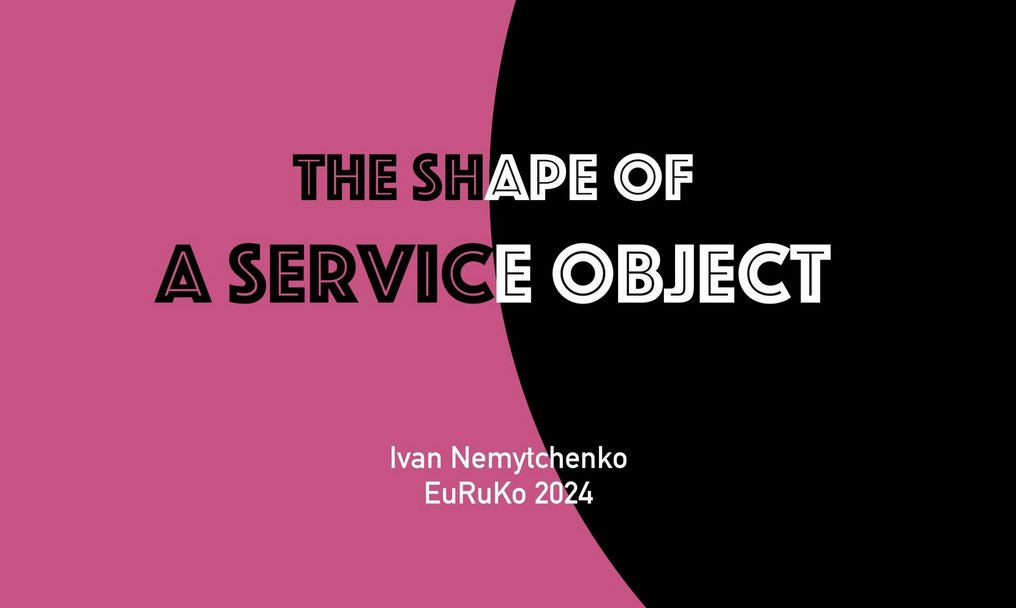
Slides from my Lightning Talk at #EuRuKo2024 : https://t.co/7BQZgz7MXa
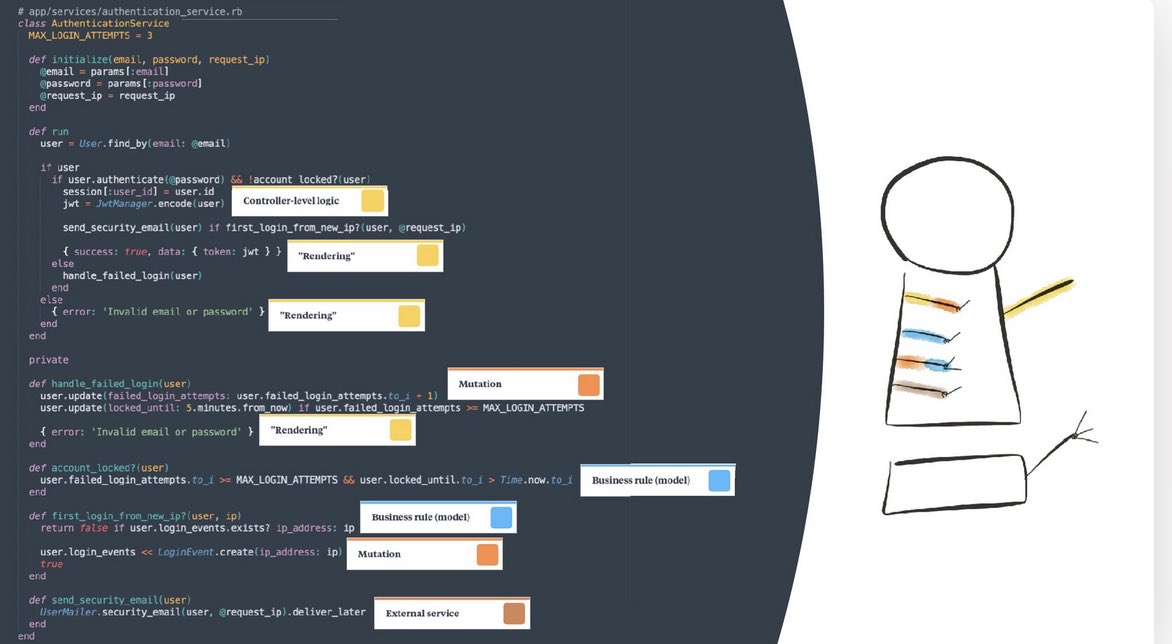
Code Topology (Dummies) Notation - a way to express code complexity and architecture with pictures of little dummies:
I just gave my talk “The Shape & the (Missing) Idea of Service Object” at #EuRuKo2024
Service Object is a FAKE concept.
I share a lot of my learnings here: https://t.co/Yy3wkqHy1p
This post touches the very basics of Ruby OOP, but I'll add more complex topics pretty soon.
- Basic OOP anti-patterns
- Dependency injection
- Subtype polimorphism
- Structs in Ruby
I start all my conference talks with this these days:
https://t.co/Q7eKCZJnmt
It's damn convenient and allows me to discuss any tricky abstract Software Engineering concept in the most concrete way possible.