Here is an output of my @inextvir research project @CBGP_Madrid:
We analyse three members of the Bromoviridae family and their ecological strategies for host-species utilisation in anthropic and wild ecosystems.
#virus_ecology#metagenomics
https://t.co/fImorbIAKi
Happy to share our latest publication on the complex virome of wild and cultivated carrot 🥕populations in France and Spain, which show a wealth of previously uncharacterized viruses…check it out 👉👉👉https://t.co/Aq8iNunnut
Exciting to see the brilliant minds at my former lab continuing to push boundaries! Congrats to @deborah_s92@bisola_musa and the team on their new paper. @inextvir @MSCActions
The gift has been unwrapped! Our paper is now available in its 'First Look' version.
Another great work out of the @inextvir @MSCAactions project with colleagues from 🇸🇮🇫🇷🇧🇪🇺🇸!
Also another study driven by #HTS#Serratus#ClassicVirology
https://t.co/OGZzJkDpI3
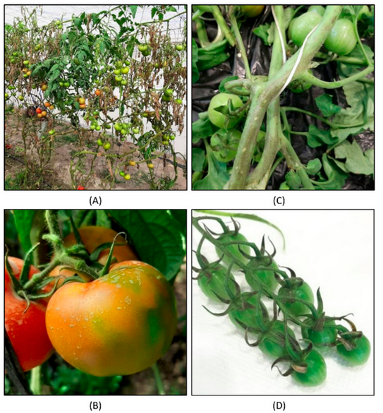
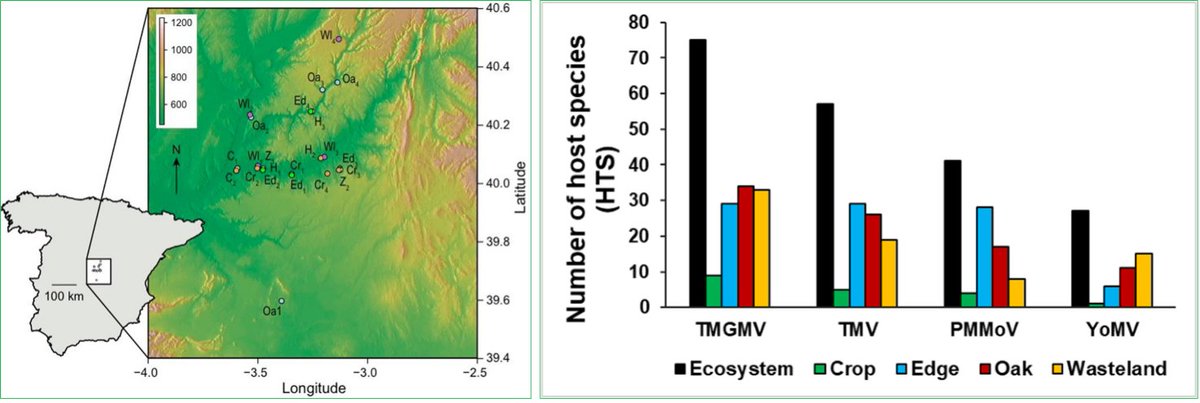
Tobamoviruses show broad host ranges and little genetic diversity among four habitat types of a heterogeneous ecosystem.
Result underscore the relevance of the probability of virus-host encounters, rahter than of apdatation, in tobamovirus host ranges in nature.
Huge congratulations to @ColineTemple for her PhD graduation obtained after the didactic and clear presentation of her thesis result 🎉🎉
Beyond in depth biological characterization of PhCMoV, she dare to cross border, integrating socio-economy & phytopathology 👏👏
@inextvir
Huge congratulations to @ColineTemple for her PhD graduation obtained after the didactic and clear presentation of her thesis result 🎉🎉
Beyond in depth biological characterization of PhCMoV, she dare to cross border, integrating socio-economy & phytopathology 👏👏
@inextvir
🦠🌱 Our @inextvir project is coming to an end! It has been more than 4 years of research and training activities to generate a better understanding of viral communities and their role in agricultural ecosystems.
All the details of the final conference ➡️ https://t.co/EmI7AUG5SY
CEBAS-CSIC, en colaboración con Abiopep, ha ensayado cinco virucidas comerciales para desactivar el virus del fruto pardo y rugoso del tomate (ToBRFV, “rugoso”). La lejía comercial diluida al 6% y Virocid al 1% han dado los mejores resultados. https://t.co/LwmM6C3diZ
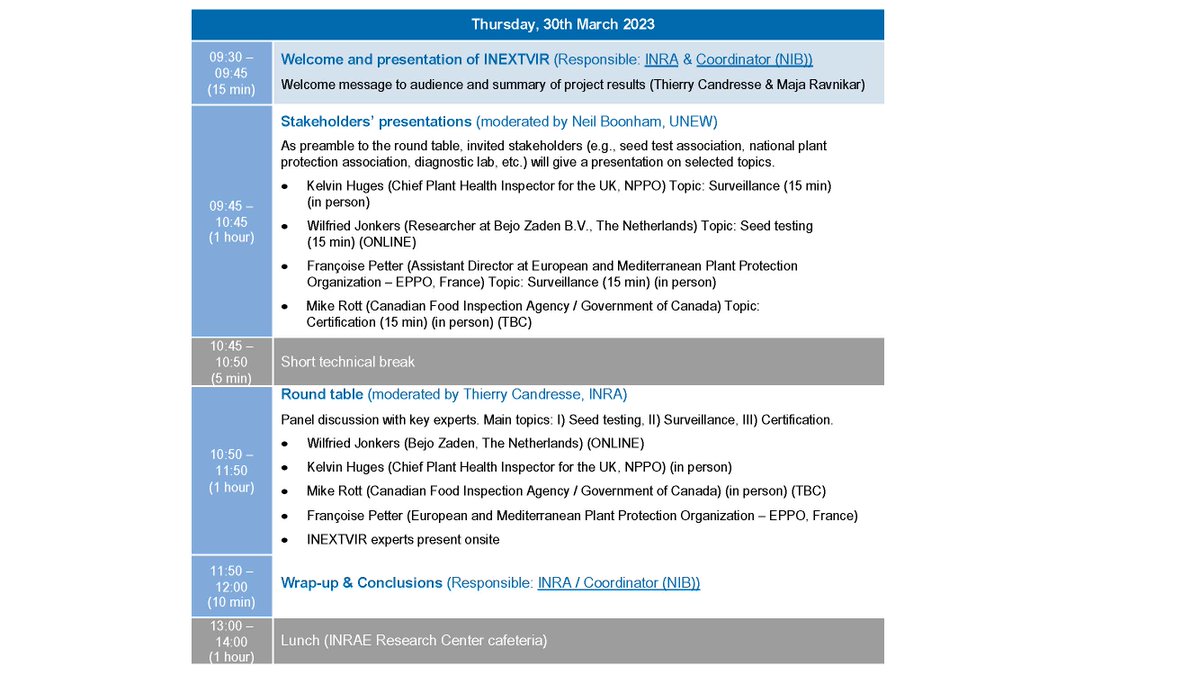
INEXTVIR final meeting and conference will take place 29th and 30th March. A round table on adoption and impact of high throughput sequencing in plant health: seed testing, surveillance and certification will be held on line https://t.co/391MENS3A7 on March 30th 9:45-11:50.
Research coordination can benefit all stakeholders working in #planthealth. @Euphresco members have just approved the membership of the International Seed Federation @SeedFed . This membership will reinforce collaboration with organizations that work on seed health