Huge and historic victory for transgender rights in Europe--the European Union's top court has ruled that gender changes issued by one member country must be respected in every EU country. The Court ruled “Gender, like a first name, is a fundamental element of personal identity.”
In January of this year, TONIC, a UK-based public consultation and social research specialist organisation, published the results of a public consultation (commissioned by NHS England) regarding puberty blockers (PB's).
Conveniently, the results seem to have been "forgotten".
Just three questions were asked of the respondents, and 4040 responses to the consultation were received.
32.2% of respondents were either trans patients or trans adults, with the residue respondents mainly coming from parents or members of the public - that would include, for example, people like the non-experts Joyce, Forstater and Rowling.
Question 1 asked. "Has all of the relevant evidence into PB's been taken into account." [to promote clinical trials]
Question 2 asked. "Does the equality and health inequality impact assessment (EHIA) reflect the potential impact that might arise as a result of the proposed changes" - [clinical trials].
Question 3 asked. "Are there any changes or additions you think need to be made to this policy."
Not surprisingly, responses fell mainly into two distinct camps - the anti-gender movement (Group B) and the trans-supportive (Group A).
Group A: Believed that PB's have been shown to be harmless and beneficial, and that they should be made available to gender dysphoric children and young people without the requirement to enrol in a research trial. This group made up the majority of responses to the consultation, with 3,492.
Group B: Those who believed that that evidence tended to show that PB's are harmful, unproved, unsuitable or unnecessary, and that therefore, PB's should not be made available to gender dysphoric young people. There were just 180 responses from this group!
In this thread, I am looking specifically at Question 2, as, in my view, we are simply not thinking of the benefits PBs afford to children suffering from gender dysphoria/gender incongruence.
Just under 2,900 respondents provided details about why they felt the EHIA did not fully reflect the potential impact that may arise due to the proposed changes.
The most commonly raised themes presented by Group A respondents were:
• That the EHIA fails to sufficiently assess the potentially serious impact on the physical, emotional and mental health of transgender children who will be denied PBs
• That the policy discriminates against transgender children because other NHS treatments do not require a patient to be part of a research protocol and PBs will still be available to non-transgender children and young people.
• The protected characteristic of gender reassignment was insufficiently addressed, with the EHIA misinterpreting the breadth of the characteristic and being at odds with the Equality Act 2010.
• The EHIA fails to acknowledge that children and young people from low-income homes who are unable to afford private care will be discriminated against.
• The EHIA fails to address the future impact of transgender children and young people having developed secondary sexual characteristics.
• It fails to recognise the impact and risk of driving patients to access treatment from unregulated sources.
• It fails to properly address the protected characteristic of disability, given that the policy will disproportionately impact on autistic and neurodivergent children and young people.
• The EHIA does not address the potential impact on those who are currently receiving PBs treatment but who may be forced to stop.
• The EHIA does not address transgender children and young people whose families are unsupportive
Overall, many Group A respondents believed that decisions about PBs should be informed predominantly by the experiences and perspectives of #transgender individuals and experts in the field, expressing concern that the voices of those who have first-hand experience of PBs have not been adequately included in the decision-making process.
Respondents believed that social studies and qualitative data should be used to balance the clinical and quantitative evidence predominant in the current review.
Respondents suggested it would be particularly important to engage with transgender adults who had been denied access to puberty blockers during their youth, as this would offer valuable insight into the impact of such denial.
Respondents believed such studies either did or would show deterioration of mental health, increase in suicide rates, and decrease in overall quality of life – particularly in the cases of biological males who experience more pronounced and difficult to reverse physical changes at puberty. [Side note, I have regularly made this point]
Respondents suggested that in order to better understand the effects and results of PB treatment future evidence reviews should include comprehensive comparison studies between those who use PBs and those who opt instead to undergo purely psychological treatment.
Many Group A respondents believed that @NHSENGALND [and NICE] should have drawn upon work already undertaken by international bodies such as WPATH, ASIAPATH, EPATH, PATHA, and USPATH, highlighting their exclusion and apparent dismissal of international guidelines such as WPATH’s Standards of Care (SOC 8) as limiting the insight into effective and safe treatment pathways for transgender youth.
So, the bottom line of this thread?
For goodness sake @wesstreeting listen to trans voices and not the anti-gender movement and in particular the named hate groups like SEGM and Genspect!
This post is a quick overview of the TONIC report - you can see the full report via the link below:
LINK: https://t.co/ViHF7wAlA1
UK folks who care for trans people - NHS folks who care for trans people. Please notice what is happening right now.
Powerful NHS figures are key speakers at a wildly anti-trans event. Alongside some of the leading figures in harms to trans people worldwide. Short thread. 1/
A reminder that Hillary Cass is not an unbiased auditor of transgender care.
Members of her team and advisory board regularly met with DeSantis operatives, like Kaltiala. Even she did herself.
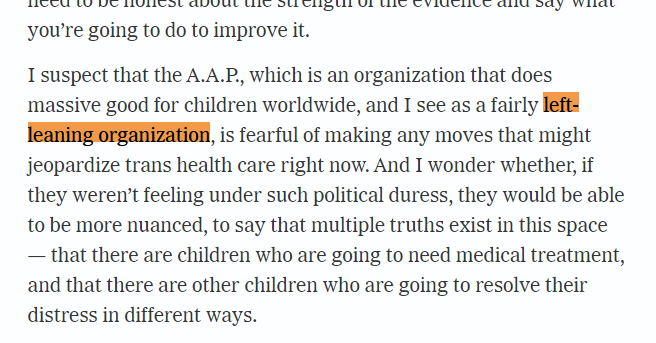
She even decried the American Academy of Pediatrics as a "left-leaning organization."
A pride month filled with politicians debating trans people’s right to exist it is then. It’s never been more important to stand with trans people against the hateful rhetoric used by almost all parties. Let’s remember pride is a protest and make ourselves heard 🏳️⚧️🏳️⚧️🏳️⚧️
Nobody has ever been arrested for "misgendering" in the UK.
It's easy to fake bravery in the face of sht that definitely, positively is not going to happen.
The far-right have concocted this boogeyman and now they want praise for not being afraid of it.
@CaelanConrad I've always wanted to take the Ofsted (the governing body for children's education in the UK) to the shit wizard movies. I just know there's some major problems, including private meetings with students, I just can't bring myself to watch the shit wizard movies
1. Brutal anti-trans politics in England may have met their match in an unlikely opponent... ferrets?
Members of Parliament, including some conservatives, filibustered a gender affirming care ban that would have applied to private clinics in the country pushed by Liz Truss.