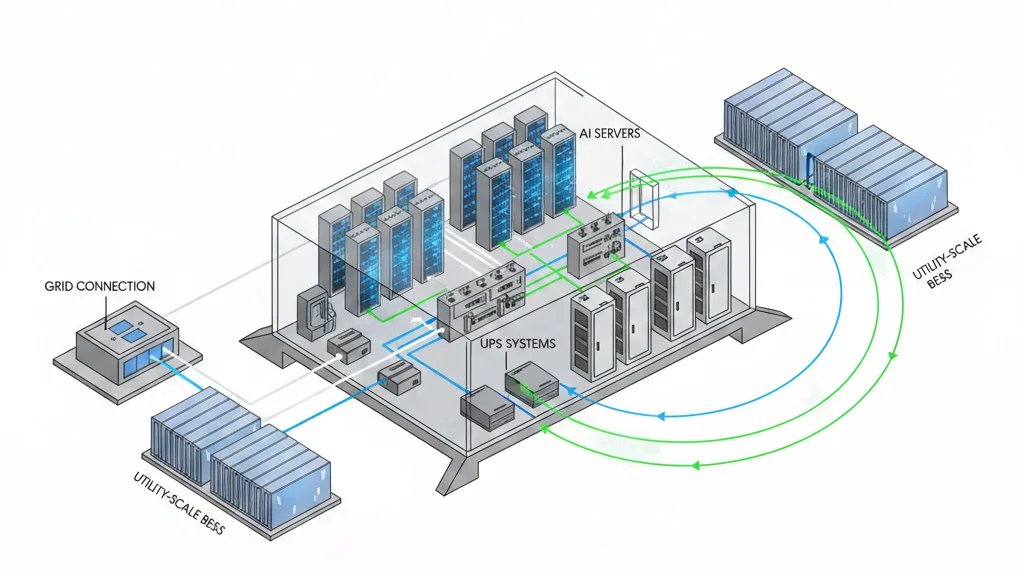
Data centers will consume >15% of US electricity by 2028 - Up 300% from 2023.
Their demand will strain our grid and use inefficient, dirty diesel generators for back-up power
The solution: Using a data center's battery to arbitrage power, without risking downtime
A Thread 🧵
Stonepeak has closed its $2.5B acquisition of the Chicago Parking Meters concession
The sellers are a Morgan Stanley-led group with Allianz Capital Partners and ADIA. They about doubled their $1.15B investment from 2008.
The concession runs to 2084, with about 57 years left.
City Council approved the sale 46-3 after reworking terms. Chicago gets a $75M transfer fee for pensions, 5% of net income, and 2% of any resale before 2084.
Free event closures rise from six to seven a year. Closure true-up payments cost the city nearly $174M through 2025.
Mayor Johnson bid up to $3.2B to take the meters back before withdrawing.
Every concession transfer should come with a consent fee and a revenue share for the city.
Hyperscaler stocks are back near their highs while hyperscaler credit spreads sit at their widest of 2026
Goldman's hyperscaler credit spread index widened to 174.7 on Oct 16, from about 120 in May. Its hyperscaler equity basket closed at 101.63, and Goldman says it traded about 15% lower the last time spreads were this wide.
Credit is funding the capex, so equity holders should be watching spreads.
Goldman Sachs' London head of investment grade corporate bond trading, Alexander Rauner, to join Barclays
Rauner joined Goldman from Bank of America about six years ago and made managing director in January 2025.
He is expected to run IG credit trading at Barclays and report to Michael Khouri, head of credit trading, per eFinancialCareers' sources.
He is still registered with Goldman on the FCA register. Barclays and Rauner did not respond; Goldman declined to comment.
RBC recently replaced its global head of spread products with a systematic hire from Bank of America.
Credit desks are paying up for traders who can run more of the book electronically.
A geothermal plant can power a data center and cool it with the same heat
Turbine waste heat runs an absorption chiller that feeds chilled water into the data center's cooling loop. Project InnerSpace modeled up to $3.2B of cooling savings over 30 years for a 1 GW geothermal campus.
Cooling is 30-40% of energy use at dense AI sites, so developers should be siting campuses on subsurface heat.
Former Sequoia equities head Jeff Wang has raised more than $1B for his new tech hedge fund, Augnition Global Investors
Augnition started trading in October with at least $570M, per a Sept 30 regulatory filing. About 45% of that starting capital came from internal sources.
The fund invests across public and private tech, including a $25M vehicle for cybersecurity company Cyera.
Wang ran Sequoia's global equities business for a decade, growing AUM from $600M to $9B at 17% annualized returns.
Augnition is the second $1B+ hedge fund launch of 2026, after Daniel Senft's NX1 Capital raised $2.5B in January.
Allocators are still writing big launch tickets for managers who bring private tech access with them.
Google has expanded its PJM virtual power plant with Voltus to 1,170 MW, up from the 100 MW deal signed in June
Voltus will aggregate batteries, smart thermostats, on-site generation and industrial load flexibility from homes and businesses. It bids that capacity into PJM when the grid is strained.
The VPP ramps to full size over three to four years and runs under contract with Google through 2040.
PJM demand response revenue rose 240% in 2025 to $523.5M on higher capacity prices, per the market monitor. Emergency DR made up 88%.
Voltus says PJM customers can earn up to $350,000/MW-year from DR. It has 8.5 GW under contract and targets 20 GW by 2030.
FERC largely rejected PJM's bring-your-own-capacity proposal this month. Google is bringing its own anyway.
Long-dated hyperscaler offtake is what makes distributed capacity financeable.
Ex-Citadel Securities and Tower Research traders are building quant trading desks inside fintechs
Mark Wilkinson, Citadel Securities' former head of FICC systematic trading, is building a quantitative trading function at Wealthsimple. He is hiring quants with at least 3 years of trading experience.
Annanay Kapila, ex-Tower Research and founder of perpetuals exchange QFEX, has started open-sourcing mid-frequency strategies to clients.
Kapila says QFEX made more in the first 12 days of October than in the 12 months to August 2026. He credits OpenAI's Astra model for the research gains.
China's green methanol buildout is running ahead of shipowner demand, warns Shenergy Environment Technology
China had 380,000 t/y of green methanol capacity at end-2025, about 60% of the global total, per the NEA. More than 3 Mt of bio- and e-methanol capacity is under construction, per GENA Solutions.
However, costs are the main issue:
Bio-methanol costs $900-1,400/t and e-methanol $1,600-2,400/t, against $600-900/t for fossil LNG. Ships need about twice the methanol by weight for the same energy.
Shipowners will sign offtakes once a carbon price or fuel standard closes that cost gap
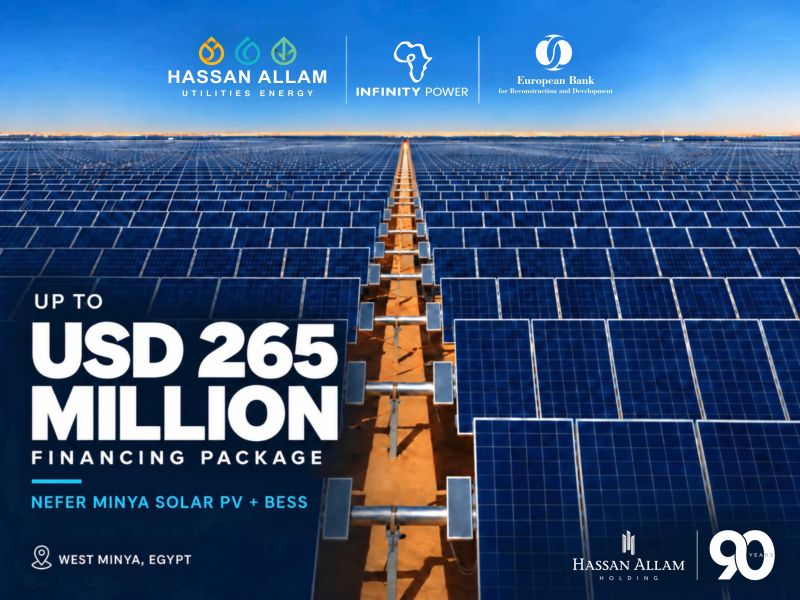
EBRD is arranging up to $265M for a 1.2 GW solar and 600 MWh battery project in Minya, Egypt
The loan is a $160M A-loan, a $75M B-loan from Bank of Jordan and up to $30M of concessional Clean Technology Fund money. DEG, FMO and Proparco bring the full debt package to up to $566M.
EBRD's disclosure puts the plant at 1,000 MWac and total cost at $764M, so debt covers up to 74%.
Nefer Menya, the SPV, is 51% Infinity Power (Infinity and Masdar) and 49% HAU Energy (Meridiam, Hassan Allam Utilities and EBRD). AIKO supplies the modules.
Power goes to Egyptian Electricity Transmission Co. under a 25-year PPA, with the battery shifting solar output into the evening peak. COD is targeted for September 2027.
Lithium demand is set to more than triple to nearly 7 Mt LCE by 2050, which will require 134 new mines and $100B+
That is one new mine every two months for 24 years, from 2.11 Mt this year. North America's share of mined supply rises from 1.7% to 13%, while Australia's falls from 29% to 20%.
Western mines need capital that holds through price cycles to get built, maybe AI & electrification are just that
Trafigura has chartered a Nordic American suezmax for a year at a reported record $150,000/day
The Nordic Hawk deal tops the $128,000/day one-year suezmax assessment in Compass Maritime's Oct 12 report.
However, spot is easing at the same time. Petrobras fixed a VLCC in a $50M deal that pulled Brazil-China rates below $600,000/day for the first time since early October.
VLGC spot rates fell for a second straight week as tonnage lists lengthened and LPG arbitrage narrowed. Baltic's Houston-Chiba route stood at $333.43/t on Oct 16, or $204,369/day TCE.
The ERCOT BESS fleet is at 18.7 GW, up from 7.8 GW at the start of 2025, with a record 2.2 GW added in Q3.
Average revenue is $24/kW-year, which works out to about $449M a year across the fleet. Annual additions are leveling off near 6 GW.
Barclays has moved balance sheet from macro rates trading to prime financing for Asian hedge funds, per Bloomberg
The bank hit its financing limits for Asia hedge fund clients over the summer. An internal auction then shifted capacity from rates traders to prime, as leveraged funds piled into Asian tech.
Barclays also asked some clients to add shorts to cut net financing needs. Goldman has done the same.
Goldman says equities financing demand still exceeds industry supply. UBS is allocating its equities balance sheet more selectively.
Prime balance sheet is the scarce input on Wall Street, and banks will keep pulling it from lower-return desks
Apollo will originate $75 billion of energy loans this year, announced CEO Marc Rowan
That comes out of $500B of total 2026 origination for Apollo, up from ~$300B in 2025.
Rowan said the capital goes to very long-dated infrastructure that moves energy in the US, Canada, the Middle East and Europe, with AI companies included.
Apollo's view: AI sovereignty requires models, chips and energy, and almost everyone is short energy.
Apollo had about $1.05T of AUM at June 30.
Long-dated energy infrastructure needs patient capital, and private credit is now supplying it at scale
Data center in-rack energy storage is forecast to grow from $1.06B in 2025 to $11.96B by 2035, per Emergen Research
Battery backup units held 63.4% of 2025 revenue and lithium-ion held 71.2%. The OCP Mt. Diablo rack spec from Microsoft, Meta and Google took effect Oct 8 and calls for 45-90 seconds of BBU hold-up at full load on 800 kW to 1 MW+ racks.
GPU load swings now have to be absorbed inside the rack, so storage is becoming standard rack hardware
Trafigura says hyperscaler plans imply AI copper demand of 2.5-3 Mt in 2028, up from about 1 Mt this year
Henry Van, Trafigura's head of industrial metals analysis, called that the full-build case. Market pricing implies 1.6 Mt, still up 60%.
Chief economist Saad Rahim said global copper demand would fall this year without data centers. Van said data center builders are price insensitive and expects high prices to add 2 Mt of supply next year.
On the LME, Hartree Partners built the largest position in October copper, long October against short November, per Bloomberg. The trader is Sonny McNess, Hartree's head metals derivatives trader since leaving Mercuria this year.
The Oct-Nov spread hit $91.99/t backwardation before Tuesday's expiry. The trade pays if US refined copper tariffs squeeze nearby supply, since much LME stock sits in US warehouses.
Caerus Commodities has hired Alex Watson from BlueCrest to be their Chief Investment Officer
Caerus is a Houston energy trading house focused on battery storage.
BlueCrest let go of Watson and his six-person gas team in early 2026 after extreme price moves hurt profitability. He previously ran natural gas trading at EDF Energy and worked at Citi and Total Gas & Power.
Ex-BlueCrest gas strategist David Hawkins and quant Krzysztof Nowak, now head of execution, have also joined Caerus.
The 100 largest hedge funds returned 6.0% in H1 2026, 100bps behind the wider industry at 7.0%, per Canoe Intelligence
The top 100 manage about $3.2T of institutional allocations. Their long/short equity funds beat peers 9.2% to 8.9%, while their relative value funds trailed 2.9% to 5.4%.