'BA'T NAMAN PO AKO MAGIGING APOLOGETIC ABOUT IT?'
Nagsalita si Mimiyuuuh tungkol sa mga puna ng ilang netizens na nagbago na umano siya at naging “unrelatable” simula nang maging content creator at fashion celebrity.
Basahin: https://t.co/XBjpnfEwuo
wdym one of the San Jose shooters today in the Philippines wore the same shirt as one of the Colombine shooters in Colorado??
This is not who we are 😭 I’m fucking livid
Beyoncé’s visual albums. Billie Eilish’s aesthetic universe. Sabrina Carpenter’s image precision. You’re watching the long shadow of what Lady Gaga established.
Full article linked.
Kaya andaming pangit na films ngayon locally and internationally kasi masyadong pinipilit magpaka-morally righteous gayong art should touch everything whether disturbing or not
Little Monsters should ignore those fandoms cause fighting with them makes no sense when Gaga is on such a higher artistic level than their faves that the comparisons just look silly
Lady Gaga released these two live concerts within five months of each other. How anyone can watch this video and still say that Lady Gaga is stuck in 2011 is insane to me.
There’s a reason why this woman’s versatility is always mentioned whenever her name is spoken
Gaga es un genio de la música, perdón pero ninguna de sus reinitas y princesitas hace esto, son solo muñequitas de aparador que medio cantan y medio bailan niguna tiene este nivel de desenvolvimiento en el escenario.
🌹 100 anos depois, ninguém mais sabe exatamente quem foi Lady Gaga.
O nome sobreviveu, mas deformado pelo tempo, como uma lenda repetida tantas vezes que já não se distingue verdade de invenção.
Alguns dizem que ela foi uma cantora. Outros, uma profeta pop. Outros juram que nunca existiu de fato, que era apenas um personagem coletivo criado por uma geração obcecada por espetáculo, excesso e sobrevivência emocional.
O que restou dela foi a ruína.
A antiga Opera Haus da MAYHEM Ball aparece agora como um monumento devastado, enterrado sob poeira, ferrugem e décadas de abandono. O palco que um dia foi grandioso virou escombro arqueológico.
E é nesse cenário pós-apocalíptico que começa o “MAYHEM Requiem”.
Não como um show.
Mas como uma sessão espírita.
Um Little Monster do futuro, alguém que nunca viveu a era MAYHEM, nunca viu Gaga em carne e osso, nunca experimentou o mundo antes da ruína, encontra aquele lugar esquecido e tenta estabelecer contato. Como quem gira uma estação de rádio morta tentando captar uma voz impossível.
E então a voz vem.
Distorcida. Fragmentada. Quase corroída pelo tempo.
As músicas soam quebradas porque foram engolidas por um século de decadência. Não chegam limpas: chegam como memórias sobreviventes. Como fitas magnéticas deterioradas. Como arquivos recuperados de um servidor destruído.
Há ruído, interferência, falhas, mas justamente por isso tudo parece mais humano. Mais visceral. O espetáculo inteiro funciona como se o passado estivesse lutando para continuar existindo.
E aí surge a frase:
“Stranger, remember me.”
Não é apenas uma abertura impactante. É um pedido desesperado atravessando 100 anos. Gaga já morreu naquele universo. Sua época acabou. Seus contemporâneos desapareceram. Tudo o que ela significava foi soterrado pelo tempo. E mesmo assim, de algum lugar distante, ela ainda tenta alcançar alguém.
Um estranho.
Alguém que não a conheceu.
Alguém que talvez nem compreenda completamente quem ela foi.
Mas que, diante daqueles restos, escolhe sentir.
Existe algo profundamente bonito nisso: a ideia de que a arte continua procurando companhia mesmo depois do fim. Que uma artista pode desaparecer fisicamente, virar mito, ruído, folclore… e ainda assim encontrar uma pessoa, um século depois, disposta a ouvir o coração pulsando dentro dos destroços.
“MAYHEM Requiem” transforma a nostalgia em arqueologia emocional. Não é sobre reviver uma era; é sobre escavar seus fantasmas. O palco destruído deixa de ser apenas cenário e vira símbolo: a beleza inevitavelmente entra em colapso, os impérios culturais acabam, os ícones desaparecem, mas o impacto emocional permanece escondido em algum lugar, esperando alguém para reencontrá-lo.
E talvez seja isso que torne tudo tão melancólico e poderoso.
Porque no fundo, “Stranger, remember me” é o medo mais humano possível: o medo de ser apagado pelo tempo.
Mas também é esperança.
A esperança de que, mesmo depois de cem anos, alguém encontre os fragmentos daquilo que fomos… e escute.
"MAYHEM Requiem" já está disponível na Apple Music e na Apple TV.
With MAYHEM, Lady Gaga reminded the world what a fully committed era actually looks like. She was everywhere: hosting SNL, delivering a career-defining Coachella headlining set, staging an historic concert at Copacabana that broke the world record for most attendees for a female performer, sitting down for interviews, touring the world on one of the biggest and most in-demand treks in recent memory, releasing smash singles, and weaving herself into film and television both as a performer and a writer. The album itself debuted at #1 across multiple markets, while singles like “Disease,” “Abracadabra,” and “Die With A Smile” dominated airplay charts and playlists globally, with the latter two already cementing themselves as iconic entries in her catalog.
The era also brought home Grammy wins, further solidifying MAYHEM as one of the defining albums of her career. But beyond the spectacle, this era gave us something more meaningful: Gaga visibly happier and healthier than she’s been in well over a decade.
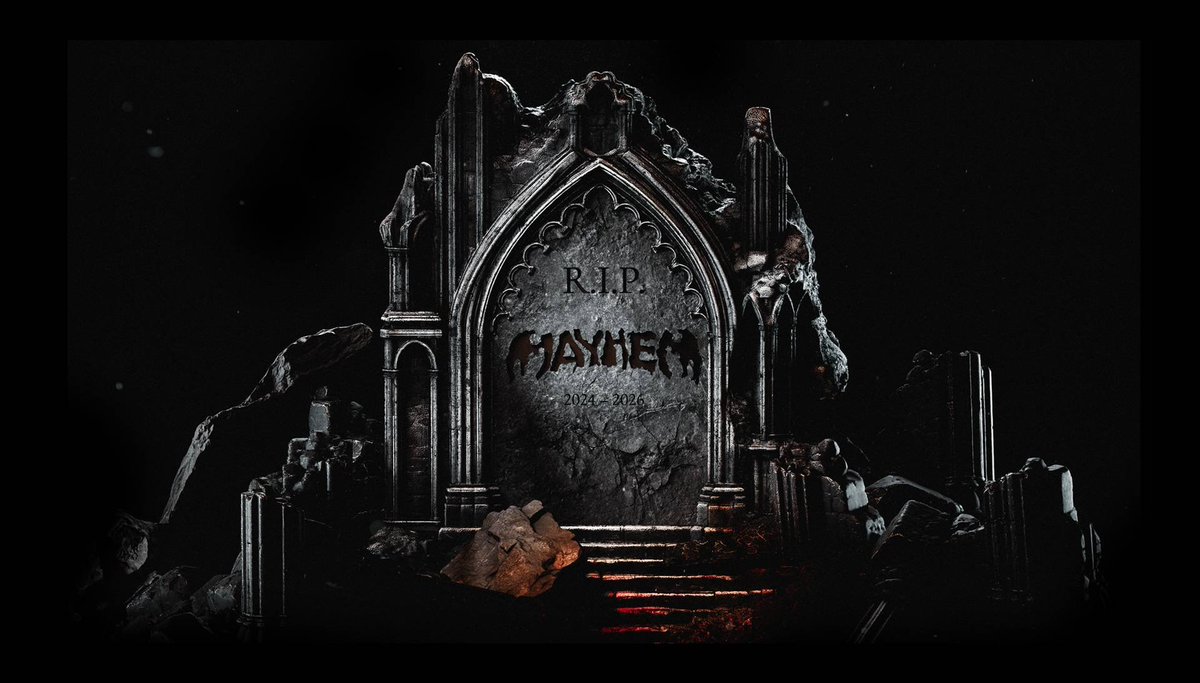
And then came MAYHEM Requiem. Intimate, cinematic, and completely unapologetic, it was the perfect final chapter to one of the most ambitious artistic cycles in recent pop history. A farewell worthy of everything that came before it.
It was a reminder that the artist her fans and the general public fell in love with never went anywhere. She’s simply ever-evolving, growing stronger with every new chapter she steps into.
Thank you for this wonderful era, @ladygaga. This journey was something else. Until next time. 🤍
Pay your respects and sign up to attend the premiere of @ladygaga’s MAYHEM Requiem at select AMC Theatres and on Apple Music May 14th at 8PM PT. https://t.co/KCvU9oXO2O #AppleMusicLive
Kanji aren't random shapes.
Every character has a unique story behind it.
Some are amusing, while others point to a cruel past.
Some are downright shocking.
Here are 5 kanji with intriguing histories.
But first some context on how kanji work.
————————————————
How kanji are made
The origin of kanji is called its 成り立ち (naritachi).
It's the story of why a kanji looks the way it does.
Kanji are usually made up of smaller shapes, and those shapes carry meanings or readings of their own that contribute to the kanji as a whole.
————————————————
Similar shapes can have wildly different meanings
You might think similar shapes in kanji have similar meanings, but actually even 1 stroke different usually completely changes what that shape represents.
Take the left parts of these two kanji for instance:
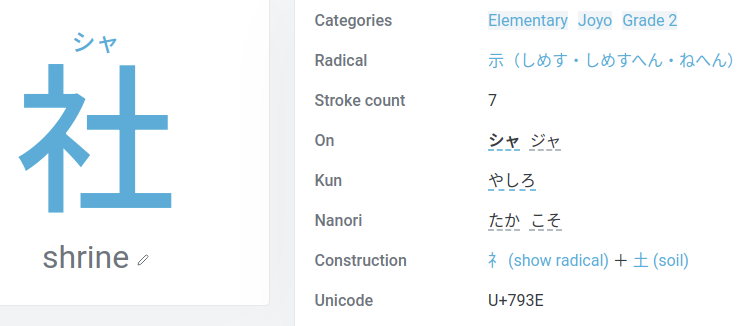
社 (shrine)
初 (first)
If you look carefully, the left part of 社 (礻) looks like the katakana ネ, whereas the left part of 初 has one extra stroke (衤).
This is because 礻 comes from the kanji 示 (show), whereas 衤 comes from the kanji 衣 (garment).
In other words, with just one stroke these characters are communicating totally different ideas. Something that is easily lost to modern eyes.
————————————————
Why do similar shapes have different meanings?
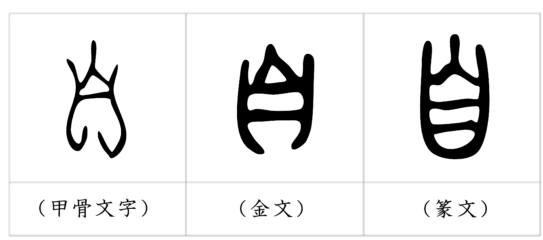
It's because of the evolution of kanji. Often the shape started out looking different, but over time kanji shapes were simplified into common patterns.
(Screenshot from https://t.co/mEPdR0eykK).
This image shows the evolution of 自 (self). You can see originally it looked very different. Now it looks like 目 (eye) with a drop on top.
Now we understand what's going on, let's look at some interesting evolutions.
————————————————
1. 幸 (happiness)
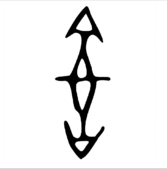
Contrary to what you might expect, this kanji has a dark past. It actually evolved from a glyph depicting handcuffs.
How did handcuffs come to mean happiness?
Historically, criminals were given very severe punishments such as beheading and much, much worse (I can't describe them here).
However, a criminal who only received a punishment of being put in handcuffs could be said to have gotten off comparatively lightly.
Such a criminal would be bound to think "wow, what luck!" and rejoice. Or so goes the logic.
This is thought to be the reason why handcuffs came to represent happiness.
Pretty crazy.
Makes you thankful to live in the modern day, right?
————————————————
2. 士 (gentleman / samurai)
On its own you can read this kanji as "samurai" (though 侍 is more common), but in words today it generally connotes the idea of a warrior or gentleman. An all around upstanding man of society.
For example you can see it in the words 博士 (hakase, doctor i.e. PhD holder), or 弁護士 (bengoshi, lawyer).
But where does it come from? What does it depict?
It depicts... get ready for this one.
It depicts male genitalia. That's right, 士 shows a man's vital organs standing to attention.
Why?
It's thought because this... functionality... implies a man has become of age and can therefore be full member of society.
Hmm.
————————————————
3. 蚊 (mosquito)
Originally this kanji was written as 蟁. You can see why it was a candidate for simplification.
Now it's written as 蚊.
The left half is 虫 (insect) - straightforward enough.
But why 文 (writing) on the right?
You might know that often the left half of a kanji helps to categorise it. Insects use 虫, fish use 魚, actions involving people often use 亻 (it represents 人).
The right half however often tells you the sound - often it hints at a key on yomi reading.
文 hints at a sound, but not a reading.
It's because 文 is read as ブン, and the onomatopoeia of a mosquito buzzing is ブンブン.
Bet you didn't see that coming.
If you can remember the ブーン sound of a mosquito, you should have no trouble remembering this kanji.
————————————————
4. 勉 (exertion)
You probably recognise 勉 from 勉強 (benkyou, study). Learning Japanese requires a lot of that, and it's one of the first words we learn.
勉 is made from two characters:
免 (exempt) + 力 (power)
Today 免 means exempt and can be seen in words like 免許 (menkyo, licence), but originally it comes from a depiction of something different.
It depicted a woman giving birth.
Later it lost this meaning, but combining 免 with 力 we have the idea of exertion. Of doing one's best to produce something valuable.
It's fitting that one of the greatest labours a person can do was used as the basis for a character meaning exertion, don't you think?
————————————————
5. 赤 (red)
I promised kanji indicating a "cruel past" so I'll give you one more. But this one has a light twist.
赤 originally comes from a combination of 大 (big) and 火 (fire).
Maybe it's as simple as a huge fire being red..?
But it's speculated to have a much darker origin...
Some say 大 depicts a person with their arms and legs spread out... and then comes the fire.
Your imagination can fill in the details.
Very dark.
People believed that flame purifies. There is a ritual called お焚き上げ (otakiage) that uses flame to purify charms and talismans.
It's thought that this purity associated with fire is the reason 赤ちゃん (aka-chan) came to mean baby. Because a baby is a pure soul.
However as with all things about the past, it's impossible to know for sure.
————————————————
Sources
Pretty interesting stuff!
I've been interested in naritachi for a long time, but I wanted to present only info I could verify and not go off of memory.
I referenced these Japanese source materials:
- https://t.co/mEPdR0eykK
- Joyo Jikai by Shirakawa Shizuka (book)
They're my go-to sources when it comes to naritachi.
I highly recommend both if you're interested in learning more about the history of kanji, but they require a high level of Japanese (N1 or higher) - especially the book.
————————————————
Summary
Kanji have a complex history. That's part of what makes learning them difficult.
It's often not obvious what on earth a kanji is depicting or how it came to look the way it does.
That said, I think it's fascinating - the idea that kanji we use in daily life each have a rich history and story behind them.
Do you know any kanji origins? Share them in the comments below!
And as always let me know your thoughts.
Cheers
Matt
#langtwt #nihongo
A drive recorder got footage of a car running into and toppling over an ambulance in Matsuyama, Ehime Prefecture on the 25th. The ambulance was transporting a man in his 80s at the time. Amazingly, those in the ambulance only suffered light injuries.
https://t.co/sIj3Brsltt
ang masasabi ko lang sa isyu ay hindi wise paabutin ng milyon milyon ang laman ng savings acct mo kasi pag na-hack yan, 500K lang ang ibabalik sayo ng bangko mo. so kapag lumagpas na ng 500K savings mo, mag-open ka na lang ng bagong acct sa ibang bangko. #MissScorTips