The significance of Surat Singh’s manuscript lies in its ordinariness.
https://t.co/rkSxLsn52v
Instead of emperors or battles, it records the experiences of a middling official moving between cities, following a spiritual guide and negotiating life, writes Syed Ali Nadeem Rezavi.
Every time I suggest equality under the law as the right principle for Israel-Palestine, many of my fellow Jews tell me it's dangerously unrealistic, that I don't understand the region etc. It's exactly what I heard from white South Africans as a kid. But I rarely heard a Black South African during apartheid say that legal equality was unrealistic, or would produce more violence, just as I rarely hear that from Palestinians today.
In 1902 the celebrated Chinese scholar Kang Youwei wrote to his disciple, Liang Qichao, that India was a “lost country”, adding that he was “confident that the Indians have no way to restore their country in more than 1,000 years”. How could he get it so wrong? And what does that teach us?
My piece: Why do Indian politicians so readily abandon their parties? - The Economic Times undefined?utm_source=twitter_pwa&utm_medium=social&utm_campaign=socialsharebuttons via @economictimes
A Life That Served a Purpose
In a world chasing fleeting applause, some souls choose the long, quiet road of service. Today, welfare economist Jean Drèze has been honoured with a global award for his profound research on poverty and inequality in India.
Born in Belgium, he made India his home and its people his purpose. With a scholar’s rigour and a revolutionary’s heart, he stood beside the forgotten—documenting their struggles, amplifying their voices, and shaping policies that reached millions.
His tireless advocacy helped birth two landmark legislations that still stand as lifelines: the National Rural Employment Guarantee Act (NREGA), which offered dignity through work to the rural poor, and the National Food Security Act, which sought to ensure no one sleeps hungry in a land of plenty.
This is not just an award. It is recognition of a life lived in radical empathy. Of choosing dusty villages over ivory towers. Of measuring success not in citations or comfort, but in the quiet lifting of human suffering.
Jean Drèze reminds us that the highest calling is to use one’s intellect, privilege, and time in the service of those who have the least.
In an age of cynicism, his journey is a living ode:
To knowledge that heals. To scholarship that serves. To a life that mattered.
Congratulations and Thank You Professor Drèze.
India is better because you walked among us.
May your example inspire a new generation to stop performing compassion and start practising it—with depth, persistence, and love.
🧡 🙏
#JeanDreze #ServiceAboveSelf #India #SocialJustice
If u want more Indians studying India & the world, & communicating Indian POVs globally, FUND IT
Endow research scholarships, fellowships & chairs in India, create area studies pgms & travel funds, enable access to libraries/archives etc. + stop dissing humanities/social studies
"Smart girls keep romance! They prevent underarm odour with MUM!..."
(https://t.co/uTD5pga81O)
Mum "Takes odour out of perspiration". Australian Women's Weekly, 1941.
New dwelling supply is rocketing.
The number of dwellings in Australia rose by 54,200 in the March qtr 2026 to 11.495 million. This is the largest quarterly increase since 2016.
The govt may not get to 1.2 million dwellings over 5 years as it planned but it looks like it will get close.
November 1971. Chiswick, West London.
Erin Pizzey is 32 years old. She is not a lawyer. Not a politician. Not a doctor.
She is a woman who talked Hounslow Council into lending her a cold, rundown building on Belmont Road — a former community hall — for almost nothing. Her original plan was modest. A warm room. A cup of tea. Somewhere for mothers with young children to simply get out of the house.
Then the door opened.
A woman stood in the entrance. She was covered, head to foot, in bruises. She was holding two small children. She was shaking.
She didn't want tea.
She needed somewhere to hide.
Erin let her in. She didn't turn her away. She didn't tell her to call the police.
Because Erin had already called the police. They told her the same thing they told every woman in Britain at the time: they could not enter a private home over a "domestic dispute." That was the law. The home was private. What happened inside it was a family matter.
When Erin contacted a female civil servant to report what she was seeing, the response was astonishing. The woman told her flatly: "There wasn't a problem of battered wives until you made one."
Erin put down the phone. Then she went back to her residents and made sure they were fed.
Within weeks, 40 mothers and children were sleeping in four tiny rooms. No funding. No staff. No legal authority.
She didn't stop.
By 1973, word had spread through quiet whisper networks — one woman telling another, "There is a place. Go to Chiswick. She won't turn you away." That same year, Erin hosted the first National Women's Aid Conference in the UK. Women from across Britain arrived, and they all recognized the same thing at once: what she had built needed to exist everywhere.
In 1974, the council set a maximum of 36 residents. At peak times, 150 women and children were living inside those walls — sleeping on floors, on chairs, in hallways. The building smelled of cooking, fear, and something else entirely: relief.
Erin was taken to court for overcrowding. She appealed all the way to the House of Lords.
She kept the doors open the entire time.
That same year, she wrote a book. Scream Quietly or the Neighbours Will Hear. It was the first published account of domestic violence in British history. It used real stories from real women inside the shelter. Overnight, a problem that had no official name was on front pages from London to New York.
The movement spread. Refuges opened across the UK. Then Australia. Then Canada. Then the United States. The pattern she created in four small rooms in West London — no blueprint, no permission, no funding — had been replicated in hundreds of shelters across the Western world.
MP Jack Ashley stood up in Parliament and said: "It was she who first identified the problem, who first recognised the seriousness of the situation and who first did something practical."
She was ranked 14th in a poll of the 100 women who shook the world. She was awarded the Italian Peace Prize. She received a CBE. The charity she founded — Chiswick Women's Aid, which became Refuge — grew into the largest domestic violence charity in the United Kingdom, with over 460 employees and an annual income of more than £33 million.
Erin Pizzey passed away on October 4, 2025, aged 86.
She never stopped.
It all began with one woman, one borrowed building, and an absolute refusal to say no.
Forty women and children showed up with nowhere to go.
She made room.
Share this if you believe one ordinary person, refusing to look away, can build a shelter that holds the whole world.
Follow us Lost in Yesterday
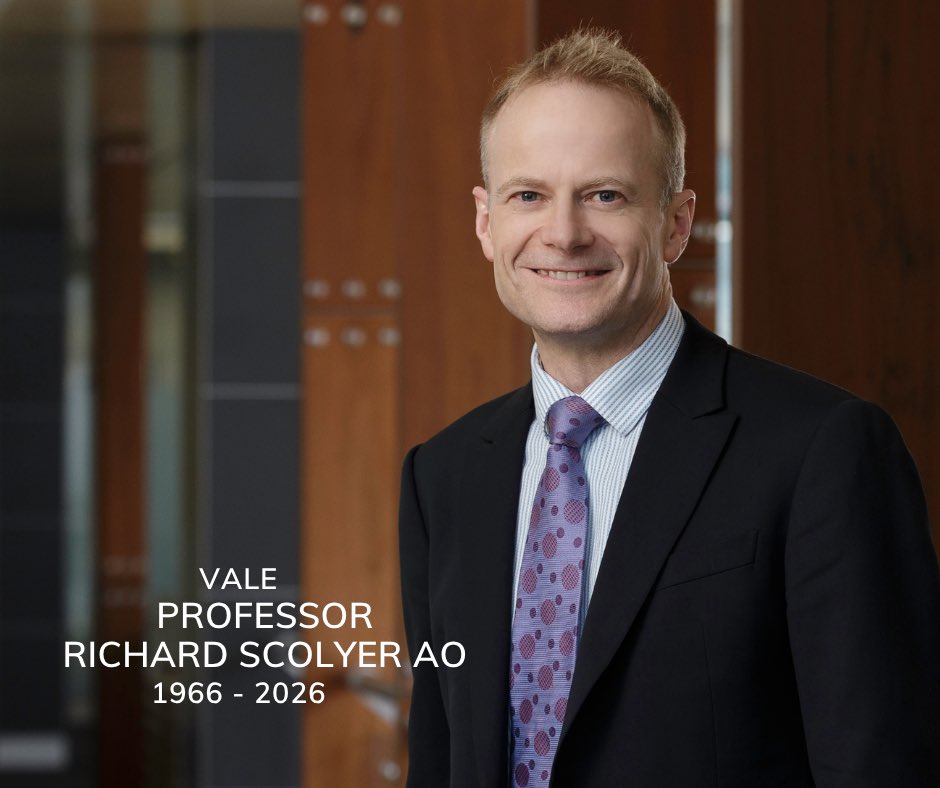
Vale Richard.
I am deeply saddened to lose such a cherished colleague. Richard was a truly extraordinary pathologist - the 'pathologists' pathologist' - who also made generous time for clinicians navigating complex diagnostic cases, understanding that an accurate tissue diagnosis was critical to patient care. His knowledge was vast, his skill exceptional, with an unparalleled eye for accurate tissue diagnoses, and the precision to apply decades of experience where it mattered most.
He shared his expertise widely: through consultation on external specimens, through diagnostic and classification frameworks now used worldwide, and as a devoted teacher and mentor. Richard has left an indelible mark on all who had the privilege of working alongside him.
My thoughts are with Richard's family during this difficult time, particularly his wife Katie and children Emily, Matthew, and Lucy.
See tribute on @MelanomaAus website > https://t.co/cAYaKPl2oA
The changes the Howard Government made in 1999 to Capital Gains Tax were supposed to boost investment in the share market.
Instead, they turbo-charged property as an investment vehicle.
And that fundamentally altered the equation for first home buyers – and for young Australians.
Since 1999, house prices have risen by over 400%. More than twice as fast as average incomes.
And in the same period, home ownership rates for Australians aged between 25 and 34 fell by 7% points.
It is no wonder that more and more young people – and indeed their parents and grandparents - have been worrying they will never own a home.
That feeling of having the deck stacked against you is only magnified when young Australians turn up to an auction and get outbid by property investors being given a leg up from the tax system.
Our reforms to negative gearing and capital gains tax remove these distortions.
Bringing more first home buyers back into the market.
If One Nation policy is to force PRs to sell their homes, there will be thousands of longterm PRs (mainly UK citizens) affected. If it’s just TRs, there would be thousands of longterm NZ citizens affected. Would NZ retaliate? https://t.co/UyZqZYSdhB
Tony Abbott's two most notable achievements were the destruction of two of the most important tax reforms of recent times - the carbon tax and the mining tax. His contribution to the future of this country has been totally destructive. He offers just regression and division.
Subhash Kashyap's passing a big loss. Colleague at Centre for Policy Reaserch, encyclopedic command of the Indian Constitutional and Parliamentary History. Fun fact: first book "The Unknown Nietzsche" was a pioneering and acute study of Nietzsche's global influence