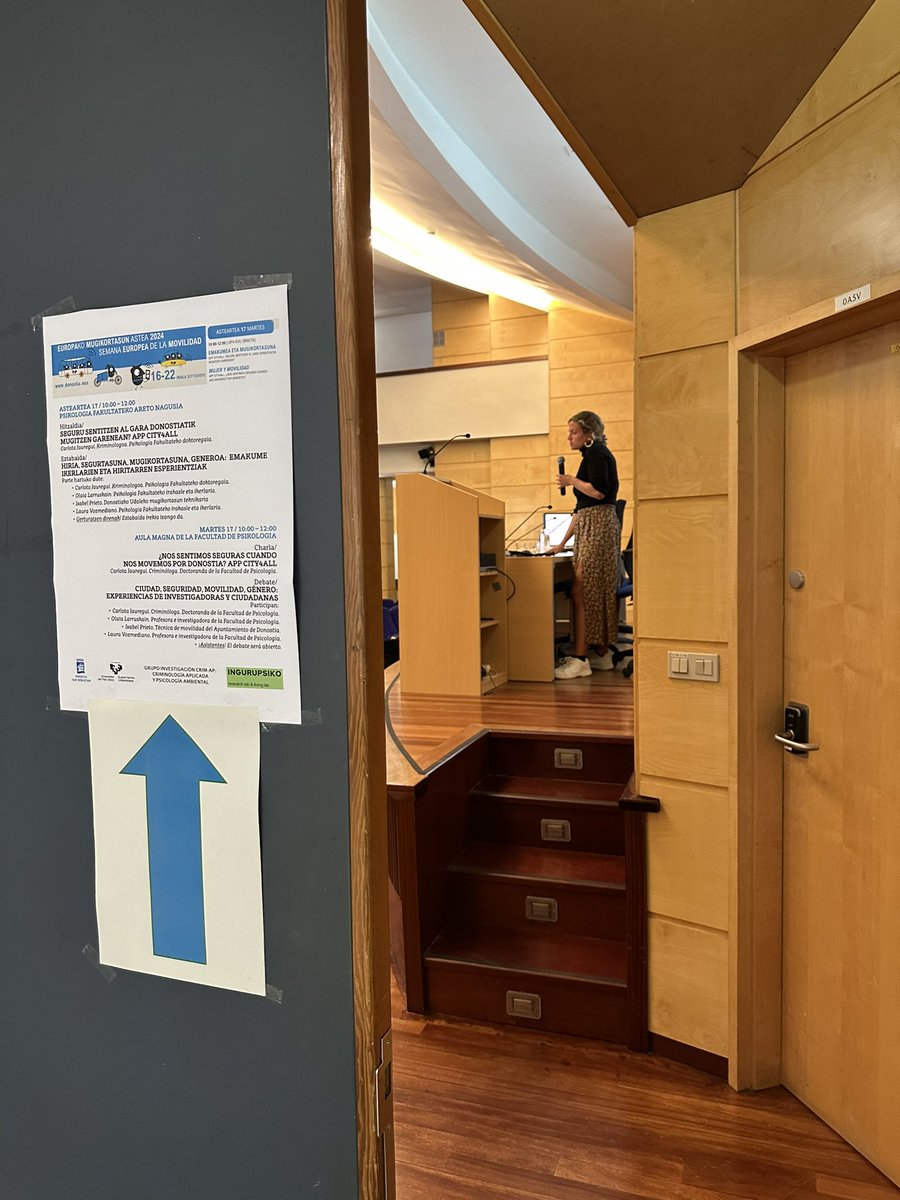
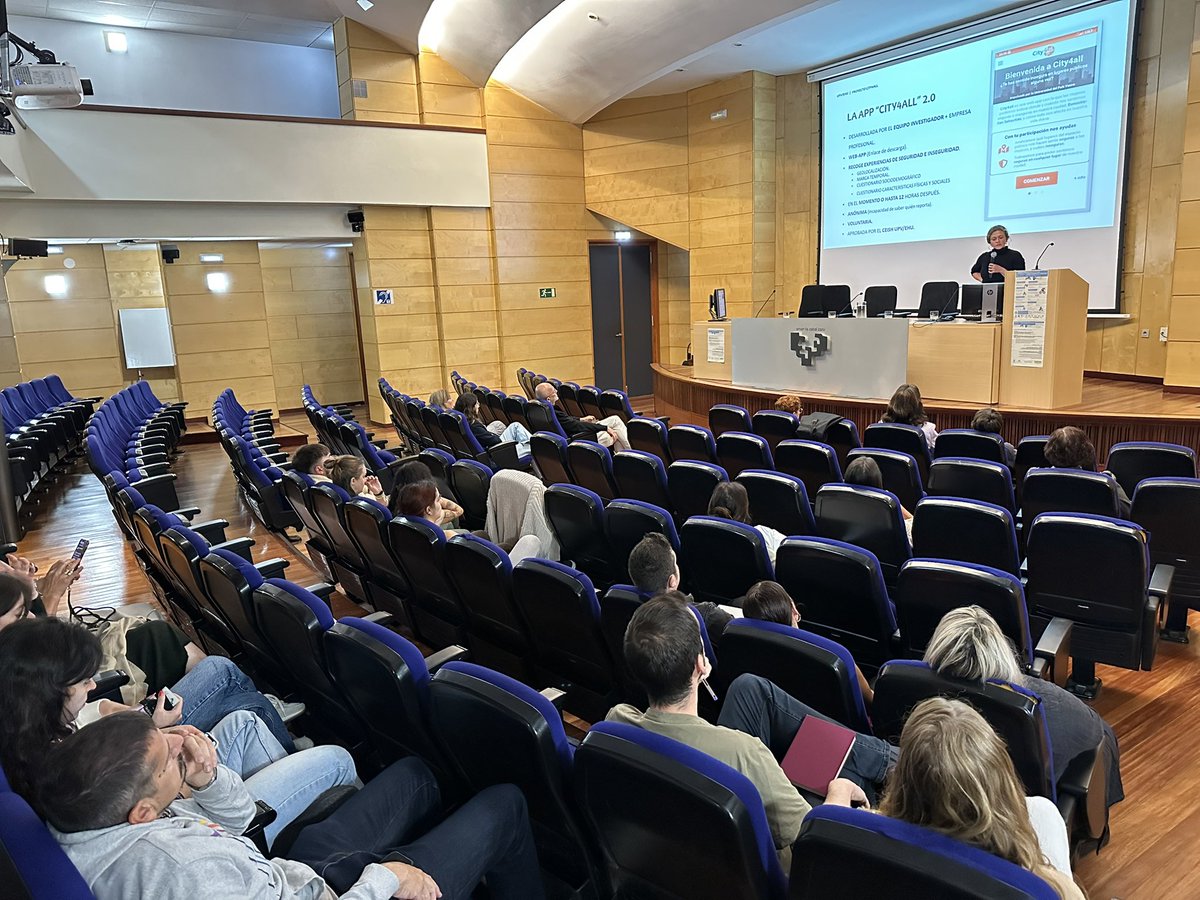
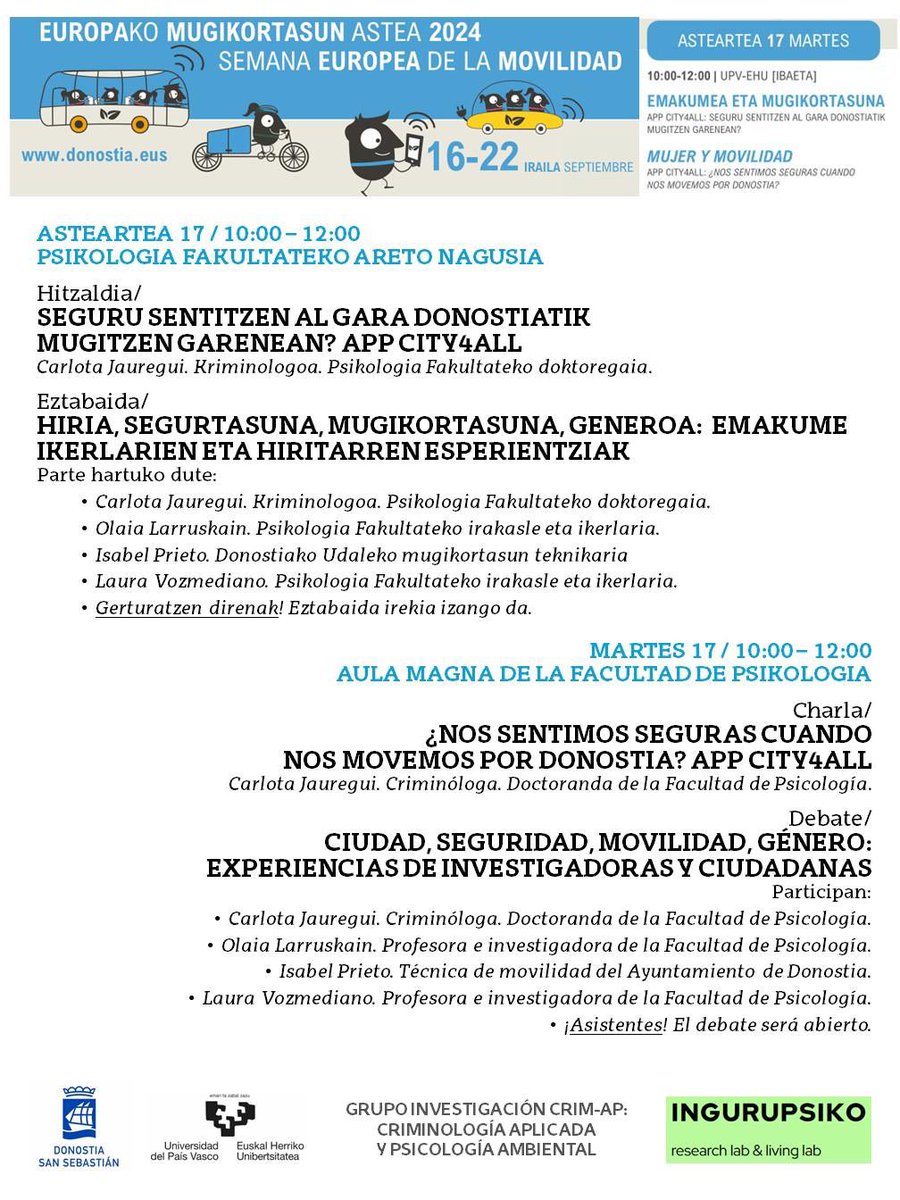
GAUR!! 10:00etan!! Mugikortasunari era generoari buruzko hitzaldi eta eztabaida Psikologia Fakultatean, zure zain gaude / Te esperamos a las 10:00 en la Facultad de Psicología para la charla y debate sobre movilidad y género!! @psikoehu @upvehu_gara
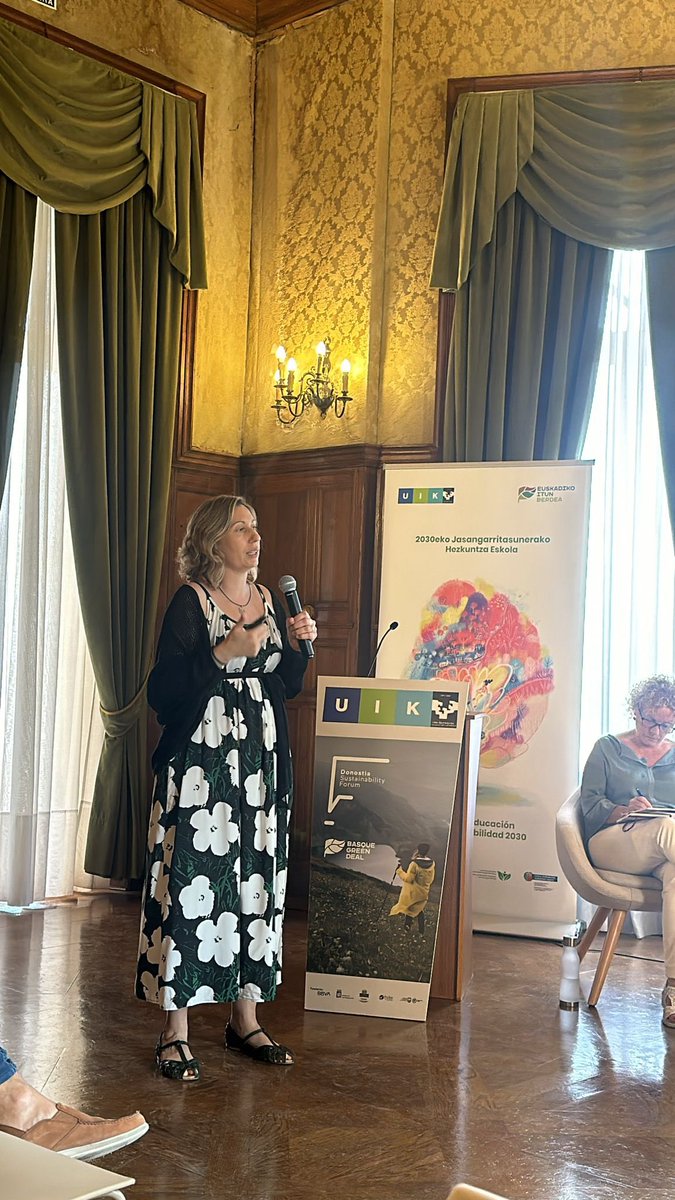
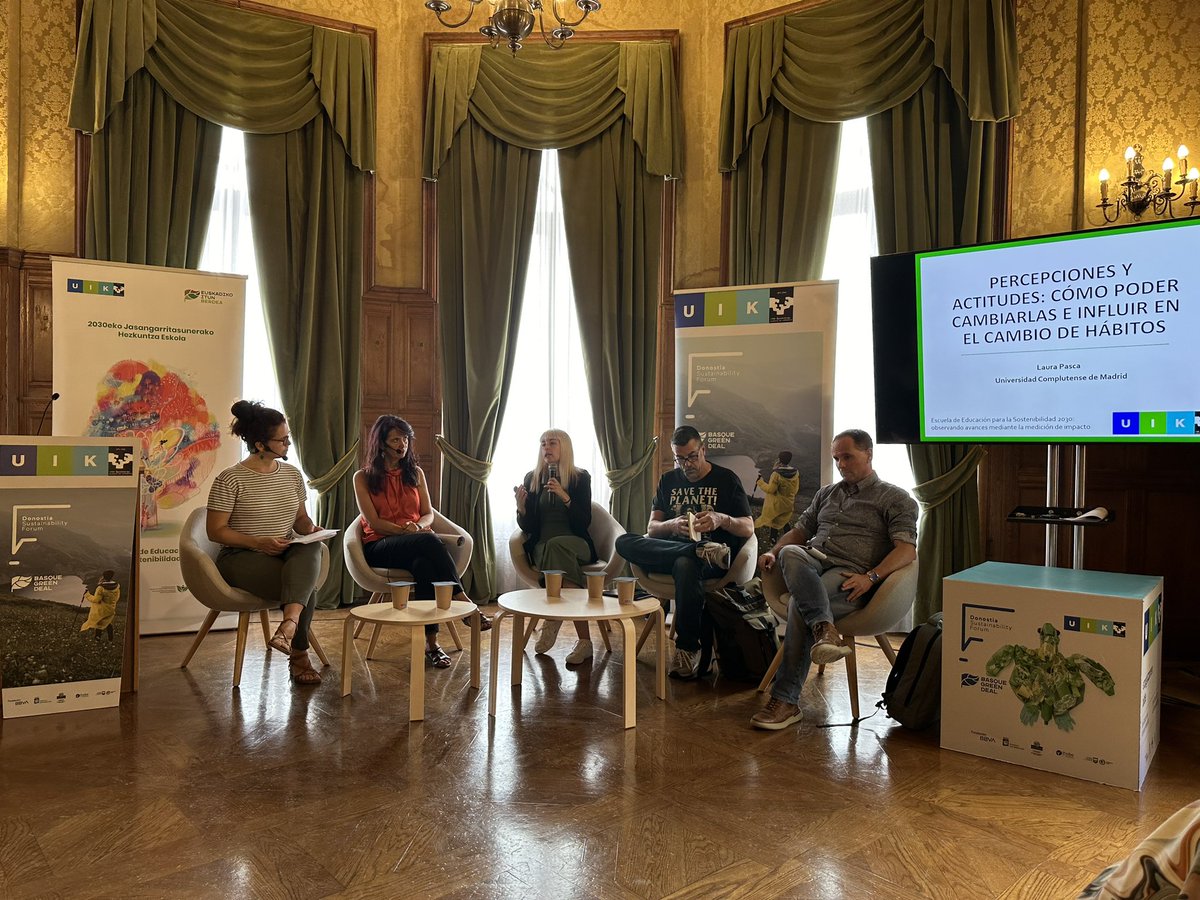
Ya es viernes en esta semana que @ingurupsiko ha dedicado a la comunicar lo que hacemos! Hoy @lauravozme ha presentado sobre retos de educación ambiental -desde una visión psicoambiental claro! - en la escuela de sostenibilidad 2030 @uik_eus@Ekoetxea_eus@Ihobe_Eus
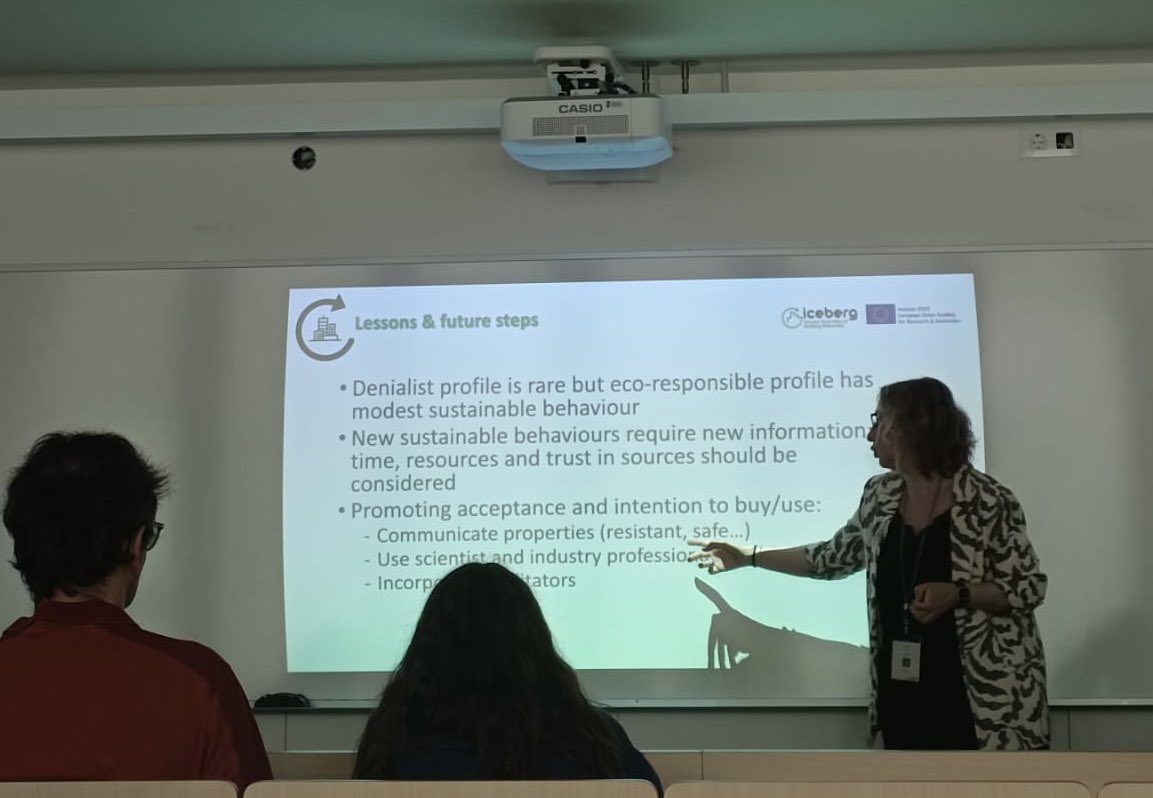
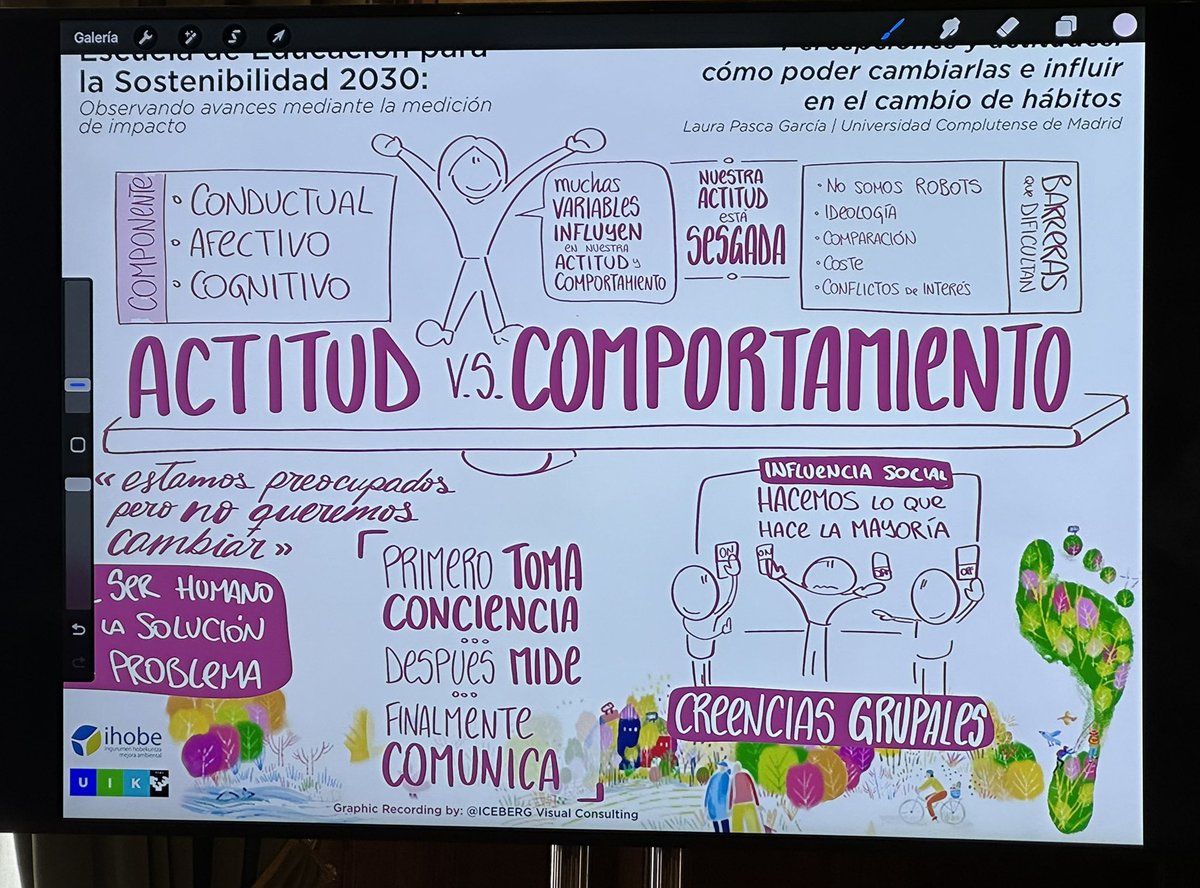
Laura @Lau_Pasca nos habla de las incoherencias entre actitud y conducta en relación al medio ambiente, aspectos a tener en cuenta al trabajar en educación ambiental
CONCLUSION: The Spanish DIPB has the = internal structure as the original, and it's valid and reliable to measure psychological barriers to act pro-environmentally. It's important to take into account those barriers that interfere in pro-environmental behavior. #ITC2024
RESULTS: Both the 5-factor and 7-factor had CFI and TLI indices showing an acceptable fit. However, the 7-factor model had a very high RMSEA (>0.08), which questions its use. 7/8
AIM: to adapt the DIPB to Spanish. 1⃣: we translated the items, 2⃣: we analyze their equivalence with the original items 3⃣: We apply the questionnaire to a convenience sample. (N = 337; age = 18 to 77; M = 42.4; SD = 13.6; 53.1% men). 6/8
Gifford (2011) proposed 30 psychological barriers grouped in accordance with what he names as ‘dragons of inaction’. With the aim of systematising the assessment of these barriers, Lacroix et al. (2019) developed the Dragons of Inaction Psychological Barriers(DIPB) scale. 5/8
One of the explanations for this gap is related to ‘behavioural barriers’: people face different types of barriers (internal + external), when attempting to become more pro-environmental (Blake, 1999; Kollmuss & Agyeman, 2002; Lorenzoni et al., 2007). 4/8
Because of the GAP! There is a gap between attitudes and behaviour ➡️pro-environmental attitudes are fairly poor predictors of pro-environmental behaviour (Bravo & Farjam, 2022; Flynn et al., 2009; Peattie, 2010; Staats, 2017). And... what is this gap due to?? 3/8
INTRO: The majority of the population is concerned about climate change (Capstick et al., 2015).But we are not engaging in sufficient mitigation behaviours, even in the context of a growing climate emergency (IPCC, 2014, 2022). WHY?!?! 2/8
En nuestra línea de estar en varios sitios a la vez, parte de ingurupsiko está en la #ITC2024 en Granada. Hoy presentamos el poster de la adaptación del DIPB al español. La sesión de posters empieza a las 11:00, pero lo publicamos en primicia por aquí: