Five Golden Tickets at the Startup Showcase. @initializ got one.
Selected by #CofoundersCapital at #AtlantaTechWeek, powered by @Google for Startups.
We were on the floor for one reason. Enterprises are shipping AI agents without an authorization model. In a traditional app, the broad credential gets narrowed in code, deterministically, reviewably, as part of the artifact. An agent has no such code path. It generates the call at runtime from model output. The narrowing has to move to the agent loop, or it does not happen at all.
That is what @initializ does. Every tool call, per invocation, identity bound. Enforced in the agent loop, decided outside the agent process. Default deny. Human in the loop where the stakes require it. Hash chained audit for the auditors who will ask.
Permission, per invocation.
Thank you Daniel Coley and the Cofounders Capital team for choosing us. The ticket comes with a working session with their investment team, and @googlecloud Startup Credits. We will use all of it.
Thank you Lauren Love and Eden Rorabaugh for making it happen. Congratulations Paras Arora.
Already governing agents inside regulated U.S. Enterprises own VPC.
#AIagents #AgentGovernance #EnterpriseAI #GoogleForStartups #AtlantaTechWeek #initializ
“A sandbox tells you whether an agent can escape. It never tells you what the agent is actually allowed to do.”
That gap is where agents stall in production. Not in the demo. The demo always works. It’s governance, security, and data residency that hold things up for months.
So we built the control plane for it.
@initializ governs every agent you run, in your own cluster, under your own policies. Checked before it starts. Denied the moment a tool call crosses the line. Every action logged and tamper-evident.
Any model. Any framework. No lock-in.
@initializ
#AIagents #AgentGovernance #EnterpriseAI #AISecurity #MLOps #AIInfrastructure #Kubernetes #AgenticAI
Enterprise AI platforms are only as capable as the runtimes they execute.
If the runtime doesn't expose audit events, traces, policy decisions, identity, workflow context, and security controls, every platform has to rebuild them.
Forge is building those runtime primitives.
Forge v0.16.0 extends the runtime with AWS Bedrock support, platform admission hooks, distributed trace propagation, workflow correlation, and enterprise security controls.
🚀 Forge v0.16.0
☁️ AWS Bedrock Support — native SigV4 outbound authentication for Anthropic and OpenAI-compatible endpoints 🛡️ Platform Admission Hooks — enable AI platforms to enforce quotas, budgets, and execution policies before an agent runs 🔗 End-to-End Trace Propagation — subprocesses and external tools automatically join the same distributed trace 📊 Expanded OpenTelemetry — authentication, scheduling, channel delivery, and admission are instrumented out of the box 🔄 Workflow Correlation — separate workflow definitions from executions for complete lifecycle visibility 🌐 Automatic Workflow Context Propagation — securely propagate workflow identity across trusted internal services ✏️ Skill Builder Edit Mode — iterate on existing skills directly from the web dashboard 🔐 Unified Audit & Redaction Pipeline — one consistent security model across audit logs, guardrails, and traces
The goal isn't to build another agent framework.
It's to provide the runtime capabilities that enterprise AI platforms need to operate agents securely, observe them end to end, enforce policy, integrate with enterprise infrastructure, and govern them at scale.
That's what Forge is building.
Full release notes → https://t.co/B4BzxCYsfY
#Forge #EnterpriseAI #AIAgents #AgentRuntime #OpenTelemetry #AmazonBedrock #Kubernetes #OpenSource
Enterprise AI agents can’t be governed with logs alone.
When an agent makes 10 LLM calls, invokes 5 tools, talks to 3 other agents, and takes action in production, you need to answer:
🔍 Why did it do that?
💰 What did it cost?
🛡️ Was it compliant?
📊 How did it perform?
🔗 Which workflow triggered it?
That’s why distributed tracing isn’t observability theater—it’s the foundation for enterprise agent governance.
Forge v0.14.0 🚀
📡 End-to-End OpenTelemetry Tracing for AI Agents
🔗 Multi-Agent A2A flows appear as a single distributed trace
🤖 Automatic tracing for LLM calls, tool execution, and outbound APIs
📊 GenAI semantic conventions for token usage, model attribution, and cost analysis
🛡️ Audit ↔ Trace correlation with trace_id and span_id on every audit event
🏛️ Governance-ready visibility for security, compliance, evaluations, and operations
☸️ OTLP collector auto-added to egress policy and Kubernetes deployments
⚡ Works with Tempo, Jaeger, Honeycomb, Datadog, Grafana Cloud, and any OTLP backend
The best part?
No manual instrumentation.
Forge agents are automatically instrumented end-to-end—from the inbound A2A request to every model call, tool invocation, downstream agent hop, and external API request.
One trace. Complete lineage. Production ready.
45 files changed. 5.5k+ lines added. 8 issues closed.
Full release notes → https://t.co/7Zpgqado9v
#OpenTelemetry #A2A #AIAgents #AgentOps #Observability #OpenSource #useforge #initializ
Heroku shutting down (for a lot of practical use cases) feels weirdly personal.
For a whole generation of engineers, it was the first time “deployment” didn’t mean wrestling with servers.
You pushed code.
It went live.
That was it.
No infra team.
No YAML.
No late-night outages because you misconfigured something.
It quietly set the standard for what good developer experience should feel like.
And now, a lot of teams are being pushed back into managing clusters, pipelines, GPUs, security, compliance, and cost optimization, whether they want to or not.
Which honestly feels like going backwards.
When we started building @initializ, this was one of the big motivations.
We kept asking:
Why does deploying AI systems today feel harder than deploying web apps 10 years ago?
It shouldn’t.
So we focused on recreating that “Heroku feeling”, but for AI agents, models, and intelligent apps.
Not just on our SaaS. Also inside customer VPCs and private clouds.
Same experience. Different environments.
Today on #initializ, teams can:
• Deploy agents and models without thinking about infra
• Scale across CPU/GPU automatically
• Get observability out of the box
• Stay compliant
• Keep data inside their own network if required
No complicated setup. No duct tape.
Just build → ship → iterate.
What’s changed is the workload. We’re no longer just deploying APIs and dashboards.
We’re deploying:
Agents, RAG systems, Agentic workflows, copilots, reasoning pipelines.
But most platforms still treat AI like “just another container.”
That’s not how teams actually work.
AI needs its own runtime.
#Heroku got something very right:
Developers do their best work when the platform gets out of the way.
We’re trying to bring that idea back for the AI era.
Simple when you want it.
Enterprise-ready when you need it.
Both at the same time.
If you’re moving off Heroku, or struggling with AI deployment in production, happy to compare notes or discuss architecture.
We’ve been living this problem for a while now.
🚀 Beyond Chatbots: Unleashing Agentic Workflows in 2025 🤖
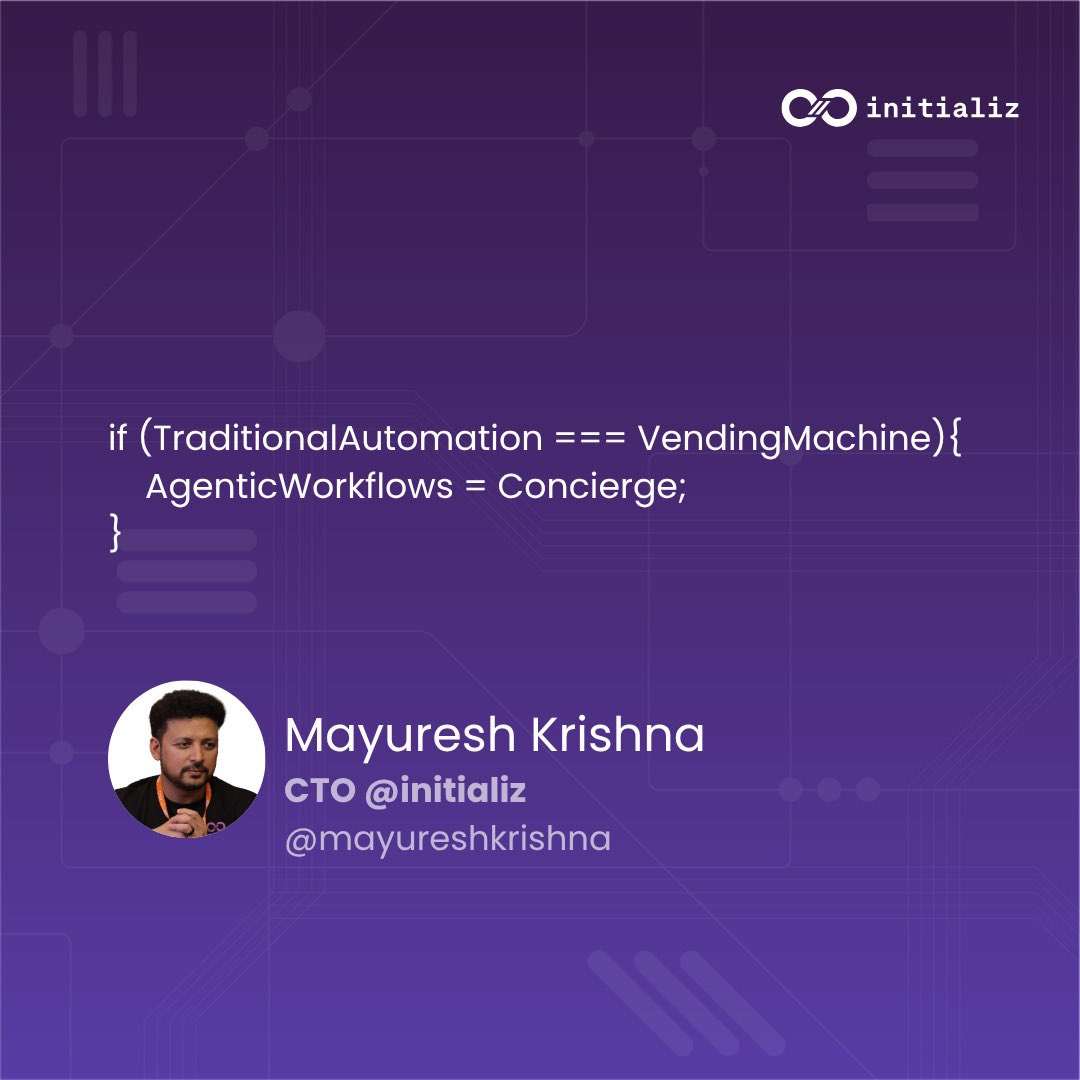
AI automation is evolving FAST. Forget rigid chatbots or clunky if-this-then-that scripts. The future is agentic workflows—intelligent systems that think, adapt, and act like a concierge, not a vending machine. 🧠✨
Here’s the deal:
- Old-school automation: Predictable, fragile, and needs babysitting for every edge case. 😴
- Agentic systems: Understand your goals, navigate uncertainty, and dynamically pick the right tools to get the job done. 💪
Why this matters:
✅ Slash engineering overhead
✅ Scale effortlessly with complexity
✅ Redefine enterprise automation with intent-driven design
With standards like the Model Context Protocol (MCP), AI can now autonomously discover and interact with APIs—building modular, secure, and truly intelligent systems. 🌐🔒
If your stack’s still stuck on brittle logic chains, it’s time to level up. The future isn’t just faster—it’s adaptive, context-aware, and outcome-driven. 🚀
What’s your take? Are you ready for the agentic revolution? Drop your thoughts below! 👇
#AgenticWorkflows #AIRevolution #EnterpriseAI #Automation #BuildWithAI #FutureOfWork #ModelContextProtocol
Meta’s Llama 4 Scout and Maverick models are live today on @initializ giving developers and enterprises day-zero access to the most advanced open-source AI models available.
Try it today at https://t.co/95rrooBo3A
#llama4#initializ#OpenSourceAI#MetaAI#AIModels#GenAI #EnterpriseAI #LLMDeployment #AIForDevelopers #AIInnovation #MaverickModel #ScoutModel
🚀 The Race for Smarter LLMs is Just Getting Started!
OpenAI and Anthropic continue to push the boundaries of intelligence in LLMs, and with DeepSeek entering the race, it’s clear that innovation in this space isn’t slowing down anytime soon. 🔥
At @initializ, our mission is to leverage this wave of innovation and democratize AI—making it more efficient, simpler, and accessible to everyone. Imagine a world where anyone, regardless of technical expertise, can take an idea and turn it into reality without friction. 💡✨
Check out my latest reel where I dive into: 🔹 The rapid evolution of LLMs 🔹 Why the AI race is accelerating 🔹 How @initializ is building a future where AI is for everyone
Let’s make AI not just powerful, but truly accessible. 💡🚀
#AIForEveryone #DemocratizingAI #LLMInnovation #AIAccessibility #OpenAI #Anthropic #DeepSeek #AITransformation #NoCodeAI #InitializAI #initializ
Getting ready to talk at Cloud Native Rejekts on “Scaling Private LLM Model Services with KServe and Modelcar OCI”
Watch it live on YouTube at 3:10 PM MST/ 5:10 PM EST/ 2:10 PM PST
https://t.co/l5IY8YAa1T
#CloudNativeRejekts#KubeCon#LLM#KServe#ModelcarOCI#CloudNative #AIModels #PrivateLLM #ModelServing #Kubernetes #AIInfrastructure #TechTalk #ScalingAI
What is the appropriate cost of security? Many CISOs have an average of 75 to 100 security tools in their toolchain. The amount of noise the fragmented approach of tools creates is impossible to manage. At @initializ our focus is on App Security. We aim to cut through that noise and prioritize the remediation of actual vulnerabilities and weaknesses that can be exploited.
#AppSecurity #Cybersecurity #SecurityTools #CISOs #VulnerabilityManagement #ThreatRemediation #CyberDefense #SecurityOptimization #Infosec #DevSecOps #SecurityNoiseReduction #initializ #RiskManagement
As someone who has spent most of my career as a developer, I'm deeply passionate about 𝗗𝗲𝘃𝗲𝗹𝗼𝗽𝗲𝗿 𝗘𝘅𝗽𝗲𝗿𝗶𝗲𝗻𝗰𝗲. Too often, developers' voices are undervalued in large enterprises despite the immense business impact they create. Leaders must prioritize outcomes from technology initiatives rather than chasing the latest industry trends.
In the current wave, there's a big push to improve developer productivity using 𝗜𝗻𝘁𝗲𝗿𝗻𝗮𝗹 𝗗𝗲𝘃𝗲𝗹𝗼𝗽𝗲𝗿 𝗣𝗹𝗮𝘁𝗳𝗼𝗿𝗺𝘀 (𝗜𝗗𝗣𝘀). While IDPs aim to streamline development, most focus on 𝗗𝗲𝘃𝗢𝗽𝘀 or 𝗣𝗹𝗮𝘁𝗳𝗼𝗿𝗺 𝗘𝗻𝗴𝗶𝗻𝗲𝗲𝗿𝘀' perspectives rather than solving for what developers genuinely need.
Here are a few reasons why I believe this approach can be misaligned:
𝗢𝘂𝘁𝗽𝘂𝘁 𝗢𝘃𝗲𝗿 𝗢𝘂𝘁𝗰𝗼𝗺𝗲𝘀: Measuring productivity with metrics like lines of code or commits misses the real business impact developers deliver
𝗜𝗴𝗻𝗼𝗿𝗲𝘀 𝗖𝗼𝗻𝘁𝗲𝘅𝘁: Each development challenge is unique, and using blanket metrics to measure productivity can be misleading
𝗧𝗼𝗼𝗹𝗶𝗻𝗴 𝗢𝘃𝗲𝗿𝗵𝗲𝗮𝗱: More tools often mean more complexity. While well-intentioned, they can create friction rather than streamline processes.
𝗦𝘂𝗯𝗷𝗲𝗰𝘁𝗶𝘃𝗲 𝗣𝗿𝗼𝗱𝘂𝗰𝘁𝗶𝘃𝗶𝘁𝘆 𝗠𝗲𝘁𝗿𝗶𝗰𝘀: Developer productivity is nuanced and cannot be reduced to simple numbers
𝗠𝗶𝗰𝗿𝗼𝗺𝗮𝗻𝗮𝗴𝗲𝗺𝗲𝗻𝘁 𝗣𝗼𝘁𝗲𝗻𝘁𝗶𝗮𝗹: Over-tracking productivity can stifle creativity and innovation
But the reality is that 𝗰𝗼𝗺𝗽𝗹𝗲𝘅𝗶𝘁𝘆 𝗹𝗶𝗲𝘀 𝗶𝗻 𝗼𝘃𝗲𝗿𝗮𝗹𝗹 𝗱𝗲𝗹𝗶𝘃𝗲𝗿𝘆 𝗮𝗻𝗱 𝗼𝗽𝗲𝗿𝗮𝘁𝗶𝗼𝗻𝘀, not just writing code. 𝗧𝗶𝗺𝗲 𝘁𝗼 𝗱𝗲𝗹𝗶𝘃𝗲𝗿𝘆 isn't just about coding speed but how efficiently the entire system—scalability, resilience, monitoring, and operational health—works together.
At 𝗶𝗻𝗶𝘁𝗶𝗮𝗹𝗶𝘇.𝗮𝗶 [@initializ], we are focused on solving 𝗼𝗽𝗲𝗿𝗮𝘁𝗶𝗼𝗻𝗮𝗹 𝗰𝗼𝗺𝗽𝗹𝗲𝘅𝗶𝘁𝘆 with a unified platform that goes beyond simply helping developers write code faster. Our approach prioritizes understanding developers' challenges and creating solutions that align with their needs.
By balancing developer-centric features with operational automation, we ensure that our platform optimizes for the 𝗲𝗻𝘁𝗶𝗿𝗲 𝗹𝗶𝗳𝗲𝗰𝘆𝗰𝗹𝗲 of an application—from infrastructure and deployment to monitoring and scaling. Our goal is to provide secure & sustainable delivery.
A big part of our mission is actively listening to developers, so I was honored to kick off 𝗗𝗲𝘃𝗫 𝗨𝗻𝗶𝗳𝘆 in July. This hyper-focused conference brought together thought leaders, developers, and platform engineers to discuss what truly needs to be solved for developers. A huge thank you to all the speakers, leaders, and, most importantly, the developers who made it a success!
Let's focus on what truly matters—𝗲𝗺𝗽𝗼𝘄𝗲𝗿𝗶𝗻𝗴 𝗱𝗲𝘃𝗲𝗹𝗼𝗽𝗲𝗿𝘀 to create value, simplify operations' complexity, and optimize for long-term success. By doing so, we can inspire and motivate developers to contribute their best and drive business growth.
#DeveloperExperience #IDP #Productivity #DevOps #InitializAI #EngineeringLeadership #TechInnovation #OperationalExcellence
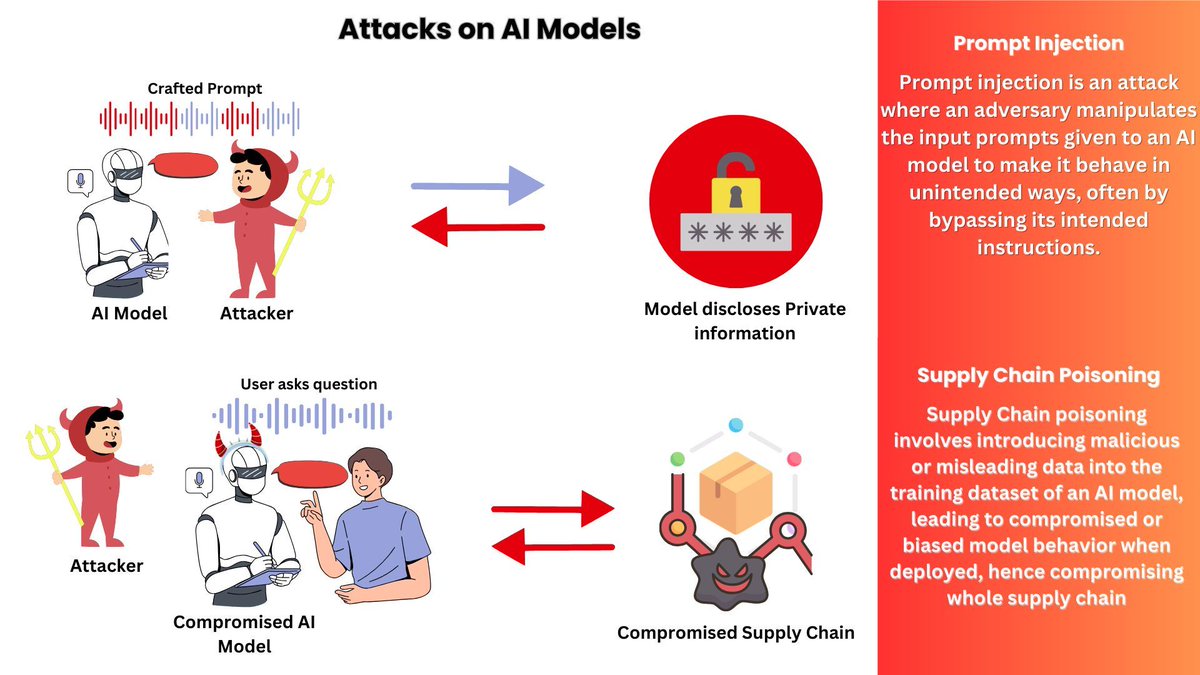
🚨𝗨𝗻𝗱𝗲𝗿𝘀𝘁𝗮𝗻𝗱𝗶𝗻𝗴 𝗔𝗜 𝗦𝗲𝗰𝘂𝗿𝗶𝘁𝘆 𝗧𝗵𝗿𝗲𝗮𝘁𝘀: 𝗣𝗿𝗼𝗺𝗽𝘁 𝗜𝗻𝗷𝗲𝗰𝘁𝗶𝗼𝗻 𝗮𝗻𝗱 𝗦𝘂𝗽𝗽𝗹𝘆 𝗖𝗵𝗮𝗶𝗻 𝗣𝗼𝗶𝘀𝗼𝗻𝗶𝗻𝗴 🚨
AI systems are increasingly becoming targets for sophisticated attacks, and two significant threats that companies must be aware of are 𝗣𝗿𝗼𝗺𝗽𝘁 𝗜𝗻𝗷𝗲𝗰𝘁𝗶𝗼𝗻 and 𝗦𝘂𝗽𝗽𝗹𝘆 𝗖𝗵𝗮𝗶𝗻 𝗣𝗼𝗶𝘀𝗼𝗻𝗶𝗻𝗴.
🔒 𝗣𝗿𝗼𝗺𝗽𝘁 𝗜𝗻𝗷𝗲𝗰𝘁𝗶𝗼𝗻: Attackers craft malicious prompts to trick AI models into disclosing sensitive data or behaving unintendedly, bypassing their safety mechanisms.
📦 𝗦𝘂𝗽𝗽𝗹𝘆 𝗖𝗵𝗮𝗶𝗻 𝗣𝗼𝗶𝘀𝗼𝗻𝗶𝗻𝗴: Malicious actors inject harmful data into the AI model’s training process, leading to compromised behavior and potentially impacting the supply chain.
In today’s AI-driven world, staying informed about these threats is crucial to safeguarding sensitive information and maintaining trust in AI systems.
#AIsecurity #cybersecurity #PromptInjection #AIpoisoning #techthreats #AIsafety #supplychainsecurity
🚨 𝗨𝗻𝗱𝗲𝗿𝘀𝘁𝗮𝗻𝗱𝗶𝗻𝗴 𝗦𝘂𝗽𝗽𝗹𝘆 𝗖𝗵𝗮𝗶𝗻 𝗔𝘁𝘁𝗮𝗰𝗸𝘀: 𝗧𝗵𝗲 𝗜𝗻𝘃𝗶𝘀𝗶𝗯𝗹𝗲 𝗧𝗵𝗿𝗲𝗮𝘁 🚨
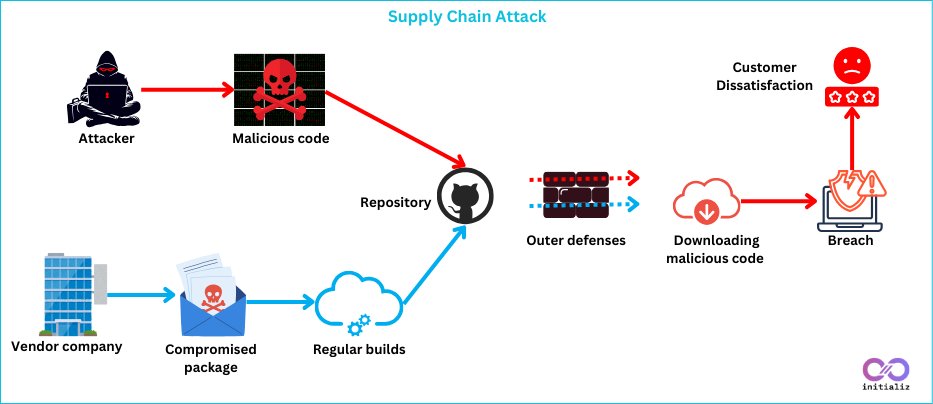
In today's interconnected world, a single compromised package in your software supply chain can lead to widespread damage, breaches, and customer dissatisfaction. The image below illustrates the typical flow of a supply chain attack:
🛠️ 𝗔𝘁𝘁𝗮𝗰𝗸𝗲𝗿𝘀 𝗶𝗻𝘀𝗲𝗿𝘁 𝗺𝗮𝗹𝗶𝗰𝗶𝗼𝘂𝘀 𝗰𝗼𝗱𝗲 into the repository.
🏗️ 𝗣𝗮𝗿𝗮𝗹𝗹𝗲𝗹𝗹𝘆, 𝗮 𝗰𝗼𝗺𝗽𝗿𝗼𝗺𝗶𝘀𝗲𝗱 𝗽𝗮𝗰𝗸𝗮𝗴𝗲 gets integrated into regular builds from a sloppy vendor company.
🔒 𝗧𝗵𝗲 𝗺𝗮𝗹𝗶𝗰𝗶𝗼𝘂𝘀 𝗰𝗼𝗱𝗲 𝗺𝗮𝗸𝗲𝘀 𝗶𝘁𝘀 𝘄𝗮𝘆 𝘁𝗼 𝘁𝗵𝗲 𝗿𝗲𝗽𝗼𝘀𝗶𝘁𝗼𝗿𝘆, bypassing outer defenses.
🚨 𝗢𝗻𝗰𝗲 𝗱𝗼𝘄𝗻𝗹𝗼𝗮𝗱𝗲𝗱, it leads to a breach, severely impacting the end-users.
Supply chain attacks are growing in frequency and sophistication. Companies must strengthen their defenses, implement rigorous security checks, and continuously monitor their supply chains.
💡 𝗞𝗲𝘆 𝗧𝗮𝗸𝗲𝗮𝘄𝗮𝘆: Always vet your sources and maintain a vigilant approach to your software dependencies. The security of your customers and your reputation is at stake!
Signup at https://t.co/ctsRHbesaF to secure your software supply chain
#SupplyChainSecurity #Cybersecurity #SoftwareSecurity #SupplyChainAttacks #Infosec #DevSecOps #CyberThreats #ApplicationSecurity #TechSecurity #MalwareProtection #SecurityAwareness #RiskManagement #CyberDefense
🌐 Google just unveiled three open-source AI models for local device use, expanding possibilities for developers.
🌮 Taco Bell is pioneering AI-driven drive-thrus, setting a new efficiency standard in fast food.
📉 Recent research shows that 'AI' in product descriptions can lower consumer trust and purchases.
🎤 Advanced voice mode demos are trending, with uses ranging from language learning to beatboxing.
🔔 Stay tuned and follow @initializ for the latest 𝙩𝙚𝙘𝙝 𝙪𝙥𝙙𝙖𝙩𝙚𝙨 𝙖𝙣𝙙 𝙞𝙣𝙨𝙞𝙜𝙝𝙩𝙨!
#AI #PlatformEngineering #TechNews #GoogleAI #OpenSourceAI #AIModels #FastFoodTech #AIDriven #ConsumerTrust #VoiceTechnology #LanguageLearning #TechUpdates #initializ #Innovation #TechTrends #AIinBusiness #AdvancedTechnology #DeveloperCommunity #ArtificialIntelligence