I have a genuine concern.
Why are Nigerian startup founders building countless payment apps, betting platforms, and delivery services, yet hardly anyone is building serious solutions to insecurity, hunger, poverty, and failing education?
These are the problems affecting hundreds of millions of people.
What exactly is stopping our brightest minds from working on them?
Is it that investors won’t fund such ideas?
Or have we become more interested in convenience than solving the problems holding the country back?
Nigeria doesn’t need another payment app as much as it needs solutions that make people safer, put food on tables, create opportunities, and help children learn.
The strongest predictor of who does extraordinary work is whether they ever obsessed over something pointless. We've seen this across 5000 startup meetings, but the pattern showed up across everyone from scientists to athletes.
We’ve met people who spent two years optimising their fantasy football algorithms, or memorised every player in the NBA at 11, or collected thousands of train tickets, or built a Lego replica of their school; none of these activities really had much point.
What they were demonstrating was the hardest skill in any field; the mental capacity to stay focused on a boring task for much longer than it deserves. The path to genius is mostly boring repetition, and people who achieve it have a broken off-switch. It is tough to fake having spent years obsessed with boring things that didn't matter.
@DrKalu_ Isn’t it perhaps more plausible to think that the place is “bugged” than it is to think it’s some spiritual mumbo jumbo? Since we are speculating why not go for the more plausible possibility.
One thing about adulthood that way too many people learn way too late (and have no choice but to learn the hard way): you have to be deliberate/proactive about everything. For the first time in your life, you can't be passive participant in anything.
Want to learn how to analyze an RF device block by block, without any docs?
Here's a thread I've written on exactly that, with a real product as the example.
Some sort of high-level reverse engineering for beginners.
"Take vitamin C with your iron." You have heard it a thousand times.
The mechanism behind it is real. The clinical benefit for supplements is not what you think.
Non-heme iron from food arrives at the gut wall as Fe3+ (ferric iron). It cannot cross the enterocyte membrane in that form. An enzyme called DCYTB sits on the brush border and uses vitamin C as an electron donor to reduce Fe3+ to Fe2+ (ferrous iron). Only Fe2+ can be transported through DMT1 into the cell. Vitamin C is one of the primary enhancers of this reduction step, particularly in meals high in phytates and polyphenols, which chelate ferric iron and further reduce availability.
This is where the advice originated, and for food iron, it is well supported.
But common oral iron supplements (ferrous sulfate, ferrous bisglycinate, ferrous fumarate) are already in the ferrous form at the point of ingestion. The reduction step that vitamin C facilitates was not required to begin with.
A 2024 meta-analysis by Deng et al. tested exactly this question in clinical practice. They pooled 11 studies with 1,930 patients diagnosed with iron deficiency anemia. Iron plus vitamin C versus iron alone. The hemoglobin difference was 0.14 g/dL. Statistically significant, but in the authors' words, "small and likely clinically insignificant." Ferritin increased by 3.23 mcg/L. Also marginal.
A separate 2023 meta-analysis by Loganathan et al. reached a similar conclusion from a smaller pool of studies: no statistically significant benefit of adding vitamin C to iron for hemoglobin or ferritin outcomes. The authors noted the evidence quality across their included studies was very low, which is part of why the Deng analysis was warranted.
One caveat: the Deng analysis had significant heterogeneity across studies, reflecting differences in formulations, dosages, and populations. The pooled estimate should be interpreted with that in mind.
The practical distinction: vitamin C matters for iron absorption from food, particularly plant-heavy meals where non-heme iron predominates and inhibitors are present. It does not appear to meaningfully improve outcomes when added to a ferrous iron supplement. The mechanism is not wrong. The context it gets applied to usually is.
Your smart TV is taking screenshots of your screen every 15 seconds.
Not a guess. Not a theory.
A peer-reviewed study by researchers at UC Davis, UCL, and UC3M tested it.
Samsung TVs: every minute.
LG TVs: every 15 seconds.
Even when you're just using it as a monitor.
Here's how to turn it off for every brand:
If it’s still not clear who we are:
We have been at this for years.
We are not here to go viral. We are fighting for our lives.
This is more than journalism.
We know exactly what we are up against. That’s why this work is a fight.
Things like this make me really deep statements like “black people are more susceptible to diabetes/ high bp etc.” Because are we really or do we just have poor access to good healthy food choices
According to independent laboratory tests, Nigeria’s Fanta contains EU banned synthetic dyes (Carmoisine E122 or Allura Red E129).
They were found in Fanta Strawberry, Fanta Orange variants, and other local soft drinks.
Say no more.
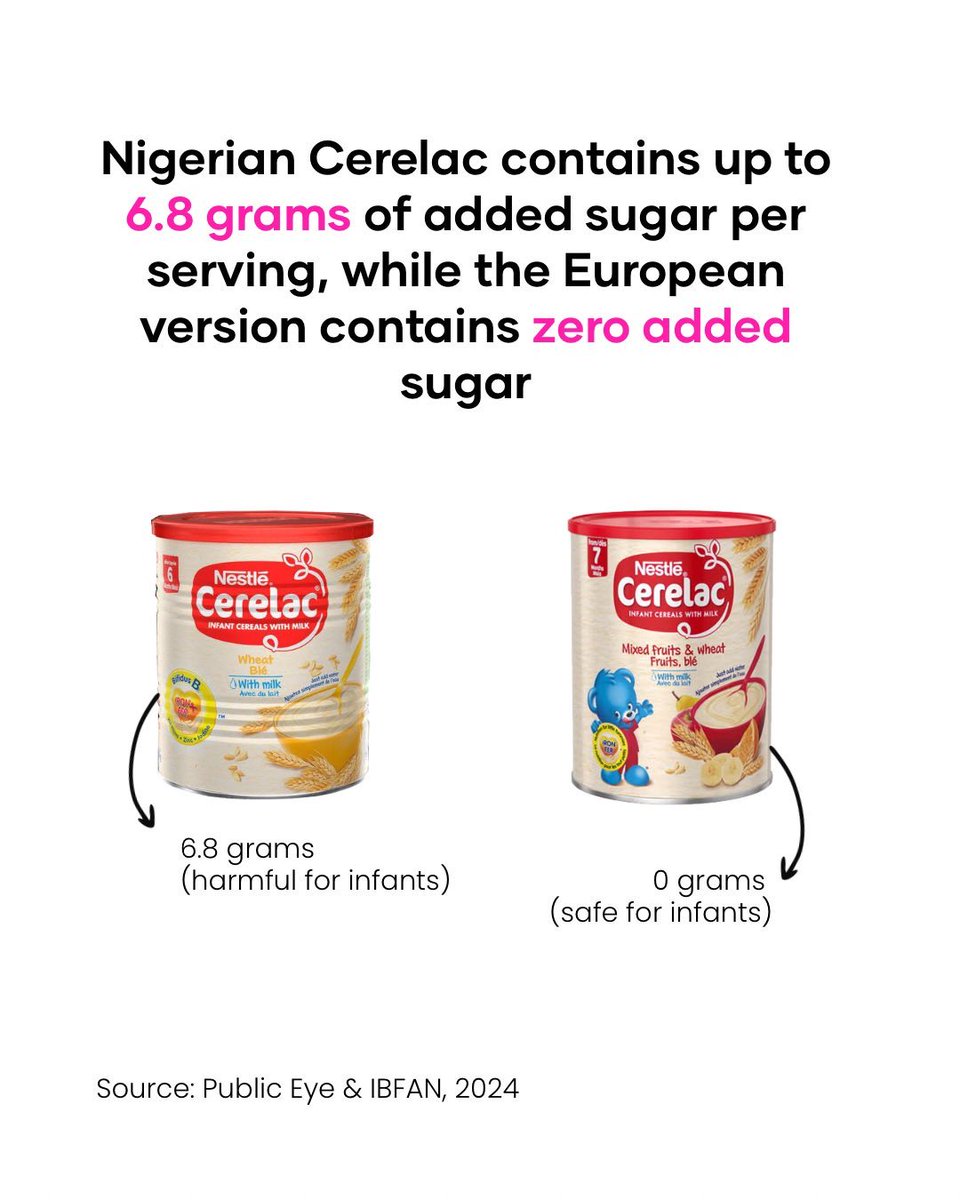
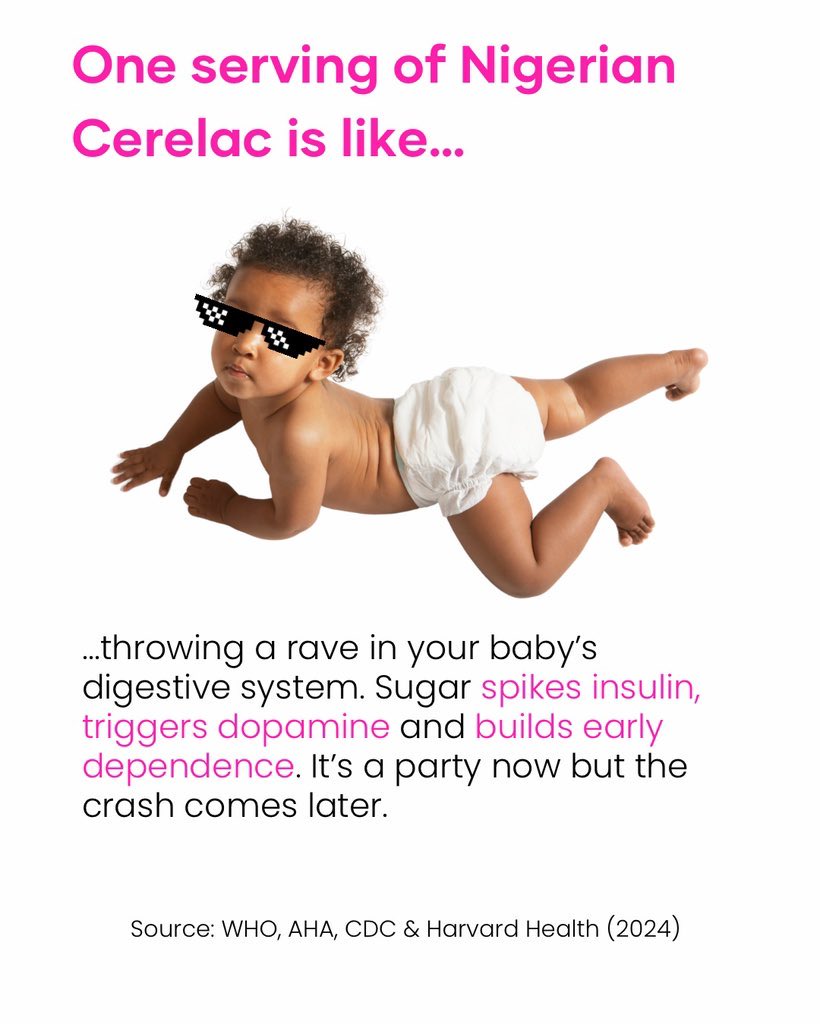
Nigerian babies are fed sugar-packed Cerelac while European babies get the same brand with zero added sugar.
The same culprit? Nestlé.
Ultimately, NAFDAC is to be held responsible. Their mandate is to protect the health of Nigerians and they are failing at it.