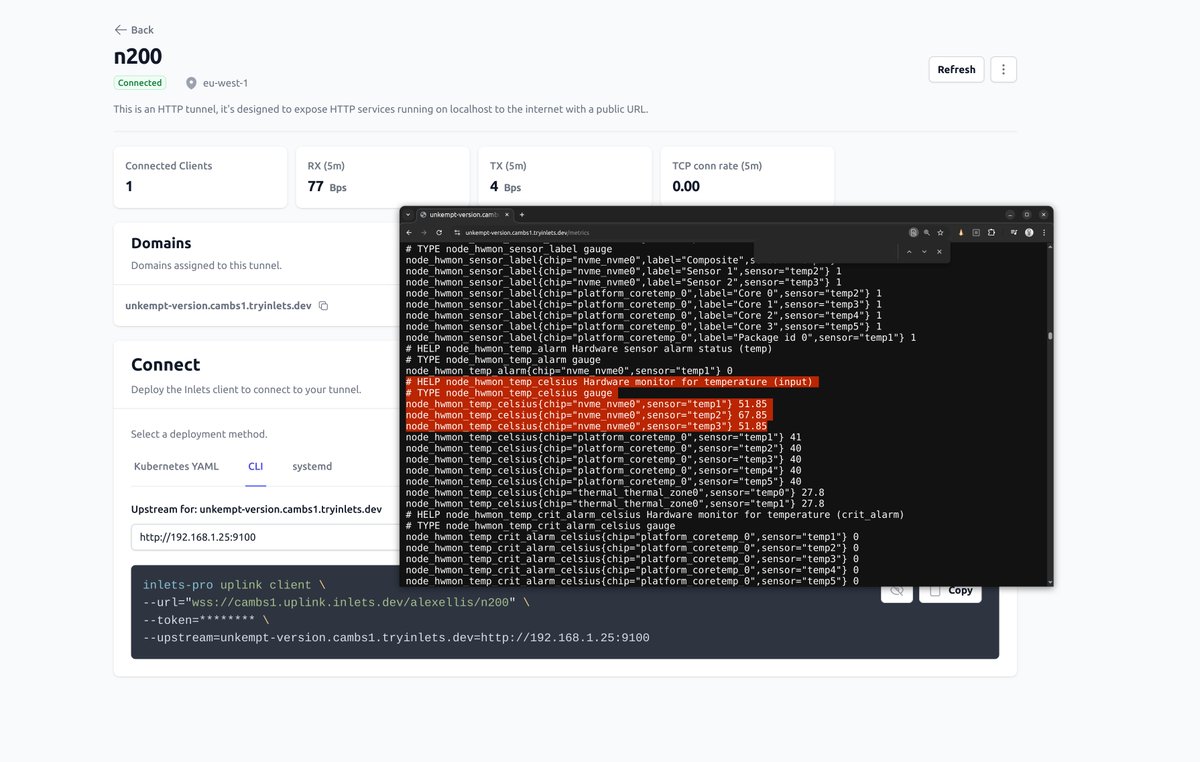
Here's what it looks like exposing node_exporter from a local machine - the HTTP endpoint got TLS terminated with a randomly generated domain
Sign up for access: https://t.co/gwHX9enpfS
We've rolled out a couple of new features on inlets cloud today:
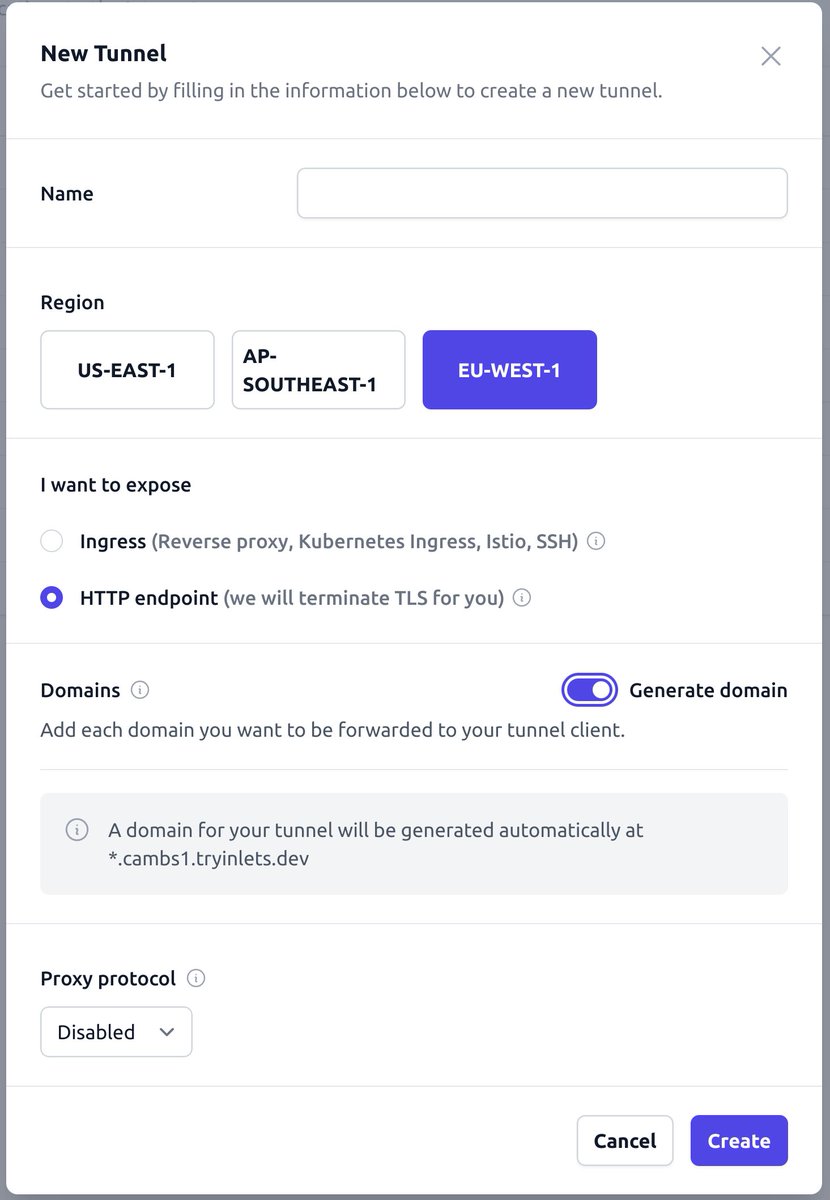
1) Use our domain for your tunnels, so you don't have to verify one to try it out.
2) HTTP tunnels where we terminate TLS for you via Let's Encrypt, instead of using Caddy or K8s Ingress
Release Friday for @inletsdev tunnels (0.10.0)!
👉 Add OAuth/Basic Auth/Bearer Tokens to local HTTP endpoints
👉 Modify HTTP request/response headers
v0 was used to make the HTML pretty for the OAuth flow, link below 👇
WIP: Add OAuth to any HTTP endpoint exposed over an @inletsdev tunnel.
Think Prometheus, a draft blog post, a fileserver (as pictured). Only your friends or colleagues that you specify can get in with their GitHub / Gmail etc.
We had an email from a new @inletsdev customer asking how to expose the @argoproj dashboard from his local KinD cluster using @IstioMesh
Here's a quick walkthrough on how you can do it too:
https://t.co/T71vm8tiG8
@virtualized6ix Thanks Marino 🙏
Have you tried the cloud hosted version yet? It's free in beta and means you don't need to host your tunnel server.
With a US, Asia and EU region - you can expose kubectl, Istio, Ingress, Caddy/Nginx and SSH. Just copy/paste the client YAML or command line
I just met with developers at an AI start-up, who'd used @inletsdev just like in this blog post to connect cheaper GPU-enabled services into their AWS EKS clusters in prod & dev
https://t.co/ddSXOcRKcl
I just tried out a demo of @inletsdev cloud - hosted tunnels for Kubernetes ingress.
After signing in and verifying a domain with a TXT record, you can hook up your ingress controller by pasting in some YAML.
I just walked a customer through how to expose Kubernetes Ingress from a private production cluster using EC2 with @inletsdev. We did everything manually to understand the moving pieces.
Here's the automated way with @Hetzner_Online in ~ 30s.
https://t.co/rKrS0w2z21
Is creating a distributed Kubernetes cluster with a VPN the right approach? @alexellisuk shows a demo of an alternative using a HTTP REST API and @ollama as an example
https://t.co/omTufOmFj2
"How do I connect my local GPU node to my cloud Kubernetes cluster to run @ollama?"
That might be the wrong question.
REST APIs or message queues are a better fit than adding a high latency node to a K8s cluster over a VPN
https://t.co/ddSXOcSi1T
Want to get a public LoadBalancer for ingress-nginx, Kong, Traefik, Istio, etc from any K8s cluster?
Reply and I'll send you free access to try out @inletsdev as a SaaS, where we host the tunnel server for you.
The same inlets experience, but with a hosted tunnel that you don't have to manage or think about
#expose#kubernetes#ingress#istio
https://t.co/DbCo4Mu5YA