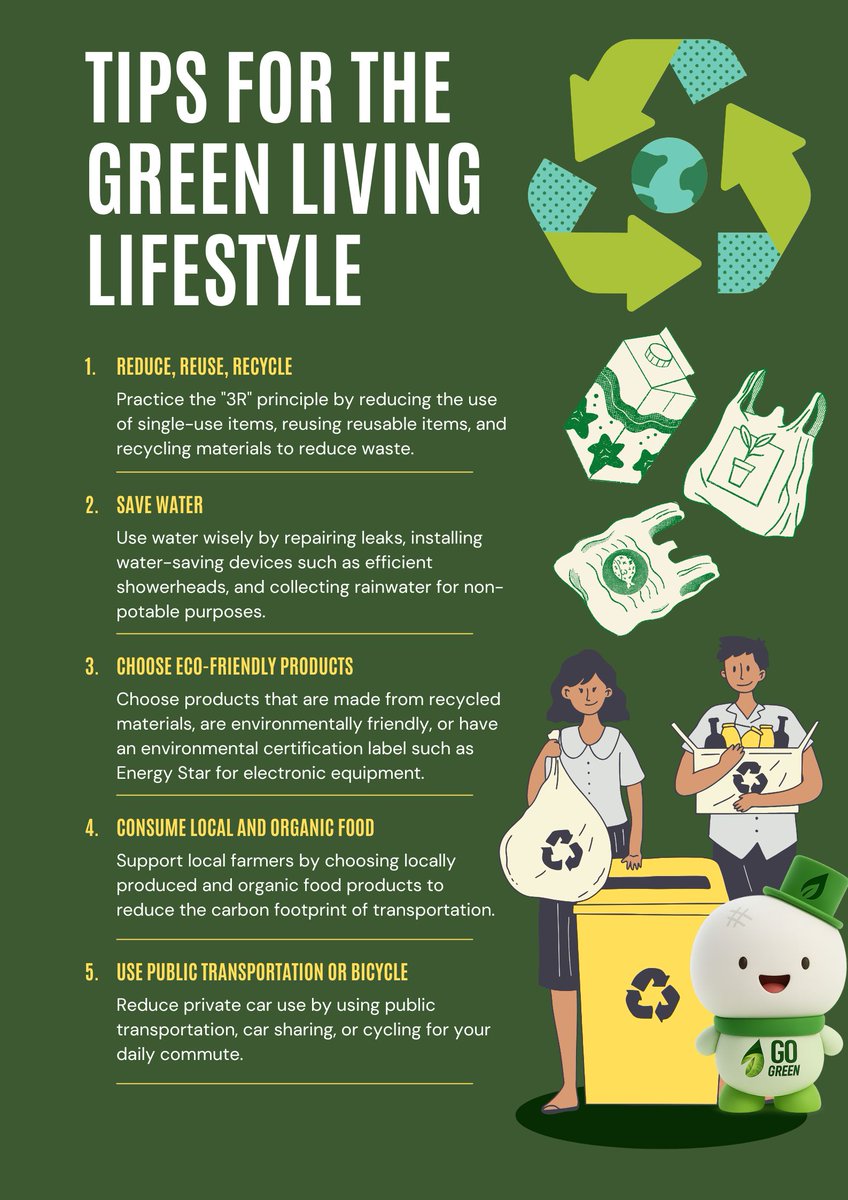
Go green, collect plastic bags and put them in the trash, reduce global warming, reduce pollution on the planet, make the world clean and livable.
@grok#Gogreen@GoGreen_App
How to Mint:
Fill this form: https://t.co/Df5W9NDVnS
Snapshots:
> May 31, 13:00 UTC
> June 1, 13:00 UTC
>June 2, 13:00 UTC (final)
Mint NFT → Wallet gets whitelisted @ 15:00 UTC on snapshot day (everyday)
Bonus: Special Discord role in Overnads 🎭
Mint: https://t.co/qCke4wJadL
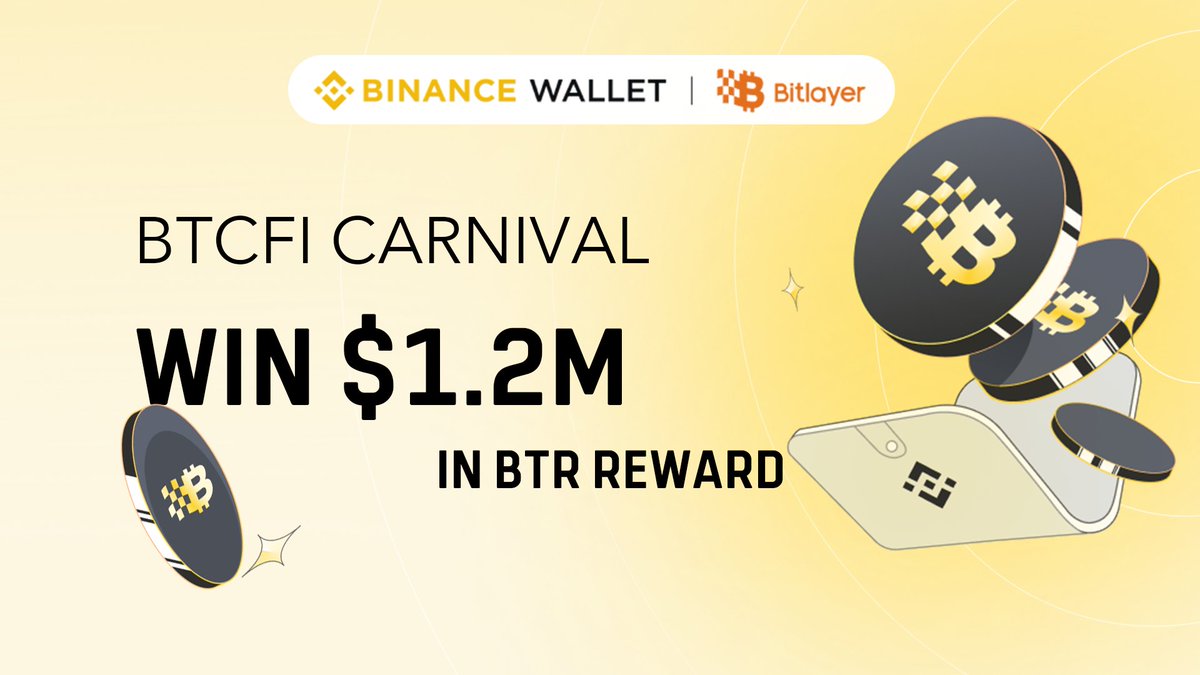
🎉Bitlayer BTCFI Carnival is officially live on Binance Wallet! 🚀 @Web3WithBinance
✅Get ready for a 6-week non-stop $BTR giveaway with $1.2M in rewards!
💫We’ll partner with 11 top-tier ecosystem BTCFI projects to bring you immersive and enjoyable interactive experiences every week.
🗓️This week, complete social & on-chain tasks, including daily check-ins, to grab your share of $600,000 $BTR Week 1 rewards.
🧡Don’t miss out on the ultimate BTCFI carnival—join us now and unlock exclusive rewards! 🎁🔥
👉Binance Wallet Entry || Binance Wallet App-Discover-Airdrop-Bitlayer
https://t.co/2N2AFvG5Uc
🕹️For more: https://t.co/GdWySbhabu
🏵️Tutorial: https://t.co/1vq5YvsxPb
#BitlayerBTCFI #BinanceWallet #BitlayerCarnival
Data labeling is the unsung hero of AI, often overlooked by many but absolutely vital, and more challenging (and transformative) than you’d think.
Here’s the reality: up to 90% of an AI project’s time is spent on labeling and preparing data, leaving only 10-20% for actual model training. That’s a staggering amount of effort going into something we don’t talk about enough.
The market is catching up. Data labeling is projected to become a $17.1 billion industry by 2030, growing at an impressive 28% per year. This growth is being fueled by AI adoption across industries like healthcare, finance, retail, and autonomous vehicles.
But the challenges are huge:
1. Quality: Human error and bias often creep in, leading to inaccurate labels and, ultimately, unreliable AI models.
2. Scalability: Manual labeling is expensive and time-consuming, it simply can’t keep up with the explosion of data we’re seeing today.
3. Security: When you’re dealing with sensitive data (like medical records or financial info), privacy and compliance become major concerns.
As AI becomes more embedded in our lives, solving these challenges will shape the future of industries worldwide.
Sharing this as a reminder of how pivotal and early we still are in this space. It’s an exciting time to be paying attention!
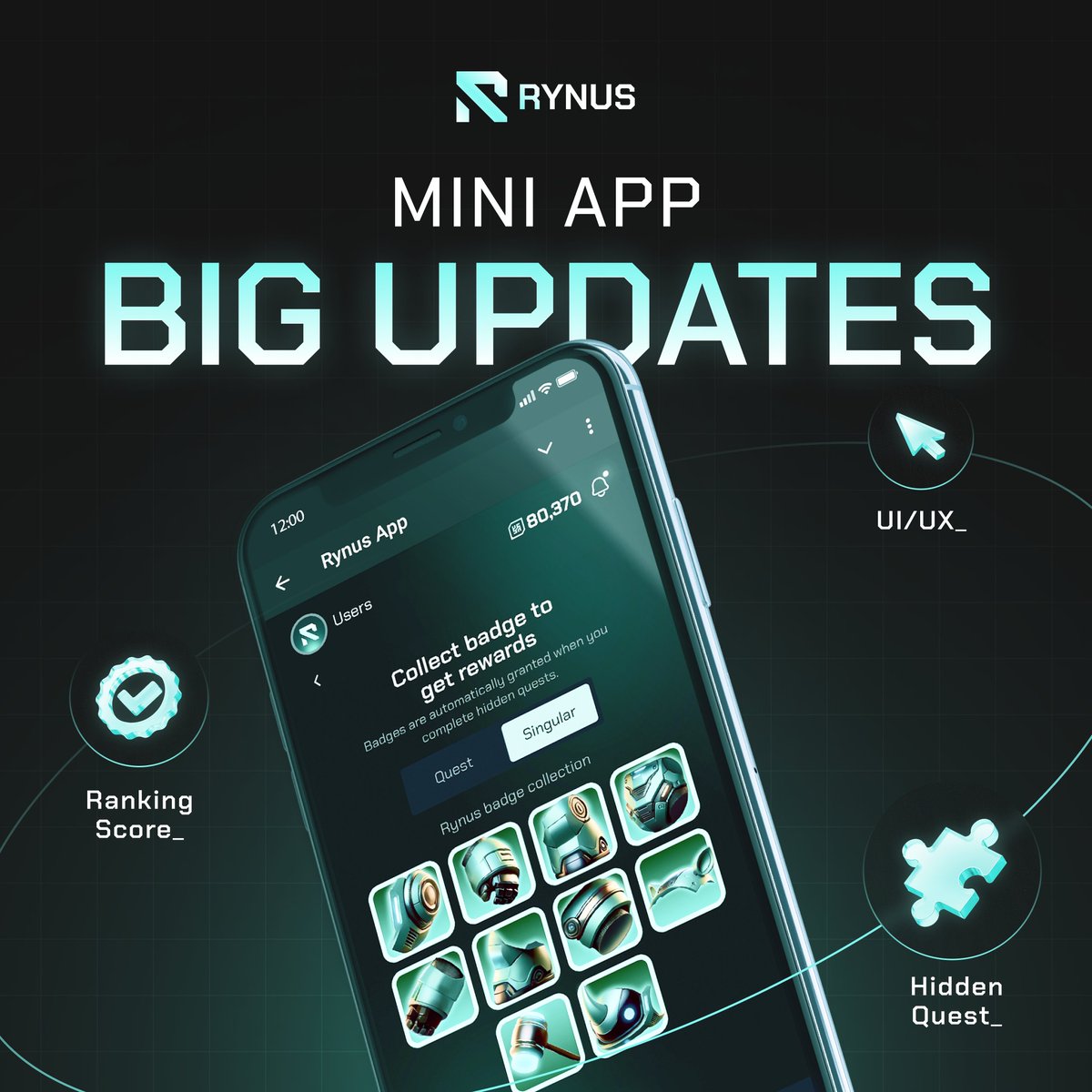
RYNUS MINI APP BIG UPDATES ✅
We’re thrilled to roll out some amazing new features to enhance your experience. Check out what’s new:
🎯 Hidden Quest Integration
Complete unique challenges, earn exciting rewards, and uncover hidden surprises in our mini app.
🎨 UI/UX Updates
Our latest UI/UX updates make the Rynus mini app faster, smoother, and more enjoyable to navigate.
📈 Ranking Score Updates
We’ve fine-tuned the metrics of Ranking Score system to ensure fair, transparent, and competitive scoring.
Rynus Now Integrates @solana Wallets ⚡️
We’re excited to announce that Rynus now supports your favorite Solana wallets: @phantom, @solflare_wallet, @Backpack, and @CoinbaseWallet.
Get ready for a smoother, faster, and more secure experience as we bring decentralized GPU computing closer to the Solana community.
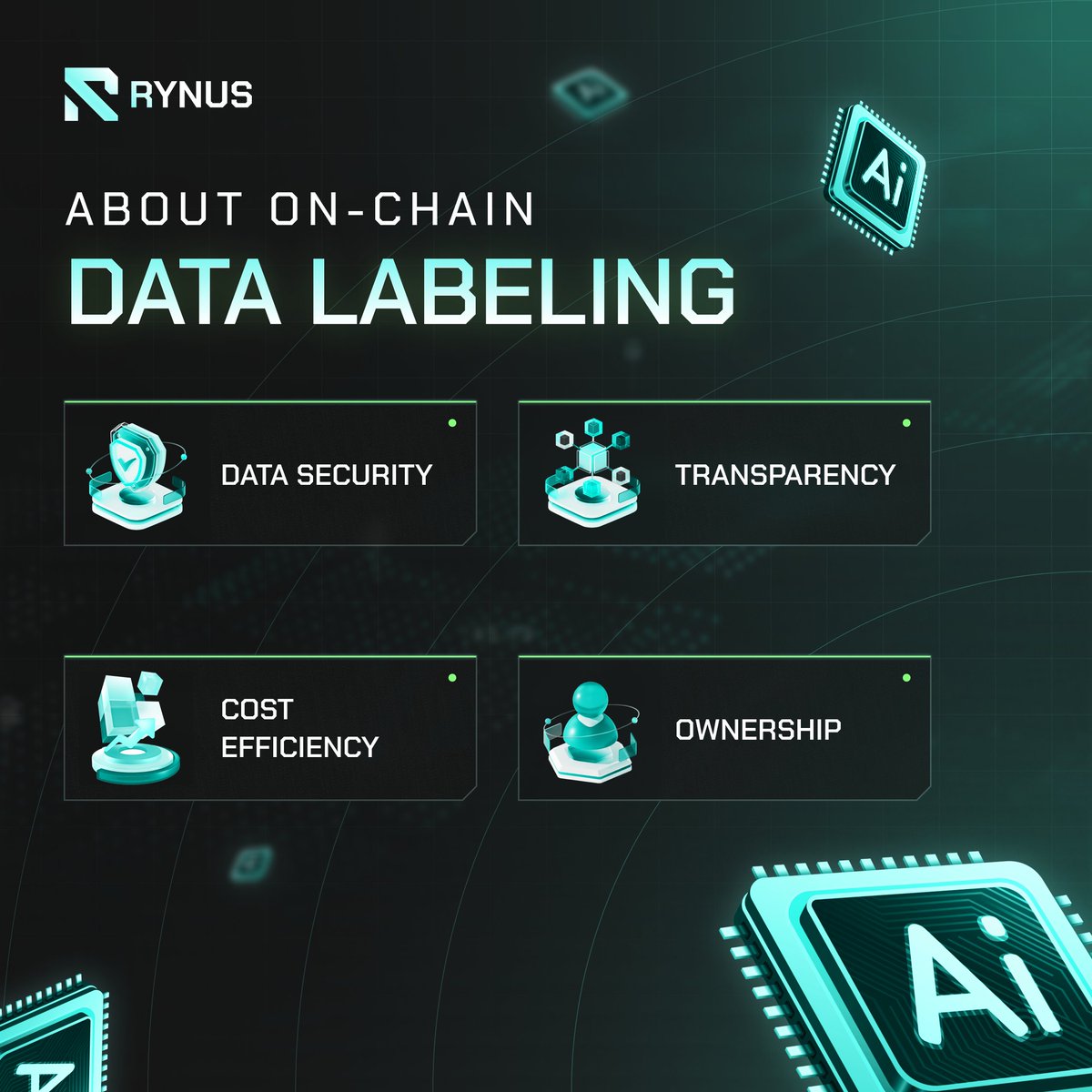
What is On-chain Data Labeling 🎯
It’s a groundbreaking method for AI training data preparation, with blockchain-based labeling ensuring secure, transparent, and efficient handling through decentralized technology.
Why is it better 💡
➤ Data Security: Your data and labels are immutable and protected
➤ Transparency: Every step is recorded and traceable on the blockchain
➤ Cost Efficiency: Decentralized systems reduce intermediaries & associated costs
➤ Ownership: Contributors retain control and credit for their work
Start exploring with the first on-chain data labeling solution👇
https://t.co/3pOM8CcYdZ
It's clear we're entering a new phase for crypto. Leadership has the power to reshape industries and open new doors. The direction the U.S. takes now will influence the global stage, and the future holds tremendous potential!
GPUs have quietly become the backbone of innovation, but their true potential is only just beginning to unfold.
No longer confined to training AI models or powering machine learning, they are evolving into the core of a distributed global network, transforming how we compute, collaborate, and innovate.
By unlocking access to shared computing power, this shift can break down barriers that have long restricted advanced technology to the few. From enabling real-time autonomous systems to driving hyper-efficient AI, this evolution opens the door to solutions once thought impossible.
This isn’t just about improving hardware, it’s about rethinking infrastructure itself: making it accessible, scalable, and shared by everyone.
The question isn’t whether this transformation will happen - it’s who will lead the charge to make it real.