Copper now diverging from gold in a meaningful way.
Yes, AI, industrial demand, and onshoring are part of the story.
But the real driver is a tightening supply-demand imbalance that the market is only beginning to price in.
That said:
Metals rarely stay disconnected for long.
This gap is setting the stage for gold to become the next catch-up trade, in my view.
https://t.co/sJjIAEqwqb
The most powerful antioxidant you've never heard of:
Astaxanthin.
It's 6,000 times stronger than Vitamin C and 550 times stronger than Vitamin E.
It even improves your eyesight and makes your skin look younger.
Here are its top 7 health benefits (and how to get enough): 🧵
RBI may have sold nearly $12 billion worth of Gold, as per a Bloomberg report.
Read that again.
The same RBI that spent years accumulating gold and bringing it back home may have used gold as emergency dollar liquidity during this war/oil shock regime.
That is stress in the system.
When crude spikes and rupee comes under pressure.
When imports become expensive, the central bank needs liquid dollars.
And in that moment, Gold becomes the final balance-sheet asset that can be converted into liquidity.
If central banks like RBI are forced to convert Gold into dollar liquidity, imagine the pressure sitting inside the system during that time.
@snipy_in Thank you for the heads-up.
Correcting magnesium deficiency is one of the most powerful, evidence-based steps you can take for preventing and reversing atherosclerotic plaque.
Comprehensive article on magnesium and atherosclerosis by Dr. Jeffrey Dach.
Well worth paying attention.
https://t.co/4N9N1lEQXW
Hm. The other yellow metal had a good start to the week...
Uranium Markets BPI June 1, 2026
Broker Price Index: $85.25 (+$1.13)
Spot Bid: $86.00
Spot Offer: $86.50
White rice can contain high levels of arsenic.
Dr. Pradip Jamnadas shared a practical method on Diary of a CEO for making it safer:
- Soak rice overnight and discard the water (removes much of the arsenic and heavy metals)
- Cook with plenty of fresh water and discard that water too
- Cool the rice in the fridge, then reheat the next day
Arsenic accumulates in rice from contaminated soil and water. Soaking and rinsing can reduce inorganic arsenic by up to 60%. Cooling and reheating rice increases resistant starch, which improves gut health, lowers blood sugar response, and feeds beneficial bacteria.
For billions of people who rely on rice as a staple, these simple steps can meaningfully reduce toxin exposure while improving metabolic benefits.
Have you tried the soak-and-cool method with rice?
David Hunter says silver could first run toward $200 before facing a major correction in a global bust. He says that kind of fall should not shock investors, as silver already dropped from $122 to the low $60s in a very short period. In his view, once that global downturn is over, gold could eventually move toward $20,000, while silver’s long-term target has now been raised from $400 to $500 toward $1,000.
For the record.
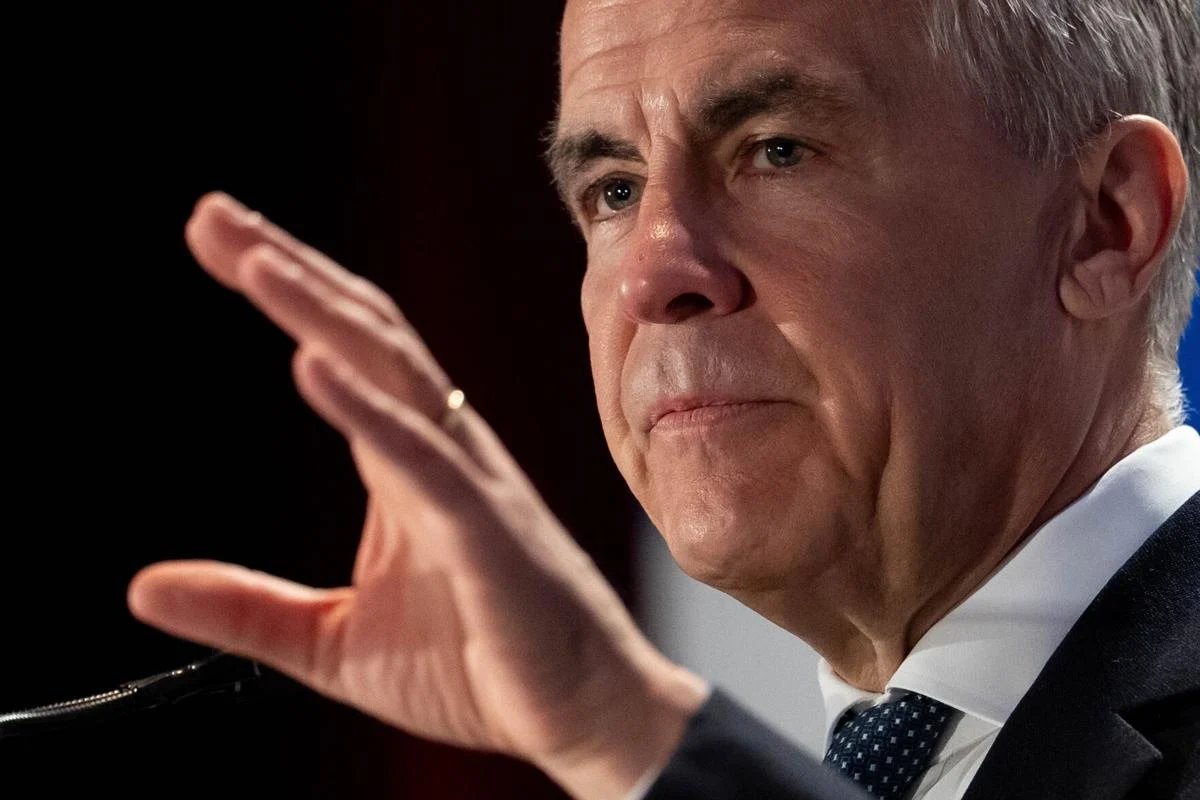
Canada’s recession is not bad luck, it is a policy choice and the blame sits squarely with Tiff Macklem, not Mark Carney.
By keeping monetary conditions too tight for too long into a tariff‑driven slowdown with inflation already essentially anchored, Macklem has replayed John Crow’s late‑1980s mistake of attacking real estate to prove his anti‑inflation credentials, and in the process turned a manageable adjustment into a made‑in‑Canada recession.
A Danish researcher proved cholesterol does not cause heart disease. They burned a copy of his book on live Finnish television.
Dr. Uffe Ravnskov. Danish nephrologist and lipid researcher. He spent decades studying cholesterol up close. The deeper he looked, the less the official diet-heart hypothesis held up.
The official story was simple. Saturated fat raises cholesterol. Cholesterol clogs arteries. Cholesterol causes heart disease. Lower it and you save lives.
Ravnskov went back to the underlying trials and found the data did not support any of it. High-cholesterol countries did not have higher heart disease rates than low-cholesterol countries. The famous statin trials hid more than they showed. The dose-response that should exist if the theory was right kept refusing to show up.
He publishes The Cholesterol Myths in Sweden. Detailed. Citation-heavy. Polite but devastating.
The Finnish edition launches. Finnish proponents of the cholesterol hypothesis go on national television. On channel 2, on live air, a copy of the book is set on fire in protest.
He kept going.
In 2002 he founded THINCS. The International Network of Cholesterol Skeptics. The first organized scientific dissent against the diet-heart hypothesis. More than a hundred doctors, researchers, and PhDs from around the world joined. Almost none of them got airtime.
For thirty years the official advice did not move. Statins became the most prescribed drug in human history. Saturated fat guidance kept tightening every revision.
Then January 2026 happened. The federal nutrition reset moved away from the low-saturated-fat era. The pyramid was inverted. Full-fat dairy returned to the official plate.
The book they burned on Finnish television in 1992 turned out to be the early warning.
Ravnskov was right.
Most patients are still on the medication built on the theory he disproved.
#NSNG #NoSugarNoGrains #VinnieTortorich #UffeRavnskov #CholesterolMyths #THINCS #SaturatedFat #RealFood #NutritionScience #MAHA
So let me get this straight...
Canada is in a recession—the only G7 country currently in one. Unemployment is up. Inflation is rising. Food insecurity is at a record high.
Yet the highest proportion of Canadians since 2017 now say the country is on the right track.
That's either a remarkable display of optimism—or a sign that many Canadians aren't getting the full economic story from the news they consume.