What do you do when your own child becomes someone you barely recognize? One mother watched her son turn to drugs, crime, and a life that nearly destroyed him. She prayed for years, but things only seemed to get worse. Then one morning, her son came downstairs and said something she never thought she'd hear. ⤵️
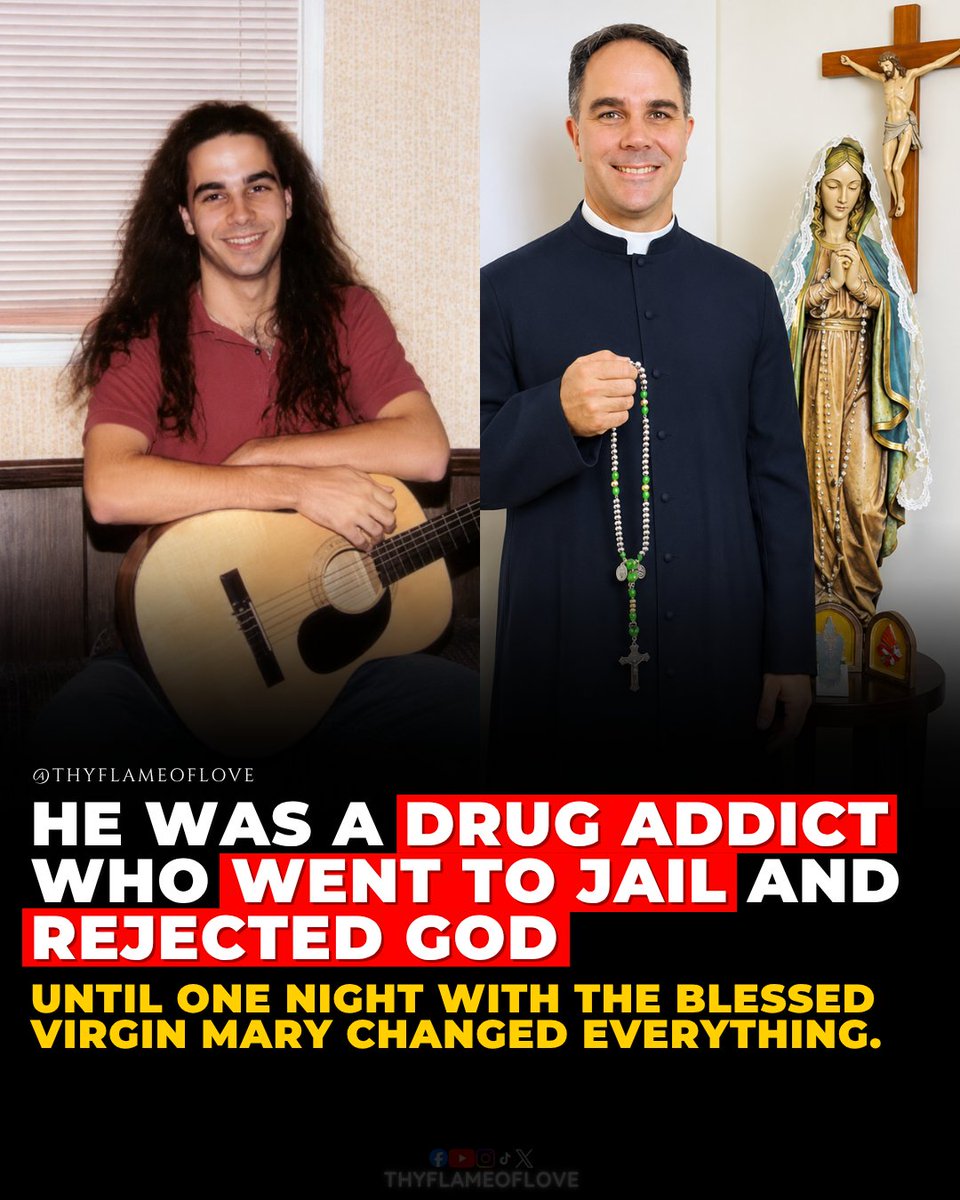
His name was Donald Calloway, and by his teenage years, his life was a mess. He was drinking, using hard drugs, stealing, and running from the police. He dropped out of school, ran away from home, and even got involved with the Japanese mafia. He was eventually kicked out of Japan and later spent time in jail in America.
He wanted nothing to do with God. When his mother asked him to go to church, he mocked her for believing.
But his mother, LaChita, had found strength in the Catholic faith. She prayed to Jesus, the Blessed Virgin Mary, and St. Joseph for her family. Even when Donald lied to her, rejected her faith, and kept running away, she and her husband continued welcoming him home.
And Donald only seemed to get worse.
Then one night in March 1992, something strange happened. Donald turned down his friends when they invited him out to party. He stayed home, feeling empty and unhappy with his life.
Looking for something to read, he found a book on his parents' shelf called The Queen of Peace Visits Medjugorje. It was about reported appearances of the Virgin Mary.
He barely knew anything about Catholicism. He didn't even know who the Blessed Mother was. But he opened the book and started reading.
Hours passed. He read about Jesus, His death on the Cross, prayer, and the Blessed Virgin Mary. For the first time, he began to understand a love unlike anything he had known.
By early morning, he had finished the book. But he couldn't sleep. He needed answers.
When his mother came downstairs, Donald struggled to get the words out. Finally, he said:
"Look, Mom, I have to talk to a Catholic priest, okay?"
His mother thought he was joking. After everything he'd put her through, could she really believe him?
But Donald was serious. He showed her the book and asked who the Blessed Virgin Mary was.
His mother was stunned. She started calling priests, trying to find someone who could meet with him right away.
When Donald remembered a chapel nearby, she told him:
"Yes, Donnie. Run!"
And he did.
Donald began learning the Catholic faith and eventually entered the Church. But his story didn't end there.
On May 31, 2003, Donald Calloway was ordained a Catholic priest.
The same young man who had been arrested, jailed, and kicked out of a country was now standing at the altar, offering the Holy Sacrifice of the Mass.
Today, Father Donald Calloway has spent years bringing people closer to Jesus through the Rosary, Divine Mercy, and devotion to the Blessed Mother.
And just think about his mother. She once watched her son throw his life away. Now she was watching him give his life to God.
Maybe you're praying for a son or daughter who has left the faith. Maybe someone you love has made choices that break your heart. And maybe you've been praying for so long that you're starting to wonder if anything will ever change.
Remember what happened to Donald Calloway.
His mother spent years praying for the son she feared losing. One day, that same son would stand at the altar as a priest.
Not every story ends this way. But no one is too far gone for God's mercy, and no prayer offered in faith is wasted.
💬 Who is someone you love that you're still praying will return to God?
Somewhere, another parent is wondering if there's still hope for their child. This might be the story that helps them keep praying.
I’ve been thinking about these elections and all the talk about Trump being the reason Republicans lost so many races. But I think there’s something bigger going on here.
I’ve never defended Trump’s mouth or some of his behavior. Frankly, I think some of the things he says are downright disgusting. But as I wrote in a blog a few years ago, I didn’t need Donald Trump to tuck me into bed at night. I voted for his policies, not his personality.
And I’m speaking primarily from a Christian perspective here. I realize not everyone shares my biblical convictions, and even Christians disagree about politics. But my faith is the foundation for how I evaluate candidates and their policies.
Look at Trump’s record. He was the first sitting president to attend the March for Life. He appointed three Supreme Court justices who helped overturn Roe v. Wade. He fought for stronger border security and enforcement of immigration laws, and he took steps to protect religious liberty.
Those things mattered to me because of my biblical convictions. I believe Christians should examine policies through Scripture rather than simply voting based on how they feel about a candidate.
I also believe God used Trump to slow some of our country’s movement away from biblical principles. That doesn’t mean I excuse his sins or claim to know God’s specific purposes. Every politician is a sinner, just like the rest of us.
And I think Trump changed something else. I remember years ago sitting quietly in social situations while liberals openly expressed their political opinions. I watched other conservatives do the same. Trump helped change that. He showed conservatives they didn’t have to be afraid to speak up.
But here’s what really concerns me.
I think Americans have become more concerned about political personalities than actual policies.
I see it constantly. People go on and on about how much they hate Trump or some other politician, but rarely do I hear anyone discussing the policies themselves.
Some people seem so consumed with hatred for Trump that they can’t acknowledge anything positive he’s done. Others defend him so blindly that they won’t acknowledge anything wrong with his behavior.
Neither makes sense to me.
We have to learn to separate our emotions about a person from our evaluation of their policies. That doesn’t mean character doesn’t matter. Of course it does. But we can’t let our personal feelings keep us from looking honestly at what someone actually stands for.
James 1:20 reminds us that human anger does not produce the righteousness of God. That’s something worth remembering right now.
I don’t expect everyone to agree with me about Trump. But I wish we’d spend less time attacking personalities and more time discussing the direction our country is heading.
Because ultimately, no politician is going to save America. Our hope isn’t in Washington. It’s in Jesus Christ.
And that’s something I refuse to lose sight of.
It was absolutely not the Democrats who won the midterm elections. It was George Soros and his son. Hard to convince anyone otherwise.
Human rights, immigration and refugee policy, civil rights, and democratic institutions. These are central elements of the radical left's political strategy and ideological agenda. And that strategy succeeded.
Part of the funding from the father and son is channeled through structures classified as "dark money," although much of it is also publicly reported.
This was, in our shared view, the sum of yesterday's midterm election results.
We hope our patriot @ElonMusk will help build similar political structures, mobilize resources, and develop an equally effective strategy, but with far greater openness and transparency than the Soros devils.
Ignore the noise
Trump lost the House and Senate, but his immigration, economic, and trade policies stay in place. He still controls enforcement, tariffs, and executive actions. The border funding is locked through 2029. Democrats can block new bills, they cannot reverse the tariffs or reopen the border.
“At the evening of life, we shall be judged on love” Saint John of the +
St Therese says not to fear God who loves us so much, she said, even if she had on her conscience every imaginable crime she would throw herself into the arms of the Father with a heart broken with sorrow.
The moment a human being draws a last breath, Catholic doctrine teaches that the soul steps immediately—without delay or reprieve—into the presence of Christ the Judge. This encounter, called the particular judgment, is the private, irrevocable verdict rendered on one individual life. As one of my seminary professors was in the habit of saying, “the person who we are at the moment of death, is the person we shall be for eternity.”
Unlike the general judgment at the end of time, when every soul will be publicly vindicated or condemned before the assembled universe, the particular judgment is intimate: only the soul, its conscience, and God.
At that instant the entire moral history of the person is laid bare. Every grace offered, every commandment kept or broken, every secret motive and public act passes before the divine light. The standard is not abstract perfection but fidelity to the light each person actually received: the natural law written on the heart, the revealed law of Scripture and Tradition, and the unique vocation inscribed by Providence.
Three outcomes alone are possible.
Souls who die in perfect love, detached from all sin, enter at once into the bliss of heaven—often, the Church adds, after a final cleansing in purgatory. Souls who die in friendship with God yet still bearing the temporal effects of forgiven sin are admitted to purgatory, a state of purifying joy that ends infallibly in heaven. Souls who die in unrepented mortal sin, having freely chosen final separation from God, enter hell: the eternal ratification of their own refusal of love.
Scripture states the principle plainly: “It is appointed for men to die once, and after that comes judgment” (Heb 9:27). The Catechism distills two millennia of teaching: “Death puts an end to human life as the time open to either accepting or rejecting the divine grace manifested in Christ… Each man receives his eternal retribution in his immortal soul at the very moment of his death” (CCC 1021–1022).
Thus the particular judgment is not a preliminary hearing but the definitive sentence. No reincarnation, no second probation, no mitigation after the soul leaves the body. The doctrine therefore invests every earthly choice with everlasting weight and every confession with urgent hope. In the unforgettable words of Saint John of the Cross, “At the evening of life, we shall be judged on love.” Catholic faith replies: the examination begins the very second the evening falls.
LAS ÁNIMAS QUE VIENEN DE NOCHE A PEDIRTE UNA ORACIÓN
Santa Brígida de Suecia veía algo que nosotros no vemos. Un día, estaba rezando y vio el purgatorio. No era como lo pintan. Eran miles de almas en un fuego que no quema como el de la tierra, sino que purifica. Gritaban, pero no de odio, de esperanza. Porque sabían que podían salir.
Y gritaban un nombre: el de sus familiares vivos.
La Virgen del Carmen le prometió a San Simón Stock: "A quien muera con mi escapulario, yo lo sacaré del purgatorio el primer sábado después de su muerte". Por eso la ves en la imagen con el escapulario en la mano. No es un amuleto. Es una promesa de Madre que no olvida.
Las ánimas del purgatorio son tu abuelo que no alcanzó a confesarse bien, tu tía que se fue peleada, ese amigo que murió de repente. No están en el infierno, porque murieron en gracia. Pero no pueden entrar al cielo todavía, porque aún les queda amor por purificar.
Y no se pueden ayudar a sí mismas. Solo nosotros podemos ayudarlas. Con una Misa. Con un Rosario. Con un vaso de agua ofrecido por ellas.
Santa Faustina contó que una noche una hermana muerta vino a su celda y le dijo: "Ruega por mí". Faustina rezó la Coronilla de la Misericordia y al instante vio a esa alma subir brillante al cielo.
Los lunes es el día que la Iglesia dedica a las ánimas. Ellas están esperando.
Si hoy rezas un Padre Nuestro por ellas, mañana ellas rezarán por ti cuando tú estés delante de Dios. Nunca se olvidan de quien las ayudó.
"Por las benditas ánimas del purgatorio, dales Señor el descanso eterno" Amén 🙏
If God made ordinary dirt holy just by standing on it, imagine how holy the woman must be who carried Him inside her womb for nine months... ⤵️
When Moses encountered God in the burning bush, God commanded him to remove his sandals. Why? Because the ground he was standing on had become holy simply because God was present there. That's Exodus 3:5.
Now here's where things get incredible. If ordinary dirt was considered holy because God appeared there, what does that tell us about the woman who carried God Himself inside her body? Think about that.
For nine months, Jesus Christ, the eternal Son of God, lived inside Mary's womb. He received His human nature from her. The hands that would heal the sick, the feet that would walk on water, the heart that would be pierced for our salvation, all developed within her.
And Scripture gives us something extraordinary. When Mary visited Elizabeth, Elizabeth was filled with the Holy Spirit and cried out: "Why is this granted me, that the mother of my Lord should come to me?" Luke 1:43.
Elizabeth didn't simply call Mary a blessed woman. She called her the mother of her Lord.
And THIS is what so many people misunderstand about Catholics. We don't worship Mary. We worship God alone. But honoring the woman God chose to bring His Son into the world doesn't take glory away from Jesus. It recognizes the extraordinary work God accomplished through her.
And here's what makes Mary even more remarkable. When God called her to something beyond human understanding, she didn't demand to know every detail of the future. She answered: "Let it be done to me according to your word." Luke 1:38. That is what complete surrender to God looks like.
And there's something beautiful about this that applies to every Christian. Through Baptism and God's grace, we're also called to become dwelling places of His presence. Mary shows us what happens when a human heart opens itself completely to God.
So the next time someone asks why Catholics honor Mary, remember this: We don't honor her instead of Jesus. We honor her because of Jesus. And everything beautiful about Mary ultimately points back to Him.
💬 Now I have a serious question. If God declared the ground beneath Moses holy because of His presence, why is it so controversial to honor the woman He chose to carry His Son?
I'd genuinely love to hear your thoughts in the comments.
Wisdom just welcomed another chick at approximately seventy-four years of age.
The most elderly documented wild bird on Earth has been breeding offspring since the era of President Eisenhower. Biologists originally placed an identification band on the Laysan albatross back in 1956, a time when she had already reached maturity and was occupying a breeding nest. Almost seventy years after that moment, she arrived back at Midway Atoll in the Pacific Ocean alongside a different mate and produced another egg during the final months of 2024.
Her historic partner, Akeakamai, had gone missing for numerous consecutive seasons. Although these seabirds typically establish permanent, lifelong unions, they possess the ability to choose a replacement companion if their original mate vanishes.
Conservation officers successfully captured footage of Wisdom softly leaning her head against her current mate shortly before he took his place on top of their shared egg.
The Surprising Truth St. Thérèse Taught About Purgatory 🕊️
Most of us grow up believing that aiming for Purgatory is the ultimate sign of humility. We quietly whisper to ourselves, "If I can just barely slip into the back row of Purgatory, I will be more than grateful."
Yet, Saint Thérèse of Lisieux completely turned this mindset upside down.
When a fellow sister in the convent once mentioned that she expected to spend a long time in Purgatory, Thérèse did not praise her modesty. Instead, she gently corrected her, insisting that expecting Purgatory does not honor God at all. In fact, she boldly said that it actually grieves His paternal Heart.
That might sound startling, but the Little Flower understood the Father’s love in a way few ever dared to imagine.
Purgatory is real and it is a breathtaking gift of divine mercy. But Thérèse recognized that it is an emergency remedy, not God’s primary dream for you. A loving father takes no pleasure in keeping his child waiting outside in an antechamber. He allows that purification only with great reluctance, longing instead to draw His little one straight into His embrace without delay.
Thérèse uncovered a counterintuitive secret: countless souls enter Purgatory not because their sins were too heavy, but because their trust was too small. They measured God with the cold calculations of human justice rather than the boundless ocean of His Merciful Love. They expected a stern judge, so they missed the open arms of a Father.
Saint Thérèse taught that the fire of divine Love on earth is infinitely more pleasing to God than the fire of purification after death. When you bring Him your daily weaknesses, small sacrifices, and honest failures wrapped in total confidence, His grace purifies you in real time. He cleanses your heart every single day through tenderness, burning away your faults with the warmth of His presence.
Holiness is not about presenting a spotless spiritual resume at the end of your life. It is about casting yourself so entirely into the arms of Jesus that His mercy consumes every imperfection before you even take your final breath. 🤍
Today I walked into a Catholic church in Milwaukee, Wisconsin, that could hold its own against the great basilicas of Rome.
And the story behind it is almost as magnificent as the church itself.
The Basilica of St. Josaphat was built by Polish Catholic immigrants, many of them working-class families who had come to America with little money but an extraordinary devotion to their faith.
By the 1890s, their parish had grown to more than 12,000 souls. Their first church had burned down. Their second was too small. So they decided to build something astonishing.
A church modeled after St. Peter's Basilica in Rome.
Their pastor, Father Wilhelm Grutza, learned that an enormous post office and customs building in Chicago was being demolished. He purchased it for $20,000, had it dismantled, and transported its materials to Milwaukee on FIVE HUNDRED railroad cars.
Stone by stone, these Catholic immigrants built their own little piece of Rome.
When the church was completed in 1901, its colossal dome was surpassed in size in America only by the dome of the U.S. Capitol.
But they weren't finished. After years of sacrifice and debt, the church's interior was transformed with magnificent Austrian stained glass, soaring columns, elaborate ornamentation, and breathtaking sacred paintings.
In 1929, Pope Pius XI elevated it to the dignity of a minor basilica—the first Polish-American church to receive that honor.
And the result?
One of the most magnificent Catholic churches in the United States. I have visited some of Europe's great churches, and this basilica genuinely rivals them in beauty and grandeur.
But what moved me most wasn't the dome or the artwork. It was the people who built it.
Ordinary Catholic families who understood something our age has largely forgotten: The house of God should lift man's eyes from earth to Heaven. They did built this for His glory.
And more than 125 years later, the Holy Sacrifice of the Mass is still offered beneath that magnificent dome.
Deo gratias.
St. Josaphat, pray for us. 🇵🇱
While editing a photo of the Blessed Sacrament, content creator Maik Vélez received an unexpected surprise. The artificial intelligence in his photo-editing app identified the Host in the monstrance as a person.
Vélez explained that the AI normally detects human shapes such as a head, arms, or feet. Yet no matter which photo he used from that moment, the program consistently marked a person at the very center of the monstrance. “As you can see, the little icon shows that there’s a person there,” he said.
The discovery left him speechless. While technical explanations may exist, Vélez saw the moment through the eyes of faith: “For me, it’s very telling that this is Jesus, alive and real, in that monstrance.”
The video of the experience quickly went viral. Many viewers shared similar stories of facial-recognition software detecting a face during the elevation of the Host or chalice. Comments echoed the same wonder: “Even AI knows that Jesus is alive here.”
The episode has become a quiet, modern invitation to reflect more deeply on the Real Presence of Christ in the Eucharist.
Checkmate, Protestants….🇻🇦
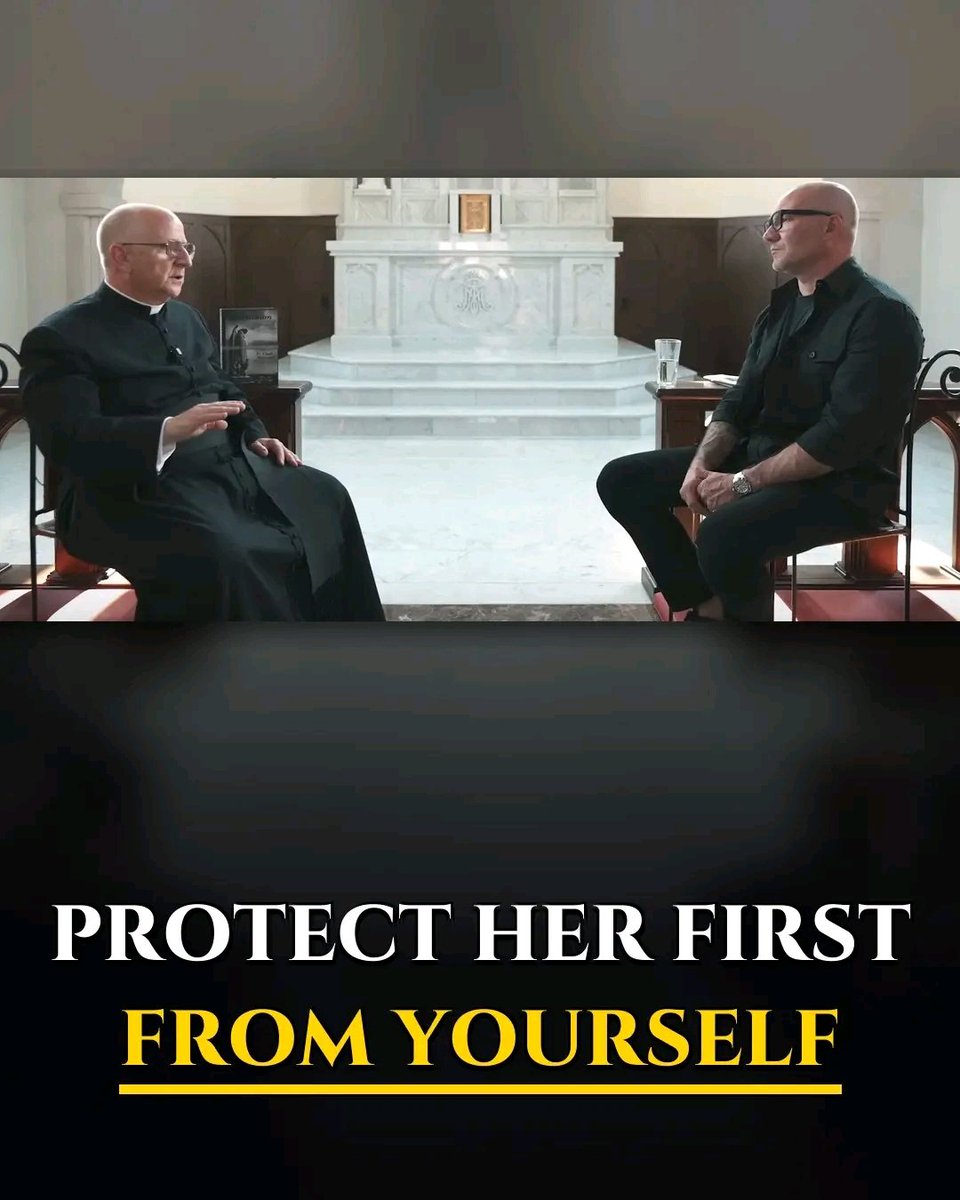
The person who can hurt you the most is not a stranger. It is the one who shares your bed, your bills and your last name. Not because he is cruel. Because you love him.
Fr. Chad Ripperger, an exorcist, said this to a room full of men, and it is one of the most honest things a priest has ever said about marriage.
He started where you would expect:
"YOUR JOB IS TO SACRIFICE YOURSELF FOR HER."
Provide for her. Protect her. Not only her body, but her soul. Then he turned it around:
"THE PRIMARY PERSON YOU HAVE TO PROTECT HER FROM IS YOURSELF. BECAUSE SHE'S MORE LIKELY TO SUFFER INJURY AT YOUR EXPENSE THAN ANYONE ELSE'S, BECAUSE SHE LOVES YOU."
Think about what that means. A stranger can be rude to her, and she shrugs it off by dinner. But the sharp word from her husband, the promise he forgot, the evening he chose the phone over her, those she carries for years. Love opens the door wide, and whatever walks through it goes all the way in.
So the guard a husband has to put up first is not at the front door. It is on his own tongue, his own temper, his own habits.
One honest line, because it matters: this is about the ordinary wounds of a marriage. If there is violence or danger in your home, that is not something to pray through in silence. Call a priest, a counselor or the police.
For everyone else, here is something for tonight.
If you are a husband, put your hand on her shoulder before you sleep, even if she is already asleep. Fifteen seconds, out loud or in a whisper:
"Lord Jesus, You gave her to me to protect. Guard her first from me. Watch my words, my temper and my silence. Make me the safest place she has. Amen."
If you are a wife, pray it the other way around, for him:
"Lord Jesus, make my husband a guard and not a wound. Give him Your strength to protect us, and Your gentleness to do it. Amen."
If your husband or wife is already with God, pray for their soul tonight instead.
👇 One word if you are praying this over your marriage tonight: PROTECTED.
Credit: Father Chad Community
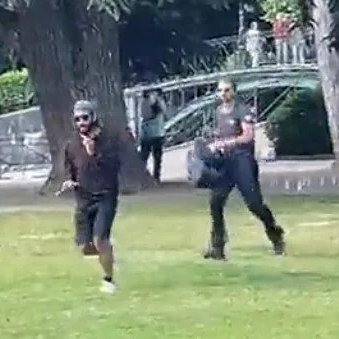
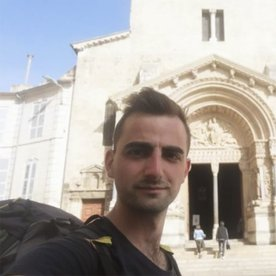
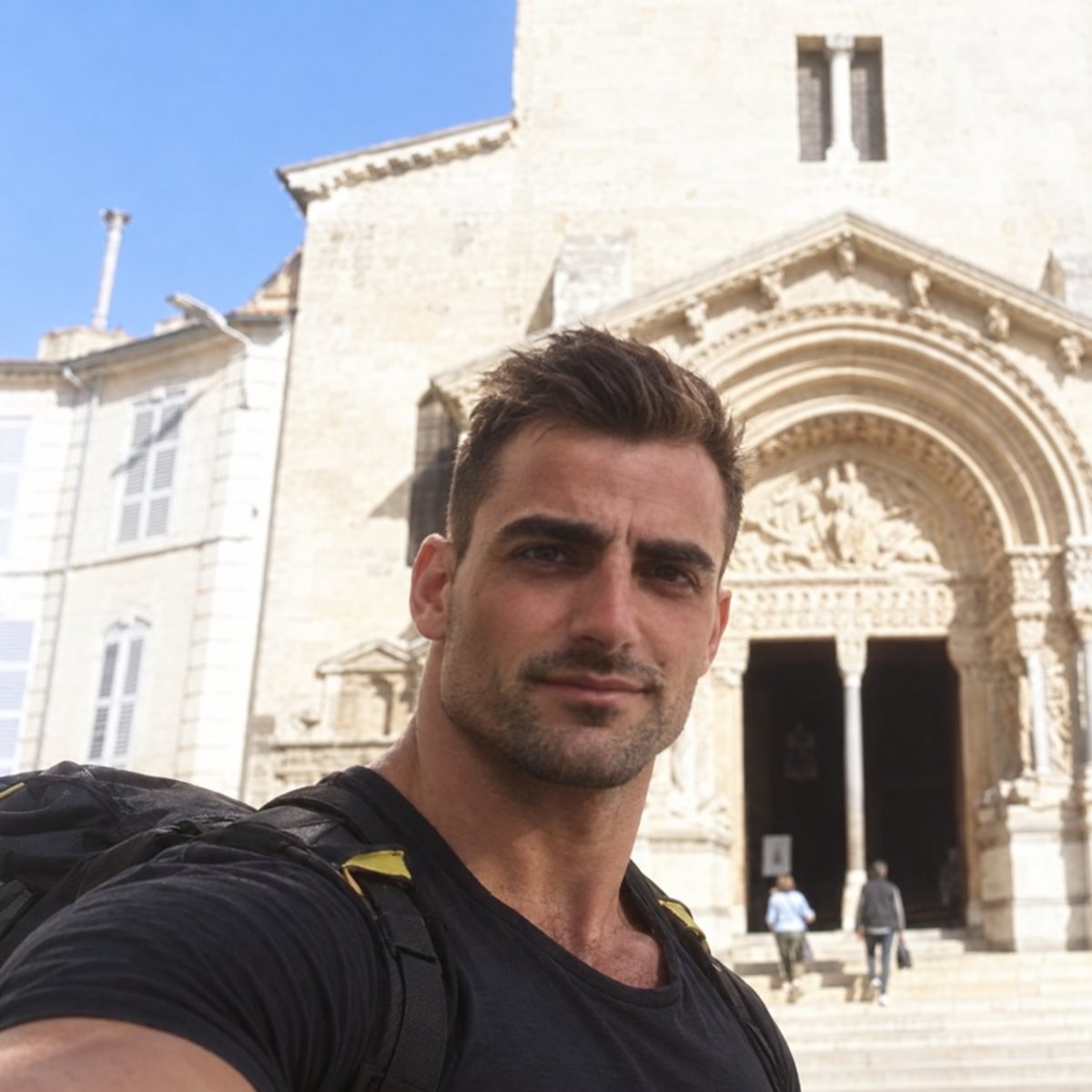
>24-year-old Catholic pilgrim walking across France
>Stops in Annecy
>Sees a man attacking children in strollers
>No police there yet
>Charges him with nothing but a hiking backpack as a shield
>Blocks the knife, draws him away from the children
>Keeps pursuing until police arrive
>Asked why he intervened: “I am a Catholic. I followed my instinct to protect the weak.”
This is what a true Christian warrior looks like
A parable.
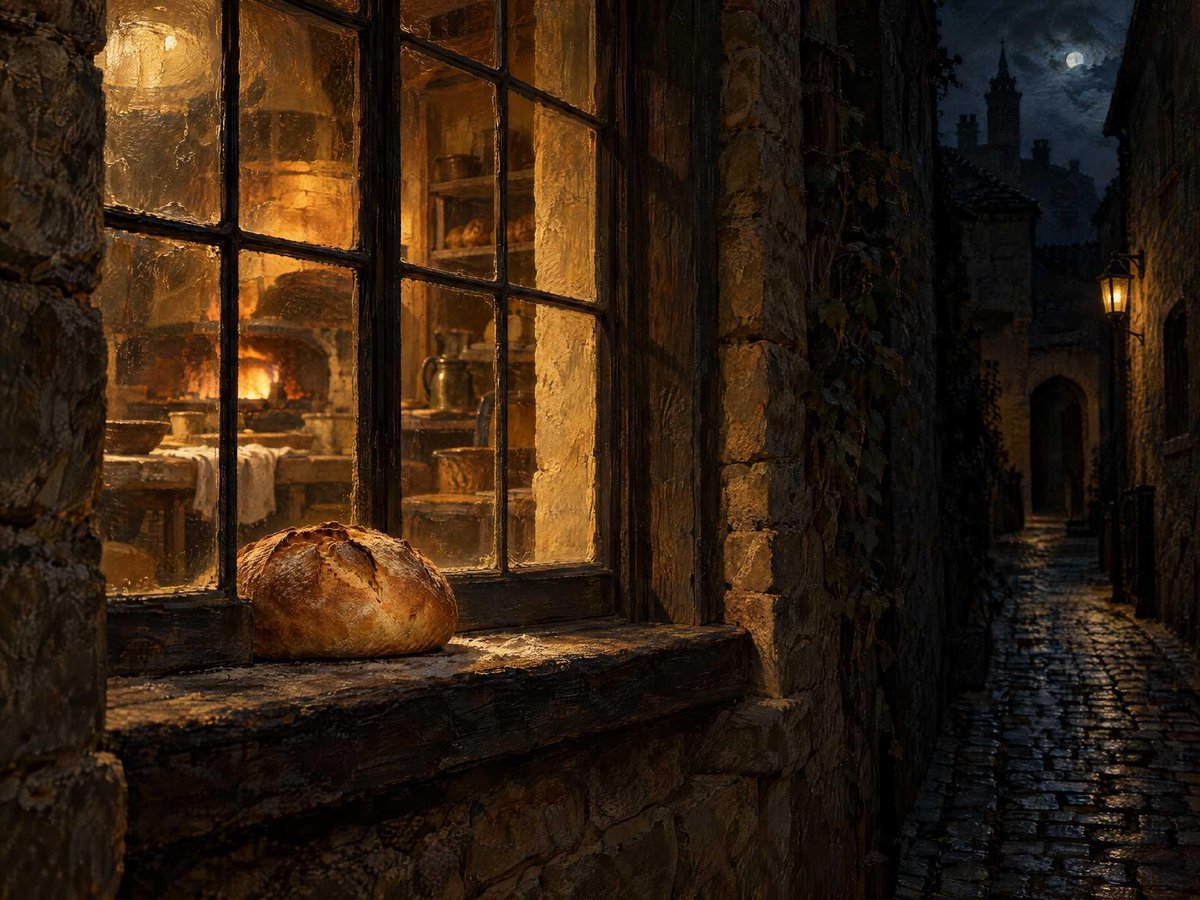
In a small town, there was a baker who, every night for thirty-one years, left one loaf of bread on his back windowsill before he went to bed. By morning it was always gone. He never stayed up to watch. He never put out a sign. His wife asked him once who took it, and he said, "Someone hungry. That's all I need to know."
When he died, the church was full. Near the end of the service, a man in his fifties stood up at the back. He said that when he was nine, his father had left and his mother worked nights, and for two winters that loaf was the only dinner he and his sister had. He said he used to wait in the alley until the kitchen light went off. He said he became a baker because of it. For the last twenty years, he said, he's left a loaf on his own windowsill every night.
The old baker never learned any of it. He never saw a single thing his bread did.
Most of the good you do, you'll never see land. Do it anyway. There's a Father who keeps the ledger.
"Your Father who sees in secret will reward you."
Matthew 6:4
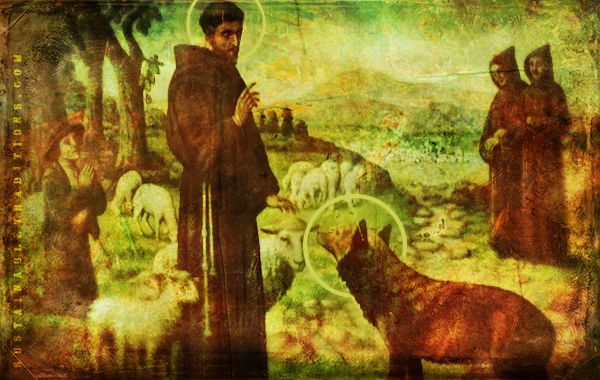
13th century Italian city terrorized by a wolf. Kills not just livestock but humans too. St Francis decides his help is needed. Goes to meet the wolf. Finds him, sees fangs, gets charged. "Come hither, Brother Wolf; I command thee, in the name of Christ, neither to harm me nor anybody else.” Wolf slows. Comes to Francis' feet. Lays down. Francis offers deal: wolf must vow never to eat man or livestock; in return the Gubians will feed him. Wolf nods. Francis asks the wolf to promise. Wolf places his paw in Francis' extended hand and they shake on it. Both enter the city and Francis informs the residents of the agreement. Wolf lives its final years in Gubio. Citizens feed him, grow to like him, and mourn his death when it comes. Church of St Francis of the Peace is built on the site where the wolf was buried. Many years later, in 1872, renovations are being made and the crews find a very old skeleton of a large wolf!
Ora pro nobis, St Francis, friend to animals!