This is the oldest known quasar! After more than 13 billion years, light emitted from its companion quasar has illuminated the existence of a black hole in negative space. Researchers, in a paper published this month in the Astrophysical Journal Letters, named the quasar J0313-1806 and wrote that the animated black hole originated 670 million years after the Big Bang—20 million years older than what is now the second-oldest black hole ever discovered. This oldest and most distant quasar and others like it are “critical to understanding how the earliest black holes formed and to understanding cosmic reionization—the last major phase transition of our universe,” said Xiaohui Fan, an astronomer at the University of Arizona. The J0313-1806 black hole is 1.6 billion times the mass of the sun ☀️ and 10 trillion times brighter. 🌟 Credit: NASA, Hubble. Image by Science Photo Library.
A stunning view from the James Webb Telescope ✨
This image captures the planetary nebula NGC 6537, also known as the Red Spider Nebula. Its exact distance is unknown; various sources cite figures ranging from 2,000 to 8,000 light-years.
Objects like this represent the future that awaits our Sun. Once it exhausts its hydrogen fuel, it will begin to expand, transforming into a red giant. Eventually, it will shed its outer layers, leaving behind only a bare core. Radiation from the core will ionize the surrounding material, causing it to glow and form a visible nebula—much like NGC 6537. This phase will not last long; in a few tens of thousands of years, the core will cool, and the nebula will dissipate.
In the case of NGC 6537, there is a possibility that its center harbors two stars rather than one. Hourglass-shaped nebulae of this kind often originate in binary star systems, though the existence of a companion star has not yet been confirmed.
🫡We’ve been busy: new partnerships, campaigns, integrations… you name it.
Even we needed a guide to keep up.
So here it is: the complete Brevis rundown, all in one place
https://t.co/vXNz7GUoUc
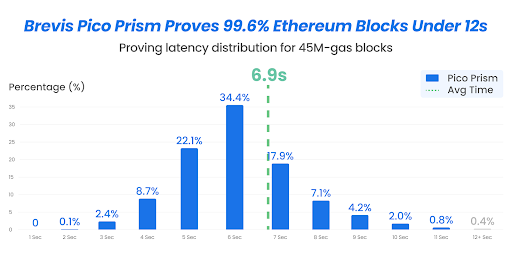
Announcing Pico Prism, the state-of-the-art zkVM for Ethereum real-time proving. 99.6% of blocks proven under 12 seconds, 6.9s average with 64 RTX 5090 GPUs.
This marks a major step toward scaling Ethereum by 100x and a future where you can validate the chain from a phone.
The Brevis Proving Grounds are now live!
https://t.co/Xa9WZRrnnc
We've built an arena showcasing every protocol and application that Brevis ZK technology has enhanced. Step inside and experience what intelligent smart contracts actually feel like.
Your mission: explore the ecosystem, become part of the ZK community, and stack as many Brevis Sparks points as possible.
Start proving yourself today. ��
🫡We’ve been busy: new partnerships, campaigns, integrations… you name it.
Even we needed a guide to keep up.
So here it is: the complete Brevis rundown, all in one place
https://t.co/vXNz7GUoUc
Announcing Pico Prism, the state-of-the-art zkVM for Ethereum real-time proving. 99.6% of blocks proven under 12 seconds, 6.9s average with 64 RTX 5090 GPUs.
This marks a major step toward scaling Ethereum by 100x and a future where you can validate the chain from a phone.
The Brevis Proving Grounds are now live!
https://t.co/Xa9WZRrnnc
We've built an arena showcasing every protocol and application that Brevis ZK technology has enhanced. Step inside and experience what intelligent smart contracts actually feel like.
Your mission: explore the ecosystem, become part of the ZK community, and stack as many Brevis Sparks points as possible.
Start proving yourself today. ��
The Brevis Yapper Leaderboard is LIVE on @KaitoAI!
This isn't your typical "post about us, get tokens" setup. You get that too, but it's more!
Let's take a look at how Brevis just innovated the world of InfoFi.
Scientists from China have reliably confirmed for the first time the presence of a solid inner core on Mars.
Its radius is approximately 600 kilometers, roughly one-fifth of the planet's radius. The discovery was made by an international team of researchers from the University of Science and Technology of China.
The key piece of evidence came from marsquake data collected by the SEIS seismometer on NASA's InSight lander. By analyzing seismic waves traveling through the planet's interior, the scientists discovered that Mars's core has a layered structure: a liquid outer core and a solid inner core.
Testnet III has begun.
Today, we're rolling out Testnet III across the United States, Vietnam, Nigeria, Russia, India, Indonesia, the United Kingdom, Hong Kong SAR and Mainland China.
Tomorrow, the world.
Learn more: https://t.co/4zwVxsgiAU
We’ve partnered with @Snag_Solutions to level up questing at Nexus.
It’s now easier to earn points, badges, and rewards tied to Testnet III.
Learn more about Nexus x Snag here: https://t.co/j2uhKbV1Ou
1/ Merit Badge Challenge: Spelunking Badge
Contribute compute!
How to earn 2,000 NEX Testnet III Points:
- Visit https://t.co/4tytEdA71i
- Find 'Contribute using https://t.co/Yz7zPIP4q5'
- Start proving on the Nexus web app
- Return to dashboard, refresh (it may take a minute)
1/ Merit Badge Challenge: Graduate Badge
A fitting send off to Camp Nexus.
How to earn 3,000 NEX Testnet III Points:
- Repost this post
- visit https://t.co/4tytEdA71i
- Find 'Goodbye Camp Nexus'
- Claim the quest