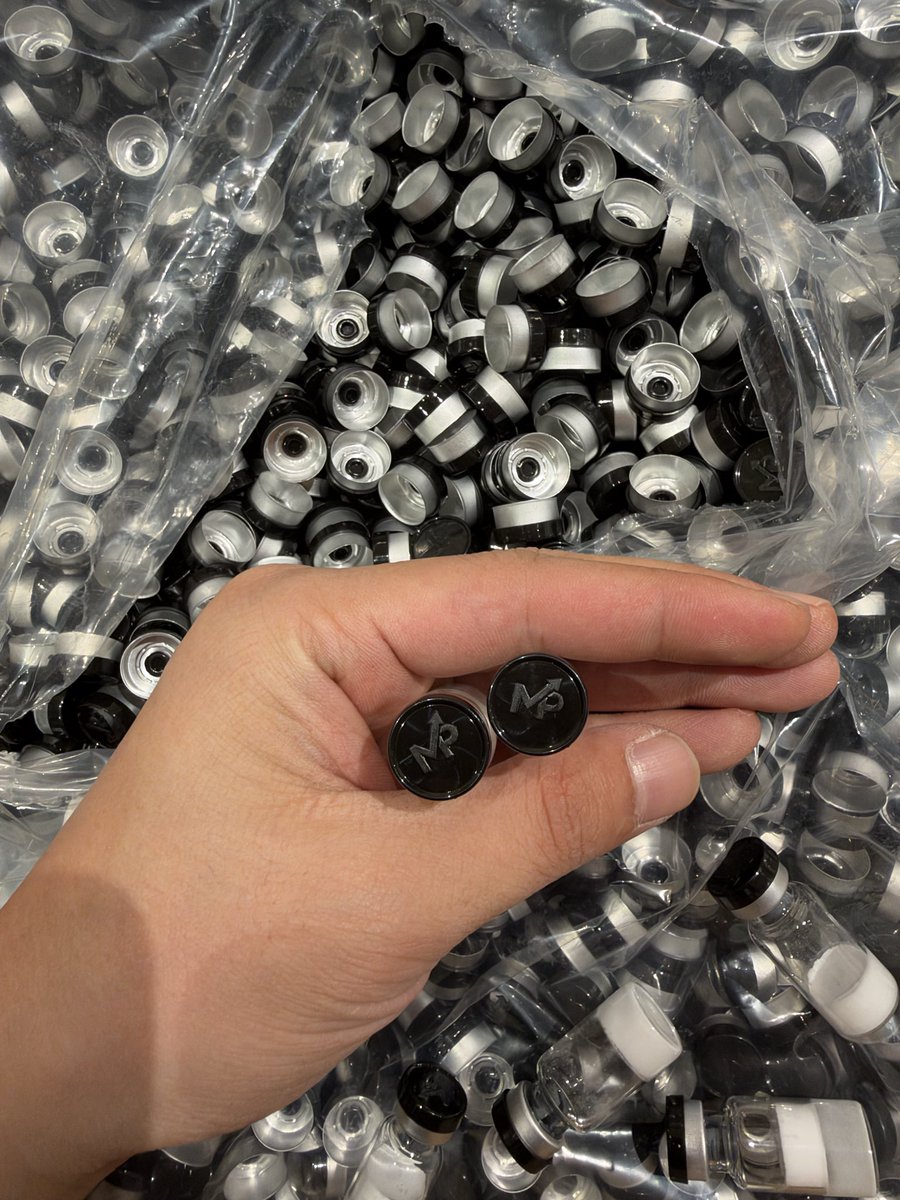
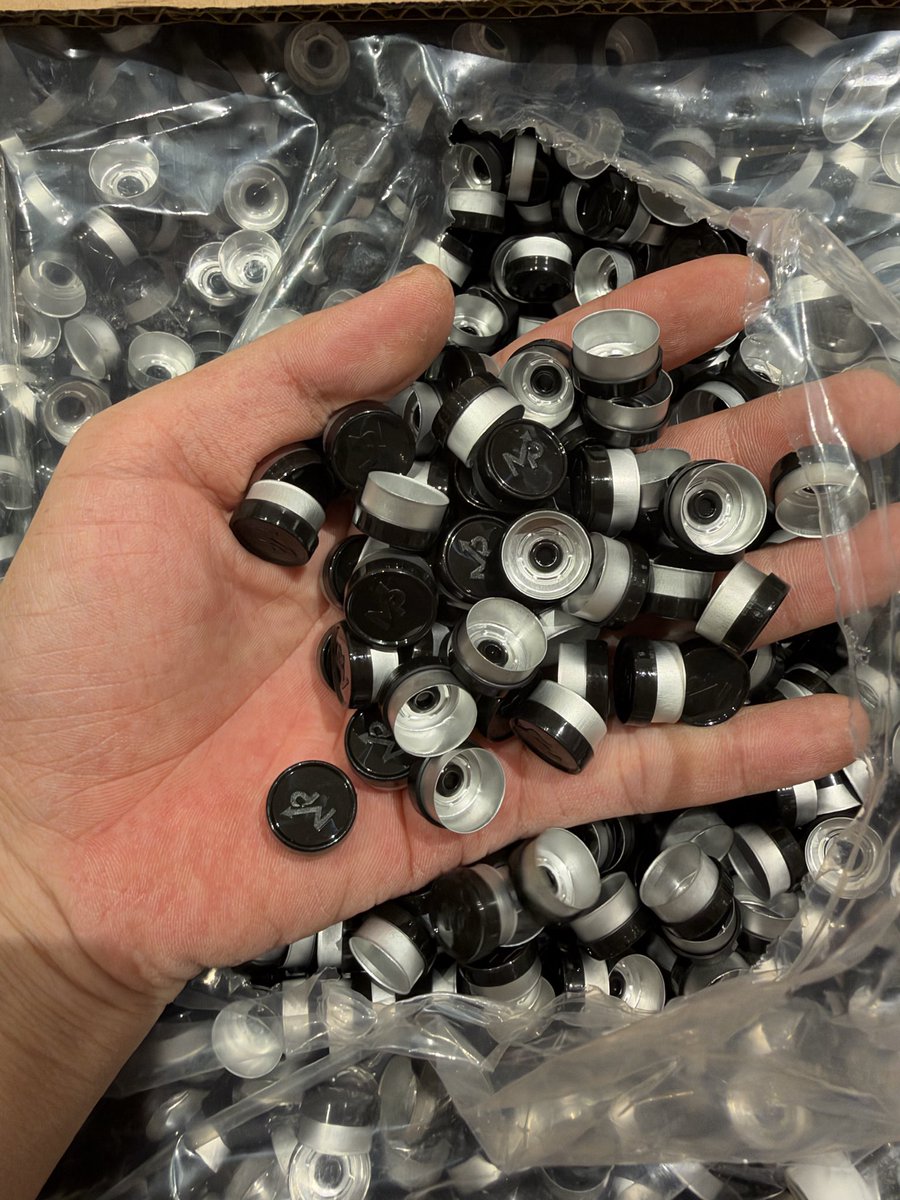
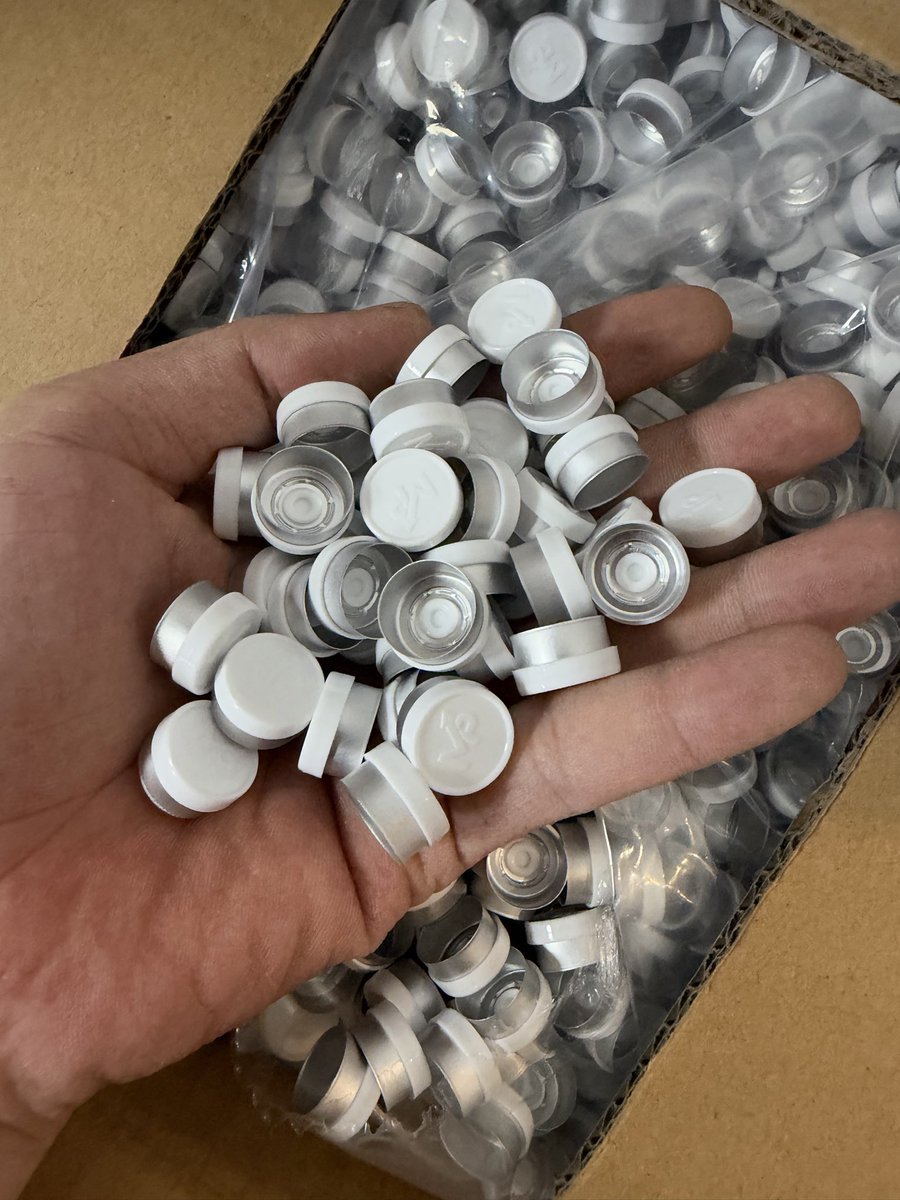
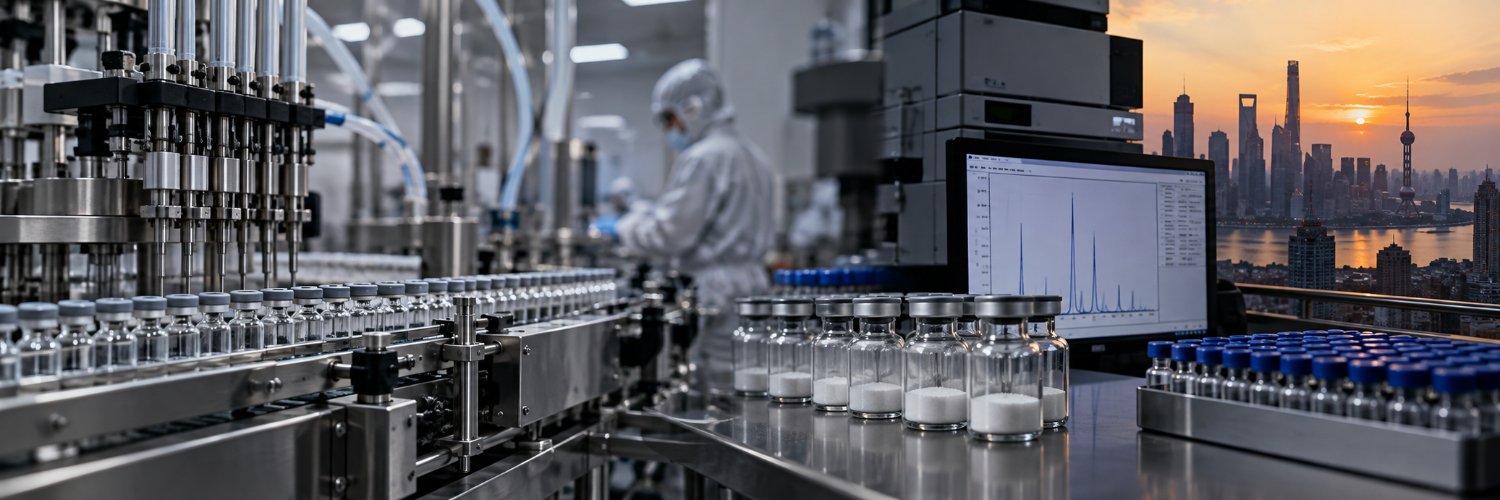
When you’re building a peptide brand, customers should recognize your product before reading the label. Custom cap colors and molded logos help make that happen.
When our line is booked, I need the next API lot to hit the same spec and a COA my team can review before it ships. That’s why we buy through formal channels from manufacturers we’ve worked with for years.
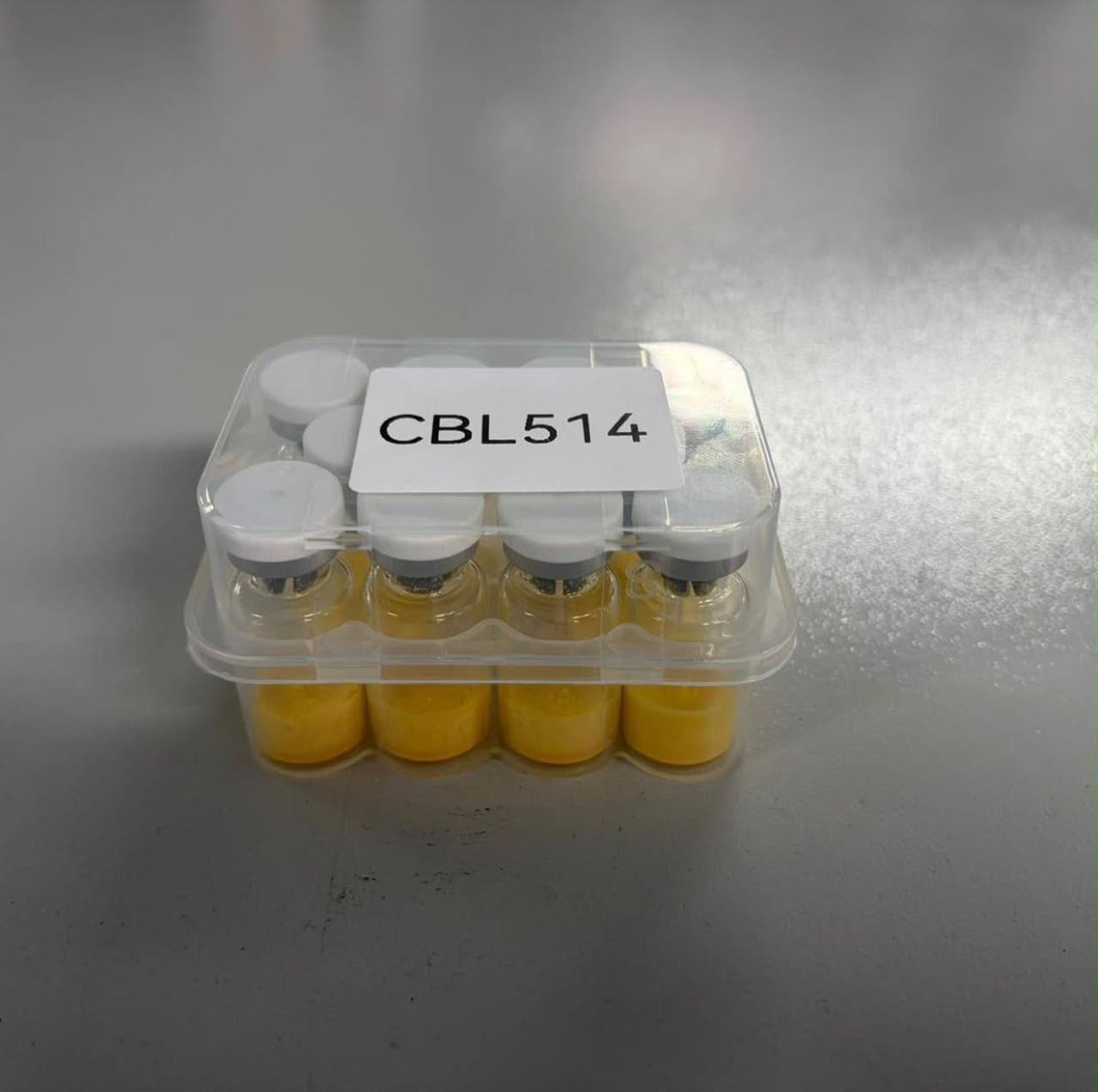
CBL-514 - The armchair scientists are still debating the formulation. Meanwhile, our customers are sharing positive feedback.
These are their personal stories. Claims about fat loss need controlled evidence.
CBL-514
Our QC and a third-party COA from China support the compound’s identity. Early customer feedback is encouraging, though anecdotal.
Our samples are still being tested at a US lab. The lab needs reference standards and time to validate the method, so it’s taking a little longer. We’ll share results once testing is complete.
@PGC1a_RB We have a researcher who's been treating his CKD using SS-31. Before starting SS-31, his GFR was at 36. After 2.5 months, his most recent test was at 71, stage 2...
I'm asking him to share the full panel with me. His doctors are baffled.
Trump is coming to Shenzhen for APEC this week, so we may have a short pause on regular shipping.
Big orders can still go through. Huge orders. Tremendous orders. Quite frankly, some of the best orders we’ve ever seen.
Message me. We’ll make a deal.
CBL-514: What Chinese manufacturers actually have to work with
Krysia has been digging into CBL-514, including a recent report from someone experimenting with material supplied by FS Peptides. Good reporting, and she raises some fair questions about the formulation.
I'm a co-owner of FS, so I figured I'd share what I've found from the manufacturing side.
The big question is whether Chinese chemists can independently develop something resembling Caliway's formulation without access to its exact proprietary recipe.
I spent some time going through Caliway's patents.
The 2026 patent, WO2026098542A1, describes surfactants, particle characteristics, pH, osmolality and formulation experiments.
But here's the interesting part.
It actually refers back to US10610496B2, an older Caliway patent covering micellar formulations. There's also a 2018 application covering resveratrol-containing micelles.
These aren't just documents identifying curcumin and trans-resveratrol. They describe delivery systems, formulation methods and experimental results. Some of that work goes back more than a decade.
And this isn't unfamiliar chemistry in China. Chinese university researchers have published work on curcumin-loaded micelles and delivery systems containing both curcumin and resveratrol.
So the idea that Chinese scientists would have no way to approach this without being handed Caliway's finished product doesn't really hold up.
They have published technical information and relevant scientific experience to work from.
I spoke with my Chinese manufacturing partner, about our product. He confirmed the active ingredients are curcumin and trans-resveratrol and described the formulation process and excipients as proprietary.
That's his explanation of the manufacturing arrangement, not independent proof that our product matches Caliway's exactly.
Now, about the dosing.
I've seen people compare the 10 mg vials being sold with the 600 mg figure from Caliway's abdominal trials.
That 600 mg was the maximum per treatment, not a minimum dose. The published Phase 2 protocol used 2 mg/cm², with dosing determined by the treatment area.
That's an important distinction, although it doesn't mean someone using a few milligrams has established an effective treatment. The reported grey-market experiences are still anecdotes.
My point is that there are two different questions here.
Can qualified Chinese formulation scientists develop a complex delivery system using published research? Absolutely. There's substantial precedent for that kind of work.
Appreciate Krysia continuing to investigate this. I'd rather see suppliers challenged on the technical details than have everyone relying on another generic 99% purity COA.
CBL-514: First Grey-Market User Reports Results
One researcher has shared a two-week update after experimenting with CBL-514 purchased from FS Peptides.
He reports using three injections on each side of his love handles, approximately 1.5 mg per injection.
His experience so far:
Reports a slight reduction in his love handles.
Says he's experienced no side effects.
Is taking measurements to track changes.
Plans another session in two weeks.
He emphasises that he used far fewer injection sites than the clinical trials and followed his own approach.
The bigger question remains whether the product contains the correct ingredients and resembles Caliway’s clinical formulation.
@KleosOperator My app doesn't have a native calculator so need to enter your own dose information but it does have AI if you need help!
https://t.co/hxrFsnXxvK
FS Peptides 🧬
Vials • Pens • Cartridges • Bulk API
Custom batches • Private labeling • Packaging
Build your brand or expand your range with FS.
COAs & testing options available.
$80 worldwide shipping.
DM for pricing & enquiries.
Research use only.
Join our TG:
https://t.co/jkSQrQP9ul
Everyone is looking at which peptides made the HHS list. I’m looking at Appendix B. Original manufacturer, exact identity, impurities, endotoxins, validated methods, batch traceability
Important detail in the HHS peptide policy: single-API products only. BPC-157 and TB-500 being listed individually doesn’t bring a BPC/TB blend into scope. Same applies to GLOW and KLOW