Things are getting real - integration has begun! 🏗️
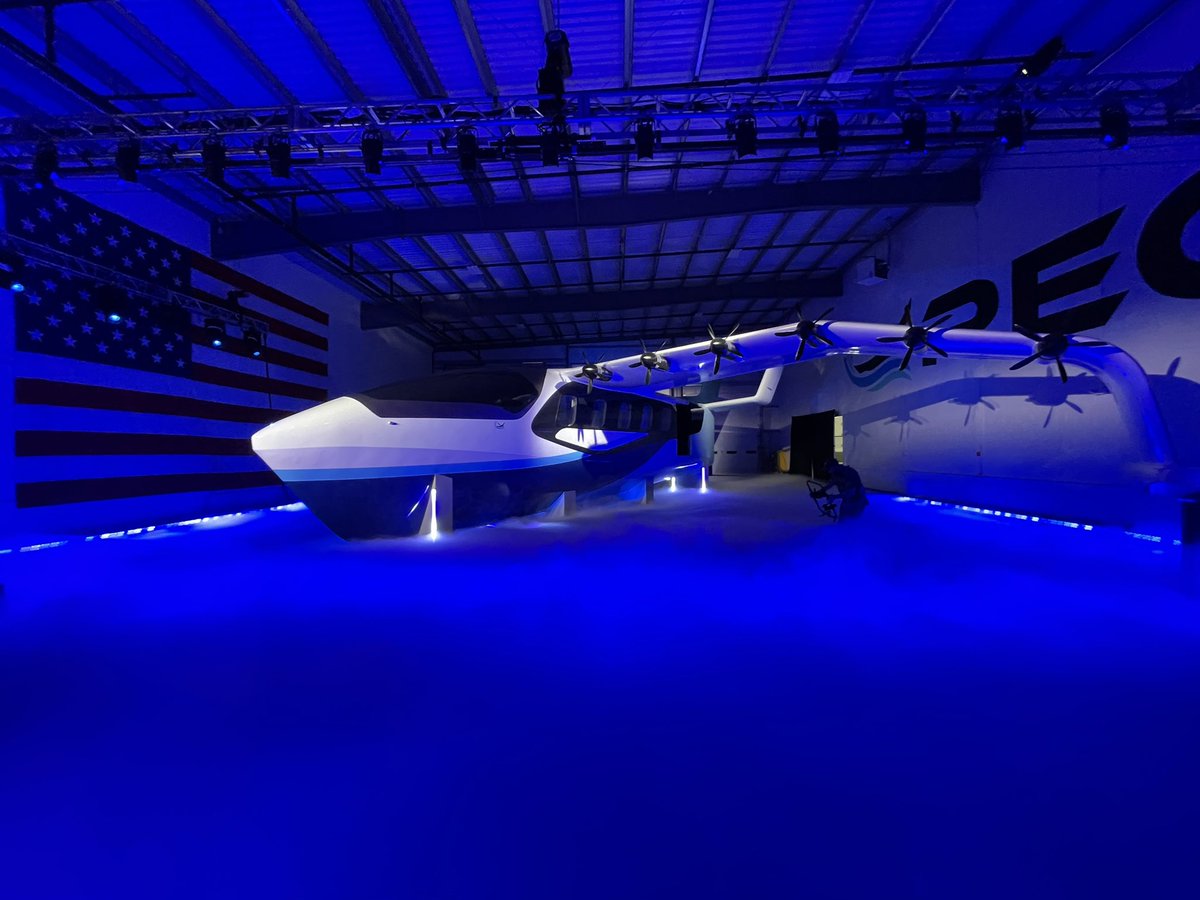
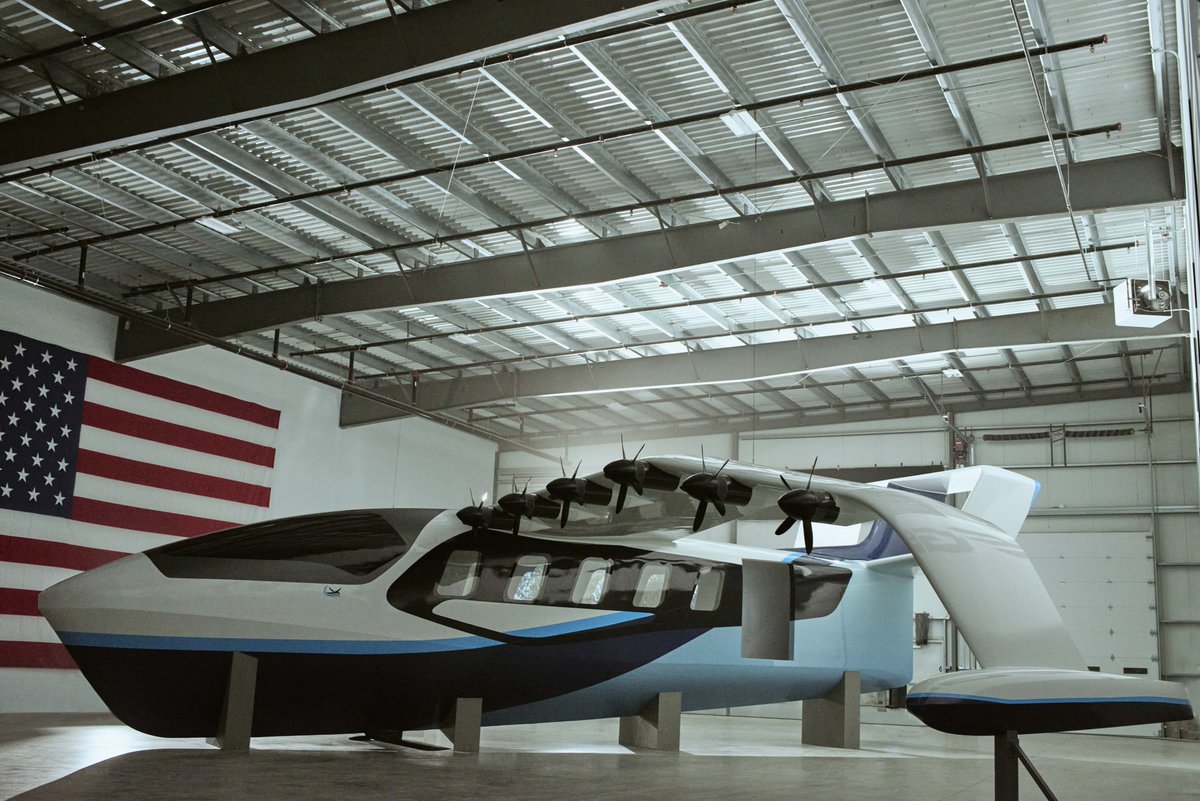
The full scale Viceroy #seaglider prototype is on-track for sea trials by end of year. Hands on hardware at @regentcraft!
Looking forward to explaining what is a @regentcraft seaglider and why build one on Tuesday at the @GMTResearch Zero Emissions Ferries - East conference in Arlington.
It was great to talk about @regentcraft seagliders at the Ship Operations Cooperative Program (SOCP) meeting this week at @mitags_maritime. Lots of interesting presentations and discussions about new technologies, decarbonization, and the US mariner workforce.
On days like this, it's hard to believe that REGENT is only 3 years old. We've come so far but the journey's just begun.
The real work starts now.
#floatfoilfly#seriesa#seagliders#startuplife
All the hard work of getting our sub-scale prototype to float-foil-fly has paid off and now we have $60M to build a full scale prototype and fly humans onboard next year. Work is already underway!
It is a truly monumental day for @regentcraft – I’m ecstatic to announce our $60M Series A!
From our earliest days, we were told this round may be the hardest money we ever raise. I wont go as far to say its “easy” to build a sub-scale, proof-of-concept demonstrator, but many companies have done it. In the early days, we raised our Seed Round off a business plan, some clever use of physics and regulatory pathways, and a ¼ scale uncrewed prototype that proved it was possible.
But then came the big jump: full-scale, human safe systems. They’re (very) expensive. They’re difficult. They take years to design. When they break, there’s no reversion to the last stable branch of code – its months of repair and delays on program goals.
Most importantly, human life is on the line. Systems must be redundant. Tested to the edge of their operating envelope and beyond. It is a whole new ballgame.
Unsurprisingly, the world of interested investors quickly dwindled when we first tested the waters of a $60M raise to build a human-carrying prototype. And if the ask wasn’t grand enough, as an economic backdrop, it was the worst fundraising market of the last decade.
We of course understood the general sentiment. After all, what could be a more capital intensive, more risk-on, more long-lead than investing in a human-carrying flying machine? Investors existing and prospective alike challenged us on our approach. “Why build the full scale? Is there anything else you can do that’s less money, time, or risk?”
We stood steadfast because we knew: if we wanted to bring seagliders to market on the timeline we promised, this was the next step. Full scale, with humans onboard.
So we remained undeterred, and we chipped away. We began forming strategic commercial partnerships and took investment from @JAL_Official_jp, Yamato Transport, and others (soon to be announced!). We leaned in on dual use - on the growing need for distributed maritime transport to our armed forces - and brought on @LockheedMartin.
And at this intersection of defense and sustainability, we met 8090 Industries - who’s ethos and hustle perfectly complimented our own. With a lead check from 8090, and co-leadership from @foundersfund , our earliest backer, the Series A was on.
We gathered support from investors who understood what we were doing. Who didn’t recoil at the goal of a full-scale human-carrying prototype, but rather embraced it. They saw the prize – the promise of $8B in commercial preorders waiting on our development, a capability perfectly in line with an existential capability gap in national defense strategy, and a mode of transportation that will service the billions of people that move along coastlines every year.
When the dust settled, we raised an oversubscribed $60M round that funds us all the way through human flight of our full scale prototype, and we were able to do it all without slowing down the engineering one bit.
The year ahead will be the most exciting year in REGENTs history (I suppose that isn’t saying much as we’re only 3 years old – but it will be truly exciting!) as we fly humans on a seaglider for the first time in history.
Besides our amazing investors, I’m thankful for our steadfast customers, our partners, my co-founder and best friend @Mikeklinker, and my wife who has provided unwavering support through the years of founder grind.
Could not be more proud of this amazing team and more humbled to be a part of it. And you can bet, this round has not gone to our heads. We know we’re still a long way from our goal of global seaglider operations and we’re full force ahead on making history next year!
It is a truly monumental day for @regentcraft – I’m ecstatic to announce our $60M Series A!
From our earliest days, we were told this round may be the hardest money we ever raise. I wont go as far to say its “easy” to build a sub-scale, proof-of-concept demonstrator, but many companies have done it. In the early days, we raised our Seed Round off a business plan, some clever use of physics and regulatory pathways, and a ¼ scale uncrewed prototype that proved it was possible.
But then came the big jump: full-scale, human safe systems. They’re (very) expensive. They’re difficult. They take years to design. When they break, there’s no reversion to the last stable branch of code – its months of repair and delays on program goals.
Most importantly, human life is on the line. Systems must be redundant. Tested to the edge of their operating envelope and beyond. It is a whole new ballgame.
Unsurprisingly, the world of interested investors quickly dwindled when we first tested the waters of a $60M raise to build a human-carrying prototype. And if the ask wasn’t grand enough, as an economic backdrop, it was the worst fundraising market of the last decade.
We of course understood the general sentiment. After all, what could be a more capital intensive, more risk-on, more long-lead than investing in a human-carrying flying machine? Investors existing and prospective alike challenged us on our approach. “Why build the full scale? Is there anything else you can do that’s less money, time, or risk?”
We stood steadfast because we knew: if we wanted to bring seagliders to market on the timeline we promised, this was the next step. Full scale, with humans onboard.
So we remained undeterred, and we chipped away. We began forming strategic commercial partnerships and took investment from @JAL_Official_jp, Yamato Transport, and others (soon to be announced!). We leaned in on dual use - on the growing need for distributed maritime transport to our armed forces - and brought on @LockheedMartin.
And at this intersection of defense and sustainability, we met 8090 Industries - who’s ethos and hustle perfectly complimented our own. With a lead check from 8090, and co-leadership from @foundersfund , our earliest backer, the Series A was on.
We gathered support from investors who understood what we were doing. Who didn’t recoil at the goal of a full-scale human-carrying prototype, but rather embraced it. They saw the prize – the promise of $8B in commercial preorders waiting on our development, a capability perfectly in line with an existential capability gap in national defense strategy, and a mode of transportation that will service the billions of people that move along coastlines every year.
When the dust settled, we raised an oversubscribed $60M round that funds us all the way through human flight of our full scale prototype, and we were able to do it all without slowing down the engineering one bit.
The year ahead will be the most exciting year in REGENTs history (I suppose that isn’t saying much as we’re only 3 years old – but it will be truly exciting!) as we fly humans on a seaglider for the first time in history.
Besides our amazing investors, I’m thankful for our steadfast customers, our partners, my co-founder and best friend @Mikeklinker, and my wife who has provided unwavering support through the years of founder grind.
Could not be more proud of this amazing team and more humbled to be a part of it. And you can bet, this round has not gone to our heads. We know we’re still a long way from our goal of global seaglider operations and we’re full force ahead on making history next year!
Huge news! A $60M Series A for @regentcraft and a partnership with Japan Airlines (@JAL_Official_jp) to advance seagliders in Japan.
Great coverage by @CNBC here
Make runway safety equipment NORSEE (Non-Required Safety Enhancing Equipment) like AoA indicators for part 23. The avionics “safety” fiefdom in FAA drives up certification costs to unbelievable levels. For a while putting ownship position on an airport chart was a “major” risk.
It looks like FAA wants to require certain cockpit-alerting technology on all planes to reduce close calls. The technology is already common on airline planes.
We’ll be attending a showcase of @QuonsetRI businesses on Tuesday, June 6 at the Rhode Island State House. Stop by to see our role in #RhodeIsland's economic growth!
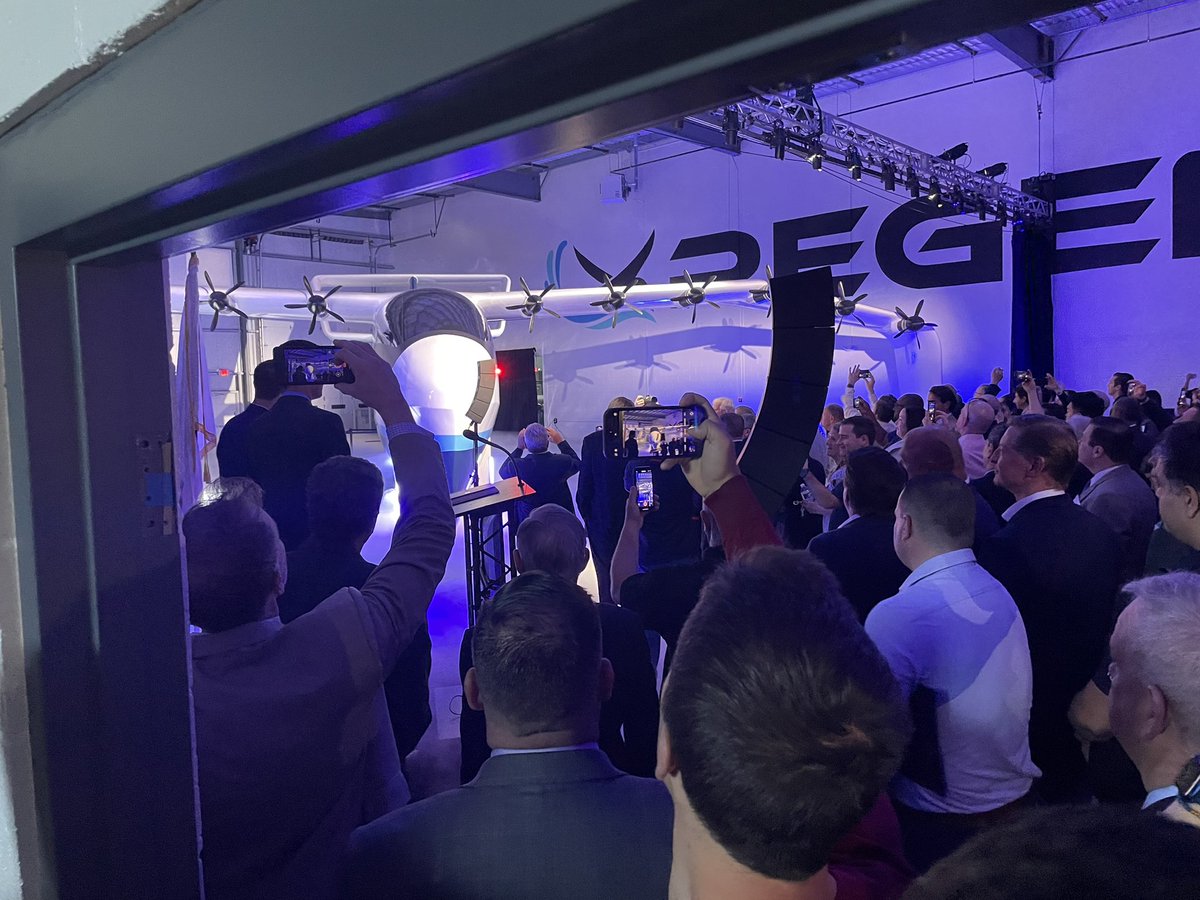
What a wild Friday...
⚙️ Years of engineering and test experience
🎟 200+ VIP guests
🤩 1 epic unveiling of our real-life, full-scale #seaglider mockup
So much to say on this enormous moment for @regentcraft - I'll share! 🧵👇
This is absolutely **bonkers.**
During a botched training exercise, FBI agents barged into a Delta pilot’s hotel room near Boston Logan Airport, then handcuffed and interrogated him.
Good local reporting by @wbz here.
This is absolutely **bonkers.**
During a botched training exercise, FBI agents barged into a Delta pilot’s hotel room near Boston Logan Airport, then handcuffed and interrogated him.
Good local reporting by @wbz here.