Insights Media Network is dedicated to advancing informed public discourse by producing credible articles, interviews, podcasts, and multimedia content.
🇳🇬 Happy Independence Day, Nigeria! 🇳🇬
Today, we celebrate our people, our resilience, our journey, and the limitless possibilities of a greater Nigeria.
May we continue to build with purpose, innovate with courage, and contribute to a stronger and more prosperous nation.
Speaking on New Central TV on “Nigeria at 66: Security, State Capacity and Democratic Stability,” Dr. Captain Luqman Gidado, Security Expert and Public Affairs Analyst, noted that insecurity is not peculiar to Nigeria, as criminality has existed throughout human history and security threats continue to evolve. He stressed that Nigeria have institutions of government that exists to fundamentally protect lives and property, describing security as the foundation upon which democracy, economic development and other aspects of society rest. He referenced Section 214 of the 1999 Constitution, which provides for the Nigeria Police Force, and Section 217, which establishes the Armed Forces of the Federation and sets out their constitutional functions, highlighting that these institutions have continuously adapt and strengthen their capacity to respond to emerging threats.
To that extent, Dr. Gidado maintained that the Police and the Armed Forces must continue to sustain the tempo in strengthening Nigeria’s security architecture. He applauded ongoing reforms within the Nigeria Police Force aimed at enhancing professionalism, as well as the recently concluded Conference and Retreat for Senior Police Officers, which he described as an important roadmap towards effective policing and security management ahead of the 2027 General Elections. He also commended the government for implementing the salary increase for military personnel, while advocating sustained improvements in the welfare of personnel, equipment, logistics and other combat enablers across the security agencies, stressing that adequately supported personnel are essential to effective national security.
Speaking on New Central TV on “Nigeria at 66: Security, State Capacity and Democratic Stability,” I noted that insecurity is not peculiar to Nigeria, as criminality has existed throughout human history and security threats continue to evolve. I stressed that Nigeria has institutions of government that exist to fundamentally protect lives and property, describing security as the foundation upon which democracy, economic development and other aspects of society rest. I referenced Section 214 of the 1999 Constitution, which provides for the Nigeria Police Force, and Section 217, which establishes the Armed Forces of the Federation and sets out their constitutional functions, highlighting that these institutions have continuously adapted and strengthened their capacity to respond to emerging threats.
To that extent, I maintained that the Police and the Armed Forces must continue to sustain the tempo in strengthening Nigeria’s security architecture. I applauded ongoing reforms within the Nigeria Police Force aimed at enhancing professionalism, as well as the recently concluded Conference and Retreat for Senior Police Officers, which I described as an important roadmap towards effective policing and security management ahead of the 2027 General Elections. I also commended the government for implementing the salary increase for military personnel, while advocating sustained improvements in the welfare of personnel, equipment, logistics and other combat enablers across the security agencies, stressing that adequately supported personnel are essential to effective national security.
Nigeria’s Diplomatic Influence in Africa: The Police as a Strategic Security Partner
Dr. Gabriel Jerry Otu, Lecturer and International Relations Expert, recently provided insightful perspectives on this subject, highlighting the strategic importance of Nigeria’s role in Africa and the need to leverage our institutions to deepen the country’s influence and security partnerships.
Nigeria’s influence in Africa extends beyond traditional diplomacy. The Nigeria Police Force is increasingly contributing to regional security through police-to-police cooperation, intelligence sharing and joint efforts against transnational crime.
From collaboration with Chad and Burkina Faso through INTERPOL to cross-border recovery operations and IGP Olatunji Rilwan Disu’s participation at the UN Chiefs of Police Summit, these engagements demonstrate Nigeria’s contribution to international policing and collective security.
Effective policing is therefore not only a domestic responsibility; it is also an instrument of Nigeria’s regional engagement. By strengthening partnerships, securing our borders and tackling crimes that transcend national boundaries, the NPF is helping Nigeria play a meaningful role in shaping Africa’s security architecture.
PRESS RELEASE
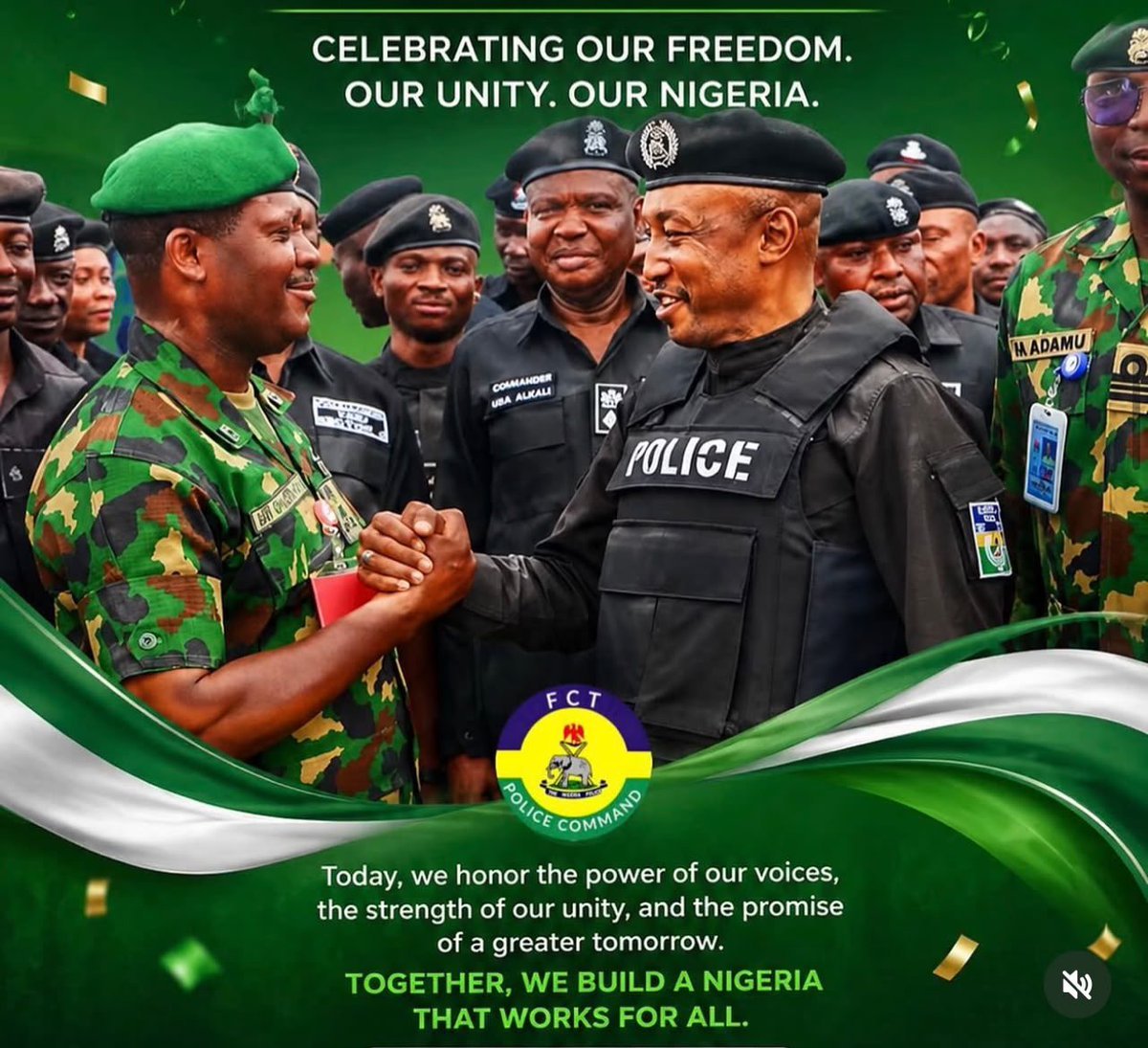
2026 INDEPENDENCE DAY CELEBRATION, CP FCT FELICITATES WITH RESIDENTS
…warns criminals to vacate the FCT
The Commissioner of Police, FCT Command, CP Ahmed Muhammed Sanusi, PhD., FCAI, on behalf of the officers and men of the Command, heartily felicitates with residents of the Federal Capital Territory on the commemoration and celebration of Nigeria’s Independence Day 2026. He wishes all residents a peaceful, safe and memorable celebration.
The CP enjoins residents to use this period to reflect on the values and ideals of independence, particularly unity, togetherness, peace, patriotism and collective responsibility.
The Command also sends a clear warning to criminal elements and those who may seek to exploit the celebration to perpetrate crime: the FCT cannot and will not be a lucrative playing field for criminal activities. Criminally minded persons are therefore advised to vacate the Territory or desist from their unlawful activities, as the Command remains resolute in identifying, arresting and bringing perpetrators to justice.
The Command assures residents of the FCT of adequate security deployments across the Territory to safeguard lives and property and ensure a peaceful celebration. Strategic deployments, visibility patrols and other proactive security measures have been put in place to maintain law and order throughout the period. FCT Police Command emergency numbers: 08032003913, 08028940883.
SP Josephine Adeh, ANIPR, MIPRA
Police Public Relations Officer,
FCT Police Command,
Abuja.
1st October, 2026.
Nigeria’s Diplomatic Influence in Africa: The Police as a Strategic Security Partner
Dr. Gabriel Jerry Otu, Lecturer and International Relations Expert, recently provided insightful perspectives on this subject, highlighting the strategic importance of Nigeria’s role in Africa and the need to leverage our institutions to deepen the country’s influence and security partnerships.
Nigeria’s influence in Africa extends beyond traditional diplomacy. The Nigeria Police Force is increasingly contributing to regional security through police-to-police cooperation, intelligence sharing and joint efforts against transnational crime.
From collaboration with Chad and Burkina Faso through INTERPOL to cross-border recovery operations and IGP Olatunji Rilwan Disu’s participation at the UN Chiefs of Police Summit, these engagements demonstrate Nigeria’s contribution to international policing and collective security.
Effective policing is therefore not only a domestic responsibility; it is also an instrument of Nigeria’s regional engagement. By strengthening partnerships, securing our borders and tackling crimes that transcend national boundaries, the NPF is helping Nigeria play a meaningful role in shaping Africa’s security architecture.
🇳🇬 Happy Independence Day, Nigeria! 🇳🇬
Today, we celebrate the strength of our people, the richness of our diversity, and the resilience that continues to shape our nation.
As we reflect on our journey, may we remain committed to truth, unity, progress, and building a Nigeria filled with greater possibilities for all.
Happy Independence Day from Insights Media Network.
#HappyIndependenceDay #Nigeria #IndependenceDay #InsightsMediaNetwork #IMN #NigeriaAt65 #OneNigeria
Happy Independence Day, Nigeria! 🇳🇬
As one of the guests on NTA Tuesday Live, I advocated for renewed patriotism among all Nigerians, anchored in the understanding that Nigeria is the only country we have. We must put the national interest first and support legitimate efforts to protect our communities and strengthen national security. Our security agencies cannot secure the country alone. Citizens have a critical role to play through cooperation, responsible information sharing, vigilance and respect for the rule of law. A safer and stronger Nigeria is a shared responsibility, and patriotism must go beyond words, it must translate into action.
May we continue to build a Nigeria we can all be proud to call home. 🇳🇬. https://t.co/kgqbZcFPNJ
Dr. Captain Luqman Gidado as one of the guest on NTA Tuesday live programmme commends Police Trust-Building Reforms, under IGP Tunji Disu & Calls for Stronger Action Against Repeat Offenders.
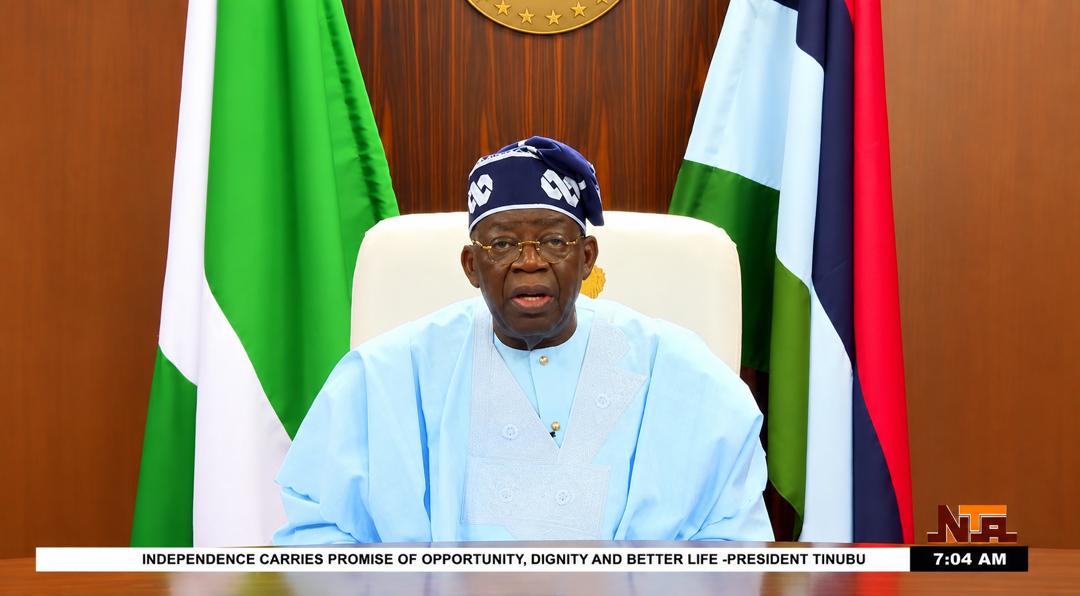
FULL TEXT: In Independence Day speech, Tinubu says Nigeria has crossed Red Sea, kicks against ‘addictive subsidies’
President Bola Tinubu reiterated the impact of his reforms in what would be his last Independence Day address before next year’s general election.
He likened Nigeria to a cancer patient when he assumed the reins in 2023, saying only painful treatment would have sufficed.
https://t.co/eXUZDl3vuy…
#IndependenceDaySpeech
FROM REFORM TO PROSPERITY: INDEPENDENCE DAY ADDRESS TO THE NATION
BY
HIS EXCELLENCY, PRESIDENT BOLA AHMED TINUBU, GCFR, 1ST OCTOBER 2026
My fellow Nigerians,
Sixty-six years ago today, our flag was raised, for the first time, over a free and sovereign nation. For sixty-six years, we have journeyed together as one nation, bound by our collective trust in the great promise of Nigeria: that a country of our size, our bountiful resources, our cultural diversity and, above all, our extraordinary people can build a giant in Africa. That in this blessed and fertile land we can build a united, strong and prosperous nation; a land of regional authority and global consequence.
Our journey has not always been easy. In truth, it has generally been too hard for too many. We have known moments of great hope and periods of profound disappointment. We have endured war, military rule, economic crises, insecurity and political upheaval. Yet through it all, Nigeria, with the indomitable spirit of its people, has endured.
It has endured through the efforts of the farmer who rises before dawn to work his land. The trader who opens her shop each morning with hope for a productive day. The teacher who believes in the children entrusted to her care and the young entrepreneur who refuses to surrender ambition to circumstance. We are grateful for the men and women of our Armed Forces and security services who place themselves in harm’s way so that the rest of us may live in peace.
Through every difficulty, generations of Nigerians have continued to believe in one thing: that this country of ours, will be better.
This faith, which sustains us all, is the inheritance of independence. Our founding fathers did not struggle merely for a flag, an anthem or a place among the nations of the world. Independence carried a larger promise: that Nigerians would have the freedom to shape their own destiny and build a nation capable of providing opportunity, dignity and a better life for its people. Sixty-six years later, Almighty God has made it our responsibility to deliver that promise.
Today, as we celebrate our independence, we must speak honestly about the journey so far, the choices we made, and the country we are determined to build from here.
For too long, the promise of Nigeria was undermined by choices that postponed difficult decisions and allowed deep economic distortions to grow.
By 2023, poverty was rising, and hope was nearly gone. The country’s situation was darker than it had ever been. We had no choice but to act.
Nigeria was like a sick patient who receives the terrible news that he has cancer. His doctor explains that the treatment will be difficult and painful, but that it offers a strong prospect of recovery. The patient has a choice. He can begin treatment, endure its discomfort and fight the disease. Or he can ask only for morphine, dull the pain and leave the cancer to spread.
For too long, Nigeria’s leaders chose morphine while praying for a miracle that never came.
They focused on symptoms while allowing the disease to take hold deep within the fabric of our society. We spent enormous sums sustaining inefficient arrangements that were never intended to last. We hid from difficult truths and passed the consequences from one generation to the next.
When this Administration assumed office, we resolved to do things differently. We chose to excise the cancer. The reforms that followed were difficult. The side effects were real. Yet, we must never confuse the medicine with the disease.
Our reforms did not create the weaknesses in our economy. They confronted them. Now, as certain influential but regressive voices would have us abandon the treatment and return ourselves to the abuse of addictive subsidies, we must resist their siren song. We must remember why we began this journey and how far we have already come.
Three and a half years later, the evidence that Nigeria’s economic outlook has improved is undeniable. Our economy has grown by over 4 per cent this year. Both oil and non-oil sectors have contributed to the renewed period of stable growth.
Oil theft is down. Inflation has fallen substantially from its peak. Our foreign reserves have been rebuilt, our foreign exchange market has stabilised, and in 2025 this country recorded its highest revenue from non-oil exports in its history, exceeding $6 billion. This is real money being made by real Nigerian businesses.
These are not idle claims. International observers, journalists, NGOs and multilateral institutions can see the change. Each has concluded that our reforms have strengthened Nigeria’s economic stability and resilience. The private sector has long since delivered its verdict, and foreign direct investment continues to rise each year.
My fellow Nigerians, we have reached a turning point.
The emergency treatment is over. The foundation has been repaired. The central economic task before us has changed. For three years, our overriding purpose was to correct our nation’s course.
Now, our purpose is simple: shared and widespread prosperity.
When I speak of prosperity, I do not speak merely of a larger economy, abstract numbers or better statistics. I mean something much more personal.
I mean a Nigeria in which the farmer can cultivate his land in safety, produce more at lower cost and earn a decent return for his labour. A Nigeria in which factories have reliable power, businesses can obtain credit, and young people can find productive work. A Nigeria in which food and transportation are affordable, education is within reach, and hard-working families can look towards the future with confidence.
This is the promise we must now fulfil.
Our priority is to bring down the cost of living. We will achieve this by lowering the cost of producing and moving the things Nigerians consume.
We have the land and people to feed ourselves. My government is therefore focused on expanding mechanised irrigation and dry-season farming, improving access to seeds and fertiliser, holistically increasing mechanisation, and investing in storage and transportation. We are building and completing the roads, railways and ports that connect farms and factories to markets.
Our logic is simple. When a farmer produces more cheaply, when fewer crops are lost between the farm and the market, when a manufacturer spends less on electricity, when a truck reaches its destination faster, and when the business environment fosters fair competition, all those savings will ultimately find their way into the price of goods in the market.
But prosperity requires more than cheaper goods. It requires productive work.
Nigeria is a young country. Millions of young Nigerians enter adulthood every year with talent, energy and ambition. Our responsibility is to ensure that this great demographic strength becomes an engine of production rather than a source of despair.
We are therefore placing jobs, enterprise, and industrial growth at the heart of our government’s policies.
We will use our gas to power new industries. We will support businesses that work to bring factories back to life in our great industrial centres. We will expand digital connectivity into communities that have waited too long to participate in the modern economy. We will invest in the skills employers demand and support Nigerian businesses with the infrastructure and finance they need to grow.
I want to see more Nigerians making things. I want to see more Nigerian farms feeding our cities and supplying our factories. I want to see Nigerian businesses selling Nigerian goods to the whole world. I want young Nigerians building unicorns and creating opportunities for others here at home.
I am also conscious that millions of our fellow citizens cannot wait for tomorrow. Some Nigerian families still struggle today for the next meal, the next school fee, the next medical bill, or simply enough money to get to work. Their circumstances did not begin with the reforms of the last three years. Their struggle is the accumulated consequence of decades of low productivity, inadequate infrastructure, insufficient opportunity and institutions that too often failed those who needed them most.
We cannot erase in four years what accumulated over generations. But we can change its course. We can build an economy that steadily lifts people out of poverty while ensuring that those who remain vulnerable are not abandoned along the way.
That is why we are strengthening direct support for the poorest households and improving the National Social Register so that assistance reaches those who genuinely need it.
It is why the Nigerian Education Loan Fund is ensuring that the child of a low-income family need not surrender the dream of higher education simply because his parents cannot afford the fees.
It is why CREDICORP is giving working Nigerians access to consumer credit, allowing people to acquire vehicles, solar systems, digital devices and other essential assets without first having to accumulate years of savings.
That is why, working with our states and local governments, we will continue to strengthen primary healthcare, basic education, and the essential public services on which poorer Nigerians depend most. Since 2023, we have paid salaries and pensions on time and in full. We have reformed the national pension program to benefit retirees and the vulnerable.
These programmes are not substitutes for prosperity. They are a bridge to aid our nation’s citizens on their path towards it. Our objective is not to manage poverty more efficiently.
We will defeat it.
It will take time. It will require discipline. It will require sustained growth year after year and the creation of millions of productive opportunities across our country.
But for the first time in decades, we embark on this task from a position of strength; with an economy whose fundamental direction has been corrected. We confronted the difficult choices we faced and have laid the foundations for lasting prosperity. Rather than fail the promise of a better future for our children, the time has come for us to build that future.
The age of reform has done its work. Now begins the age of prosperity. An age in which the promise of this great nation must finally become the lived experience of Nigerians from all walks of life.
We have travelled through difficult years together. We have made hard decisions together. And now, still together, we must build the country those decisions have made possible.
I believe deeply in what lies ahead.
I believe in the millions of ordinary men and women whose work, courage and determination have always been the true strength of our country. The road ahead will still demand much from us. But we travel it now with firm footing, a clear direction and renewed hope in our collective future.
Nigeria has corrected its course. We have passed through our own Red Sea. This is not the time to look back . Let us go forward together, with faith in ourselves, faith in our country, and faith that the sacrifices we have made will yield their reward.
The Promised Land before us is a Nigeria of abundance and opportunity; a nation where prosperity is broadly shared, where every child can dream beyond the circumstances of his birth, and where the immense promise of our country is finally reflected in the lives of our people.
Our destination is in sight. Our foundations are strong. Our direction is clear. So let us go forward.
No looking back.
Happy Independence Day, my fellow Nigerians. God bless you all, and God bless the Federal Republic of Nigeria.
Bola Ahmed Tinubu, GCFR
President and Commander-in-Chief of the Armed Forces of the Federal Republic of Nigeria
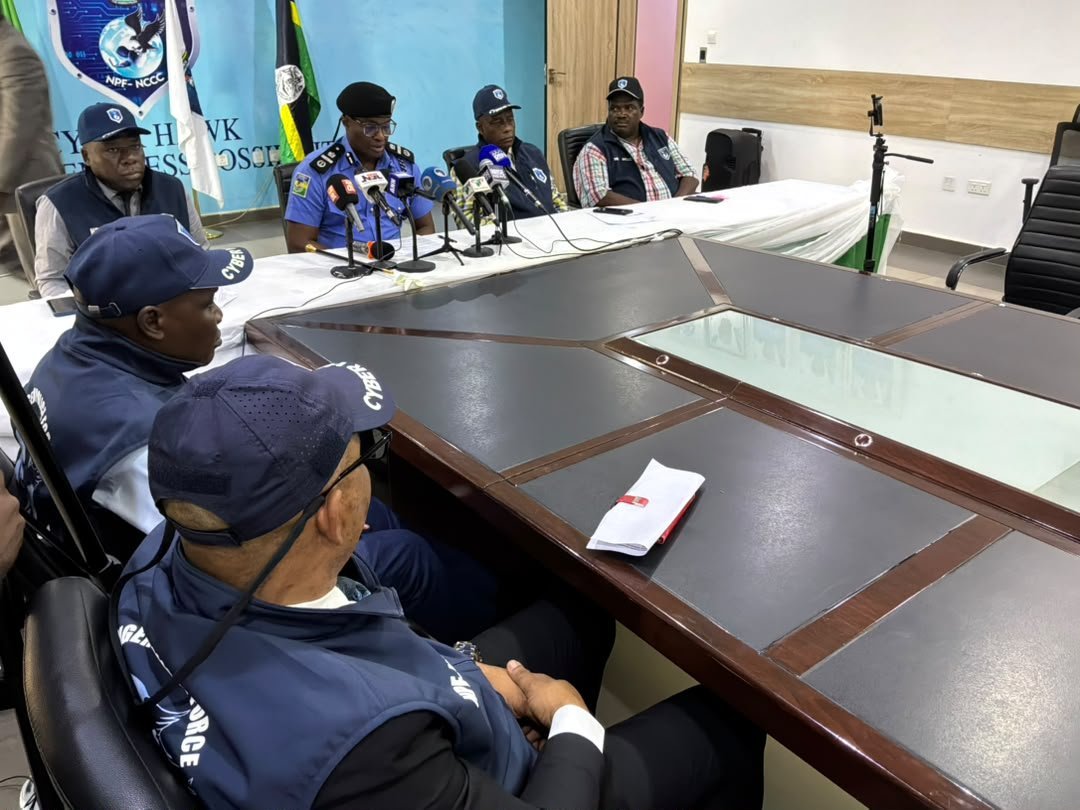
₦6.17BN: POLICE UNCOVER NEW CYBERCRIME NETWORK
Crime is taking a new digital turn, as cybercriminals exploit technology to steal money, identities and valuable devices.
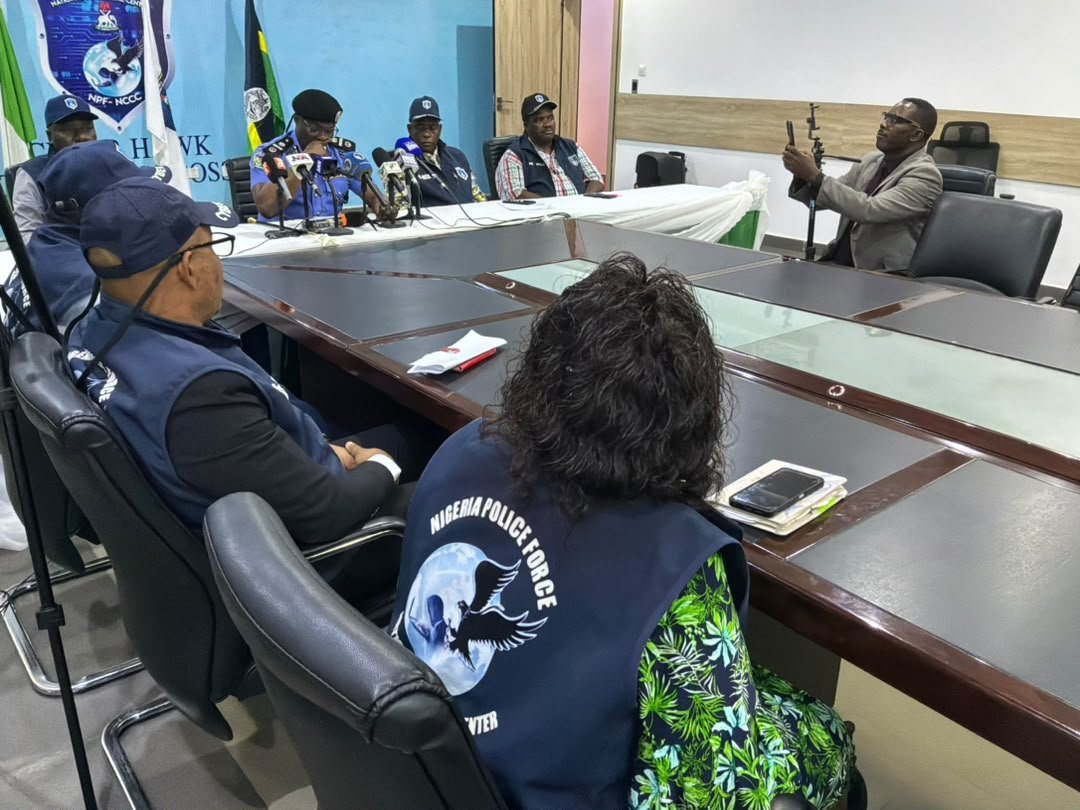
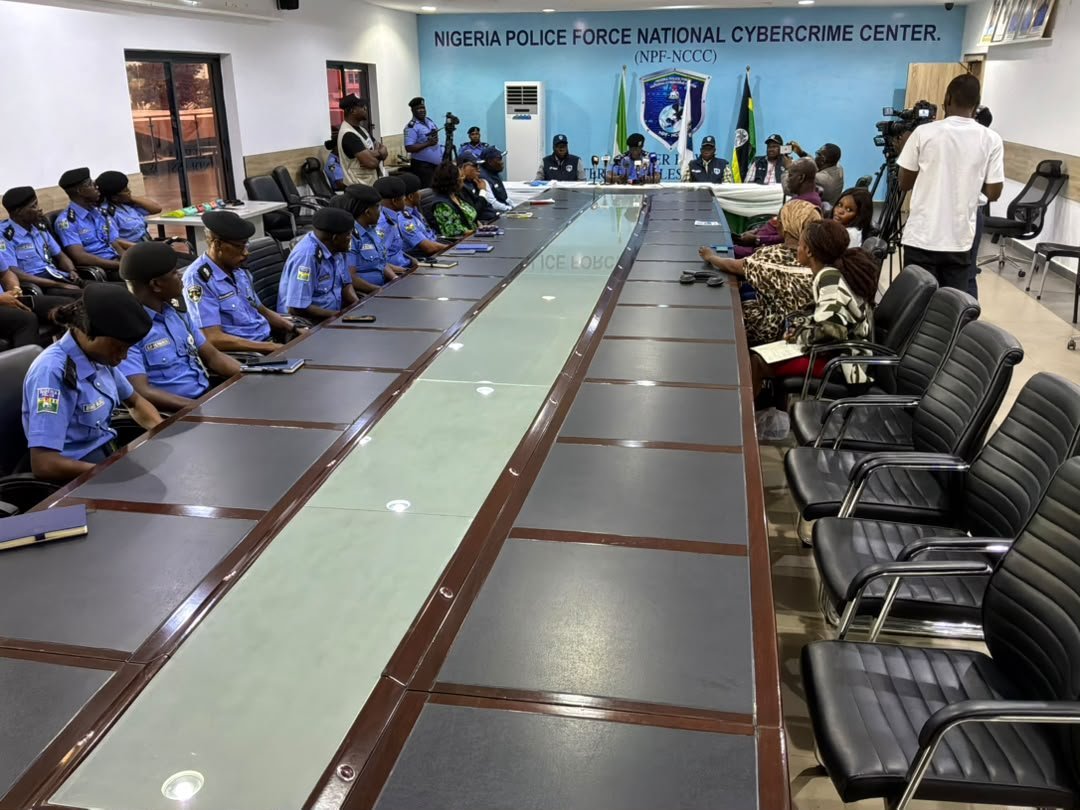
In a statement by the Nigeria Police Force National Cybercrime Centre says four major investigations have exposed emerging methods of cybercrime, including financial diversion, stolen-phone banking fraud and identity theft.
One of the investigation involves an alleged ₦6.174 billion diversion, with 761 successful payments traced to 105 beneficiaries across 19 banks.
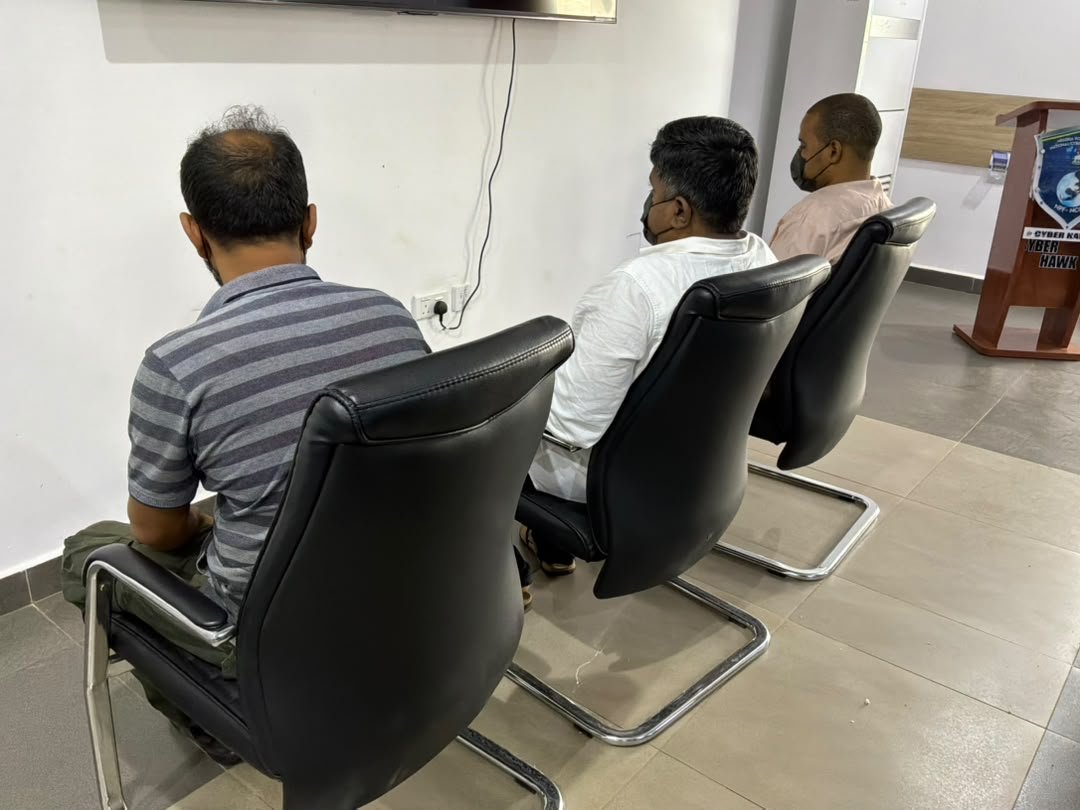
The statement further says two suspects have been arrested, while efforts continue to locate another suspect.
In Abuja, stolen mobile phones were allegedly used to gain unauthorised access to victims’ bank accounts, resulting in the withdrawal and transfer of funds.
The statement also reveals an investigation into missing 222 iPhones and 15 smartwatches, valued at about $144,440, has led to five arrests and the recovery of six suspected devices.
The NPF-NCCC is also warned the public against the misuse of digital platforms for cyberbullying, cyberstalking, criminal defamation and false publications.
BREAKING: Israeli Defense Minister Israel Katz says preliminary information indicates the co-pilot who stabbed the captain of a Flydubai flight acted intentionally and intended to crash the plane.
@Jeff_Paul reports Israeli Prime Minister Benjamin Netanyahu is also revealing new details, saying the plane went into a spin and began to nosedive before a passenger and crew member broke into the cockpit and subdued the co-pilot.
The flight ultimately landed safely after being diverted to Saudi Arabia.
Follow for the latest updates as new details emerge: https://t.co/Xj39wEfHyK
FG DECLARES OCTOBER 1 PUBLIC HOLIDAY FOR 66th INDEPENDENCE ANNIVERSARY
The Federal Government has declared Thursday, October 1, 2026, a public holiday to mark Nigeria’s 66th Independence Anniversary.
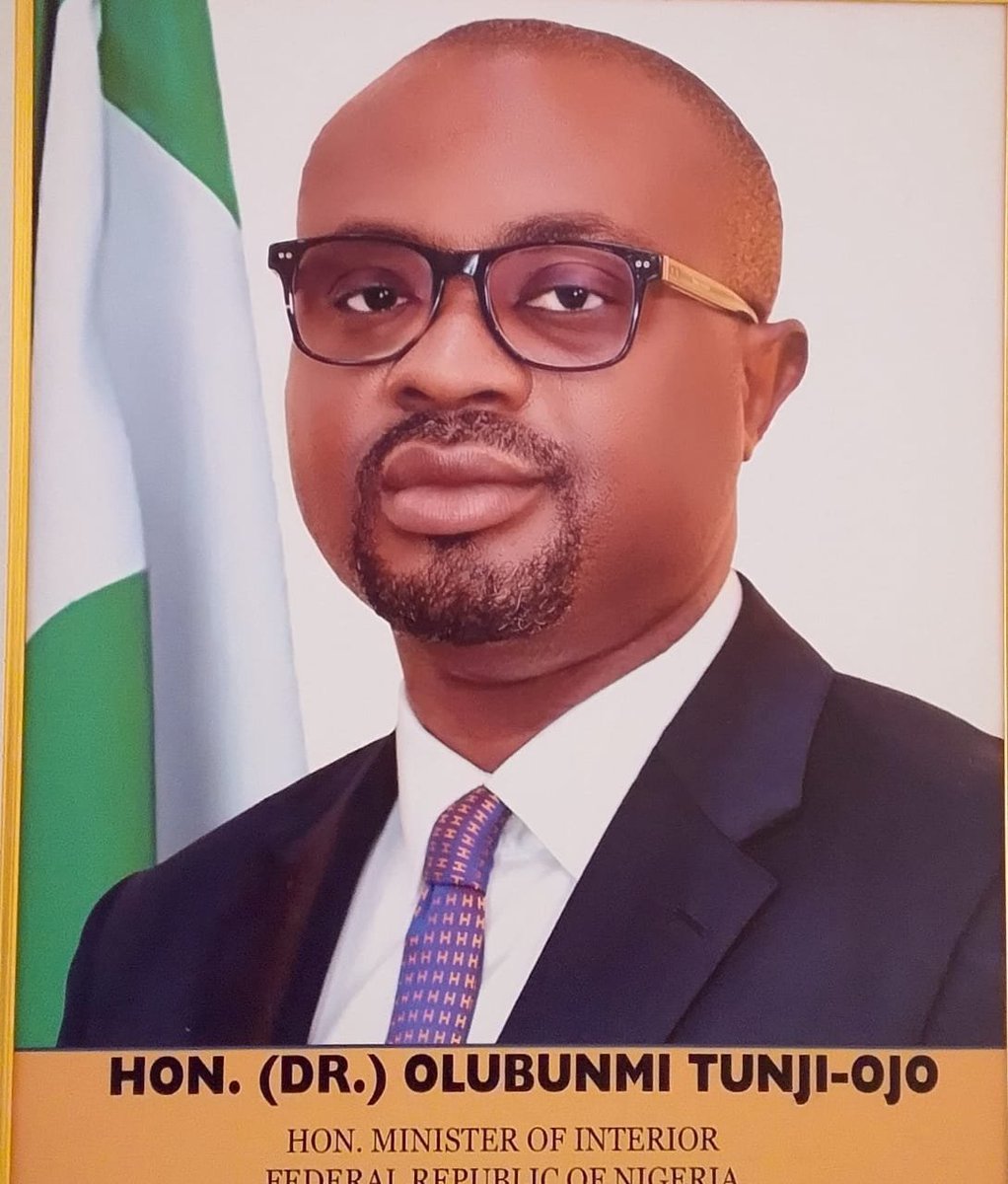
A statement by the Permanent Secretary, Ministry of Interior, Dr Magdalene Ajani, says the Minister of Interior, Olubunmi Tunji-Ojo, congratulates Nigerians at home and abroad on the celebration.
The Minister urges Nigerians to uphold unity, patriotism, peaceful coexistence and mutual respect, stressing that peace and stability are essential for national development.
The statement describes Nigeria’s diversity as a strength and called on citizens to emulate the patriotism of the nation’s founding fathers in building a country future generations can be proud of.
The Minister also reaffirms the Federal Government’s commitment to strengthening national security, improving public safety and creating an environment where Nigerians can live, work and pursue their legitimate aspirations with confidence.
Sustaining Nigeria's Security Gains: Lessons from NTA's Tuesday Live
Abuja, 29 September 2026
Nigeria does not lack security operations. It lacks staying power. That was the core issue on NTA's Tuesday Live, where a panel took on the topic "Sustaining National Security Efforts."
Dr Lukman Gidado was among the guests. The panel also included a police officer and a representative linked to NAPTIP, the anti-trafficking agency. Together they covered the question that follows every big security push: what happens after the headlines fade?
The answer is often not much. Operations start strong. Then funding slows, attention moves on, and agencies drift back into separate lanes. Criminal networks wait for exactly that gap.
Sustaining security therefore takes four things:
Steady funding. Budgets must be released fully and on time.
Shared intelligence. Agencies must work as one system, not as rivals.
Community partnership. Local information is the earliest warning available.
Honest evaluation. Measure results, drop what fails, and scale what works.
National security is a long game. It is won by consistency, not by one-off surges.
As one of the discussants on NTA Tuesday live session, Captain Dr. Luqman Gidado, Security Expert and Public Affairs Analyst, commended the successes being recorded by troops of the 8 Division, Nigerian Army, under Operation FANSAN YAMMA (OPFY) in Kebbi and Sokoto States. He described the neutralisation of terrorists and recovery of caches of arms, ammunition, mobility assets and other operational materials as significant gains in the ongoing effort to degrade terrorist networks in the North-West. According to Dr. Gidado, these intelligence-led successes demonstrate the value of sustained surveillance, operational pressure and decisive action in disrupting the logistics, mobility and freedom of movement of criminal and terrorist elements.
Captain Gidado (Rtd) further noted that the significance of these gains extends beyond the immediate operational environment, given the strategic importance of Kebbi and Sokoto and their proximity to Nigeria’s international borders. He stressed that degrading armed groups and disrupting the movement of weapons and terrorist logistics in these areas contributes directly to national security and border integrity, while reducing opportunities for transnational criminal networks to exploit border corridors. He therefore called for sustained military pressure, stronger intelligence gathering, effective inter-agency coordination, robust border management and meaningful community engagement to consolidate these gains and translate tactical successes into lasting security and public confidence.
Highlighting the critical nexus between drugs and national security, Security Expert, Dr. Captain Luqman Gidado, on NTA Tuesday Live, commended the significant strides recorded by the NDLEA under the leadership of Brig. General Buba Marwa (Rtd). He stressed that disrupting drug trafficking and substance abuse is integral to crime prevention, youth protection, and strengthening Nigeria’s national security.