A home for serious writing about Nigeria. Essays, research and conversations, plus public datasets from our Response Panel. We show you what the record says.
Essays by Nigerian writers, long enough to say something. Research into how the country actually works. Conversations with people who know their sector. And public datasets from our Response Panel: real answers from real Nigerians, anonymised, on money, health, law and the vote.
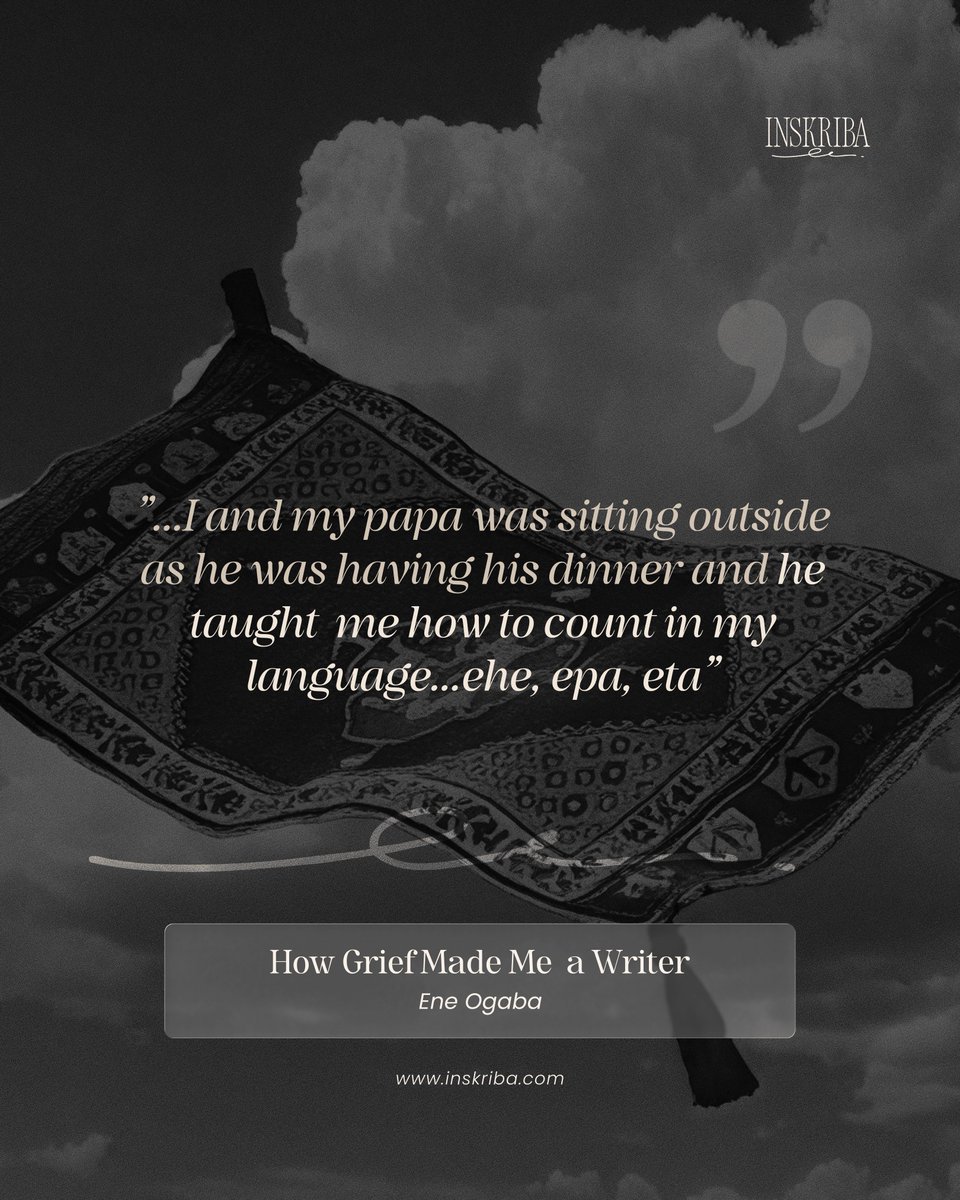
How Grief Made Me a Writer' is a beautiful work of literary non-fiction that explores how the loss of a loved one sparked the art of writing.
@ennie_ogaba Ene Ogaba takes us down memory lane, reflecting on her family and her late father, a staunch patriot who traversed the world, documenting everything along the way. She recounts his deep love for his wife during an era when romance was uncommon, his peculiar bond with his children, and the intimate moments he spent teaching her Idoma.
Though she was only a toddler when he passed, holding few direct memories of him, she captures his enduring impact and how his legacy lives on.
Read 'How Grief Made Me a Writer' on Inskriba. Link in bio.
Inskriba is an archive of original voices, preserving the ideas, experiences, cultures, histories, and perspectives that shape our country and continent.
We value the craft, and we reward every accepted piece.
Read our guidelines at https://t.co/euQfIheQsA
Blessing Akpan reflects on a lecture by Yemi Osinbajo, who argued that Nigeria’s high level of religiosity has not translated into economic transformation because popular religious teachings often prioritize supernatural prosperity over diligent, dignified labor.
In Altar, Desk, and Market: Where Faith Meets Productivity, she examines her own struggles as an entrepreneur and the introspection the lecture stirred.
At its heart, the essay explores an essential idea: true success requires both hard work and faith.
Read the full essay on Inskriba. Link in bio.
"
The popular definition is that it is a way of life. It is also how we speak, what we inherit, how we live, and ultimately, who we become.
Across diverse ethnic groups, language and culture shape the stories we tell, the traditions we preserve, and the identities we carry. And somehow, they remain among the unifying threads we share as Nigerians.
Theme - Language and culture
Read the full essays on Inskriba. Link in bio.
This is the day the Lord has made. A familiar verse from the Christian Bible that highlights the grace and significance each day carries.
In his essay, Dume Ikiriko reflects on the misconstrued meaning often attached to these words, especially in relation to our everyday experiences. He writes, “I had treated ordinary days as though they were simply the waiting room for the life I really wanted,” emphasizing that each day is a gift, not just a placeholder for better days.
He takes us through the reality of his daily life and how a fresh look at a well-known passage changed how he saw each day.
Read “This Is the Day” on Inskriba. Link in bio.
Daves Uguru turns to the spirit of "one-manness" disguised as hustle in the third part of his collection, Dear Conquered Generation.
A generation given over to escapism is thrown further down the well. In this final section, he exposes the agents of our own detriment, dressed as survival.
Read the full collection on Inskriba. Link in bio.
There is a profound dignity in mastering a fading craft, a craft that embodies art, precision, and passion.
In "The Last Canoe Carver on Ikorodu," Blessing Chidera Nnadozie documents the reality of Baba Rasheed, perhaps the last of his kind.
A story of craft, wood, water, and legacy.
Read the full essay on Inskriba. Link in bio.
The same structure across thousands of homes, a similar hierarchy, yet entirely contrasting realities.
In Nigeria, every family has its own story: love, silence, betrayal, warmth, first times. And through it all, one thing remains constant. Presence.
Theme: FAMILY
Read the full essays on Inskriba. Link in bio.
What does it mean to be noticed without effort, to stand out, to be stared at, and yet somehow be ignored?
"...we were told to avoid her."
In "Too Visible to Be Invisible," Ema Mkpouto explores the life of a teenage girl abandoned by both family and community, examining the stereotypes attached to albinism and the toll they take on those forced to carry them.
Read the full essay on Inskriba. Link in bio.
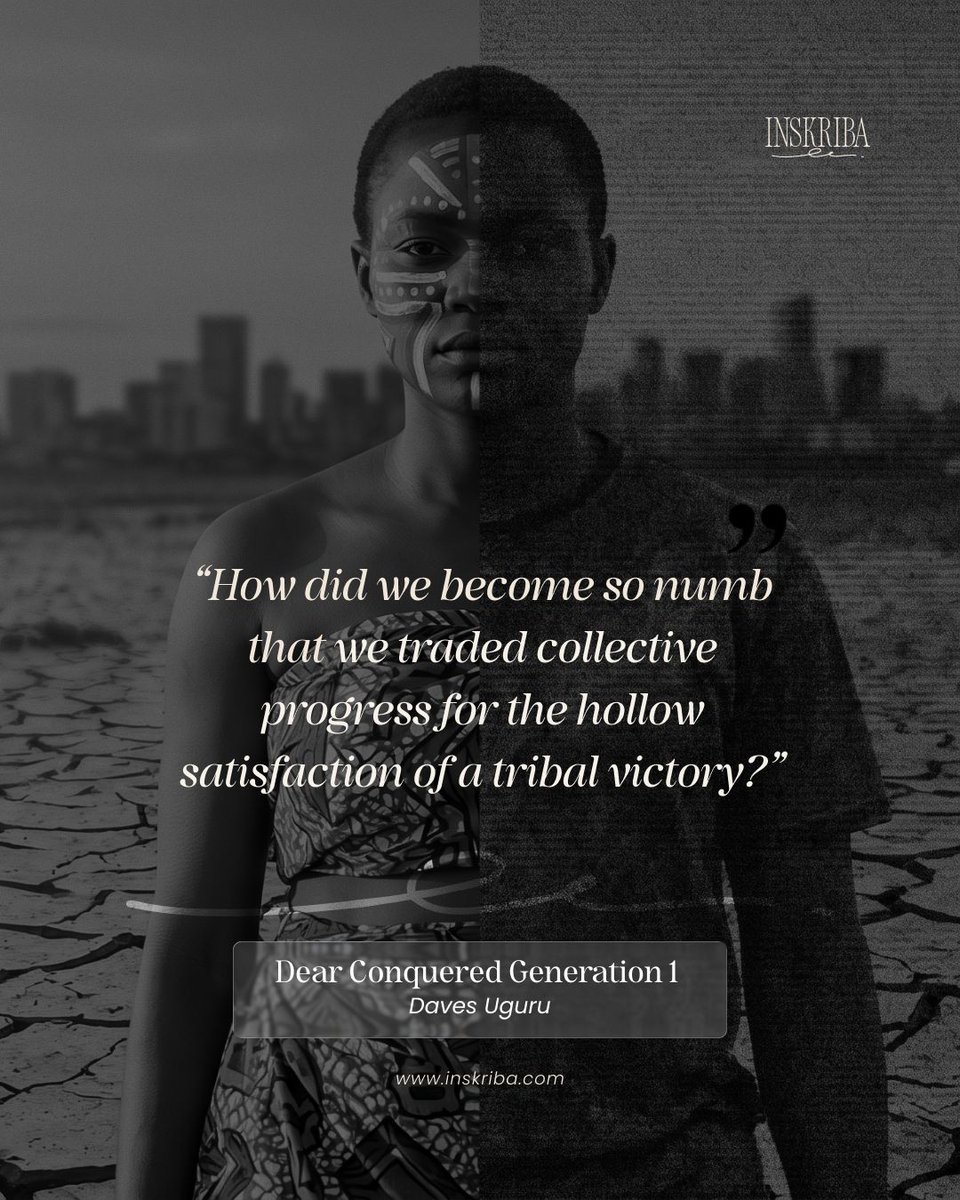
A generation is conquered when it surrenders its unity in diversity to the disease of ethnic bias. This is the premise of Daves Uguru's collection, "Dear Conquered Generation."
In Part I, Daves Uguru holds a mirror to the consequences of our shared ethnic bias as a nation. Using political decisions made based on tribal relations, he presses on the danger of ethnically influenced leadership selection. He writes: "Every ethnic group eventually suffers from the very same broken systems they once defended for a passing, short-term tribal advantage."
What becomes of a nation that chooses tribal victory over national victory?
Read the full collection on Inskriba. Link in bio.
The real tragedy of corruption is not the money that disappears; it is the opportunities that disappear with it. In Part II of his collection, "Dear Conquered Generation," Daves Uguru shifts his focus to accountability.
We are not interested in mathematics, he notes, and we associate it with the abstract. But mathematics holds real-world value. To tell the huge from the little is to hold leaders to account.
A conquered generation slowly loses sight of how much it is robbed. Billions to trillions of public funds go unaccounted for, and the citizens scroll past as though it were another item on the feed.
When did the theft of our future become just another post?
Read the full collection on Inskriba. Here: https://t.co/tgu7seV9CF . Link in bio.
Inskriba is a deliberate space for intentional writing and research, grounded in lived experience, cultural intelligence, and timely relevance. We aim to preserve stories that reveal patterns we ignore and narrate unique experiences.
We appreciate depth. We value craft.
You deserve to tell the story that aligns with your reality.
Write for Inskriba today.
Read our guidelines at https://t.co/3IA7ZfuXJB.
The real tragedy of corruption is not the money that disappears; it is the opportunities that disappear with it. In Part II of his collection, "Dear Conquered Generation," Daves Uguru shifts his focus to accountability.
We are not interested in mathematics, he notes, and we associate it with the abstract. But mathematics holds real-world value. To tell the huge from the little is to hold leaders to account.
A conquered generation slowly loses sight of how much it is robbed. Billions to trillions of public funds go unaccounted for, and the citizens scroll past as though it were another item on the feed.
When did the theft of our future become just another post?
Read the full collection on Inskriba. Here: https://t.co/tgu7seV9CF . Link in bio.
A generation is conquered when it surrenders its unity in diversity to the disease of ethnic bias. This is the premise of Daves Uguru's collection, "Dear Conquered Generation."
In Part I, Daves Uguru holds a mirror to the consequences of our shared ethnic bias as a nation. Using political decisions made based on tribal relations, he presses on the danger of ethnically influenced leadership selection. He writes: "Every ethnic group eventually suffers from the very same broken systems they once defended for a passing, short-term tribal advantage."
What becomes of a nation that chooses tribal victory over national victory?
Read the full collection on Inskriba. Link in bio.
What does it mean to be noticed without effort, to stand out, to be stared at, and yet somehow be ignored?
"...we were told to avoid her."
In "Too Visible to Be Invisible," Ema Mkpouto explores the life of a teenage girl abandoned by both family and community, examining the stereotypes attached to albinism and the toll they take on those forced to carry them.
Read the full essay on Inskriba. Link in bio.
The same structure across thousands of homes, a similar hierarchy, yet entirely contrasting realities.
In Nigeria, every family has its own story: love, silence, betrayal, warmth, first times. And through it all, one thing remains constant. Presence.
Theme: FAMILY
Read the full essays on Inskriba. Link in bio.