CVSS 9.8 does not mean fix this first.
The score describes theoretical worst-case severity. Not whether it's reachable in your environment, exploitable in your stack, or pointed at something that matters.
Sort by exploitability + asset sensitivity. Not the number.
#VulnerabilityManagement
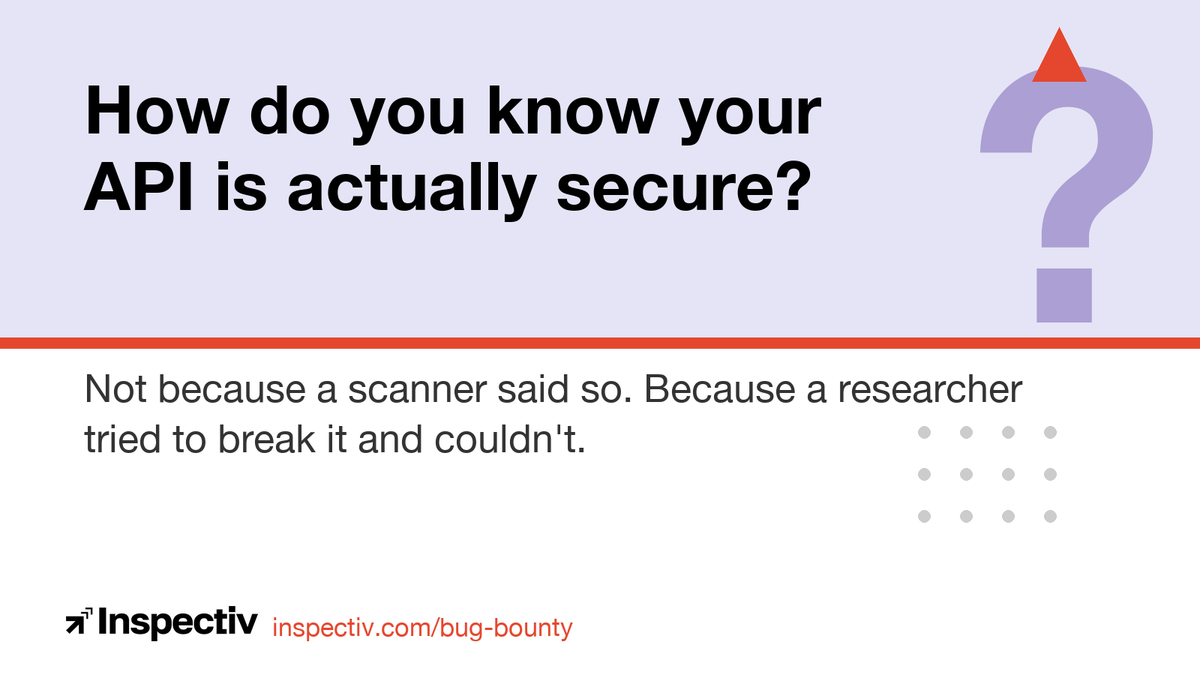
API security is business logic.
Can I swap a user ID and see someone else's data? Does rate limiting hold on every path, or just the happy one?
Scanners can't ask those questions. Researchers can.
https://t.co/hSSSTVwhjl
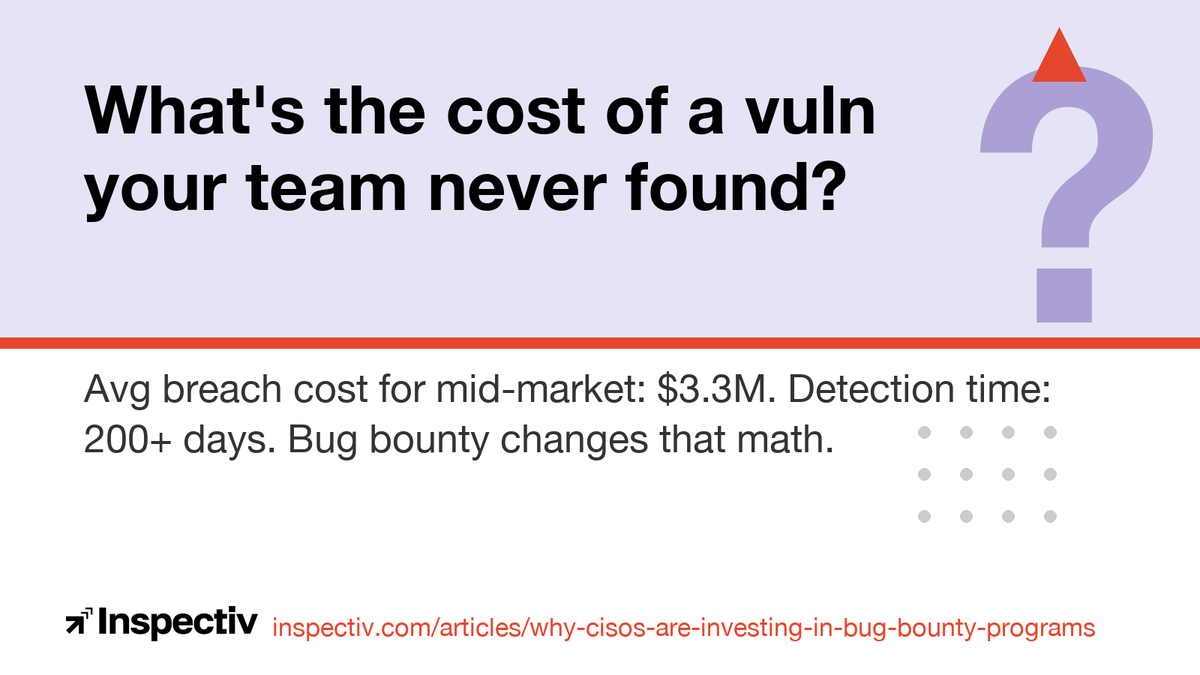
What's the cost of a vuln your team never found?
Not just IR. Churn + fines + engineering fire drills + the board meeting.
Price it correctly and bug bounty ROI is not a close call.
https://t.co/5Sgjc5NEZ0
Released today: Security teams are overwhelmed with vulnerability reports yet still miss critical issues. A unified platform for VDP, bug bounty, and testing can change that. How is your team reducing noise, proving compliance, and accelerating remediation without adding headcount? Read more: https://t.co/07gYBpUVMx
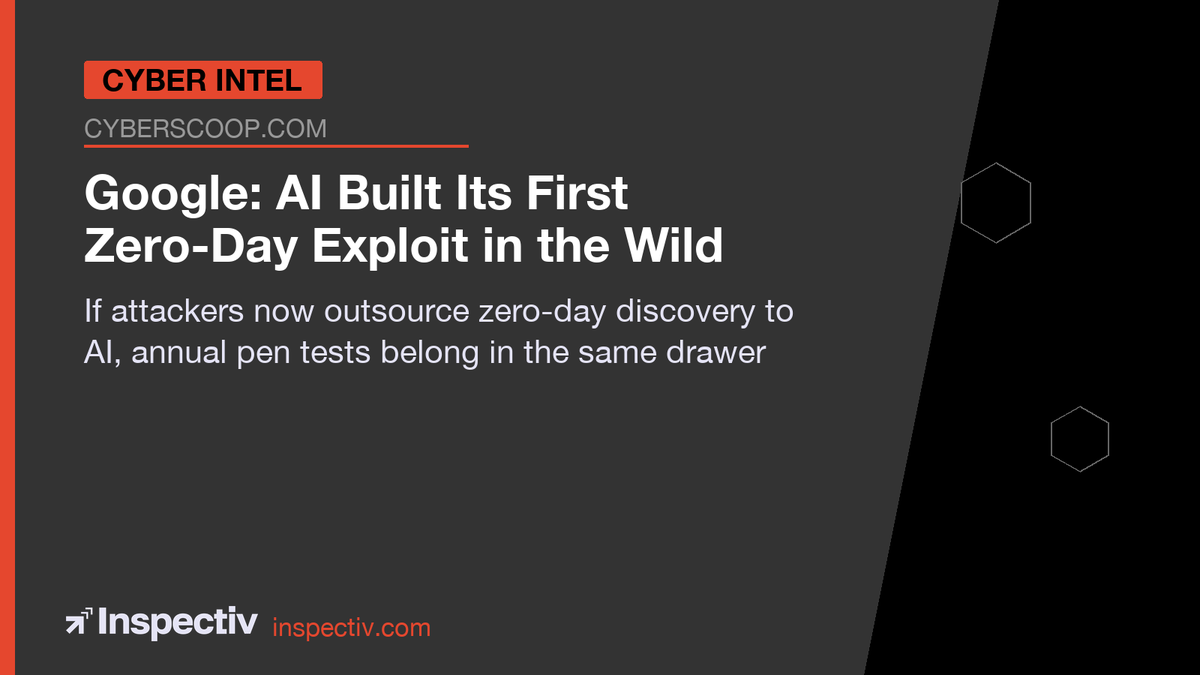
Google: AI Built Its First Zero-Day Exploit in the Wild
Google's Threat Intelligence Group confirmed the first AI-crafted zero-day exploit in the wild—a Python script bypassing 2FA on a popular web admin tool, developed by cybercriminals for a planned mass...
Via https://t.co/b0a4oKnr4e: https://t.co/CUsL4E9eda
#CyberSecurity #AppSec
Choosing between SOC 2 and ISO 27001? For fast-growing SaaS and cloud-native teams, SOC 2 often accelerates trust and aligns with how your buyers purchase—especially in North America. Do one first? Is one better?
https://t.co/xF6G9x2h16
#SOC2#ISO27001
Daemon Tools Supply Chain Attack Ran 27 Days Undetected
Supply chain attack on Daemon Tools Lite ran April 8 to May 5, infecting thousands before detection. Why assiduous vulnerability hunting always helps.
https://t.co/oXkXGpg38c
#CyberSecurity#AppSec
APIs power innovation—but also invite new risks. Proactively test and secure your APIs to stay ahead of evolving threats and compliance demands.
Inspectiv unifies vulnerability discovery, triage, and remediation guidance with stress relief in mind. https://t.co/tnaBNjHcRA #bugbounty
More Inspectiv Insights just dropped, distilled security research from our bug bounty business so you don't have the same vulnerabilities that others recently did.
Including the driest ever title "Client-Side State Is Not Authentication" but hey, it's true.
https://t.co/Rtg3BF5a3v
One of my favorite projects at @inspectiv has been bringing top quality #bugbounty and #pentest research to light in a way that can help organizations avoid the same issues as their peers.
Brief, concentrated knowledge, to the point and actionable: #InspectivInsights
https://t.co/TwdJGcakOR
Bug bounty gives you findings. It also gives you researchers who know your architecture cold and keep coming back.
Over time, that's not a vendor relationship. It's a security asset that compounds.
#BugBounty
LMDeploy CVE-2026-33626 Flaw Exploited Within 13 Hours of Disclosure
SSRF vulnerability in LMDeploy (open-source LLM deployment toolkit) was exploited just 12.5 hours after public disclosure on GitHub. Attackers can steal cloud credentials, access internal services, an...
#CyberSecurity #AppSec
The average enterprise runs 76 security tools. Still gets breached.
Maybe the 77th tool isn't the answer.
The gap is coverage — specifically, humans who think adversarially against your actual stack. Continuously.
#AppSec
Hidden cost of a traditional pentest: the weeks your team spends managing it.
Scoping calls, researcher back-and-forth, a report that needs another week to interpret.
Flat-fee. Expert-led. Managed start to finish. No overhead.
https://t.co/CbqRInjlb8
Every now and then, we have to recognize our rituals that don't add much to security. Here's a field guide to the things we do... that maybe we shouldn't emphasize so much compared to the ones that bolster our defenses fo' real. #bugbounty#pentest
Most underrated security metric: time to first valid finding.
Not MTTR. Not scan coverage. Not tools deployed.
Inspectiv programs typically see the first validated finding within 48 hours.
#AppSec#BugBounty
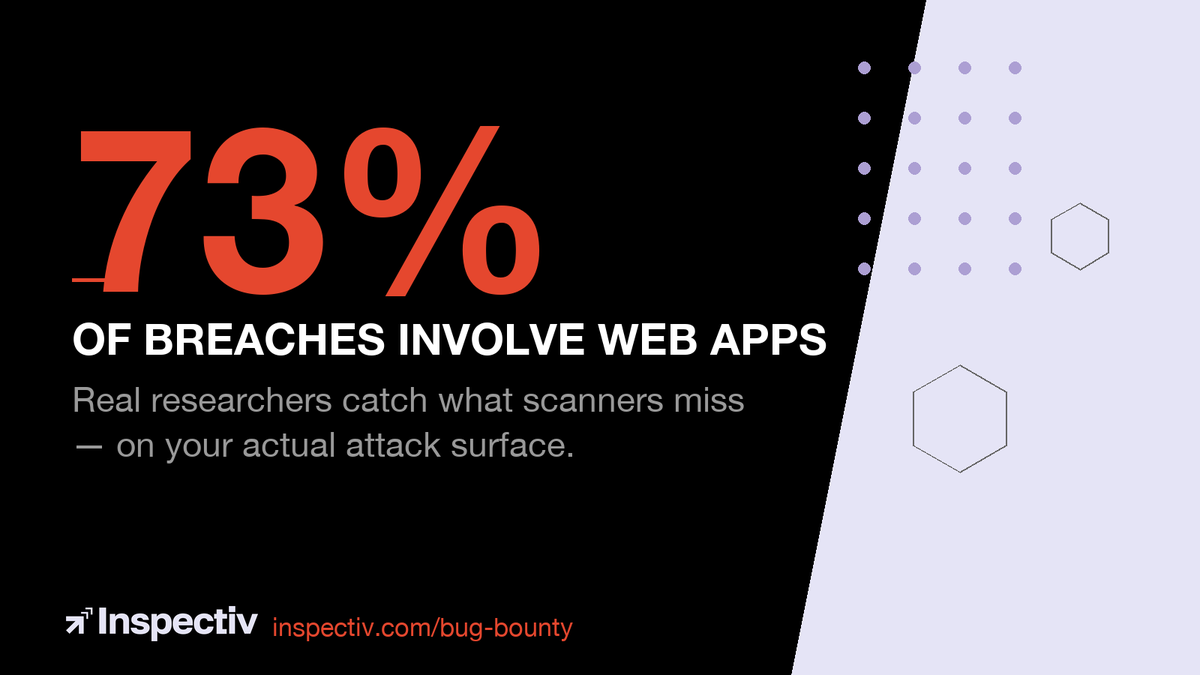
73% of breaches go through a web app.
Scanners catch the known stuff. Researchers find the rest — the chained logic flaws, the weird edge cases your scanner never considered.
That gap costs $3.3M on average.
https://t.co/EoyO5R05Pl
Shift left is right. A SAST scanner is not shift left.
You can run every automated gate and still ship logic flaws that none of them catch.
Shift left AND put researchers on the right side. Both ends matter.
#DevSecOps
Avg breach cost for a mid-market company: $3.3M.
That's a company-defining event, not a budget line item.
Bug bounty programs were once enterprise-only. Not anymore.
https://t.co/vCC7CPskeF
@ethical_h4ck3r_ Depends on our customers' ability to handle what researchers find. Most need some time to ease into that. But we like when all the stars align for that. (plus Vulnerability Disclosure Programs, which are inherently public).
The backlog is real — and it’s entirely thanks to outstanding work from researchers.
We’ve added extra triage capacity and are pushing hard to catch up. Thanks for sticking with us while we process an unprecedented wave of submissions.