Google’s AGY CLI is fast, unified, and finally dev-first—one interface, one auth, sub-second Go latency. But closing a 100k★ “open” repo and forcing migration in 30 days erodes trust.
https://t.co/ICOU7IbH3d
AI agents shouldn't die when you close your terminal.
Inspired by #OpenClaw, I built 𝗵𝗲𝗮𝗿𝘁𝗯𝗲𝗮𝘁: a 0-config Rust daemon for agentic scheduling. Persistent, lightweight, and agent-native. Bst 4 those who find cron clunky.
Try it: https://t.co/2RT87CRHtg
#AI#Rust#OSS
I watched a script wipe 3 months of UAT data. Claude Opus hit a mismatch, went hunting for a fix, & deleted the volume. Stop giving agents broad admin rights bc u think they’ll "know" where to stop. They wont. We need Zero Trust. Use this guide to secure https://t.co/YH3ggLVV15
Managing API keys is one of the top security concerns we hear from customers.
Today we’re introducing keyless auth for Claude Platform: authenticate via browser with the CLI, or let workloads use their existing cloud identity (AWS, GCP, Azure, or any OIDC token provider).
Behind every great product is a hidden journey! ✈️📦
The eye-opening lessons about the power of the supply chain. It’s the secret sauce to tech success! ✨
Read the story here: https://t.co/qnfrkqH6Hb
Sensible move, and also shows a huge industry shift as organizations plan for the future of machine/agent workers.
This is also going to hurt the market and economics of cost optimizations a bit.
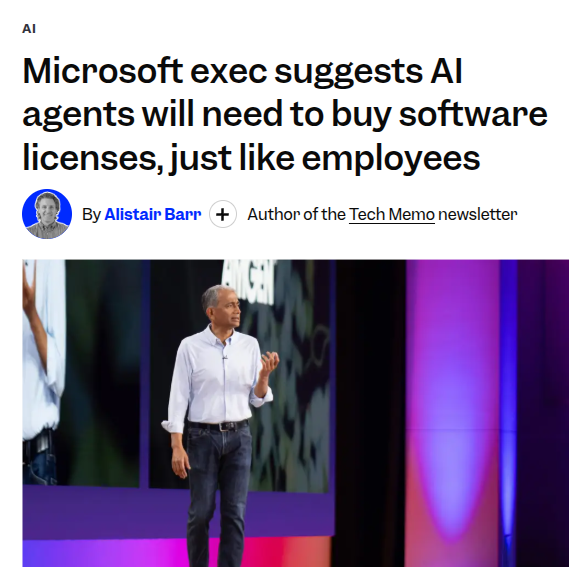
Microsoft just laid out a new way to keep enterprise software growing in an AI-heavy workplace: charge AI agents for software seats the same way companies pay for human employees.
The old SaaS model was easy, a company buys 1 license for 1 worker, so revenue rises when headcount rises.
AI agents threaten that model because 1 person might supervise 10 or 50 agents, which makes investors ask why a company would still need to pay for many separate licenses.
So Microsoft executive Rajesh Jha’s answer is that an agent may become its own software user, with its own identity, login, email, permissions, and access to tools, which turns each agent into a possible paid seat.
It shifts the pricing logic from “how many humans work here” to “how many active digital workers operate inside the company.”
Basically his logic is, once an agent can read messages, call apps, update records, and take actions on its own, software systems may need to track it as a distinct actor for security, auditing, and workflow control.
That gives Microsoft, Salesforce, and Workday a path to defend seat-based pricing even if AI reduces human hiring.
---
businessinsider. com/microsoft-executive-suggests-ai-agents-buy-software-licenses-seats-2026-4
OpenAI’s secret weapon? Killing their own products.
While others cling to "side quests," OpenAI pivots fast to focus on what pays: coding & productivity.
Ship it, kill it, move on. 🚀
#OpenAI#AI#ProductStrategy
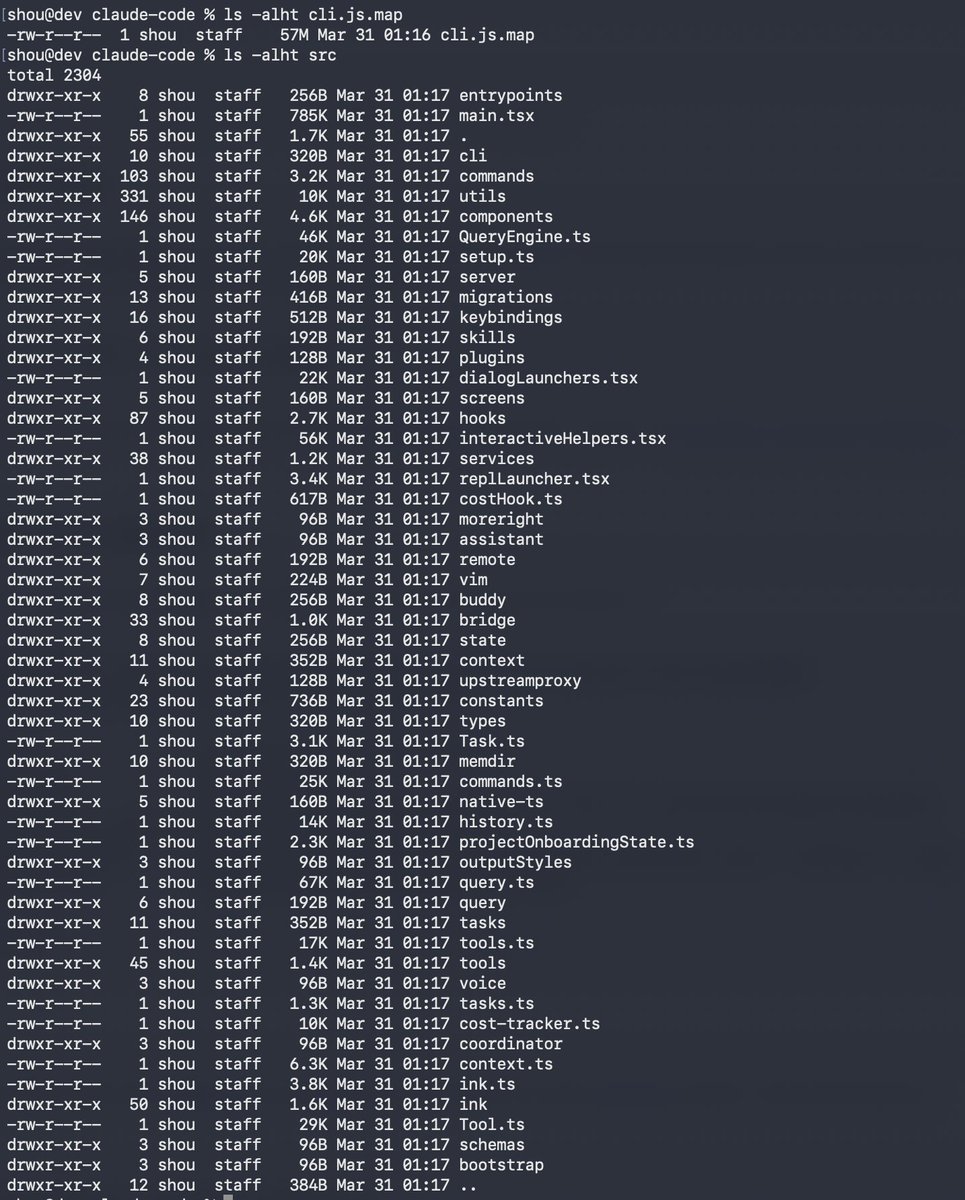
Claude Code’s source leak is a $2.5B lesson: AI agents are powerful, but security debt is real. Treat agents as insider threats: trust nothing, verify everything, monitor continuously. #AIsecurity
https://t.co/SC7tIcKxpq
Based on everything explored in the source code, here's the full technical recipe behind Claude Code's memory architecture:
[shared by claude code]
Claude Code’s memory system is actually insanely well-designed. It isn't like “store everything” but constrained, structured and self-healing memory.
The architecture is doing a few very non-obvious things:
> Memory = index, not storage
+ MEMORY.md is always loaded, but it’s just pointers (~150 chars/line)
+ actual knowledge lives outside, fetched only when needed
> 3-layer design (bandwidth aware)
+ index (always)
+ topic files (on-demand)
+ transcripts (never read, only grep’d)
> Strict write discipline
+ write to file → then update index
+ never dump content into the index
+ prevents entropy / context pollution
> Background “memory rewriting” (autoDream)
+ merges, dedupes, removes contradictions
+ converts vague → absolute
+ aggressively prunes
+ memory is continuously edited, not appended
> Staleness is first-class
+ if memory ≠ reality → memory is wrong
+ code-derived facts are never stored
+ index is forcibly truncated
> Isolation matters
+ consolidation runs in a forked subagent
+ limited tools → prevents corruption of main context
> Retrieval is skeptical, not blind
+ memory is a hint, not truth
+ model must verify before using
> What they don’t store is the real insight
+ no debugging logs, no code structure, no PR history
+ if it’s derivable, don’t persist it
AI rewired the threat model.
The perimeter is gone. The question isn't if your agents will be tested — it's whether they'll survive.
Checkout: https://t.co/YH3ggLVV15 for details.
A downloadable PDF with the full framework is also available.
I ignored speech-to-text for yrs… until a swollen elbow forced me to rethink. Physio asked was I hammering my keyboard, so I tried voice input. Wispr and Mac dictation were way better than I expected—accurate, fast. I’m not going back to typing everything. Have you tried voice?
Stripe ships 1,300 AI-written pull requests every week, so, what is stopping you?
Stripe claimed recently their minion pull requests have not a single line of code written by a human. 🤯
https://t.co/AqJOyokLbo
SW eng shld be boring
We used to chase thrill — war rooms, late nights, hotfixes
But drama ≠ success.
Excitement = 🚨
• something broke
• risky call
• preventable issue
Boring tms:
• smooth releases
• quiet on-call
• predictable arch
Best ones learn & impr
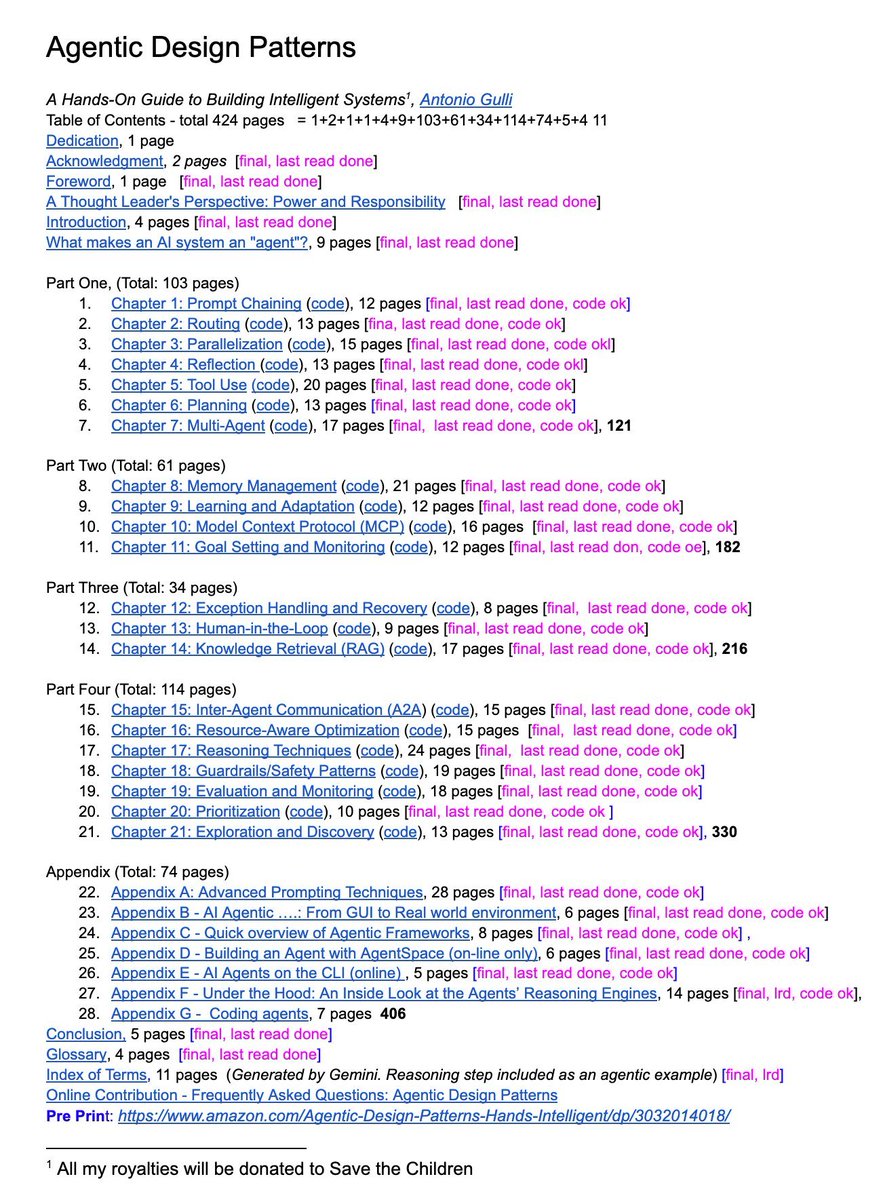
A senior Google engineer just dropped a 421-page doc called Agentic Design Patterns.
Every chapter is code-backed and covers the frontier of AI systems:
→ Prompt chaining, routing, memory
→ MCP & multi-agent coordination
→ Guardrails, reasoning, planning
This isn’t a blog post. It’s a curriculum. And it’s free.
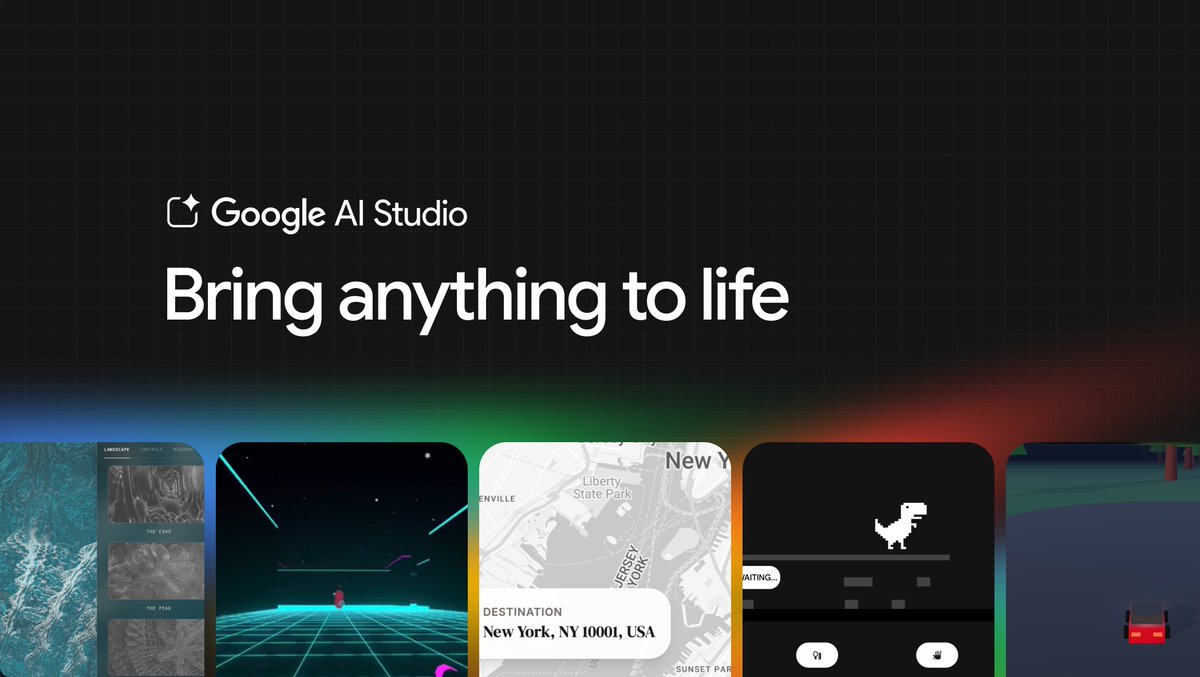
Introducing a new upgraded vibe coding experience in @GoogleAIStudio.
You can now turn any idea into functional, production ready apps. Build multiplayer games, collaborative tools, apps with secure log-ins and more.
DuckDB 1.5.0 shipped with 17% TPC-H boost, VARIANT for semi-structured data, GEOMETRY built-in, and non-blocking checkpointing — turning it from “fast query tool” into a serious embedded analytics engine. #DuckDB






![himanshustwts's tweet photo. Based on everything explored in the source code, here's the full technical recipe behind Claude Code's memory architecture:
[shared by claude code]
Claude Code’s memory system is actually insanely well-designed. It isn't like “store everything” but constrained, structured and self-healing memory.
The architecture is doing a few very non-obvious things:
> Memory = index, not storage
+ MEMORY.md is always loaded, but it’s just pointers (~150 chars/line)
+ actual knowledge lives outside, fetched only when needed
> 3-layer design (bandwidth aware)
+ index (always)
+ topic files (on-demand)
+ transcripts (never read, only grep’d)
> Strict write discipline
+ write to file → then update index
+ never dump content into the index
+ prevents entropy / context pollution
> Background “memory rewriting” (autoDream)
+ merges, dedupes, removes contradictions
+ converts vague → absolute
+ aggressively prunes
+ memory is continuously edited, not appended
> Staleness is first-class
+ if memory ≠ reality → memory is wrong
+ code-derived facts are never stored
+ index is forcibly truncated
> Isolation matters
+ consolidation runs in a forked subagent
+ limited tools → prevents corruption of main context
> Retrieval is skeptical, not blind
+ memory is a hint, not truth
+ model must verify before using
> What they don’t store is the real insight
+ no debugging logs, no code structure, no PR history
+ if it’s derivable, don’t persist it](https://pbs.twimg.com/media/HEu2icGbEAAvoFI.jpg)