Two signals predict EHR churn — and neither is on your dashboard:
1. Prior-auth burden: 13 hrs/week, 89% of physicians link it to burnout.
2. Workaround culture: 100% login, but logins ≠ trust.
Logins and RVUs count themselves. Burden and workarounds don't. Measure those.
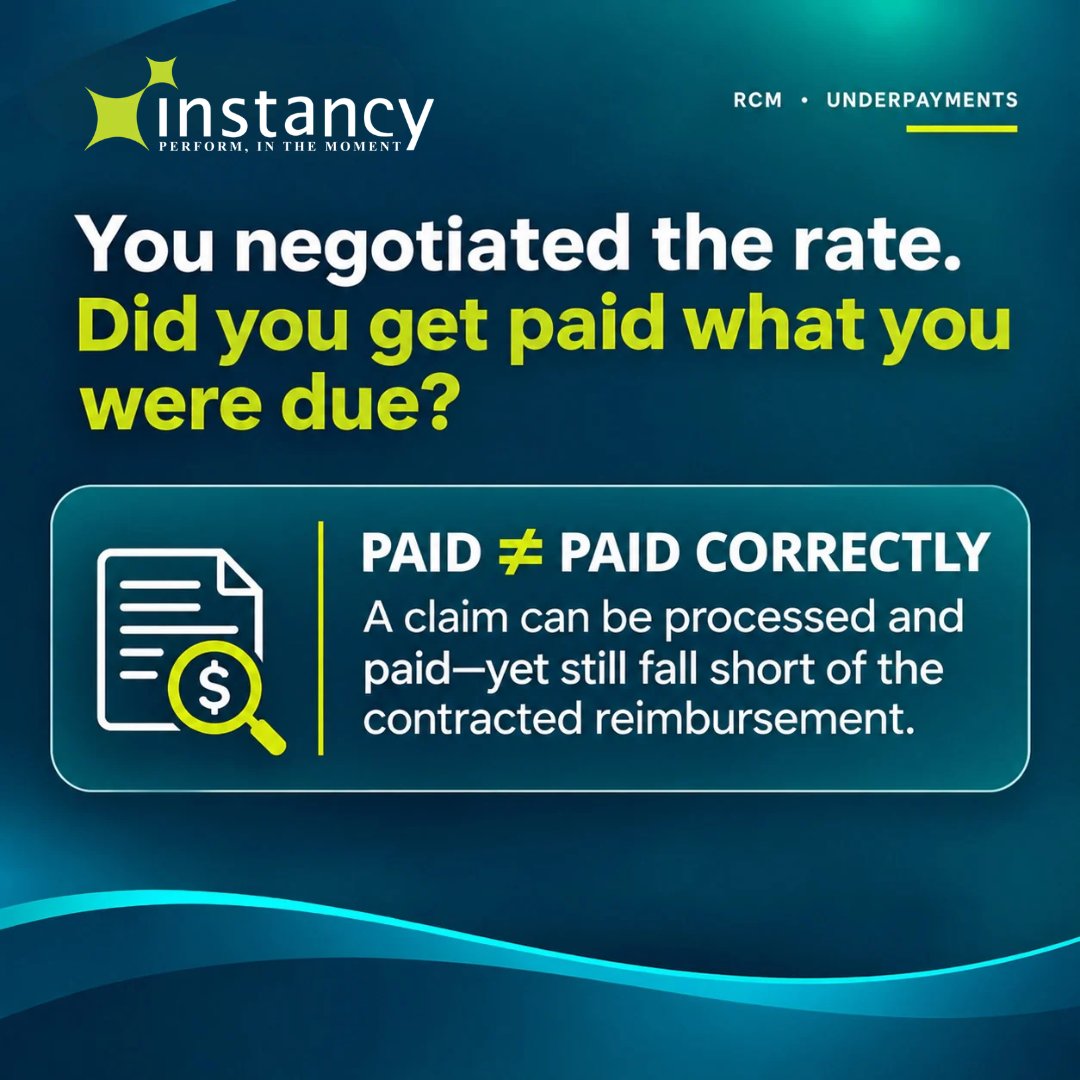
A claim can be paid and still be underpaid.
How often do RCM teams verify payments against payer contracts?
AI can help identify discrepancies and automate follow-ups.
“Paid” doesn't always mean “paid correctly.”
Explore Instancy: https://t.co/sOOSxQGiQw
#RCM#HealthcareAI
Clinicians override up to 96% of EHR safety alerts.
Meanwhile your adoption dashboard is all green — logins up, orders in-system, time-in-EHR plenty.
Both are true. Usage isn’t engagement. Presence isn’t adoption. You’re measuring the wrong thin
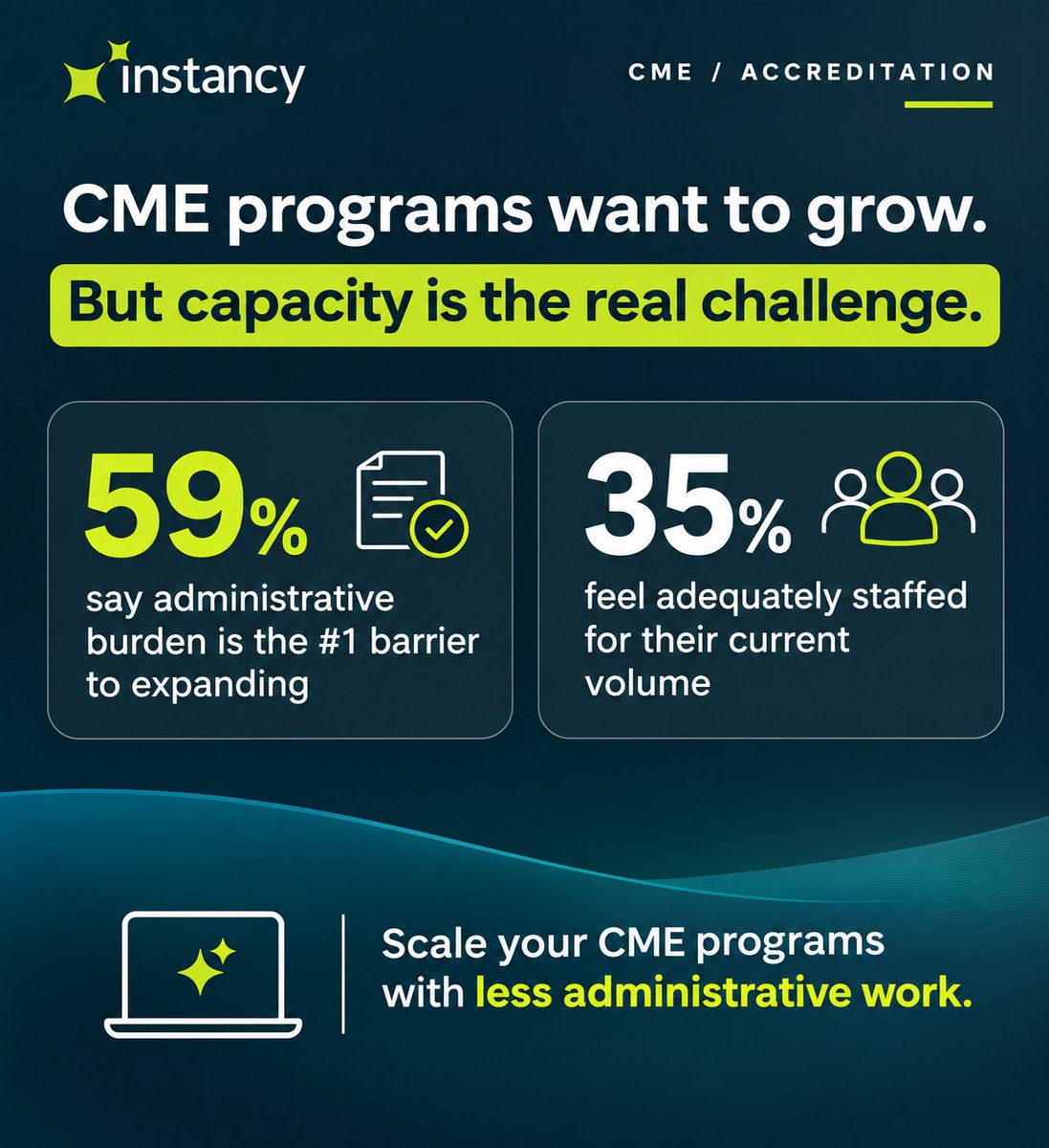
CME growth shouldn't mean more administrative work.
AI-assisted content creation, CE credit tracking, and workflow automation can help providers scale without adding the same manual burden.
CME & Continuing Education Platform | https://t.co/zJMhoxt5T4
#CME#MedicalEducation
RTM used to be all-or-nothing: 16 days of data or $0. 20 minutes or $0.
So a patient with 12 days + 15 min earned you nothing.
Two new 2026 codes (98985 + 98979) make that same patient worth ~$66. The cliff is now a ramp — if your billing uses them.
Two physicians. Same specialty. Same EHR. One loves it, one’s burning out on it.
In KLAS research, 73% of orgs have same-EHR docs who flatly disagree.
The variable isn’t the software—less than 20% of satisfaction is the EHR. It’s training.
Behavioral health pays the prior-auth tax like no one else: denied an est. 25–30% (vs 8–12%), 98% of Medicare Advantage enrollees need PA for a mental health service (KFF), and psychiatrists lose 20.3% of their time to admin — the most of any specialty. https://t.co/a63NNXivIL
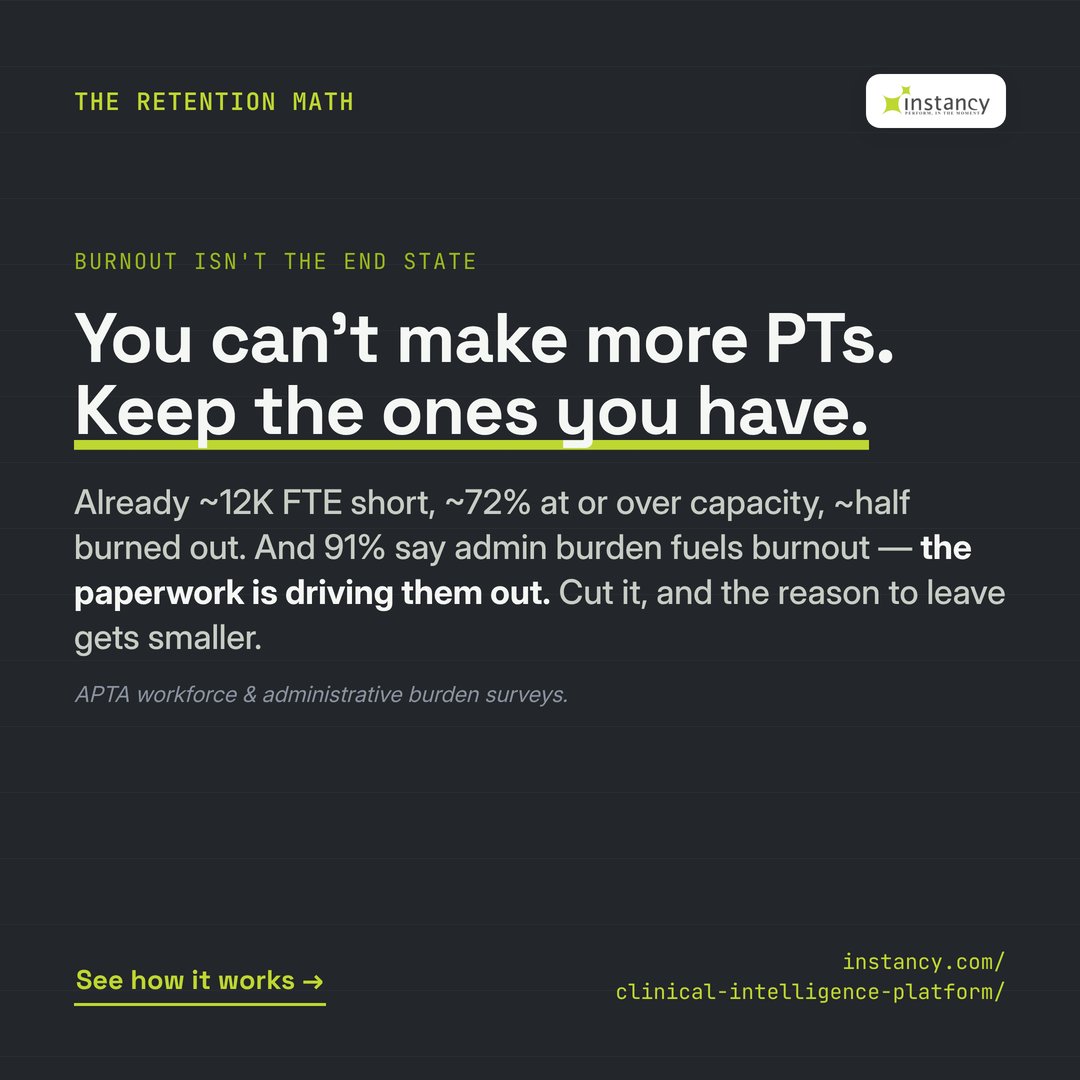
PT burnout from paperwork isn’t the end — losing the clinician is. Already ~12K FTEs short, ~72% over capacity. APTA’s forecast: how long PTs stay swings the 2037 gap from ~970 to ~17K. And 91% say admin burden fuels burnout. Keep the ones you have. https://t.co/ZKFQpU1Enz
At #NCIOM, a key question: How do we turn healthcare AI governance into everyday practice?
Executives, clinicians, staff & patients need role-specific AI literacy—not just policies.
At Instancy, we're bridging learning and in-workflow guidance.
#HealthcareAI#ResponsibleAI
Do the math: 12 patients a day × 20 min of charting each = 4 hours of a PT’s shift just typing. Half the clinical day, in the EMR. It follows them home as 9pm pajama time — and 91% of providers link admin burden to burnout (APTA 2025). https://t.co/hFmjBOHKWv
40 prior auths. 13 hours of staff time weekly. The solution isn’t working faster. It’s combining AI, in-app guidance, and automation across EHRs and portals. Less paperwork. More patient care.
RCM Automation & Staff Training | https://t.co/ztVNVViZdo #RCM#HealthcareAI
ACCME’s message for CME providers is clear: AI can accelerate education, but responsibility stays with the accredited provider.
AI governance must be built into the learning workflow—not added later.
Use AI. Govern it. Make integrity visible.
#CME#HealthcareAI
HIMSS26 signal: 85% of the largest EHR’s base is live on its AI suite, with native agent-building and medical foundation models. Bolt-on AI is giving way to an architecture question: “Which architecture?”
https://t.co/LDhSbLNoHO
#EHR#HealthIT#AgenticAI
The 2026 EHR benchmark (620 execs, 145 orgs): the market shifted from replacement to optimisation. 79% now rate clinical governance as critical, 76% stabilisation, 72% workflow simulation, 68% benefits tracking. The value is in adoption, not installation. https://t.co/bkIwATKw7t
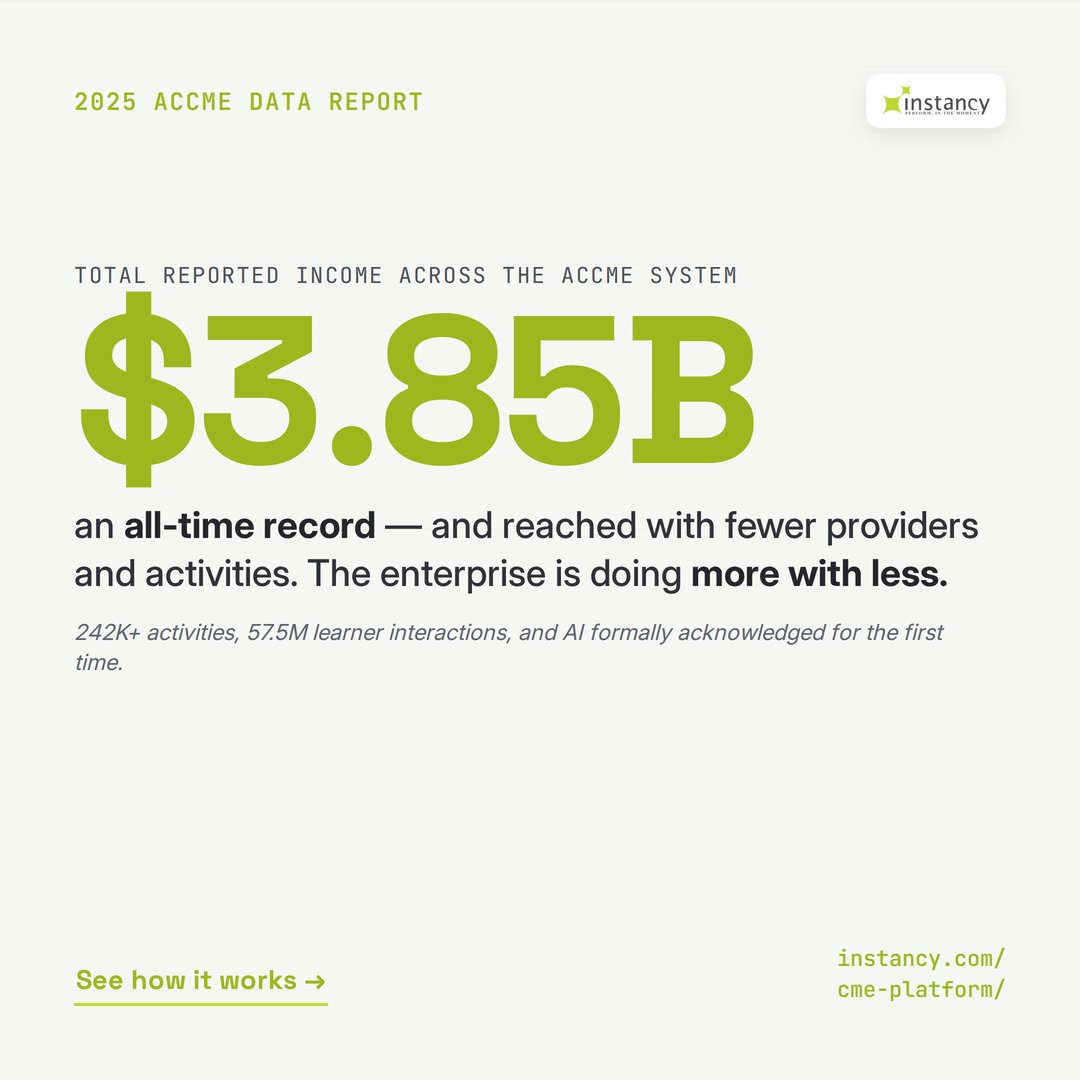
The 2025 ACCME Data Report: 242K+ activities, 57.5M learner interactions, a record $3.85B in income, and AI formally acknowledged for the first time. The twist: fewer providers and activities than last year. The field is doing more with less. https://t.co/ipw41Kz0gy
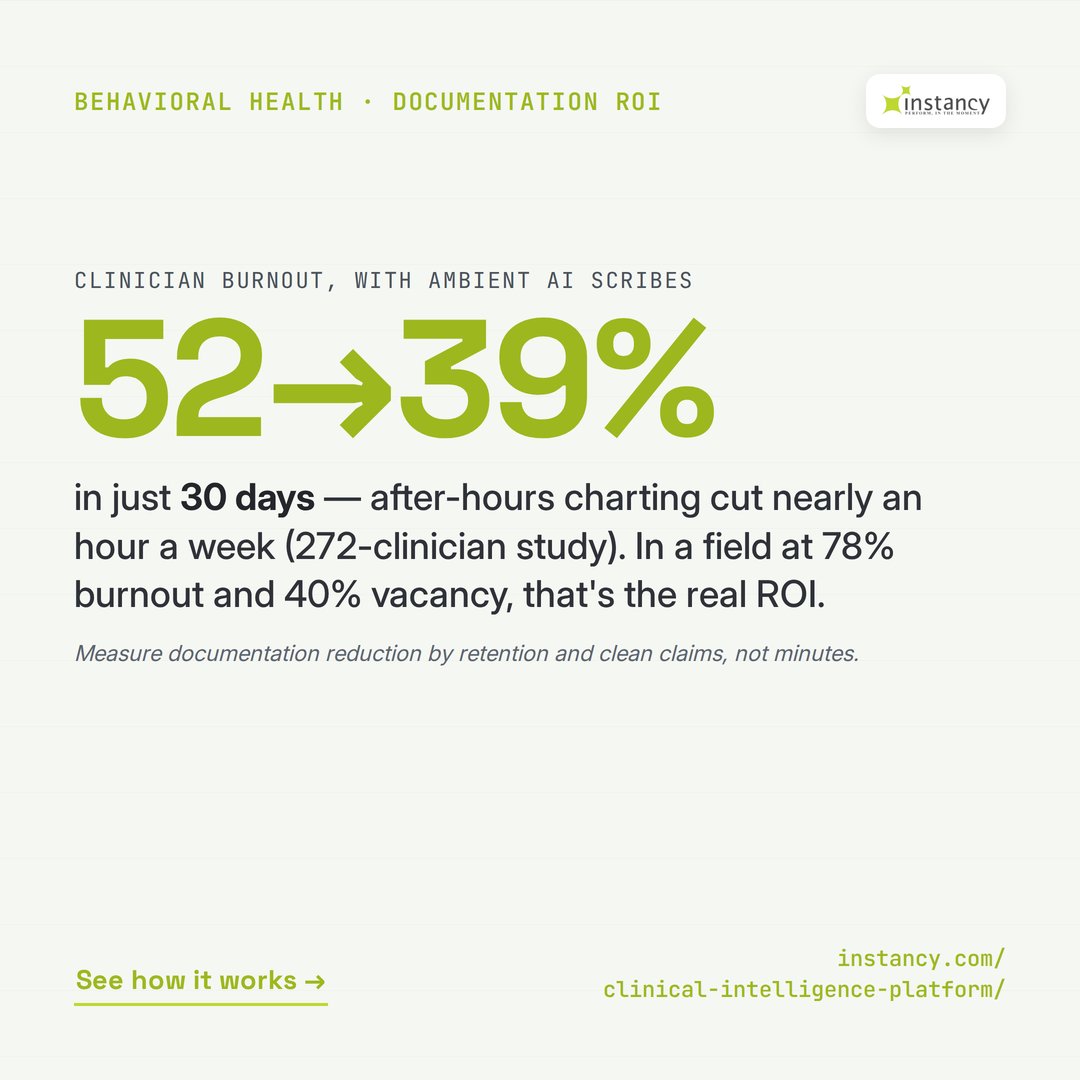
Behavioral health: 78% burnout, 40% vacancy, and clinicians spend 34-55% of their time on documentation. A 272-clinician study found ambient AI cut burnout from 52% to 39% in 30 days. Measure documentation ROI in retention, not minutes saved. https://t.co/7iZNnTBb2J
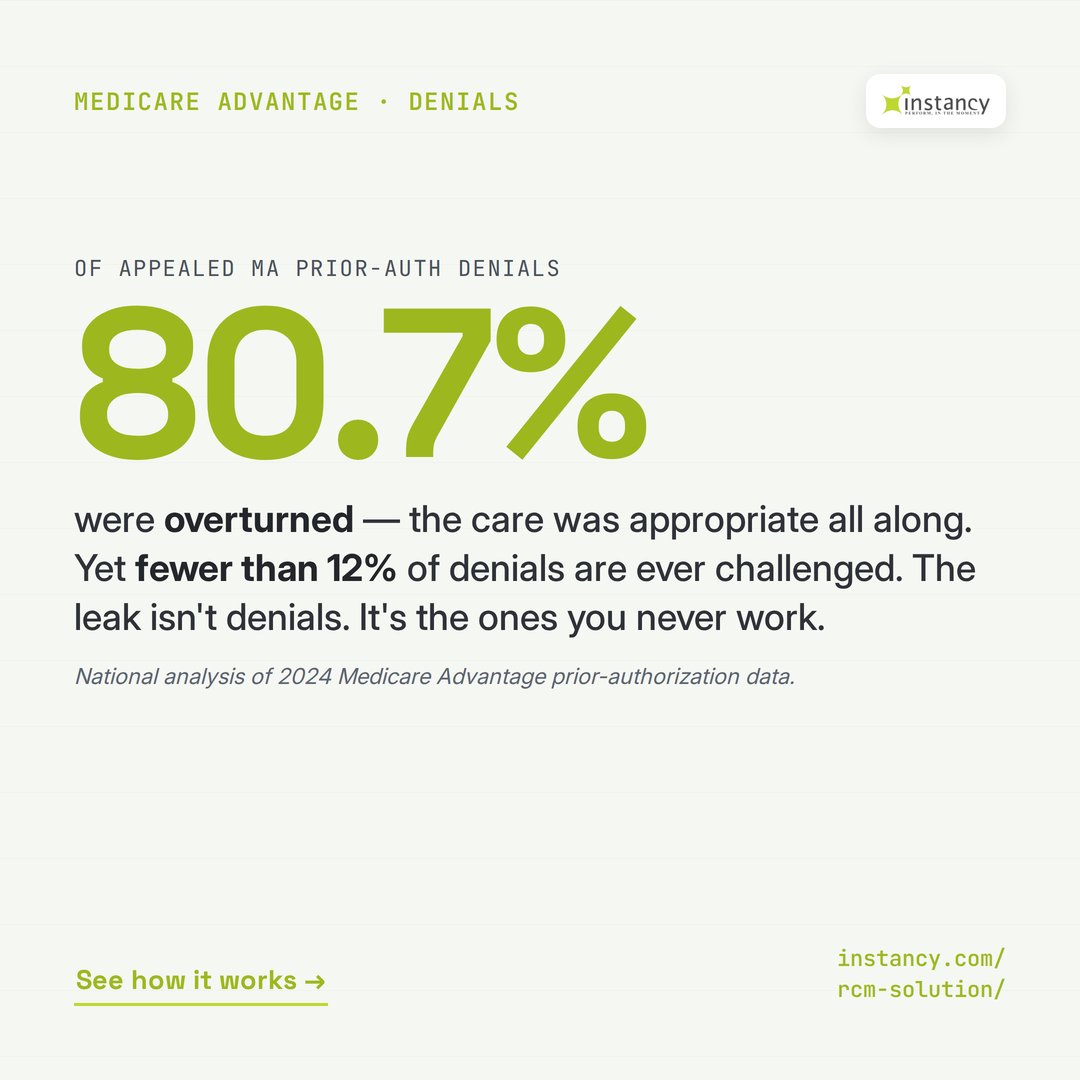
Medicare Advantage denies at ~2x traditional Medicare. But 80.7% of appealed MA prior-auth denials get overturned, and fewer than 12% are ever appealed. Most denials are winnable; almost nobody works them. Your biggest leak is the denials you skip. https://t.co/htDLaVe5B3
At Duke’s Caregiver Community Event in Durham.
Caregiving is the work between visits. That’s what we’re building toward: education families can follow, visibility between sessions, and prior auth that doesn’t steal hours from the care.
https://t.co/CefkZbcNgx
The 2026 denial benchmark: ~12.6% average initial denial rate, ~806M denied claims, ~$262B cost. But AI-first orgs deny 30-50% less, by preventing, not appealing. Top drivers (CARC 197, 11, 16) are all catchable pre-submission. Where do you sit? https://t.co/E3GVRsCOZR
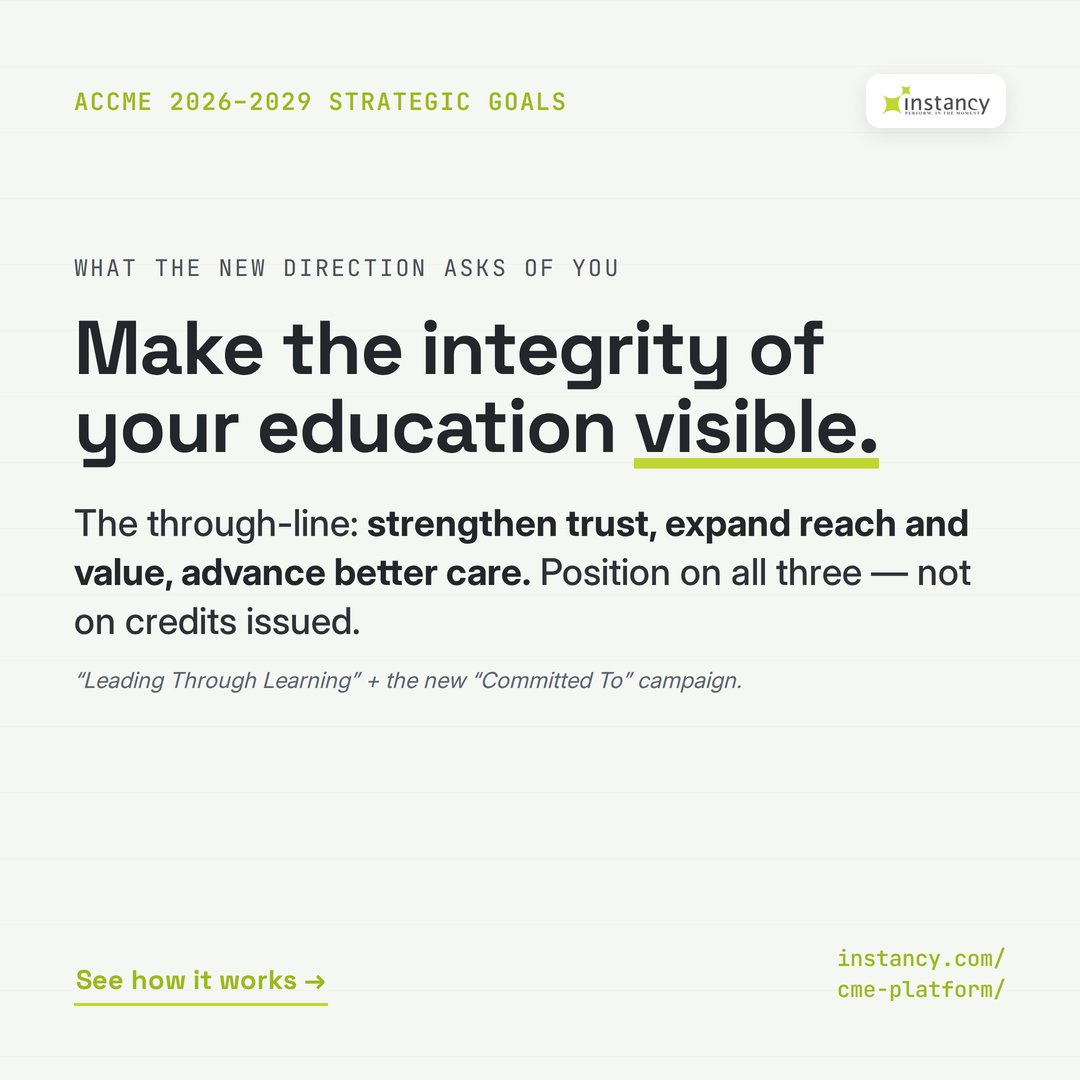
ACCME's new 2026-2029 goals, "Leading Through Learning," are a positioning brief for your CME program: strengthen trust (integrity, not just credits), expand reach & value, advance better care (tie activities to outcomes). Commit, demonstrate, connect. https://t.co/lgy5tUkHrl