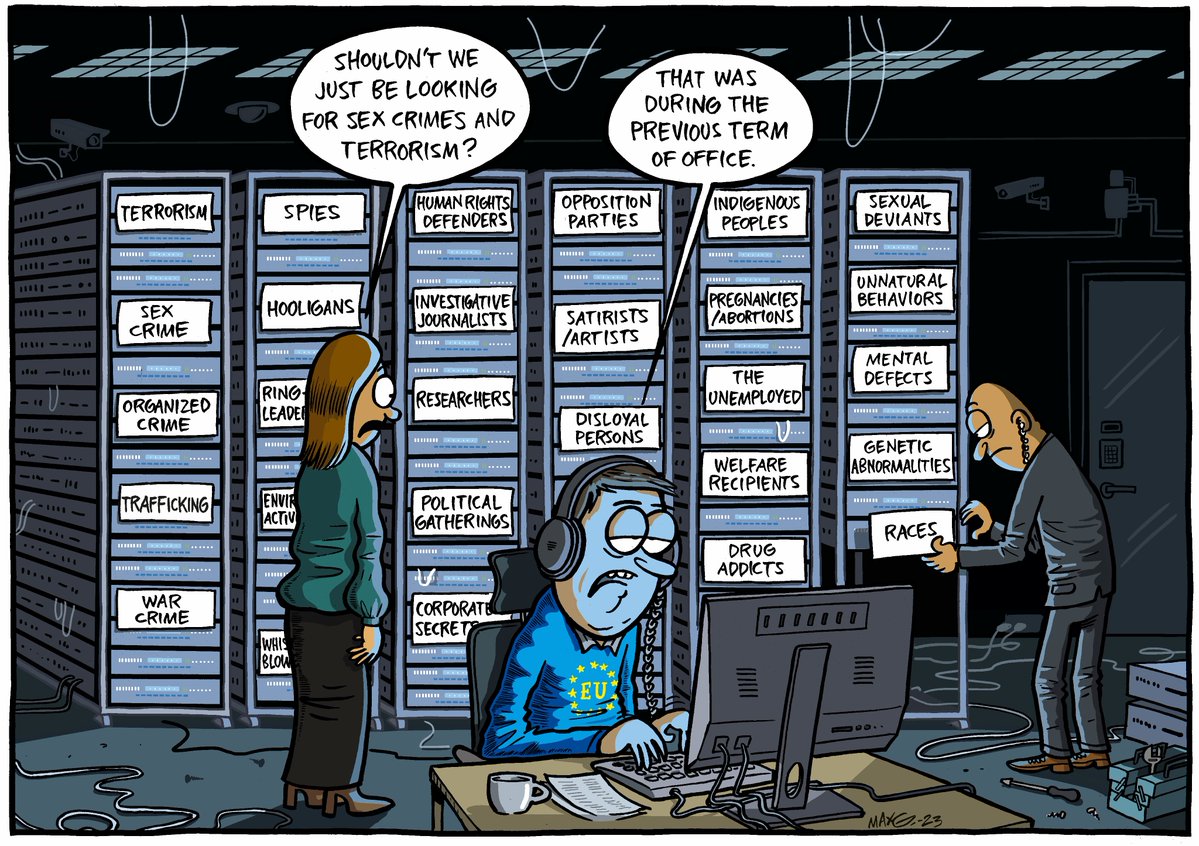
Chat Control 1 is back. Despite the European Parliament voting down the legislation twice this year, the Council of the European Union and parts of the Parliament today managed – through an urgent procedure – to extend it for another two years. The law was originally introduced as temporary legislation, so that its effectiveness could be evaluated. At the end of 2025, the European Commission itself concluded that it was not possible to determine whether the law had any measurable effect. Even so, it has now been pushed through.
Some of today's amendments could have stopped the law. And a majority of the voting MEPs wanted to do so. By a margin of 314-276, the Parliament voted to reject the proposal through these amendments. However, since it was an urgent procedure, 361 votes were required. As a result, the majority lost today and Chat Control 1 was passed. The urgent procedure was a dirty play by the Council and parts of the Parliament – it’s a procedure not meant to be used on legislation already rejected by the Parliament.
For now, Chat Control 1 will remain in effect. This means that tech companies may continue scanning communications without a warrant or suspicion.
However, the real battle is Chat Control 2. Unlike Chat Control 1, it would require all providers to scan communications, and to do so far more extensively than Chat Control 1 ever has.
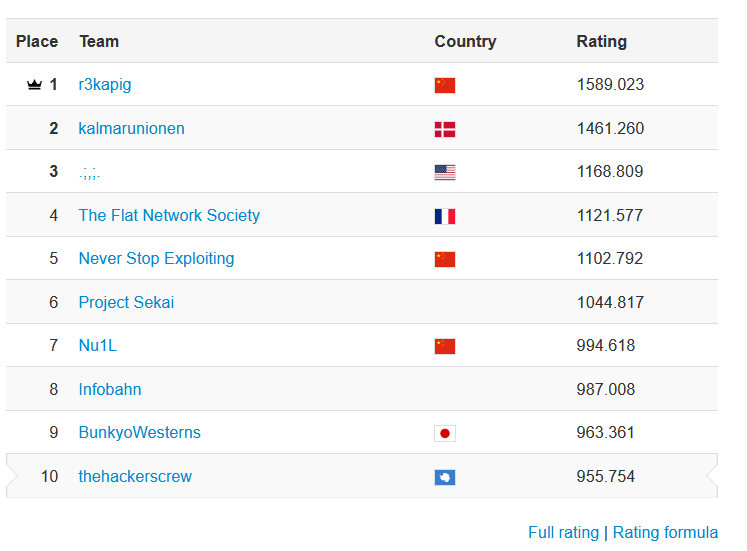
Online CTFs feel dead, but on-sites (with the correct anti AI policies) are hella fun.
But to qualify to good on-sites you'll need to slop quals.
I don't like where CTFs have gone with AI and I hope the community can find some way to make it fun again.
CTFs are fun nowadays.
Just sitting with an IDE looking at an agentic LLM doing it all for you cause it's literally more efficient than doing it yourself
God this timeline sucks
@InterShh@possiblyazure@TheGadgetFreakk Okay? But what if you're already on a distro that you like that doesn't support it? Just ditch it? Doesn't sound like a fun thing to do just to play a game with some stupid anti cheat
Dear Windows users, Hyprland will never be available on Windows because Windows does not deserve the greatness of Hyprland. Switch to Linux. Or BSD. Or an OS that respects you, as a person :)
I don't think that Windows itself is the issue here.
I am using MSBuild and MSVC instead of Clang/GCC and MinGW. But I always had linker issues when doing it through MinGW.
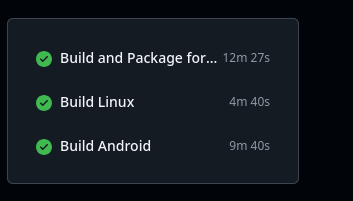
GitHub Action runners compiling a Qt app to 3 different systems.
Linux: 5 minutes (includes a WebRTC library)
Android ARM64-v8a: 9 minutes (includes OpenSSL and a WebRTC library)
Windows: 12 minutes (builds already pre-cached)
How can the Windows C++ experience be this terrible?