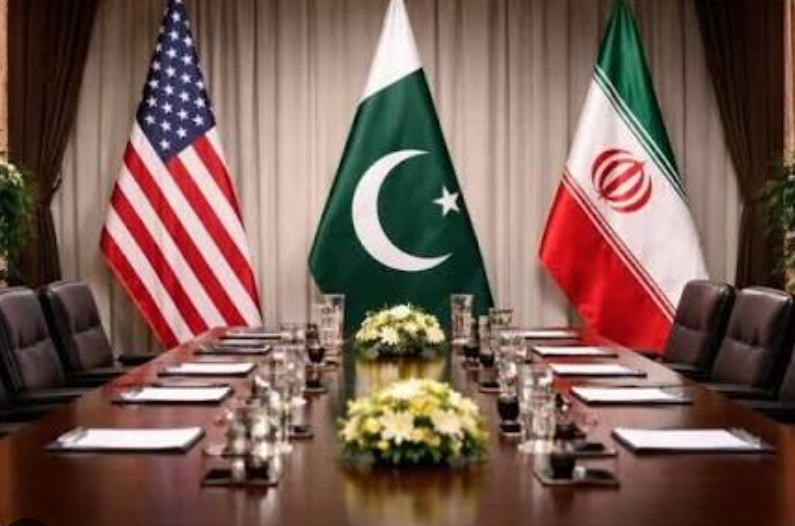
"Turkey's energy hub ambition has always rested on a premise that the surrounding environment would be stable enough to support the long-term infrastructure investment that hub status requires. Nonetheless, regional wars are disrupting existing energy routes and may also be foreclosing the routes that do not yet exist."
"TURKEY'S RARE ELEMENTS: CHALLENGES AND OPPORTUNITIES - THE BEYLİKOVA CASE"
- Turkey claims that Beylikova contains 694 million tons of rare earth ore. However, this is a resource estimate rather than a proven reserve, which requires independent verification that the deposit is technically and economically viable for extraction. The deposit, therefore, does not appear in authoritative international reserve rankings.
- Turkey currently possesses no rare earth processing capability at a commercial scale. Building genuine processing capacity would require a technology partnership of considerable depth, which would likely take years to develop even under favorable conditions.
- Western partners, while more aligned with Turkey's local processing conditions, are themselves only beginning to build midstream capabilities. It remains an open question whether they would be willing to depend on Turkey with a track record of leveraging strategic assets as geopolitical instruments and its often unstable relationship with both the US and the EU.
- The Beylikova ore is highly likely to contain thorium and uranium. These are naturally occurring radioactive elements commonly found in association with REE-bearing minerals, but they are not rare earth elements themselves. Their presence introduces radioactive waste management challenges for which Turkey has no prior institutional experience.
- Of 1,368 mining project applications submitted in Turkey in 2024, 1,153 were exempted from comprehensive environmental impact assessments. This pattern is relevant to assessing whether Turkey's institutions can manage the hazards associated with rare earth processing involving radioactive materials.
- The February 2024 Çöpler mine disaster demonstrates that lax regulation does not protect operators from disaster. The Turkish partner was shielded from domestic consequences, while the Western-listed partner was exposed to international legal and financial liability.
- Turkey ranked 118th out of 143 countries in the World Justice Project's 2025 Rule of Law Index. Contract enforceability, judicial independence, and transparent procurement are foundational conditions for a multi-decade investment commitment, conditions that Turkey's current governance framework does not consistently meet.
- The average time from proven reserve to commercial operation is fifteen to twenty years. Therefore, commercial-scale production from Beylikova is unlikely before the mid-2030s under any scenario.
- State-backed price floors and long-term offtake agreements would be essential to the project's viability, implying a long-term fiscal commitment that requires treating rare earth development as strategic infrastructure rather than a commercial venture.
"The upcoming NATO Summit, on 7–8 July 2026 in Ankara, will test whether NATO once again remains within the realm of “expressing Alliance unity,” or whether it takes real steps toward a coherent, organized, and carefully designed doctrine of deterrence and response to hybrid threats. Drones, spoofing, jamming, cyberattacks, and limited acts of sabotage are effective precisely because they prolong decision-making, increase the costs of response, and leave room for political disagreement over whether Article 5 should be recognized as applicable. This should not lead to the conclusion that the importance of Article 5 ought to be weakened. Rather, it shows that NATO must finally build a bridge leading toward it earlier: through resilience, consultations, a shared situational picture, and a rapid multidomain response."
"Turkey claims that Beylikova contains 694 million tons of rare earth ore. However, this is a resource estimate rather than a proven reserve, which requires independent verification that the deposit is technically and economically viable for extraction. The deposit, therefore, does not appear in authoritative international reserve rankings."
"State-backed price floors and long-term offtake agreements would be essential to the project's viability, implying a long-term fiscal commitment that requires treating rare earth development as strategic infrastructure rather than a commercial venture."