Senator Robin Padilla, mukhang kahit tinagalog ko na po ay hindi pa rin ninyo naintindihan.
Kaya uulitin ko: ang racist na video ay gawa ng China, at walang kinalaman dito ang mga “puti” na sinasabi ninyo. Ang dapat nating kondenahin ay ang China, dahil ang China ang gumawa at nagpakalat ng racist na video na ito.
Ngayon ko lang po napagtanto na ang sinisisi pala ninyo sa racist na video na ito ay ako, at hindi pa rin ang China. Para sa inyo, ang caricature na ginamit ko sa isang classroom setting ang siyang pinakadahilan kung bakit nagkaroon ng racist na video. Mawalang galang na po, pero mali po ang argumento ninyo.
Una, wala po akong intensyong gamitin ang aking lecture bilang “wartime propaganda” — hindi ito sinadyang mailathala, ginawa ito sa loob ng isang unibersidad, at ito ay satire.
Pangalawa, matagal nang nakapag-move on ang lahat sa isyung ito ng caricature noong January, pero kayo pa rin po ang gumagamit nito bilang convenient excuse para sa China.
Panghuli, hindi ko po kayo binabatan — HUWAG PO KAYONG MALITO. Kayo ang nagpangalan sa akin, at kayo rin po ang nagsabing mga unggoy tayong lahat. Remember your own line, Mr. Senator: “Aren’t we all monkeys of different colors?”
Hindi po tayo unggoy at hindi po ako ang kalaban dito dahil pareho po tayong Pilipino. Salamat po sana po ay blockbuster pa rin po ang susunod na pelikula ninyo 🙏🏻
‘NOW IS THE TIME TO REVIVE OUR RIGHTFUL CLAIM TO SABAH’
Nanawagan si Sen. Robin Padilla kay Pres. Bongbong Marcos na bawiin ang karapatan ng Pilipinas sa Sabah o North Borneo sa gitna ng matinding taas-presyo sa petrolyo.
“Panahon na upang muling buhayin ang ating karapat-dapat na pag-angkin sa Sabah,” saad ni Sen. Padilla sa isang Facebook post.
“Dapat ituon ni [PCG Spokesperson Jay Tarriela] at ng kanyang grupo ang kanilang makabayang sigasig sa isla, na nakikita sa parehong low tide at high tide,” dagdag pa niya.
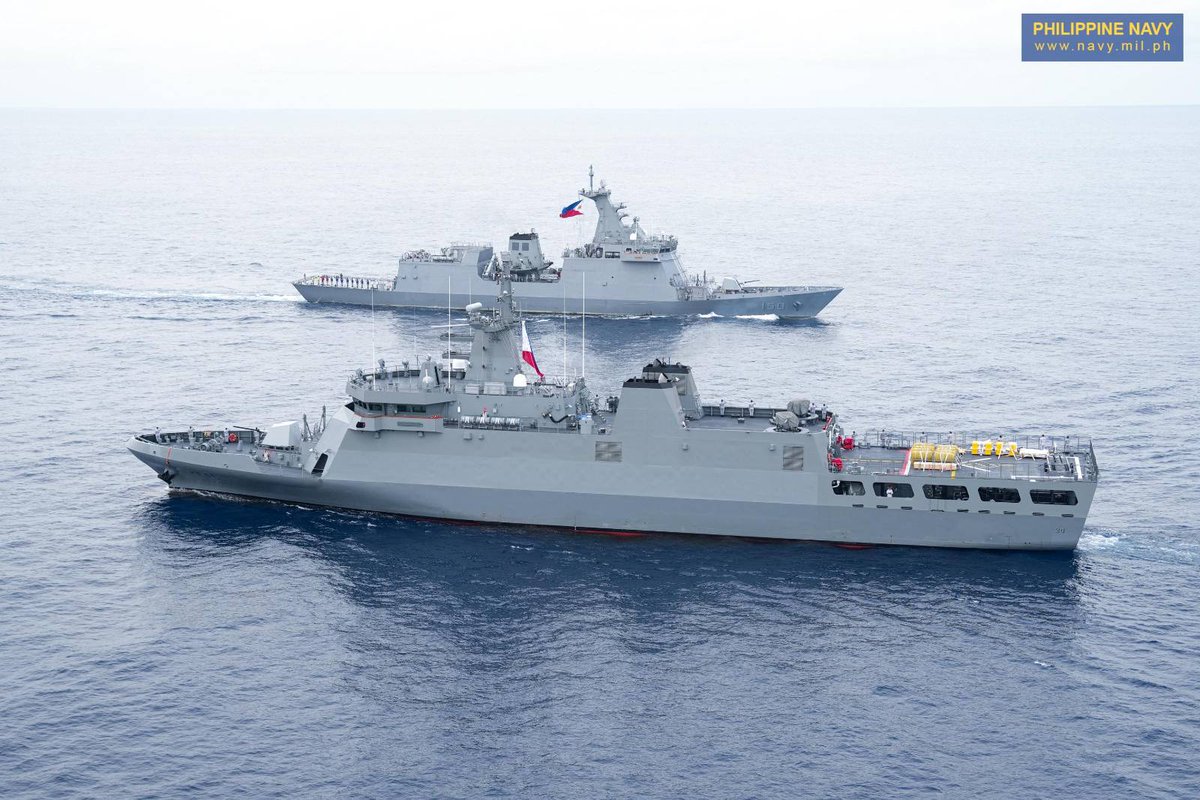
LOOK | PH Navy welcomes newest patrol vessel, future BRP Rajah Sulayman (PS20)
The Philippine Navy’s newest offshore patrol vessel, the future BRP Rajah Sulayman (PS20), has arrived in the country from South Korea, which marks another significant addition to the Navy’s growing modern fleet, on January 17, 2026.
The vessel was met in waters off Zambales by BRP Jose Rizal FF150 - PF, the Navy’s first missile-capable frigate, as part of standard naval protocols upon entering Philippine waters.
After completing coordination and meeting procedures at sea, the future BRP Rajah Sulayman will begin post-delivery activities and technical checks.
The ship is scheduled to undergo acceptance and pre-commissioning processes prior to its formal entry into active service, which underscores the Philippine Navy’s commitment to strengthening its maritime defense and law enforcement capabilities through a modern, multi-domain, and self-reliant force.
Photo credits: S1JO Datiles PN/NPAO
Philippine Navy: Addressing Challenges, Promoting Regional Stability, and Strengthening Maritime Security
#ProtectingtheSeasSecuringOurFuture
#ModernMultiDomainSelfReliantCrediblePartner
#OneAFPOnePhilippines
#StrongAFPStrongPhilippines
@Eivor_Koy Wrong. We dislike China because they are taking other country's territories while double talking about peaceful rise, conducting illegal, coercive, aggressive & deceptive actions during peacetime through cyberattacks, misinformation & drug proliferation.
PCG and BFAR Deliver Supplies to Filipino Fishermen in Bajo de Masinloc and Escoda Shoal Amid Chinese Harassment
The Philippine Coast Guard (PCG) and the Bureau of Fisheries and Aquatic Resources (BFAR) successfully distributed fuel subsidies, food supplies, and crushed ice to nearly 100 Filipino fishing boats in Bajo de Masinloc and Escoda Shoal today, as part of the ongoing "Kadiwa para sa Bagong Bayaning Mangingisda" (KBBM) initiative aimed at supporting the nation's vital fishing communities.
The mission reached more than 50 fishing boats in Bajo de Masinloc and over 40 in Escoda Shoal, providing an estimated 120,000 liters of fuel oil, more than 600 grocery packs, and facilitating the sale of 30 tons of fresh fish catch to the government by local fishermen. This aid underscores the Philippine government's unwavering commitment to bolstering the livelihoods of its fisherfolk in traditional fishing grounds within the West Philippine Sea.
In Bajo de Masinloc, PCG vessels BRP Teresa Magbanua and BRP Cape San Agustin, alongside the M/V Mamalakaya and six (6) BFAR patrol boats, executed the distribution despite significant challenges. Philippine government vessels encountered dangerous maneuvers and blocking actions from 11 China Coast Guard (CCG) ships and 11 Chinese Maritime Militia vessels, one (1) PLA-N helicopter, and three (3) PLA-N vessels, delaying the delivery process. For the first time, the PCG documented a CCG radio challenge claiming that the presence of Philippine fishing boats could damage their so-called "environmental reserve." In response, the PCG firmly asserted that Bajo de Masinloc is an integral part of the Philippine archipelago, and only the Philippine government holds the authority to designate environmental protection areas in these waters.
At Escoda Shoal, the situation was equally tense, with the CCG deploying 10 vessels and 10 Chinese Maritime Militia vessels, one (1) PLA-N helicopter, two (2) PLA-N vessels, and one (1) high-speed response boat (HSRB) to obstruct the aid effort. There were documented instances of CCG vessels activating water cannons to threaten and intimidate Filipino fishermen. Undeterred, the PCG's BRP Melchora Aquino and BRP Cabra, supported by five BFAR patrol boats, relied on exceptional seamanship to ensure the safe delivery of supplies. The mission concluded successfully at 7 p.m. this evening.
"The PCG and BFAR remain steadfast in our duty to protect the safety and security of every Filipino fisherman," said Admiral Ronniel Gil Gavan, PCG Commandant. "My top priority is to safeguard their livelihoods from any interference by the China Coast Guard and to ensure their rights as Filipinos are never suppressed by external bullying. We stand firmly with President Ferdinand Marcos Jr. in defending every square inch of our sovereign territory against any foreign power."
This KBBM initiative reflects the Philippine government's broader efforts to promote food security, economic resilience, and maritime rights in the face of China’s bullying activities in the West Philippine Sea.
🇵🇭Defense Sec. Gibo Teodoro confirmed that there are no new major defense contracts with 🇮🇱Israel. Although he said it was due to Israel failing to meet contractual obligations, he said separately that priority now will be with countries having Strategic Alignment with PH.
1/x
More photos of the @Philippine_Navy 🇵🇭's BRP Miguel Malvar FFG-06 Guided Missile Frigate for it's Show the Flag Mission in Cebu. The 2nd ship, BRP Diego Silang FFG-07 is set to arrive by September 2025. The @dndphl will also sign the deal for additional Frigates before year end.
🇷🇺 Russian nuclear-powered battlecruiser RFS Admiral Nakhimov has sailed for the first time since 1997 for post modernisation sea trials in the White Sea.
Her major modernisation began around 2011 and, on-paper at least, she is now the most powerful surface combatant in the world.
Via @Capt_Navy https://t.co/TO4o45pfn4
Philippine Coast Guard Monitors Unauthorized Chinese Research Vessels in Philippine EEZ
The Philippine Coast Guard (PCG), utilizing Canada's Dark Vessel Detection Program, has effectively tracked three Chinese research vessels operating without authorization in the Philippines' Exclusive Economic Zone (EEZ). These vessels are suspected of engaging in illegal marine scientific research (MSR), prompting the PCG Commandant, Admiral Ronnie Gil Gavan, to issue immediate orders to intercept and challenge them.
The first vessel, BEI DIAO 996, set sail from Guangdong Province, China, on June 16, 2025, and entered the Philippine EEZ roughly a week later. It is currently located 185 nautical miles off the coast of Zambales and is involved in MSR activities about 40 nautical miles west of Bajo de Masinloc. The BEI DIAO 996 is a civilian research vessel with dual-use capabilities, specializing in testing underwater acoustic sensors and sonar equipment. It is China's largest test ship for deep-sea operations and the world's largest SWATH catamaran, designed for stable performance in adverse weather.
The other two vessels, XIANG YANG HONG 10 and ZHUHAI YUN, departed from Guangdong Province on June 23, 2025, and entered the Philippine EEZ on June 25, approximately 200 nautical miles off the coast of Bolinao, Pangasinan. Their movements indicate joint MSR operations near Balagtas Reef, and they are currently positioned 195 nautical miles off the coast of Rizal, Palawan.
The XIANG YANG HONG 10 is a multi-purpose research vessel capable of deep-sea surveys and supporting unmanned autonomous underwater vehicles (AUVs) for seafloor mapping and environmental monitoring. It features icebreaking capabilities and a dynamic positioning system for precise operations.
The ZHUHAI YUN, the world's first intelligent unmanned drone carrier, is designed for oceanographic research but has significant military dual-use potential, including mapping submarine routes and deploying smart mines.
The PCG remains committed to safeguarding the maritime domain and will take all necessary actions to enforce laws and protect national interests.
Philippine Coast Guard Monitors Chinese Research Vessel Off Batanes
This morning, the Philippine Coast Guard Commandant, Admiral Ronnie Gil Gavan, deployed PCG Islander 4177 off the coast of Batanes to monitor and challenge the Chinese research vessel "ZHONG SHAN DA XUE." At approximately 8 AM, the PCG Islander detected the Chinese research vessel at coordinates Lat 21°18.457 N, Long 123°12.281, roughly 78.21 nautical miles northeast of Itbayat, Batanes.
The crew of the PCG Islander attempted to establish radio communication with the vessel multiple times, but there was no response. PCG aviators underscored on their radio challenge that the said Chinese vessel lacks the authority to conduct marine scientific research within the Exclusive Economic Zone (EEZ) of the Philippines, emphasizing that its activities constitute a clear violation of the United Nations Convention on the Law of the Sea (UNCLOS) and the Philippine Maritime Zones Act.




![News5PH's tweet photo. ‘NOW IS THE TIME TO REVIVE OUR RIGHTFUL CLAIM TO SABAH’
Nanawagan si Sen. Robin Padilla kay Pres. Bongbong Marcos na bawiin ang karapatan ng Pilipinas sa Sabah o North Borneo sa gitna ng matinding taas-presyo sa petrolyo.
“Panahon na upang muling buhayin ang ating karapat-dapat na pag-angkin sa Sabah,” saad ni Sen. Padilla sa isang Facebook post.
“Dapat ituon ni [PCG Spokesperson Jay Tarriela] at ng kanyang grupo ang kanilang makabayang sigasig sa isla, na nakikita sa parehong low tide at high tide,” dagdag pa niya.](https://pbs.twimg.com/media/HEUNUPsbYAMnJ-P.jpg)


