Integra Robotics CEO explains to @MfrgTodayIndia how robotics, AI and modular automation are transforming Indian manufacturing and making factory automation more accessible.
https://t.co/CD8RZXIRaH
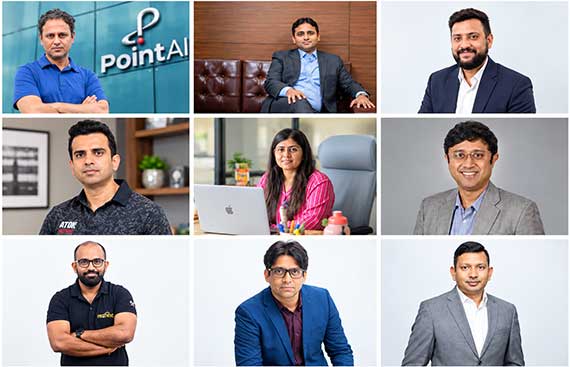
Proud to see our CEO, Abhit Kumar, featured by @SINewsUpdates among 9 visionary entrepreneurs driving impact. At Integra Robotics, he’s strengthening India’s ability to design, deploy, and support advanced robotics for industry and defence.
https://t.co/E5W18bNIQZ
Our CEO, Abhit Kumar, shared his thoughts with @etedge_insights on the future of Indian manufacturing and why intelligent machines must be flexible, retrofit-friendly, and economically viable for real-world factory floors.
https://t.co/NG9D45Q1ov
The next leap in robotics isn’t autonomy alone, it’s enabling humans to “step into” machines from a safe distance.
At Integra Robotics, this belief led us to develop our patented immersive teleoperation technology.
Great to see it covered by @CXOtodayAlerts.
https://t.co/lcWVpVipx9
What exactly is the software-level existential risk that AI leaders are warning about, and how does it apply to robotics and industry?
Abhit Kumar, Chief Executive Officer, Integra Robotics, shares his perspective on the risks of advanced AI and what they mean for embodied AI and robotics, in conversation with @GaurieD on India Business Report.
Should AI slow down, or should India move faster with the right guardrails? Our CEO, Abhit Kumar, joined a panel discussion on @NDTVProfit covering AI, robotics, autonomous agents, regulation, and India’s role in the global AI race. Watch here: https://t.co/g0IWckSVlA
Automation can transform Indian SMEs, but the hardest question is often: where do you start? Our CEO, Abhit Kumar, joins @machineedgeg to break down how SMEs can prioritise the right processes, evaluate ROI, and make smarter automation investments.
https://t.co/WYUD7lSVOL
There are easier companies to build than a robotics company.
Why robotics, and why now?
Our CEO, Abhit Kumar, spoke with @Tracxn about why we started Integra Robotics and what we're building.
Watch the conversation, here ↓
https://t.co/YEnZG7ZEgp
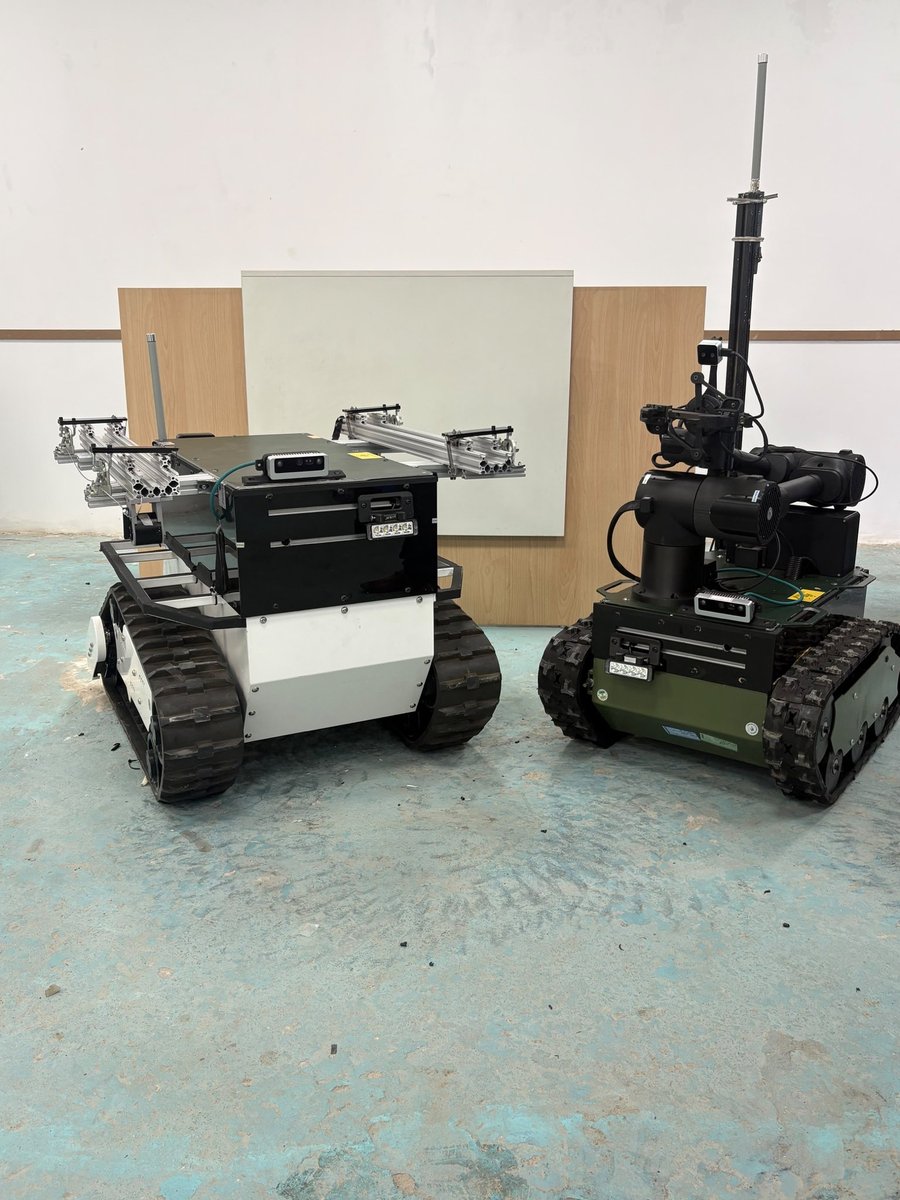
What makes a mobile manipulator useful in a hazardous environment?
The position of the vehicle can determine how much of the manipulator’s workspace is actually usable. A few degrees of approach, an obstruction near the target or limited clearance can change whether the arm can reach and handle the task at all.
Our latest article looks at how usable workspace, vehicle positioning, vision and remote operation come together in mobile manipulation, and why these factors matter when designing a platform for real field conditions.
Read the full article to understand these relationships and how they shape mobile manipulation in the field → https://t.co/ARBkMLjHru
9 years in, our mission at Integra Robotics stays the same: build robots that change and protect lives.
#Deeptech is not just about novelty but about building, implementing, and iterating fast!
We've been building compounding intelligence through our fleet of robots and a novel platform model, intended to transform the #Industry & #Defence ecosystem.
This #IndependenceDay of 2026, we've already entered the deployment cycle; our solutions span SMEs, defence, and new-age startups. And, we're just getting started. 🇮🇳 #deeptech #robotics #independanceday #growth #IndianPride
Happy Independence Day! 🇮🇳
Two things are clear right now.
India has the ambition to manufacture more, and the opportunity to build more of the technology behind that manufacturing. That means bringing together Manufacturers, SMEs, System integrators and Robotics companies to build a stronger industrial ecosystem.
We're doing our part by building Collaborative Robots, Mobile Robots and Vision Systems for India's growing industries.
There is a lot to build ahead. We're excited to build our part of it.
Collaborative robots are expanding the range of workcells that can be automated.
A modern cobot cell can bring together the robot, end-effector, fixtures, vision and production controls around a defined manufacturing process.
The P5-R900 is built around this workcell approach, combining a 5 kg payload, 900 mm reach and ±0.03 mm repeatability for compact production environments.
The mechanical envelope provides the starting point. Payload determines what the robot can carry. Reach defines the accessible workspace. Repeatability influences how consistently the TCP can return to the required position.
From there, an system integrator can shape the rest of the cell around the process, using the tooling, fixtures, vision and control architecture required by the application. The P5-R900 also supports teach pendant programming, SDK integration and ROS, allowing the same platform to fit different engineering workflows.
This combination of mechanical capability and flexible integration is making collaborative robots increasingly useful across modern manufacturing environments.
More on the P5-R900, workcell architecture and cobot integration → https://t.co/2R4sVCtkJ3