In 1984, 16-year-old Mary Lou Retton made history as the first American woman to win Olympic all-around gold in gymnastics, becoming a beloved national icon.
Nearly 40 years later, in October 2023, Retton was admitted to an intensive care unit with a rare, life-threatening form of pneumonia. The public was stunned to learn that "America's Sweetheart" did not have health insurance. Retton cited a costly 2018 divorce, lost speaking income during the pandemic, and the financial toll of 30 past orthopedic surgeries as the reasons she could not afford coverage.
Her daughters launched a $50,000 crowdfunding campaign to help cover her medical care. The response was overwhelming, raising over $450,000 in a matter of weeks.
While Retton survived, returned home on oxygen, and subsequently secured health insurance, her ordeal ignited a broader national debate about the American healthcare system, the Affordable Care Act, and the startling reality that a historic Olympic champion had to rely on the charity of strangers to stay alive.
The Best Spy of WWII Sold Chainsaws Until He Died
On August 17, 1943, a mild-mannered German diplomat walked into the British embassy in Bern carrying an envelope stuffed with Nazi secrets. They turned him away. He crossed the street to the Americans instead.
Fritz Kolbe had spent years quietly screening classified cables for the German Foreign Office — reports from German embassies in 30 countries, V-weapon production locations, the layout of Hitler's command bunker at Rastenburg, submarine rendezvous coordinates. He had refused every invitation to join the Nazi Party and spent the war years waiting for exactly this opening. He offered everything to Allen Dulles, head of OSS Switzerland. He asked for no money.
Over six courier trips from 1943 to 1945, Kolbe smuggled more than 1,600 top-secret documents. Among them: a German spy photographing the British ambassador's private letters in Ankara. A secret Nazi radio transmitter hidden in the Dublin embassy directing U-boat attacks on Allied shipping. Full reports on German agent networks across Europe. British intelligence — the same people who'd turned him away — eventually called him "the prize intelligence source of the war." The OSS told President Truman he represented "the first major penetration into the German Government."
After the war, Kolbe tried to collect on the vague promise of support Dulles had offered. He emigrated to the United States in 1949. He couldn't find work. In 1951, he applied to return to the German Foreign Office. They rejected him. The new West Germany considered him a traitor. He spent the rest of his working life as a representative for an American power-saw manufacturer.
Allen Dulles became Director of the CIA. Fritz Kolbe sold chainsaws until he died in Bern in February 1971. Germany did not formally rehabilitate his name until 2004 — thirty-three years after his death.
He handed the Allies the keys to Nazi Germany. His reward was a catalog of power tools.
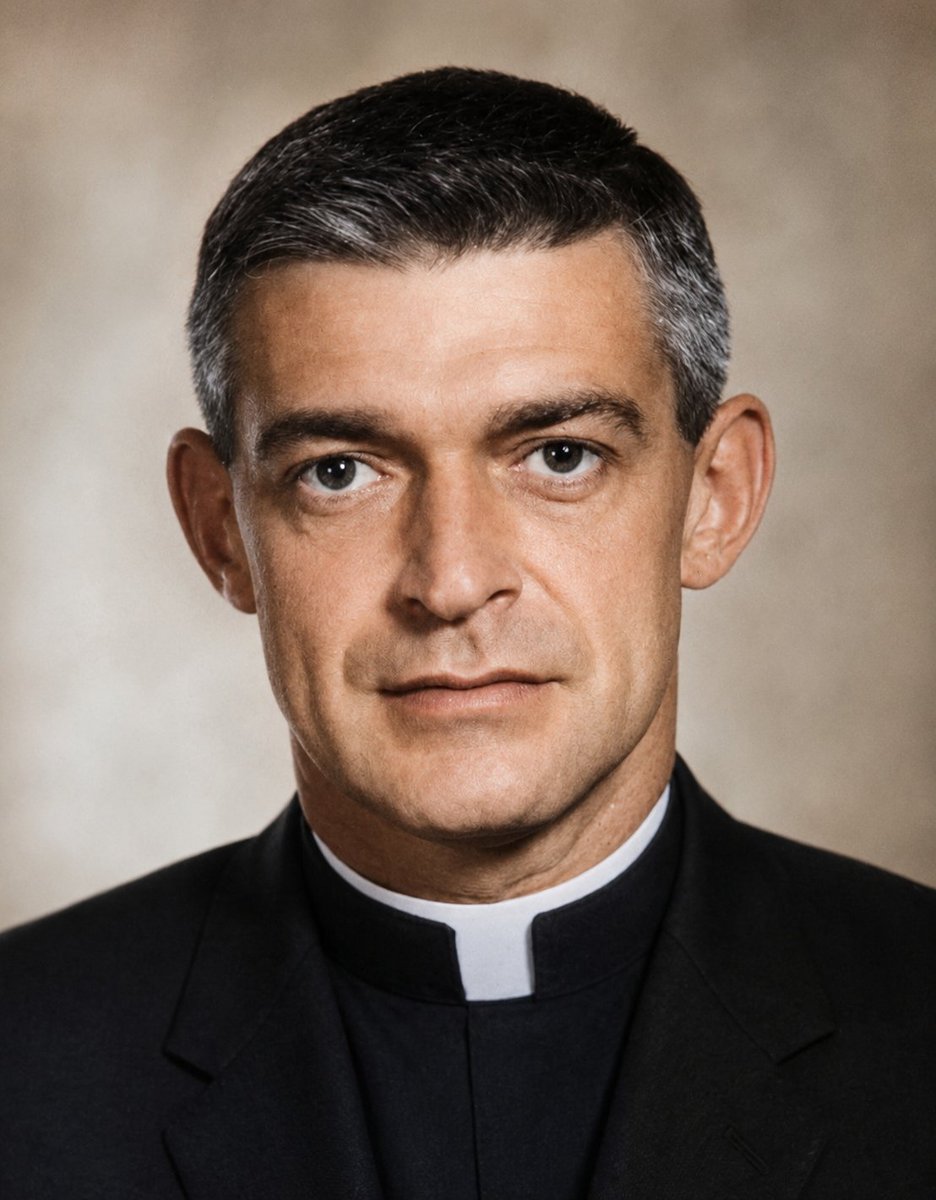
Vincent Capodanno did not carry a rifle. He carried a Bible and a box of St. Christopher medals. He was a Catholic priest, a Maryknoll missionary from Staten Island, and when he joined the Navy as a chaplain in 1965 he asked for the one assignment most men would have run from. He wanted to be with the Marines in the field. They called men like him the Grunt Padre, and he earned it. He lived the way his Marines lived, ate what they ate, slept in the same mud, and spent his hours hearing confessions, writing letters home for scared kids, and sitting with the grieving and the dying.
On September 4, 1967, during Operation Swift in the Que Son Valley, the same mountains where Marines would still be fighting years later, a company of the 5th Marines was hit by a massive North Vietnamese force, around 2,500 men. When Father Capodanno heard that a platoon was about to be overrun, he did not stay in any safe place, because there was no safe place and he would not have gone to it anyway. He ran across open ground under fire to reach the Marines who were being cut apart.
Then he just moved through the battle doing his work. He went from man to man, giving last rites to the dying and pulling the wounded to cover, praying over kids as they bled out, telling terrified Marines that God was with them right there in that field. A mortar round shredded his arms and legs and tore off part of his right hand. He refused medical aid and kept going, one hand mangled, still crawling to the next wounded man.
He saw a wounded corpsman lying out in the open, close to an enemy machine gun, and went to him. As Father Capodanno knelt over that Marine to comfort him and give him last rites, the machine gun found them both. The priest was shot more than 27 times. He died there in the field with his Marines, doing exactly what he had come to do.
He received the Medal of Honor in 1969. The Catholic Church later opened his cause for sainthood, and he now carries the title Servant of God. To the men of the 5th Marines he was already something close to a saint long before any of that, the padre who ran toward the fire empty handed so that no man in that valley would have to die alone.
A former 60 Minutes correspondent has revealed that Paramount CEO David Ellison and CBS editor Bari Weiss pressured her to report on events that "never happened."
BREAKING:
Trump just ordered warning signs and exhibits to be installed outside the Smithsonian's National Museum of American History to alert the public that the museum does not, in his view, accurately reflect American history.
For the record: It does. https://t.co/5b5UIkMZdu
I'm loving Jon Ossoff. Here's an excerpt of a follow-up letter he just sent to RFK Jr. after his first letter was ignored:
“Your silence amidst an ongoing outbreak of diarrheal disease is indicative of the reckless arrogance with which you demolished America's public health defense.”
Fact check: TRUE.
Jon Ossoff: It's only because Georgia sent me and Raphael Warnock to the Senate that we were able to cap the cost of insulin for seniors on Medicare.
I have delivered new MRI machines to hospitals, upgraded emergency rooms, delivered new mobile mammography units, and upgraded local health clinics across our state.
And when we elect a Medicaid-expanding Governor Bottoms, we will be able to make tremendous progress toward addressing these health disparities in Georgia.
Madrid superstar and England midfielder Jude Bellingham has opened up about the heated World Cup match between England and Argentina.
“Messi and the Argentines are rough,” Bellingham said. “They were calling me and other black players monkeys. I reported it to the referee but he did nothing about it. There were so many fouls that were not awarded. The World Cup completely favours them and it’s unfair.”
He also slammed the refereeing, pointing to a string of unpunished fouls, late challenges, and decisions that he believes tilted the game heavily in Argentina’s favour.
“It feels like the whole tournament is set up for them,” Bellingham added. “We come out here to compete fairly, but it’s not fair when the rules don’t apply the same way.”
One thing I really hope we'll be able to get back to in future administrations is governance that attempts to do the best thing for all people regardless of who they voted for. Even in the most extremely polarized states, 1/3 of the people either voted for you or your opponent.
Unfortunately it probably won't happen unless the incentive structure changes (such as an actual impeachment and consequences for this sort of mob-boss style of governance).
Cats carry a kill switch in their wiring most owners never find.
Clip something to their skin and their nervous system collapses into paralysis. Eyes open but gone. They become statues.
This triggers tonic immobility, the survival response prey animals use when escape becomes impossible. Movement signals vulnerability. Stillness means the hunting instinct might never fire. Play dead, predator loses interest.
That clip activates the dorsal raphe nucleus, the region processing pain and fear. Your cat reads this pressure as a threat demanding complete surrender.
The scruff response amplifies it. Kittens submit to maternal touch at a cellular level. A clip speaks that same primal language their body learned before opening its eyes.
What matters is this remains voluntary.
Your cat activates a survival program millions of years old, a response its entire system was built to perform. That paralysis isn't trauma. It's ancient knowledge. When the world becomes overwhelming, perfect stillness becomes the only true language of survival.
Your cat is remembering what millions of years of evolution built it to do when running becomes impossible and hiding becomes the only option that actually matters.
So long, America🫡🇺🇸
49 days ago we landed in the USA to follow our country at the World Cup. We had no idea it would turn into the trip of a lifetime.
Thank you to everyone who followed along, and to all the people we met who made this journey even more special. We honestly don’t have the words to express how grateful we are for everything you did for us.
This trip exceeded every expectation we had. We came here with an open mind, wanting to experience as much of the country as possible. I still remember telling my friends on the flight to Atlanta that I hoped we’d get to meet a few locals on this trip. Now we’re flying home with friends all across the USA.
Before we came, we heard so many stereotypes and warnings about America. People told us about safety concerns, that they might check our social media at the border, and all kinds of other things. None of it matched our experience. This was probably the most welcoming country we’ve ever visited.
So if you have the chance to travel, do it. The world isn’t nearly as bad as the media often makes it seem. 99% of people are awesome!
I heard this quote somewhere during the World Cup, and I think it sums up our experience perfectly:
“If you want to hate the world, watch the news. If you want to love it, travel it.”
Thank you, America ❤️🇺🇸
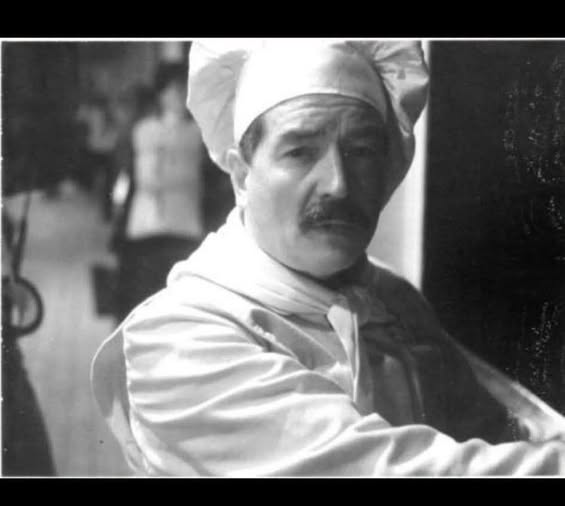
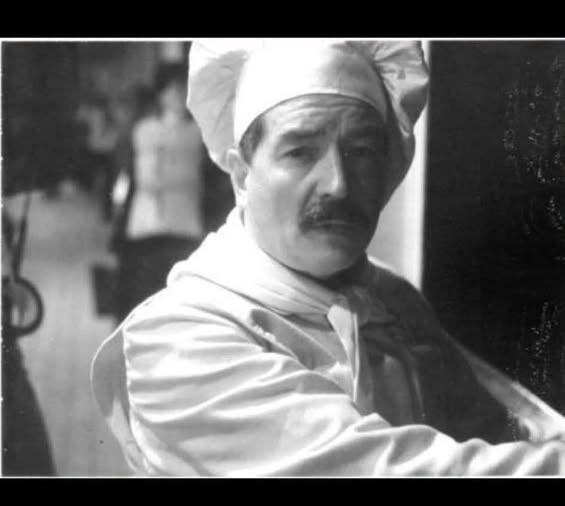
The Baker of the Titanic 😲
The Titanic had many stories… but you probably haven’t heard this one.
Meet Charles Joughin — the Chief Baker aboard the Titanic. He had two great passions: baking bread and drinking. And on the night the world’s most famous ship hit an iceberg, he put both to good use.
That evening, Charles was enjoying his usual ritual in his private cabin — sipping from a flask and checking on his homemade moonshine still (perks of unlimited yeast). Then came the deep, ominous scrape along the starboard hull. Without panic, he grabbed his flask and stepped onto the deck — just in time to hear Captain Smith give the order to prepare the lifeboats.
What did Charles do?
He gathered his team of bakers and personally organized the distribution of bread to the lifeboats — calories mattered in survival. Then he returned to his room... for more whiskey.
When it was time to board lifeboat #10 — the one he was assigned to command — he gave up his seat to another crewman and stayed behind, calm and buzzed.
Eventually, with all lifeboats gone, Charles stood alone on the sinking ship, tossing deck chairs into the ocean — dozens of them — to serve as flotation for anyone left in the freezing water.
And yes, he kept drinking the whole time.
As the Titanic’s stern rose high, Charles calmly stepped over the rail…The ship sank beneath him without pulling him under. He swam in the icy Atlantic for over four hours — with dry hair and a surprisingly steady mind. When rescued, Second Officer Lightoller (who had assumed Charles was doomed) was stunned to find him alive.
Charles believed it was the alcohol that kept his blood from freezing and his nerves from shattering. He survived. Helped others survive. And walked away from one of history’s greatest disasters.
Afterward? He went back to sea. Kept baking. Kept drinking. Survived two more shipwrecks. Lived to 78. And today, his gravestone reads:
“The Baker of the Titanic.”
A man who toasted life — even as the ocean closed in.
🤯 The easiest way to remember Celsius to Fahrenheit: every 12°C, the digits are inverted.
04°C = 40°F
16°C = 61°F
28°C = 82°F
40°C = (1)04°F
52°C = (1)25°F
In 1998, Crown Prince Abdullah of Saudi Arabia arrived at Balmoral Castle for a scheduled state visit with the Queen.
He was the de facto ruler of the world's largest oil exporter, a man accustomed to protocol flowing in a particular direction. Every detail of the visit had been arranged in advance.
Then the Queen suggested a drive around the estate.
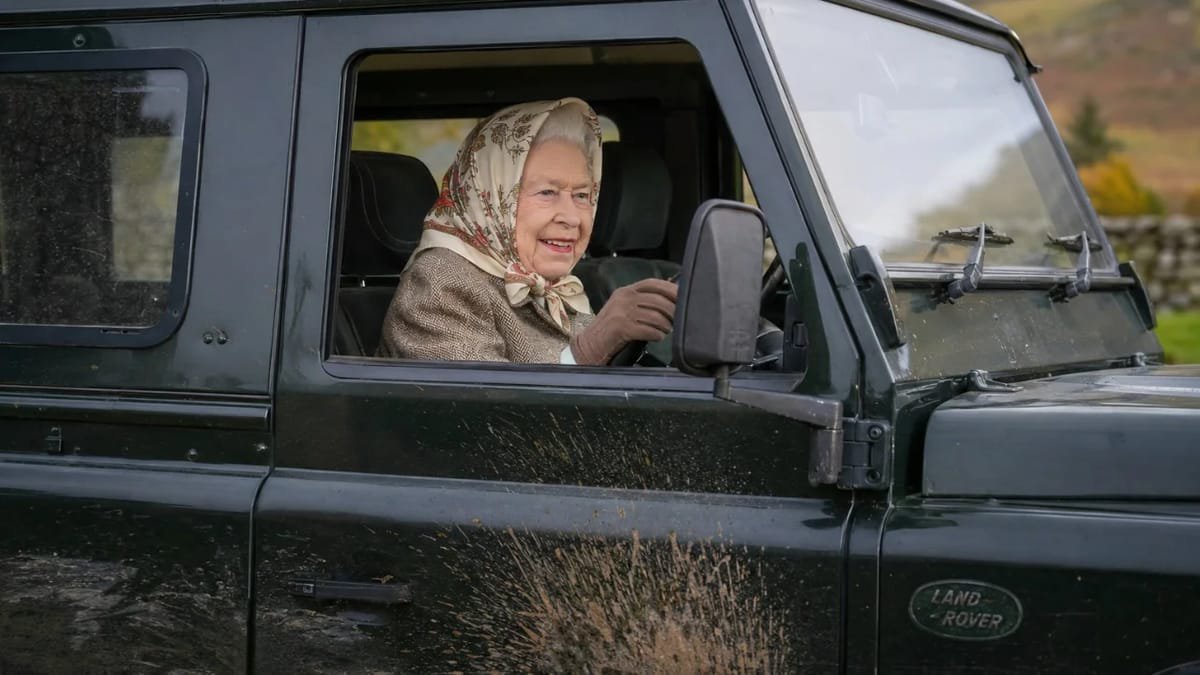
She took the wheel of a Land Rover herself. According to an account later shared by a British diplomat who was present, what followed was not what the Crown Prince had anticipated. She drove at speed along the private roads of the Balmoral grounds, talking as she went. Abdullah, through his interpreter, reportedly asked her to slow down and pay attention to the road.
The Queen continued at her own pace.
There is something worth pausing on in that moment. In Saudi Arabia in 1998, women were legally prohibited from driving. The Crown Prince of a nation where that prohibition was official policy found himself unable to take the wheel, seated as a passenger while a woman drove him, fast, through the hills of Aberdeenshire.
The deeper layer: Elizabeth had been driving since the Second World War. In 1945, at eighteen, she enrolled in the Women's Auxiliary Territorial Service, the British military branch that trained women in vehicle mechanics and military driving. She did not attend in a ceremonial capacity. She trained as a mechanic. She learned to drive military trucks.
The roads at Balmoral are private estate roads. No license required. She was, in the most precise sense, exactly where she had every right to be.
Abdullah became King of Saudi Arabia in 2005 and reigned until his death in January 2015. Saudi Arabia lifted its ban on women driving in June 2018, three years after his death.
The Queen outlived the ban.
She was still driving at Balmoral well into her nineties. More than seven decades behind the wheel. Scotland. Her roads. Her pace.
The anecdote was later recounted by a British diplomat and has since become one of the more retold stories about the Queen's private character. She kept a fleet of Land Rovers at Balmoral and was reportedly particular about driving herself rather than being driven, even in the final years of her reign.
#drthehistories
Jon Ossoff is so relentlessly on message that even his response to a question about his strong 2028 presidential polling turned into an attack on Mike Collins and his ties with a prominent neo-Nazi
141 years ago today, on July 23, 1885, Ulysses S. Grant died at 63.
Most people know him as the general who won the Civil War and the two term president on the fifty dollar bill. Almost nobody knows how his story actually ended, and it's one of the most quietly heroic things in American history.
Start with the fact that "Ulysses S. Grant" was never even his name. He was born Hiram Ulysses Grant. When he got to West Point, a congressman filled out the paperwork wrong and wrote him down as Ulysses S. Grant. The S stood for nothing at all. Grant just shrugged and kept it for the rest of his life. Later, when he forced a Confederate fort to give up with no conditions, soldiers said the U.S. stood for "Unconditional Surrender."
Here's the strange thing though. Before the war, Grant was a failure at nearly everything he tried. He flopped at farming. He flopped at real estate. By his late thirties he was working as a clerk in his father's leather goods store, hauling hides for his younger brothers. Then the war came, and the quiet clerk turned out to be one of the greatest military minds the country ever produced. He took Vicksburg. He ground down Lee. He accepted the surrender at Appomattox and, instead of gloating, let the Confederate soldiers keep their horses so they could plant crops. Then he won the White House twice.
So how does a man like that end up dying broke?
In 1884 Grant trusted his savings to a Wall Street firm run by a young hotshot named Ferdinand Ward, basically the Bernie Madoff of his day. Ward was running a con. When it collapsed, Grant lost everything. He was so wiped out that he had to borrow money just to cover his household, and he handed over his war trophies and swords to pay a debt. The most famous soldier in America was suddenly poor.
Then it got worse. Doctors found throat cancer. Grant had smoked as many as twenty cigars a day, a habit the public actually fed. After his victories, admirers mailed him cigars by the thousands, and it very likely killed him.
Now here is the part that gives me chills.
Grant knew he was dying, and he knew he was leaving his wife Julia with nothing. So a man in constant pain, throat closing up, some days unable to speak above a whisper, sat down to write his memoirs and out earn death itself. Mark Twain, who admired him, offered him a stunning book deal, far better than anything normal authors got. Grant took it and went to work.
He wrote something like three hundred thousand words in about a year while cancer ate his throat. On the days he couldn't talk, he wrote on slips of paper. Witnesses said the pain was constant. He kept going anyway. He finished the manuscript just days before he died.
And it worked. The memoirs became one of the best selling books of the century and are still considered maybe the finest memoir ever written by an American president. The royalties sent to Julia came to roughly four hundred fifty thousand dollars, an enormous fortune then, enough that she never had to worry about money again. He couldn't win the money back on Wall Street, so he wrote his way out and crossed the finish line with almost nothing to spare.
When he died, the country stopped. Around a million and a half people lined the streets of New York for his funeral, the largest the city had ever seen. And look at who carried him. His pallbearers included Union generals and Confederate generals, side by side. One of them, Simon Bolivar Buckner, was the very man who had surrendered to Grant at Fort Donelson decades earlier. He came to Grant's sickbed near the end, two old enemies making peace, and then helped carry him to his grave.
That grave became Grant's Tomb in New York, the largest mausoleum in North America.
A failed store clerk who saved the Union, lost everything to a con man, and then, dying and in agony, wrote a masterpiece to protect his wife.
141 years ago today. They really don't make them like that anymore.
In January 1991, Norman Schwarzkopf knew the exact number of body bags the Pentagon had ordered in anticipation of the coming ground campaign. He was 56 years old, and he had been handed a responsibility no American commander had carried since the Second World War: more than half a million soldiers from 34 nations, arrayed across the Arabian desert, waiting to be pointed at one of the most battle hardened armies on the planet.
Saddam Husseins forces had spent eight years fighting Iran. They had fortified every approach into Kuwait with mines, trenches, and pre aimed artillery, all built on a single assumption: that when the Americans arrived, they would come straight through the front door.
Schwarzkopf had no intention of using the front door.
He had learned something during two tours in Vietnam that desk generals never quite grasp. He had been decorated three times with the Silver Star for gallantry under direct fire. The most famous of those moments came in May 1970, when he received word that soldiers under his command had stumbled into a minefield. He flew in by helicopter and found the men trapped, with a wounded soldier lying on the ground screaming and a very real danger that the mans panic would cause him to set off another mine. Schwarzkopf crawled across the minefield to the wounded soldier, pinning him down safely so another man could splint his shattered leg.
Believe me, it wasnt a heroic act, he said later. It was something that somebody had to do, and I was the man in charge. Because of experiences like that, he knew, in a way that cannot be taught in a classroom, exactly what he was about to ask his soldiers to do.
For six weeks before a single ground soldier moved, coalition aircraft worked methodically. They struck command centers, severed supply lines, silenced communication networks, and systematically blinded the Iraqi military, all while Iraqi generals watched the Kuwaiti border and waited for the frontal assault they were certain was coming.
It was not coming.
Instead, two hundred thousand soldiers and thousands of armored vehicles moved west, deep into the open desert. They moved at night, in total electronic silence, far away from cameras and away from every position the Iraqi army had spent months preparing to defend. All the while, the Iraqi generals kept their eyes fixed on the coast.
When the ground war finally began on February 24, 1991, coalition forces were already hundreds of miles to the west. They swept through open terrain no one had bothered to defend, drove deep into Iraq, pivoted east, and struck the Republican Guard from behind. Every escape route was already closed.
The ground war lasted just 100 hours. One of the largest armies in the world collapsed in a mere four days of combat. Kuwait was liberated, and coalition casualties were a tiny fraction of the numbers that had been feared.
The Left Hook, Schwarzkopfs famous flanking maneuver, is still studied at war colleges today, and military historians still marvel at its elegance.
Six months later, the offers poured in: Senate seats, presidential conversations, corporate boards, and television contracts. The full machinery of American celebrity was pointed directly at the man who had just won the most precisely executed military campaign in a generation.
Yet, he retired in August 1991, moved to Tampa, Florida, and went fishing. He wrote just one memoir, It Doesnt Take a Hero, published in 1992, and gave a small number of speeches. He did not spend the following decades reminding the world of what he had achieved. He had led, he had brought his people home, and the job was finished.
Norman Schwarzkopf died on December 27, 2012, in Tampa, Florida, at the age of 78, from complications of pneumonia. Veterans mourned him, and military historians wrote long assessments of his career. His ashes were buried at the West Point Cemetery alongside those of his father, another general, also named H. Norman Schwarzkopf, who had famously directed the investigation of the Lindbergh baby kidnapping in the 1930s.
The operational records of Operation Desert Storm are preserved in military archives. His name is on all of them, quietly and permanently, because a record like his doesnt require his presence to stand.
Happy 75th Dad!
Today I'm remembering your weirdness and your extraordinary capacity to love.
And for the folks out there who'd like to celebrate with me, go do something kind for someone. Make someone laugh. Put a little more good into the world.
Love you forever.