SpotiActions solves the lack of native automation in your Spotify library. It allows users to trigger complex playlist management actions via iOS Shortcuts—that aren't possible within the standard Spotify app.
https://t.co/DIlUeSWJM4
Thierry Henry on the VAR check involving Lionel Messi:
🗣️ “I’ve seen a lot of people saying that should have been a red card, but for me, intent is very important when you analyse these situations properly.”
“When you watch it again, you can clearly see that Lionel Messi is focused on the ball and trying to make a football action, not trying to hurt anyone.”
“Yes, there is contact. Yes, it looks awkward. But not every collision is a red card.”
“That’s exactly why VAR exists — to slow everything down and determine whether there was any malicious intent or serious foul play.”
“The officials looked at it carefully and in the end didn't even believe it was worth a yellow card.”
“People are reacting because it’s Messi. If it was another player, I don't think there would be nearly as much controversy.”
“For me, it was accidental, unfortunate, and nothing more than that.”
“Football is a contact sport, and sometimes incidents look far worse in real time than they actually are.”
WHAT WOULD THE TRUE CHURCH OF JESUS CHRIST LOOK LIKE TODAY?
The 17 Points of the True Church
Not according to tradition.
Not according to creeds written centuries later.
Not according to popular opinion.
According to the Bible.
Years ago, a group of college students from different Christian denominations asked themselves a simple question:
“What would the true Church of Jesus Christ look like if it still existed on the earth today?”
Independently, they studied the scriptures and compared notes.
What they discovered became known as “The 17 Points of the True Church.”
What shocked them most was that one church matched every single biblical pattern.
Here are some of the things the true Church of Jesus Christ would have:
• The name of Jesus Christ
(Ephesians 5:23)
• Apostles and prophets
(Ephesians 2:19-20)
• Continuing revelation from God
(Amos 3:7, John 16:13)
• Divine authority from God, not self-appointment
(Hebrews 5:4)
• Baptism by immersion
(Matthew 3:13-16)
• The laying on of hands for the Gift of the Holy Ghost
(Acts 8:14-17)
• Miracles, healing, visions, and spiritual gifts
(Mark 16:17-18, 1 Corinthians 12)
• Missionary work to all nations
(Matthew 28:19-20)
• Baptism for the dead
(1 Corinthians 15:29)
• Temples and sacred ordinances
(Malachi 3:1, Revelation 11:1)
• Sealing authority that binds on earth and in heaven
(Matthew 16:19)
• Eternal families and marriage covenants
(Mark 10:6-9)
• A restoration after a falling away
(Acts 3:19-21, 2 Thessalonians 2:3)
• Christ visiting “other sheep” after His resurrection
(John 10:16)
• God the Father and Jesus Christ as distinct beings
(Acts 7:55-56, Matthew 3:16-17)
• The resurrected Christ with a glorified physical body
(Luke 24:36-39)
• A living prophet receiving revelation for the Church
(Ephesians 4:11-14)
Now ask yourself honestly:
How many modern churches actually teach and practice ALL of those biblical patterns?
Most Christians reject these things not because the Bible rejects them, but because later traditions replaced them.
Ironically, many people who say:
“God no longer speaks.”
“There are no more apostles.”
“There can be no more scripture.”
“There are no prophets today.”
…would likely have rejected Moses, Isaiah, John the Baptist, Peter, and even Jesus Christ Himself for claiming new revelation beyond the established religious system of their day.
Interesting questions:
Where does the Bible say:
• God can no longer speak?
• There can be no more scripture?
• Apostles and prophets would permanently disappear?
• Miracles and revelation would cease before Christ returns?
• The Trinity creed was dictated by Jesus?
• Peter became a pope over the entire Church?
• Christians should pray to Mary?
• The Bible alone would replace living revelation?
• God stopped calling prophets?
Many people defend those ideas passionately even though they are largely products of post-biblical tradition rather than explicit scripture.
The irony is that the Restoration is often criticized for believing too much of the Bible literally.
The question is not whether God HAS spoken.
The question is whether you believe He STILL speaks.
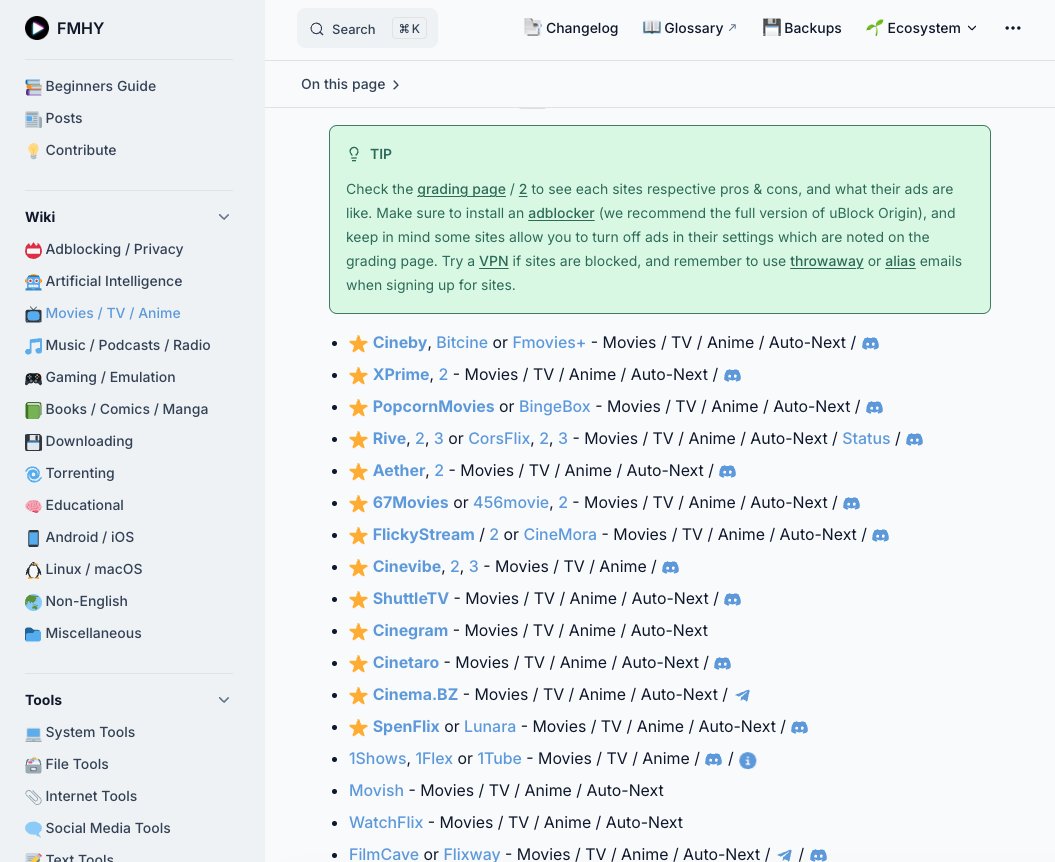
Un tipo llamado nbatman en Reddit construyó accidentalmente el sitio web más útil de internet.
Se llama FMHY (Free Media Heck Yeah).
Este es el sitio web que Google eliminó de los resultados de búsqueda por violaciones de DMCA, que Reddit ocultó parcialmente por promover la piratería, que la Motion Picture Association señaló como una de las principales amenazas de piratería, y sobre el que la RIAA presionó a proveedores de hosting para que lo eliminaran. Aun así, sigue en línea. Y sigue actualizándose cada mes.
Así es como funciona.
FMHY es el índice. La wiki en sí no aloja nada. Solo te dice dónde vive realmente todo lo gratuito en internet, organizado en 14 categorías con calificaciones de seguridad en cada enlace.
→ Películas y series en 4K desde más de 50 sitios de streaming
→ Música con calidad de Spotify y Apple Music
→ Adobe Creative Cloud, Microsoft Office, AutoCAD, JetBrains
→ Todos los cursos de pago de las principales plataformas de aprendizaje
→ 100 millones de libros y artículos a través de Anna’s Archive
→ Alternativas gratuitas a todas las herramientas de IA de pago
→ Una extensión de navegador llamada SafeGuard que marca sitios inseguros en tiempo real
Comenzó como un simple Google Doc mantenido por un moderador de Reddit en 2018. Google lo eliminó mediante una solicitud DMCA en 2023.
La comunidad reconstruyó la wiki en su propio dominio, la replicó en GitHub e IPFS, y ahora funciona simultáneamente en 12 dominios de respaldo.
No hay empresa. No hay CEO. No hay un servidor central. Seis voluntarios anónimos mantienen todo esto en su tiempo libre. Las donaciones por Ko-fi pagan el hosting. Nadie obtiene beneficios.
Hollywood no puede cerrar esto. Spotify no puede cerrar esto. Adobe no puede cerrar esto.
Toda la economía de suscripciones se sostiene en que no sepas que esta wiki existe.
https://t.co/xDVW1xKCxd
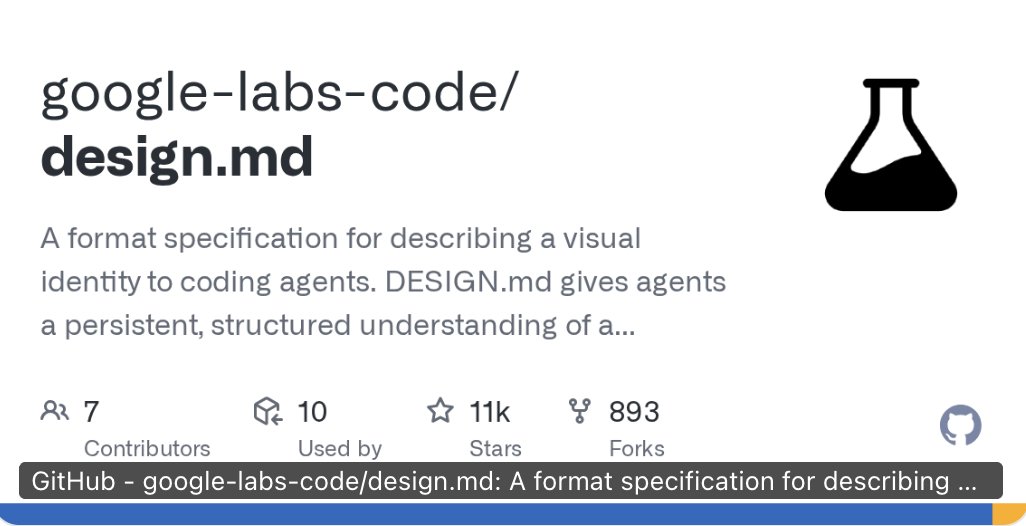
Google acaba de hacer algo que Claude Design no esperaba.
Y lo hizo gratis, en abierto, para todo el mundo.
Se llama DESIGN.md.
Pero primero hay que hablar de lo que provocó esto.
Anthropic lanzó Claude Design con límites de uso ridículos.
Cerrado. Caro. Controlado.
La herramienta de diseño con IA más potente del momento, pero con la llave en su bolsillo.
Google vio la jugada.
Y respondió de la única forma que duele de verdad:
Abrió el código. Gratis. Para todo el mundo.
Se llama DESIGN.md.
Un estándar abierto que cualquier IA puede leer.
En cualquier herramienta. En cualquier plataforma.
El problema que resuelve es real:
Los agentes de IA no tienen ni idea de tu sistema de diseño.
No saben qué significa tu color primario.
No saben si ese botón es accesible.
No saben para qué sirve cada componente.
Cada vez que usabas IA para diseñar, empezabas de cero.
DESIGN.md lo resuelve con un solo archivo.
Tres cosas concretas que hace:
1️⃣ Tokens de diseño
Tus colores, tipografías y espaciados con descripciones en lenguaje natural.
La IA entiende para qué sirve cada valor, no solo cuál es.
2️⃣ Validación de accesibilidad
El agente comprueba sus decisiones contra las reglas WCAG.
Sin que tú tengas que revisar cada detalle manualmente.
3️⃣ Portabilidad total
Exportas e importas tus reglas de un proyecto a otro.
Un archivo. Cualquier herramienta. Cualquier plataforma.
Incluidas las de Anthropic.
Eso es lo que más duele en ese lado de la mesa.
Anthropic construyó muros.
Google tiró la pared entera.
El repositorio está en GitHub: https://t.co/UJ5RVJPvwJ
Esto es lo que pasa cuando los grandes se pelean.
Nosotros ganamos.