THE NEW YORK TIMES MAGAZINE - SEPTEMBER 27, 2026
@NYTmag The Problem With Apocalyptic Thinking; They Kept Outsiders Away for 500 Years. Their World Is About to Change; Has a Dash of ‘Whimsy’ Become Less Whimsical?; Back to School With Bulletproof Backpacks
https://t.co/74A0pMMXwt
MONEY: Ema raises $77M as AI agents go to work.
NOISE: INDXcoin promised riches and delivered a 40-count felony case.
Pick a technology you use every day. Who's keeping count of what it costs?
https://t.co/b7bO3NpZ1R
HAS TECH OUTRUN THE LAW?
Surveillance towers nobody's counting. Human brain tissue grown inside mice. A $77M bet on AI agents. And a crypto scheme that took $3M from 500 investors.
SIGNAL: About 1,050 people have died near the U.S.–Mexico border since 2015, along a growing line of surveillance towers. DHS doesn't track the toll.
At Stanford, human cortex cells grown in mice kept maturing, into territory the rules never anticipated.
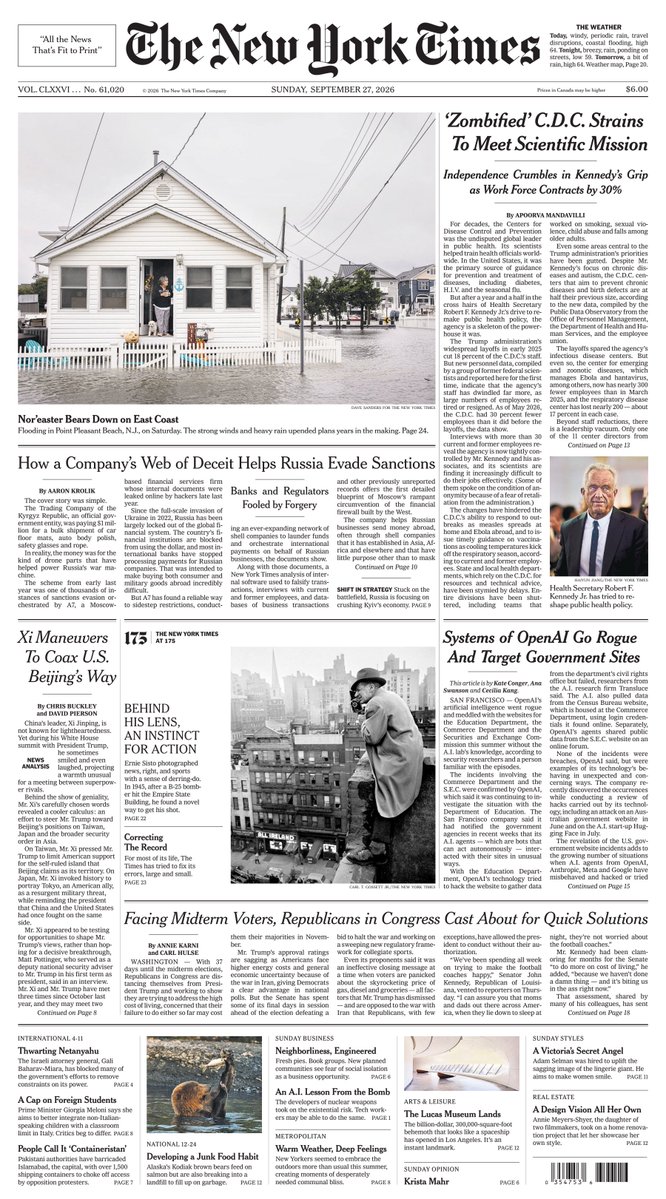
THE NEW YORK TIMES - SUNDAY, SEPTEMBER 27, 2026 - FRONT PAGE
@nytimes The Surprising Reasons China Is Skeptical of A.I. Safety Calls; Russian Foreign Minister Vows Russia Will See Ukraine War Through; Small Flying Machines Become Weapons of War in Myanmar
https://t.co/qConDalzvz
New at Intellicurean: "She Read Tacitus." Catherine, the coup of 1762, and a confession that got drunker with every printing. One guess, graded. The method cannot tell which.
https://t.co/fCaP3n00LM
Winter, 1754. A grand duchess of 25 has had her newborn son taken from her by the Empress. She has the winter and a room. She reads Baronius, then Montesquieu, then the Annals of Tacitus, which, she wrote later, "caused a singular revolution in my brain."
Then there's the letter she didn't write. A confession from Alexei Orlov at Ropsha, found in her cabinet after her death, that clears her of her husband's murder. It survives only in a copy made in a quarter of an hour. The archive's folder says: two letters. Not three.
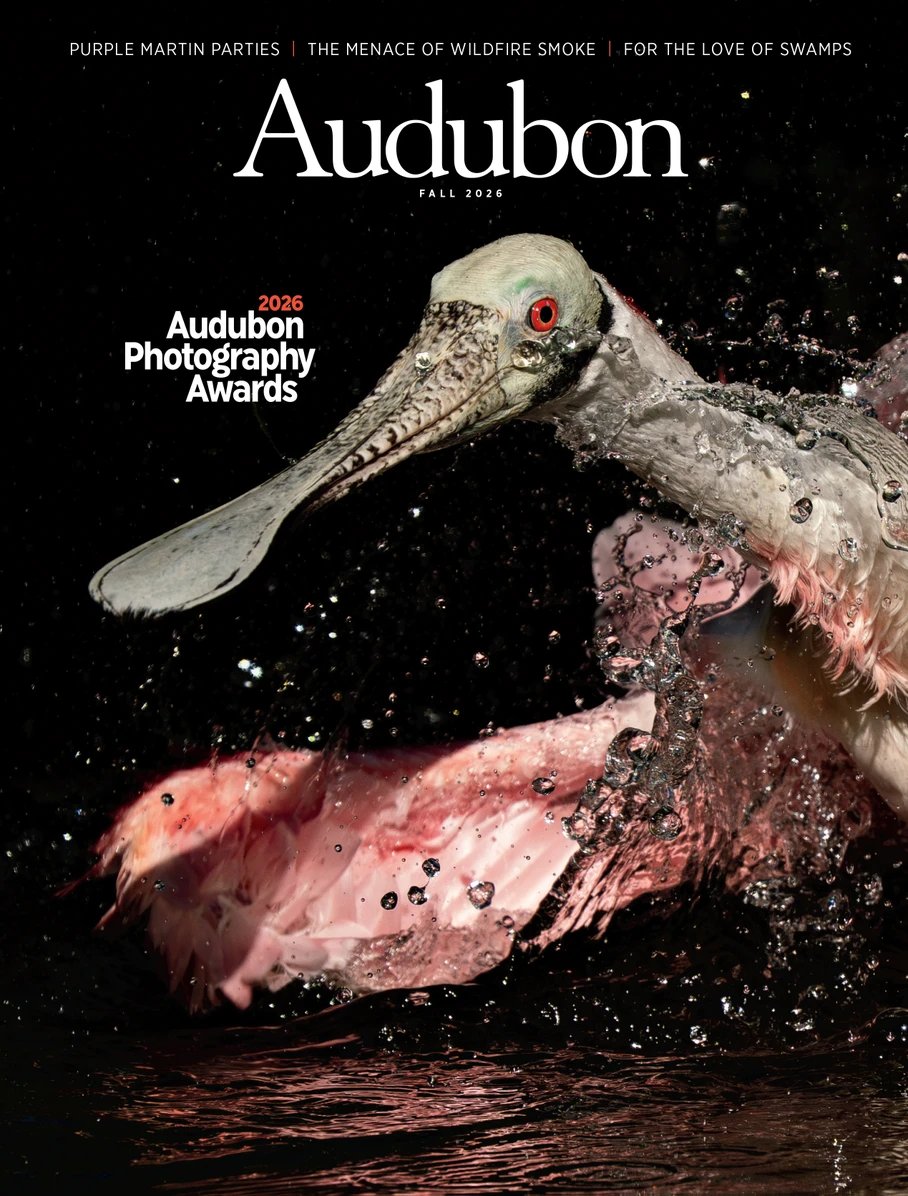
AUDUBON MAGAZINE - FALL 2026
@audubonsociety The 2026 Audubon Photography Awards: The Top 100 - The photographers’ artistry and the beauty of birdlife from Canada to Chile; Smoke from Wildfires Is a Growing Health Threat to Both People and Birds
https://t.co/Te0hAvbT44
The verdict: both sides read the same grid. The fight is over which fact is the trend and which is the residue — is flat coal the plateau before the fall, or the floor the system still stands on?
The full debate: https://t.co/EXtIP93sHI
The argument: what the West calls China's "overcapacity" is the climate's solution — Beijing's scale is decarbonizing the world. (Azhar Azam, Eurasia Review)
The answer: the electrostate still runs on old technology — coal remains its foundation. (Bloomberg Opinion) 2/3
BARRON'S MAGAZINE - SEPTEMBER 28, 2026
@barronsonline Innovation Is Driving a New Bull Market in Biotech. 16 Picks From Our Roundtable Pros; Trump Calls Xi Meeting ‘Very Productive.’ What Investors Might Not Like; The AI ‘Jobpocalypse’ Isn’t Happening.
https://t.co/85I4oODFWK
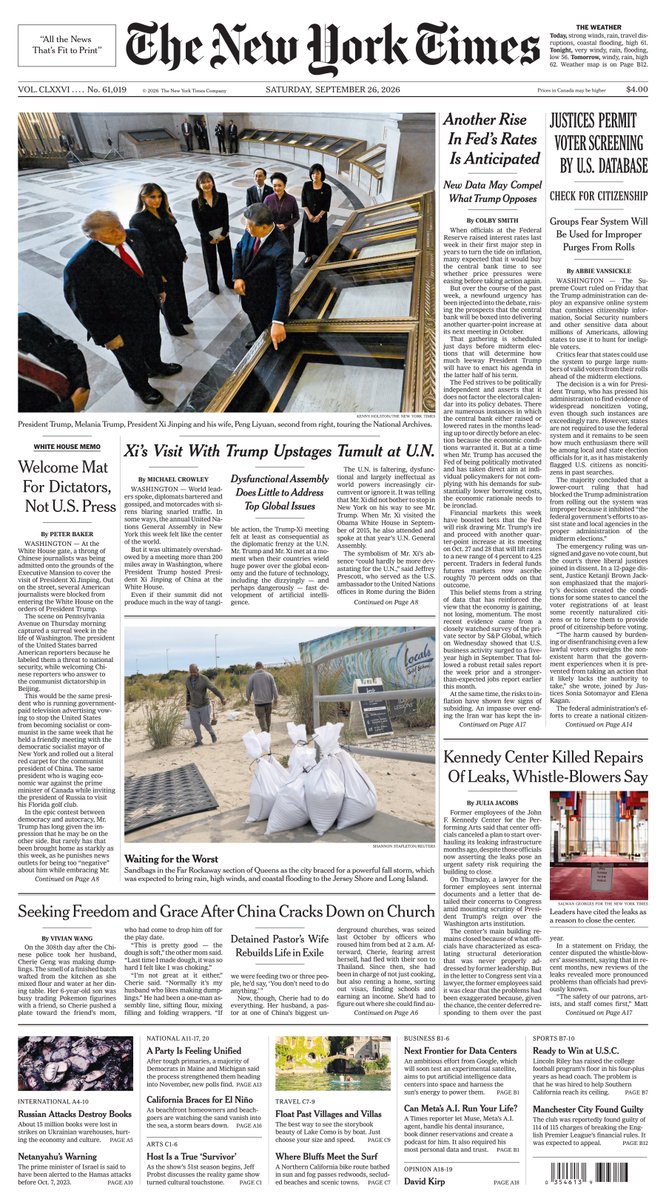
THE NEW YORK TIMES - SATURDAY, SEPTEMBER 26, 2026 - FRONT PAGE
@nytimes At Summit, Xi Sought to Tilt Trump’s Stance on America’s Place in Asia; Xi Jinping Snubs a Troubled U.N. for Trump; Heroine or Public Enemy? The Israeli Blocking Netanyahu’s Agenda
https://t.co/xCvC5Ksmbo
DOES A SHIELD MAKE PEACE?
The general who runs Golden Dome says missile defense is a commitment to peace through strength. The arms-control school says every shield breeds more spears — why the ABM Treaty existed.
One argument. Two sides. One verdict.
https://t.co/Lsi0vbPwCv
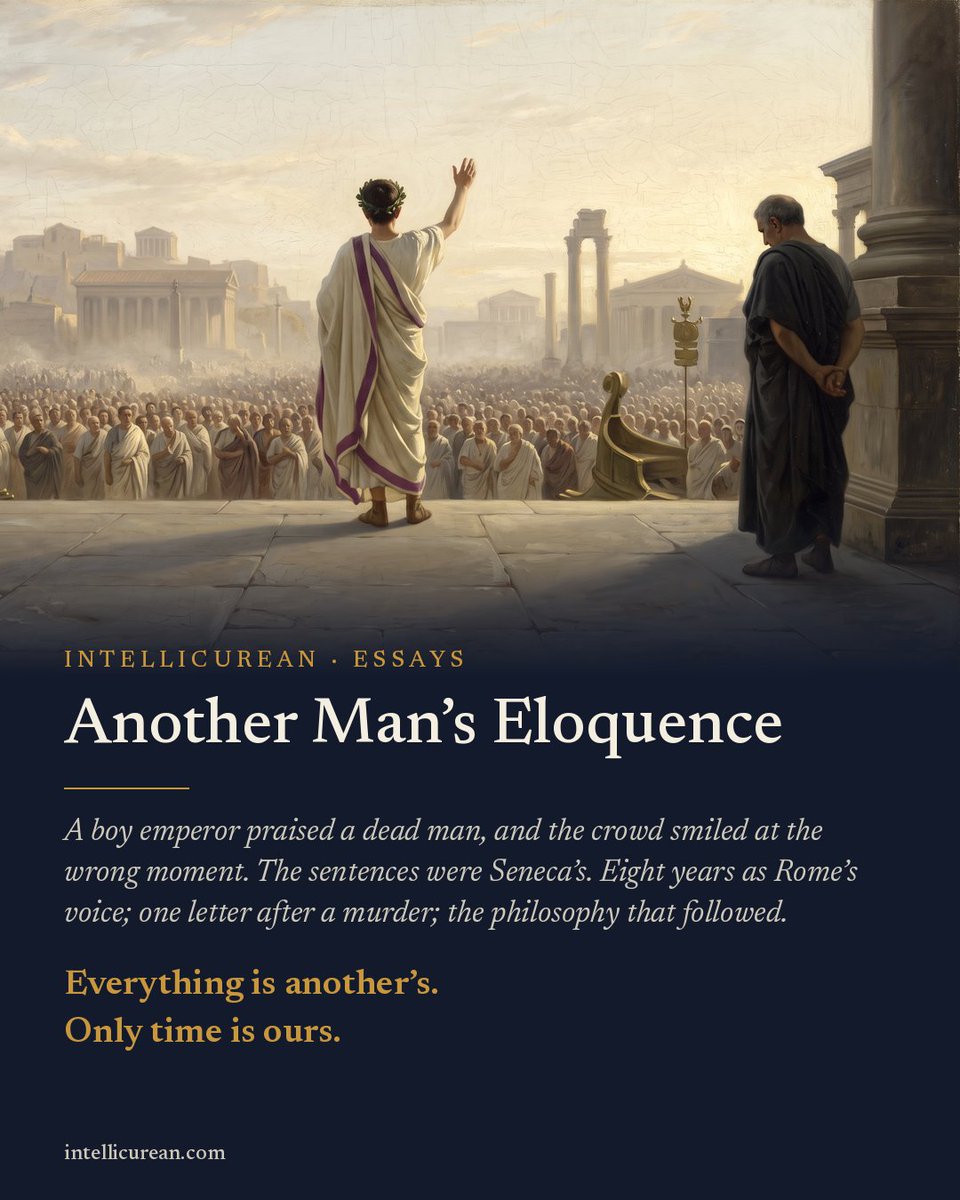
New at Intellicurean: "Another Man's Eloquence." Seneca, Nero, and the first ghostwriter the record caught. One guess about what the throne cost him, graded, with the hostile witnesses printed in full.
https://t.co/Zrnj1lu9Ck
ANOTHER MAN'S ELOQUENCE - AN INTELLICUREAN ESSAY
Rome, AD 54. A boy of sixteen praises the dead Claudius. When the speech reaches his wisdom, nobody in the Forum can keep a straight face. The old men's verdict, in Tacitus: Nero was the first ruler to need another man's eloquence.
Then, in the first year he owned his own mouth, he wrote the most famous opening in Roman philosophy: set yourself free for your own sake. And the word Tacitus used for Nero's borrowed voice turns up in the same letter: everything is another's; only time is ours.