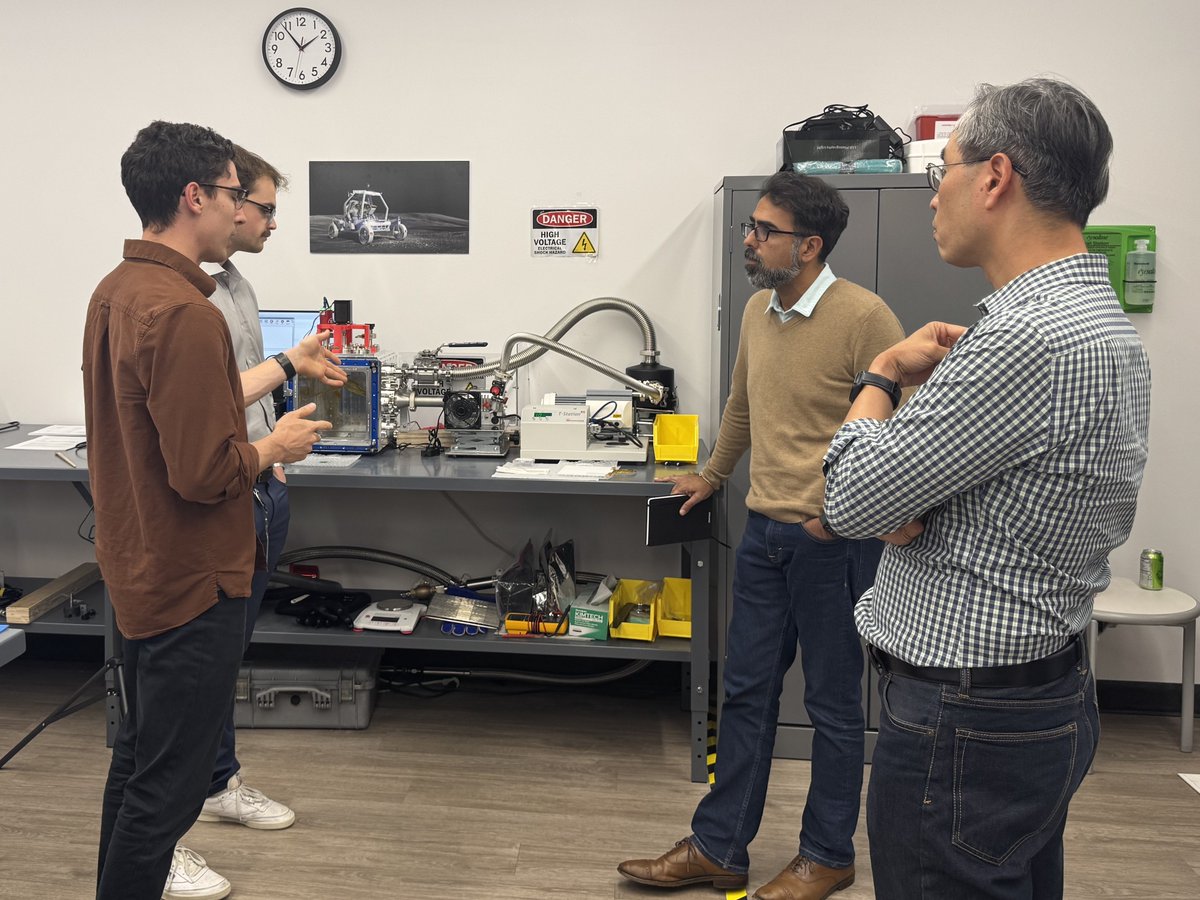
Interlune has been selected for a NASA Small Business Innovation Research (SBIR) Ignite Phase II award to advance development of its Moon-ready rotary actuators.
Actuators are devices that convert energy into movement, and Interlune is developing specialized versions for machinery operating in the Moon's harsh environment. It's one thing to make mechanical systems work on Earth, but making them work in low gravity, extreme temperatures, and alongside the industry's ultimate frenemy—Moon dust—is where Interlune goes to work.
With NASA's support, Interlune is developing a family of commercial-off-the-shelf (COTS) actuators for lunar rovers, drones, robotic arms, and other equipment supporting future Moon missions.
The Phase II award will advance Interlune's actuator technology to Technology Readiness Level (TRL) 6 on NASA's nine-level scale. Hardware will undergo rigorous testing at the Interlune Research Lab (IRL) in Houston and NASA Kennedy Space Center's Swamp Works to meet established spaceflight qualification standards.
By offering commercially available, Moon-ready actuators that can power many kinds of machines, Interlune aims to dramatically reduce the cost, engineering effort, and lead times of custom-built subsystems.
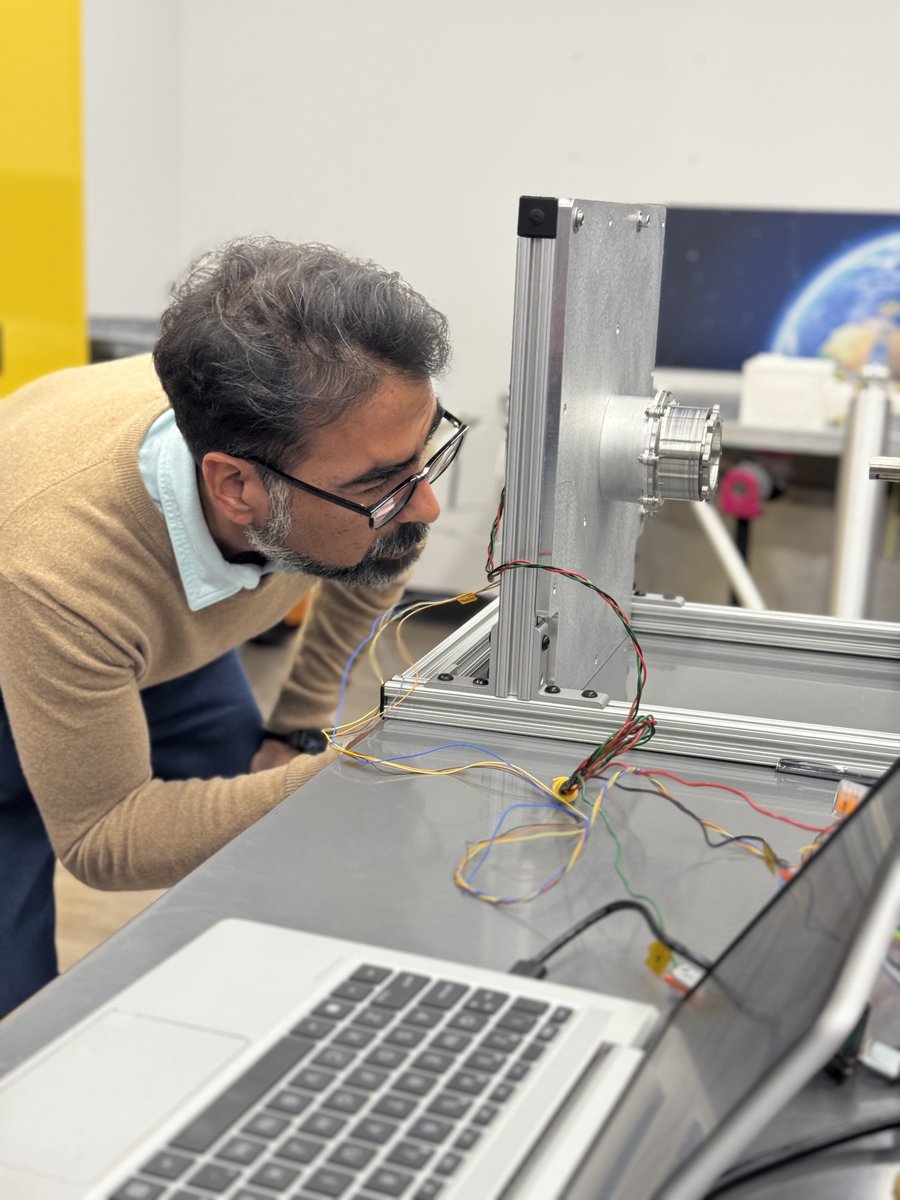
And here's one of our favorite actuator photos: NASA Associate Administrator Amit Kshatriya getting a firsthand look at the actuator that will help power the robotic arm designed to scoop lunar regolith samples on Interlune's Prospect Moon mission.
#NASA #LunarInfrastructure #SpaceEconomy
Jeff Bezos asked Rob Meyerson to run @blueorigin three months after he joined. He became the first President, took the company from 10 to over 1,500 employees and spent 15 years building Blue alongside Jeff and the team.
Now Rob leads @InterluneSpace, which has $500M+ in purchase orders for future lunar helium-3 deliveries.
We talked about lessons from @JeffBezos, Blue Origin’s founder network, and how to build a real market on the Moon.
TIMESTAMPS
00:00 Intro
01:23 Interlune’s vision for an in-space economy
03:50 Why start with lunar helium-3?
07:46 Kistler Aerospace and the first reusable-rocket market
12:35 When Kistler’s commercial market disappeared
13:00 Joining the secretive early Blue Origin
14:28 Building relationships as an engineer
19:16 Learning to fundraise after Blue Origin
24:53 Advising and investing in the next generation of builders
28:42 The Blue Origin founder network
39:33 What investors look for in a founding team
43:20 Lessons from working with Jeff Bezos
49:17 How Blue Origin grew under Bezos
54:52 Culture, delegation, and leading technical teams
59:35 Why Kistler’s restart failed
01:05:01 What Rob learned about the CEO’s job
01:07:11 Is there really a lunar economy?
01:08:46 A book that changed Rob’s thinking
Details about IRL and additional information about the technologies and hardware Interlune is building to support the Moon Base are here: https://t.co/l2kfIByiXG
Interluners in order of appearance: Rob Meyerson, Gary Lai, Kathleen Hoza, Rob Acree, Martin Johnson, Patrick Sellars, Cristina Bryant, and Alex Berne.
Building a Moon Base requires technologies that can excavate lunar soil, manage pervasive dust, identify natural resources, and keep equipment operating in one of the harshest environments imaginable.
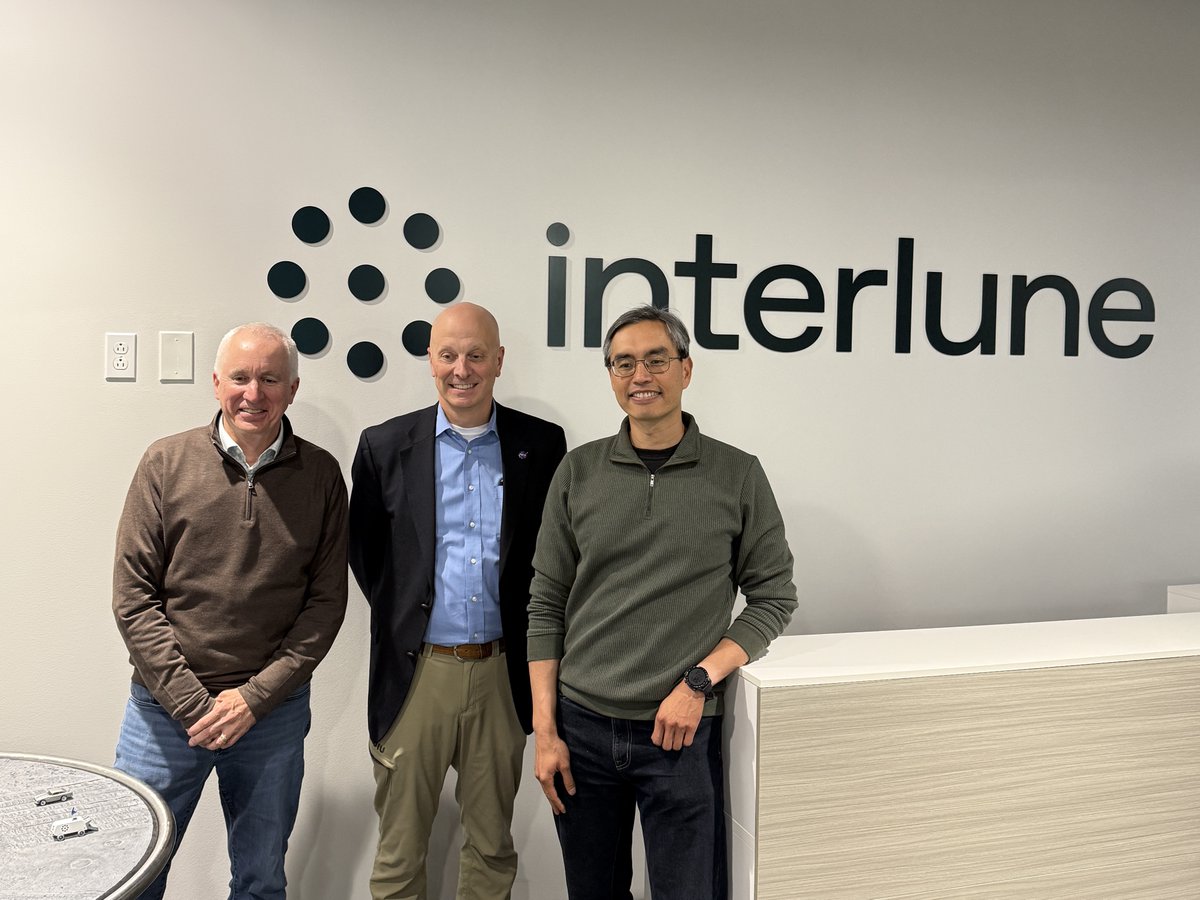
Interlune was pleased to welcome NASA’s Johnson Space Center Deputy Director Stephen A. Koerner to our Seattle headquarters to demonstrate progress on several of these critical capabilities.
Highlights included hardware for Interlune's Prospect Moon mission, which will identify gases in lunar soil (regolith) and determine how to extract them. We’ll be ready to integrate with a lander in September 2027 and are looking for a ride.
Meanwhile, we're building out the Interlune Research Lab (IRL) in Houston, where we’re implanting lunar regolith simulants with helium and hydrogen.
NASA’s Johnson Space Center, the Texas Space Commission—which is helping fund IRL—and the broader Texas space ecosystem are essential to America's space ambitions. Their commitment also offers a powerful model for expanding support for the space industry in Washington state.
#LunarInfrastructure #MoonBase #SpaceEconomy
Interlune CEO Rob Meyerson joined Aurelia Institute CEO @ariel_ekblaw to reflect on the space industry, what early skeptics misunderstood about commercial spaceflight, and why he's now focused on unlocking the Moon's resources to support a thriving space economy.
The conversation took place at the inaugural Harvest Moon Gala, an event and fundraiser celebrating the Aurelia Institute's 5th anniversary. @aurelia_labs is a nonprofit space architecture R&D lab, education and outreach center, and policy hub dedicated to building humanity’s future in space for the benefit of Earth. The event was held at the amazing John F. Kennedy Presidential Library and Museum in Boston.
Learn more and support Aurelia Institute: https://t.co/ThvVzQ9Xc0
#LunarInfrastructure #SpaceEconomy #AureliaInstitute #AureliaPrize
One of the biggest obstacles to establishing a permanent presence on the Moon might surprise you.
It’s dust.
Lunar dust threatens everything from spacecraft and solar panels to habitats, machinery, and astronaut safety. Solving this problem is called dust mitigation.
At Interlune, we live and breathe dust mitigation (not literally, of course), because managing lunar dust takes more than a Swiffer. Try electric fields.⚡
During a visit to our Seattle HQ, NASA Associate Administrator Amit Kshatriya got the rundown on the work we're doing with electrodynamic dust shields (EDS), which use electric fields to sweep dust off surfaces without moving parts. Think of them as windshield wipers made of electricity, as seen in the clip.
Interluners pictured are Martin Johnson, Spencer Powers, and Gary Lai, with Amit second from right.
Future lunar infrastructure will need more than rockets and landers. It will need a detailed understanding of the resources available on the lunar surface, and the technology to put them to work.
During a visit to Interlune's Seattle HQ, NASA Associate Administrator and Chief Engineer Amit Kshatriya got a firsthand look at Interlune’s work on lunar resource prospecting technologies, starting with our Prospect Moon mission.
In a nutshell, Prospect Moon is a payload designed to identify gases in lunar soil (regolith) and determine what it takes to extract them. BTW, it's looking for a ride in 2028. 🚀
The data it collects on gas concentrations and mineralogy could contribute to future lunar infrastructure development and natural resource harvesting.
A heartfelt thanks to Amit and the NASA team for spending time with us!
Interluners in order of appearance: Rob Acree, Indra Hornsby, Gary Lai, James Antifaev, Elizabeth Frank, Patrick Sellars, Kathleen Hoza, Jonathan Lee, Lane Haury, Martin Johnson, and Spencer Powers.
#LunarInfrastructure #MoonBase #SpaceEconomy