What if AI didn't need to remember everything to keep understanding more?
Traditional attention mechanisms come with a growing memory cost. Variational Linear Attention (VLA) explores a different approach: fixed-size associative memory that evolves as new information arrives.
And this isn't just a theoretical claim. We've published our research paper on VLA to back it up.
Curious? Read the paper and explore the research at Metriqual.
https://t.co/zSTkfPhcSW
@theunblunt@its_vayishu
I am currently studying sampling theory. The below given formula represents sample variance. Now variance simply means how spread out observations are around their mean. So when i am increasing the value of sigma, population values are "spreading out" moreee around the mean (dotted vertical line is representing the sample mean xbar) and vice versa.
Similarly second slider is sample size; you increase it and you have more observation to calculate the variance.
This is an important concept that is used in various domains of real life. For an instance; weather forecasting. Having 2 cities with same avg temp. wont tell you the actual temp. fluctuations. Variance helps us understand temperature variability and eventually understanding variance helps us build more reliable predictive models.
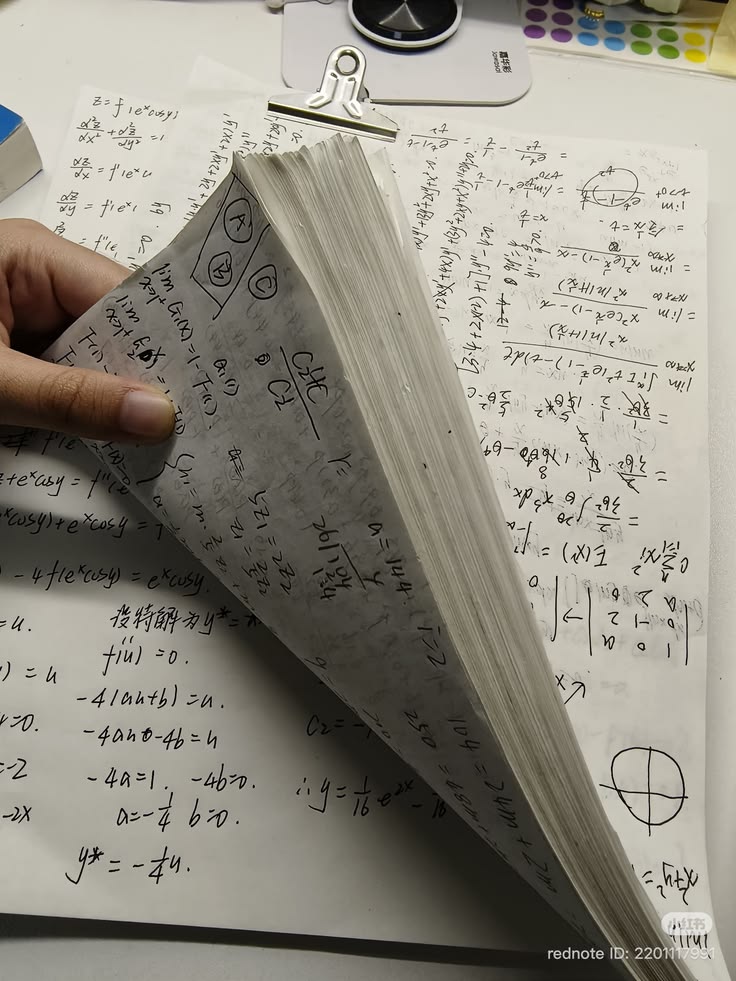
Do as much math as you can in your 20s.
not for exams.
not for grades.
but to fundamentally change how you think.
• algebra → recognize patterns and relationships
• geometry → develop spatial reasoning
• calculus → understand change and accumulation
• linear algebra → think in vectors and transformations
• probability → reason under uncertainty
• optimization → find the best solution under constraints
> solve problems.
> derive equations.
> write proofs.
> simulate what you learn.
math trains you to think in abstractions, recognize hidden structures, and break complex problems into simpler ones.
the real advantage isn’t knowing more formulas.
it’s developing a mind that can model almost anything.