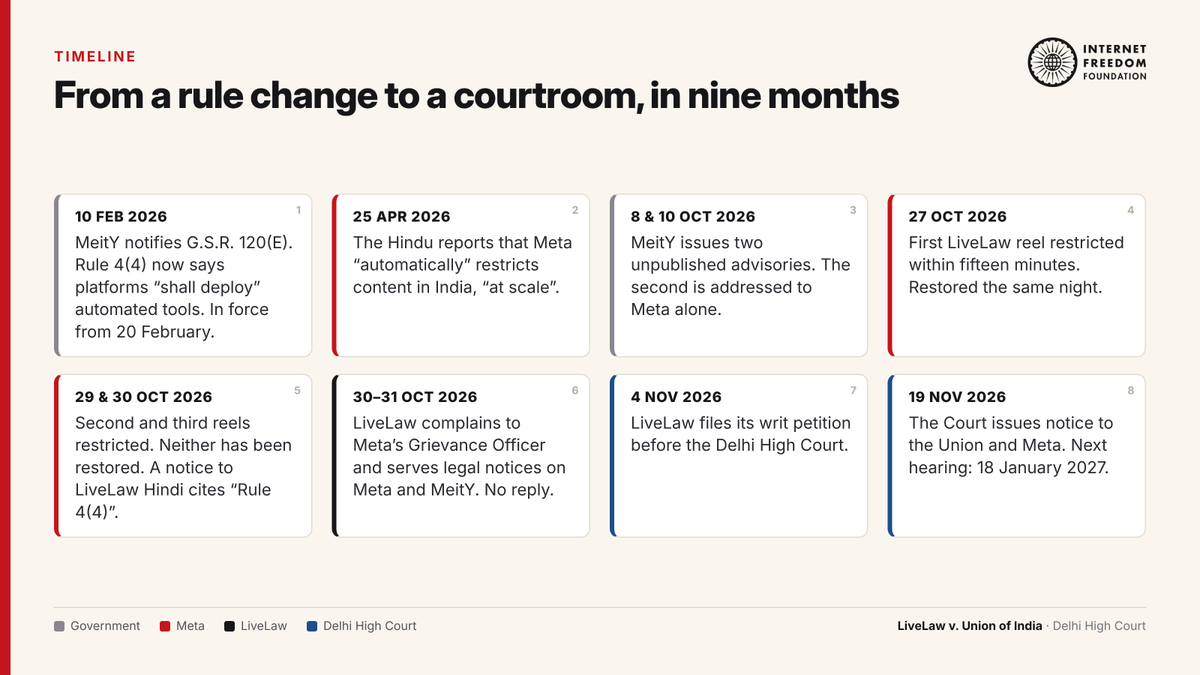
A legal news channel explained a Supreme Court hearing. Fifteen minutes later, the video was blocked in India. @LiveLawIndia got no notice and no order. Now it has challenged Rule 4(4) of the IT Rules before the Delhi High Court, with IFF’s support. Next hearing: 18 January.
Has your post been blocked? Screenshot every notice and write to [email protected]
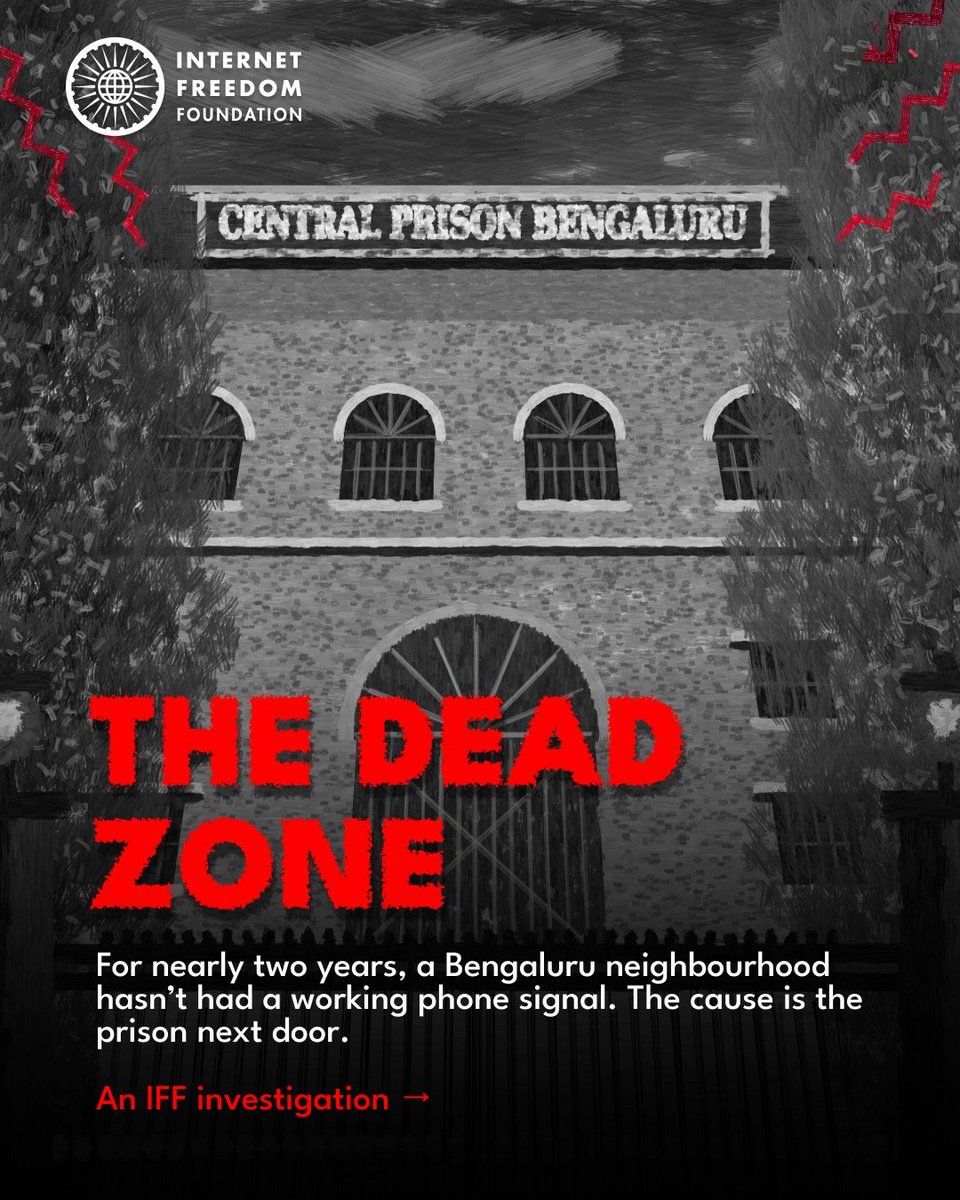
For nearly two years, around 20,000 people living near Bengaluru Central Prison have had no working phone signal. Calls drop, OTPs don't arrive and UPI payments fail.
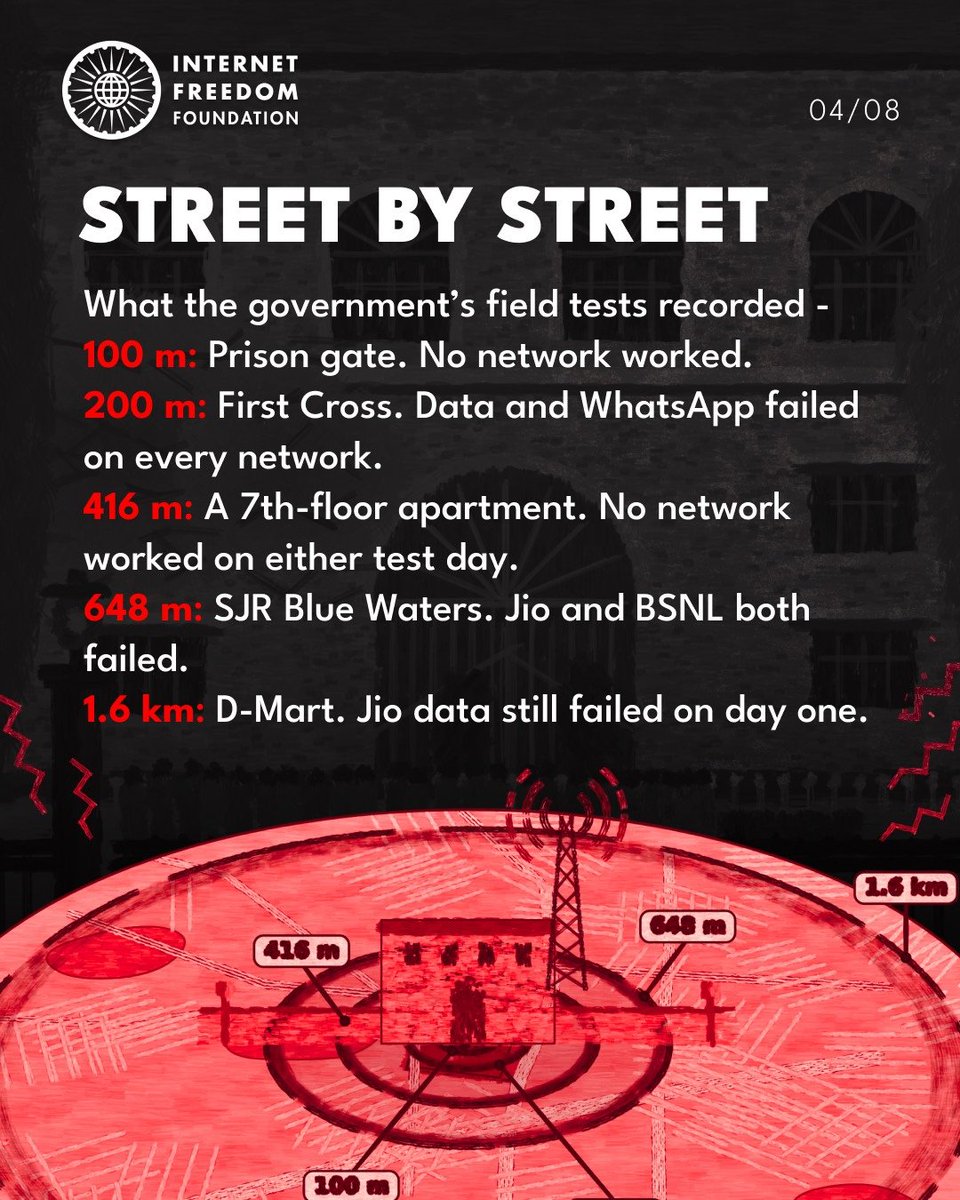
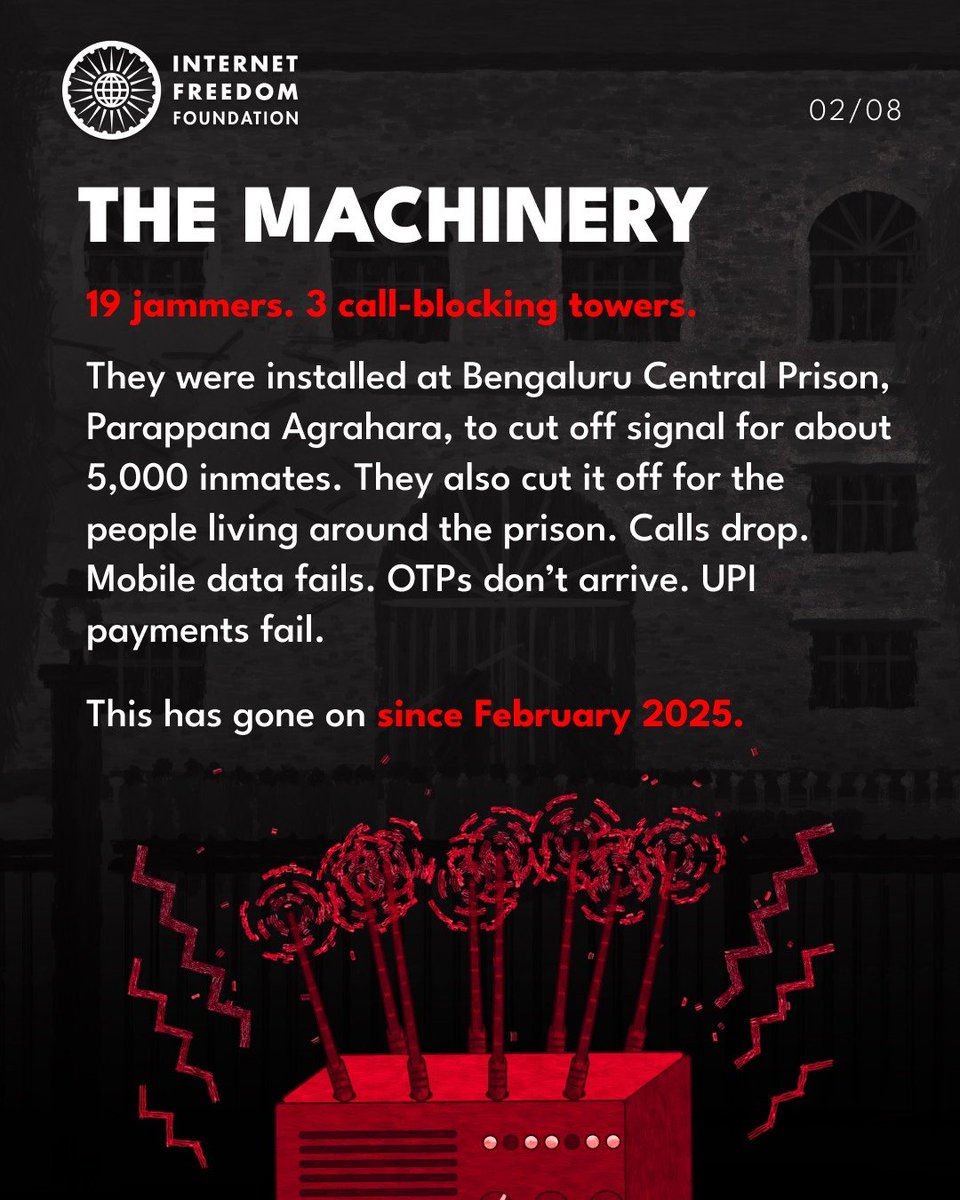
The cause is the prison's 19 jammers and 3 call-blocking towers. The government's own tests found the signals spill 500 to 700 metres beyond the prison walls and called for immediate action. More than a year later, residents are still waiting.
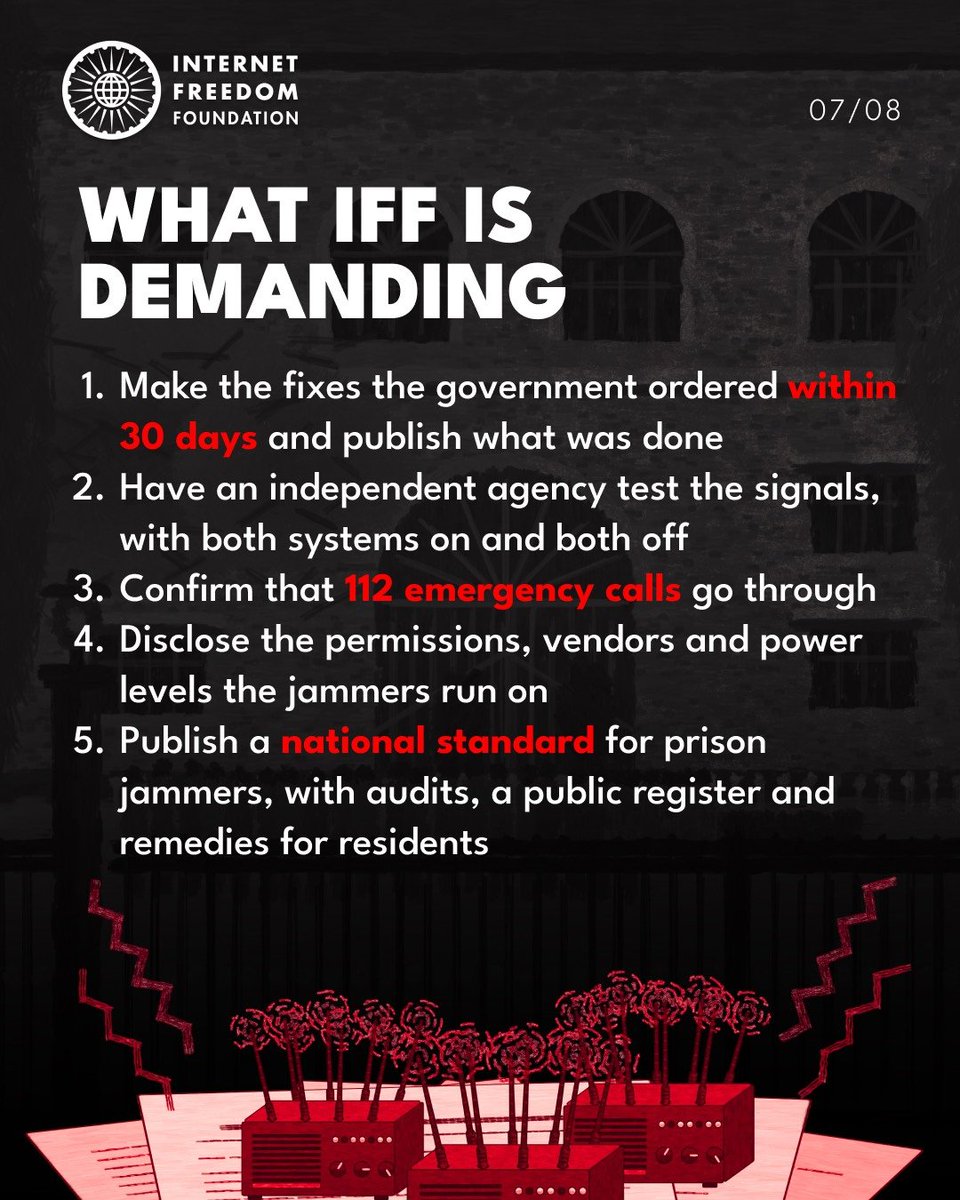
This is a shutdown with no order, no review and no time limit. Swipe through for our investigation and what we're demanding.
Support our work to push for accountability.
#TheDeadZone #InternetFreedom #Bengaluru #DigitalRights #InternetShutdown
The Court has granted the respondents four weeks to file their counter-affidavits and has listed the matter on 18 January 2027. LiveLaw seeks the striking down of Rule 4(4) to this extent, the quashing of the advisories, production of the “legal requests” and restoration of its reels. If your content has been restricted “under Rule 4(4)” or on an undisclosed “legal request”, write to us at [email protected]. We will continue to support this challenge. (10/10)
Support our work: https://t.co/qSG7IzTRTp
The Delhi High Court has issued notice on a constitutional challenge to the automated filter which Meta operates on Instagram and Facebook in India, and to Rule 4(4) of the IT Rules, 2021. On 19 November 2026, the Court issued notice to the Union of India and to Meta on a writ petition filed by Live Law Media Private Limited and its Director, Sindhu T.P. IFF is supporting LiveLaw in this challenge. (1/10)
Read More: https://t.co/s5ichxKjPu
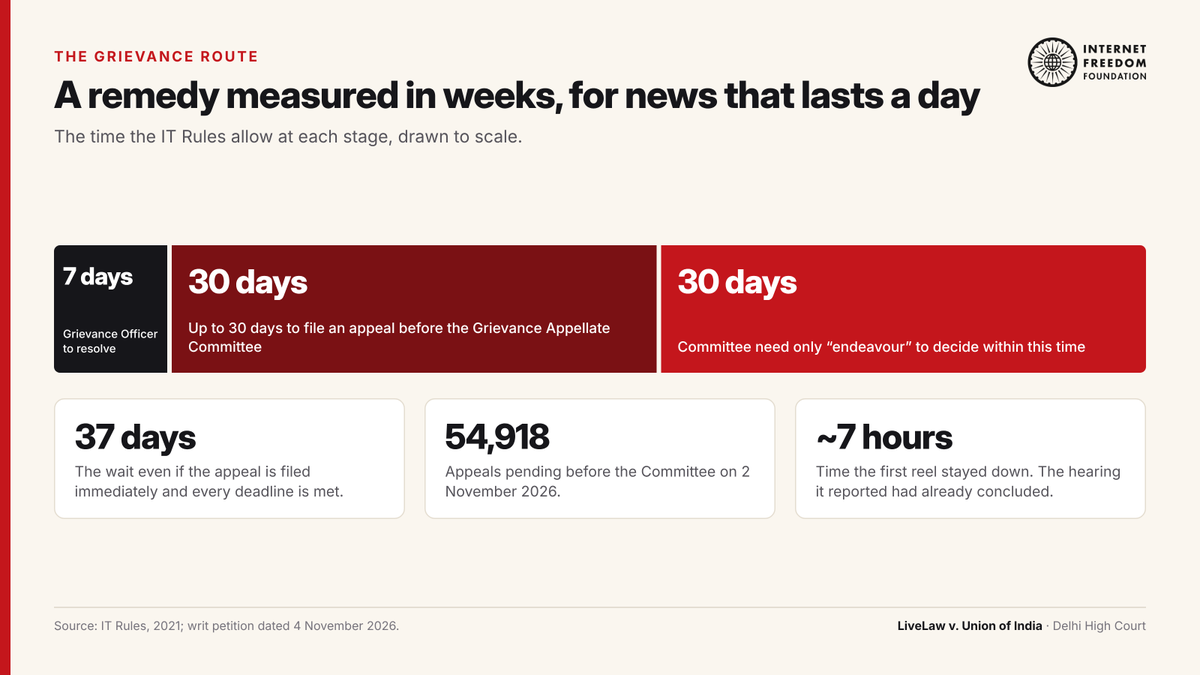
The petition contends that Rule 4(4) exceeds the powers conferred by the IT Act, creates a blocking regime outside Section 69A, and operates as a prior restraint on the press. A publisher whose report is suppressed by automated tools receives no notice, no reasons and no hearing. The grievance route offers little, since 54,918 appeals were pending before the Grievance Appellate Committee on 2 November 2026. (9/10)
Delhi High Court to hear today LiveLaw’s plea seeking restoration of its Instagram reels on Supreme Court proceedings which were restricted in India.
Plea also challenges amended Rule 4(4) of IT Rules, 2021, mandating automated content blocking by social media intermediaries.
@LiveLawIndia@Meta
"Atmanirbhar" data collection, courtesy of a California software giant and a backdoor.
the Indian government is using US-based Esri’s ArcGIS software to map and run Census 2027—the exact same enterprise platform that cybersecurity reports revealed was compromised for over a year by the Chinese state-backed hacking group Flax Typhoon.
Comic by @aaaaadvik
We ask the State to publish the rules on Family ID linkage before bids close, and to keep the police and social media applications out of this contract until a law governs them. IFF is writing to the Centre for e-Governance and the UP AI Mission, and we will file RTI applications for the Cabinet note, the Government Order and the project report of the Mission. (10/10)
Support our work: https://t.co/qSG7IzUpIX
Uttar Pradesh has invited bids for a shared AI platform that every State department will use for at least three years. The 178-page tender, published on 29 October 2026, makes the Family ID the linking key for departmental records and includes a social media monitoring tool and a police records assistant. We could find no published rules on which records may be joined. Bids close on 7 December 2026. (1/10)
Read More: https://t.co/FyGduQF02O
The timing matters as well. Bids close on 7 December, the final electoral roll is due on 4 January 2027, and in 2022 the election schedule was announced on 8 January. Under the Election Commission’s standing instructions, a tender pending on that day cannot be finalised without its approval. This contract will bind the State for at least three years and will be carried out by the next government. (9/10)