Crime-as-a-Service and Violence-as-a-Service pose serious dangers to the security of our member countries and communities. It is a global emergency which demands united action.
The hard truth we are facing today is the criminal landscape is changing faster than the systems we built to counter it. Encryption and anonymization tools shield the people behind them.
INTERPOL stands as the neutral platform where our 196 member countries turn national policing challenges into operational solutions.
Every year, INTERPOL issues over 70,000 alerts – to help identify fugitives, rescue victims and disrupt threats across borders.
Our third INTERPOL’s Partners Conference is an opportunity to reinforce our shared mission of working for the greater good, whether through peace, justice or private enterprise.
The range of our partners’ domains, mandates and goals is precisely what allows us to find new solutions to complex problems.
A technology company sees one part of the picture. A bank sees another. A government sees a third.
Bring them together, and you will see the whole.
Whether through funding, expertise or innovation, our diverse member countries and partners help us sharpen our tools, to ensure that law enforcement officers around the world have access to the information when and where they need it.
Together, we are building a smarter, more responsive INTERPOL.
One that stays ahead of threats, delivers measurable impact and ensures every investment translates into safer communities worldwide.
Always a pleasure to welcome the President, Vice Presidents and Delegates of our Executive Committee to @INTERPOL_HQ.
Since their last meeting in March at our Global Complex for Innovation in Singapore, I’ve taken further steps to strengthen INTERPOL’s effectiveness, modernize our operations and deepen our accountability.
Ultimately, all our efforts - people, data and systems - are designed to strengthen our operational impact. Earlier this month, I attended the Annual General Meeting of Police Chiefs from the Southern African Development Community, where the Chief of Police of Eswatini expressed appreciation for an Operational Support Team deployed to assist in a cyber-enabled fraud investigation.
This team, consisting of staff from our Regional Bureau in Harare, INTERPOL’s Financial Crime and Anti-Corruption Centre and Cybercrime Directorate, helped extract data, conduct digital analytics, and connect the case to other transnational crimes, including human trafficking – as well as identifying criminal assets in cryptocurrency.
This is just one example. This year, we have already deployed 15 Operational Support Teams and conducted 28 coordinated operations - each one a demonstration of what INTERPOL can achieve when we combine expertise, technology, and collaboration.
It also reflects something deeper: that everything we do must serve one purpose only: strengthening INTERPOL so it can better support the needs of our member countries.
That is the true measure of our success.
Delighted to welcome the National Police Academy of Japan as the newest member of the INTERPOL Global Academy Network.
This expansion of the Global Academy Network strengthens our collective ability to train law enforcement professionals, share best practices and enhance global security.
Japan’s participation demonstrates its commitment to international cooperation and reinforces the network’s reach, helping to build a safer world through education and partnership.
There is no safer world without a safer Africa.
In Southern Africa, crime threats are both enduring and evolving, and while many originate from far beyond national borders, their consequences are felt by local communities.
Law enforcement stands on the frontline of this fight, often operating with limited resources and constrained capacities.
Having served in a national police service in what is often referred to as the “Global South”, I understand what it means when local capacity is strained, resources are limited, and threats arriving at your borders come from far away.
This is why I was honoured to speak at the 31st Annual General Meeting of the SADC Chiefs of Police Sub-Committee in Malawi 🇲🇼.
My visit to Lilongwe was about listening to the needs of the region, through the voices of the region, as international support must be rooted in the realities on the ground.
We will continue to tailor our support to local priorities: through our tools, operational assistance, capacity building and training.
To all those leading the fight against crime in Southern Africa: your professionalism, dedication and cooperation are recognized.
To the Southern African Development Community: our partnership is essential, and one I’m personally committed to strengthening.
My thanks to Malawi’s Minister of Homeland Security Peter Mukhito; to the Chairperson of SARPCCO and Inspector General of the @malawi_police Richard Chakupaleza Chikoko Luhanga; to the Director of the @SADC_News Organ on Politics, Defence and Security Affairs Professor Kula Ishmael Theletsane; and to all the authorities and people of Malawi for their warm welcome and generous hospitality.
The scale and diversity of the Shanghai Cooperation Organization’s (SCO) membership make it a powerful foundation for global police cooperation.
Which is why I was pleased to address this week’s Meeting of Ministers of Internal Affairs and Public Security in Kyrgyzstan, chaired by Minister of Internal Affairs Ulan Niyazbekov.
Since the 2019 Bishkek Declaration, the Joint Action Plan between INTERPOL and the SCO Regional Anti-Terrorist Structure has delivered strong results in combatting terrorism.
And the 2025 Heads of State Council saw even greater steps in developing security cooperation through the creation of new centres focused on countering security challenges including transnational organized crime.
By connecting these initiatives to police all over the world through INTERPOL’s global network, we can help member countries combat the illicit flow of firearms, synthetic drugs, and enhance border management capabilities.
My visit to the INTERPOL National Central Bureau in Bishkek was an opportunity to see these connections happening in real time.
My thanks to the President of the Kyrgyz Republic, Sadyr Japarov for hosting this meeting, which I’m sure will result in even stronger support for police across the region, and globally, as we work towards a safer world.
Since I was entrusted with the mission of serving as INTERPOL’s Secretary General, one question has guided every decision I have made:
"How can INTERPOL best serve law enforcement in every corner of our global membership?"
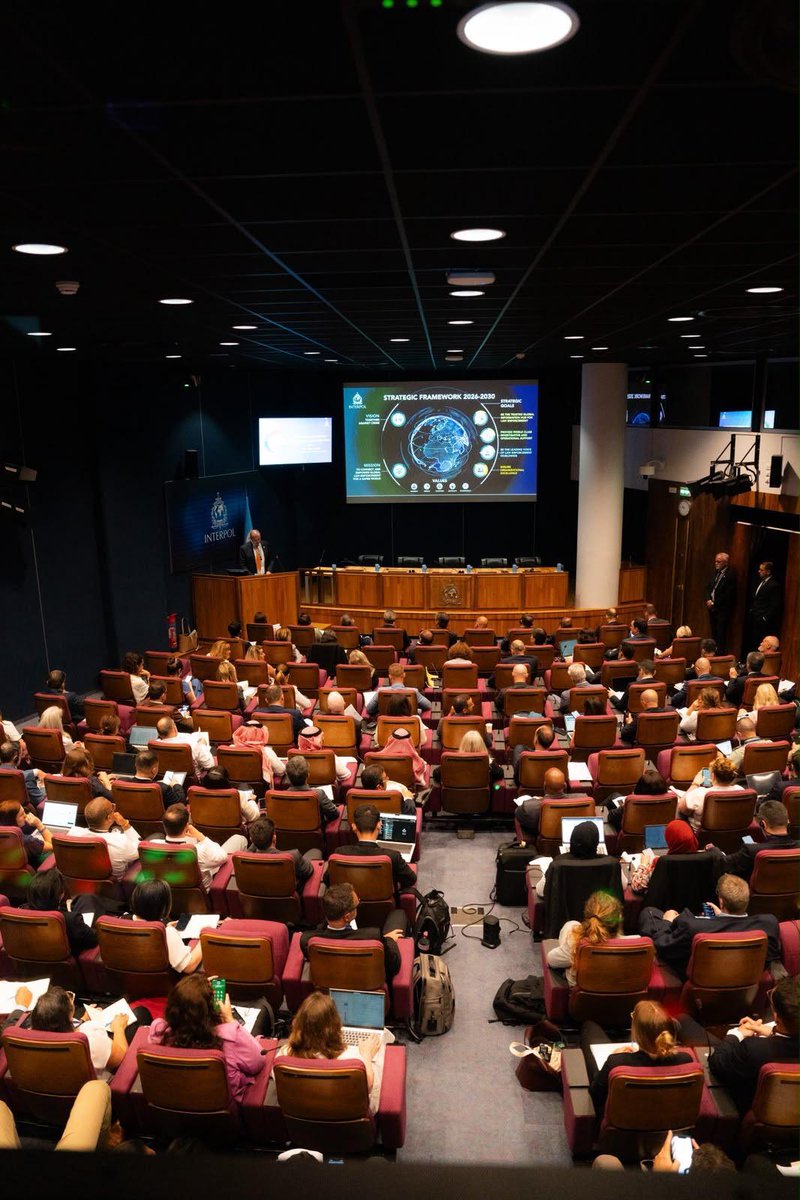
That question has shaped my plan for the next five years: our new Strategic Framework.
It is a promise that will guide how we connect and empower law enforcement for a safer world, built on four pillars.
The first is developing tools, systems and innovative solutions that reinforce INTERPOL’s role as the trusted global information hub for law enforcement. We will preserve what has always made INTERPOL successful but also deploy new technologies that will help police communicate more effectively, manage growing volumes of data, and reduce the administrative burdens that can slow down operational work.
Second is providing world-class investigative and operational support. One of my core objectives is to make our contribution more targeted, timely and responsive to the needs our member countries share with us.
The third pillar reflects a major responsibility: INTERPOL has a unique capacity to strengthen the voice of law enforcement on the world stage. We will advocate for our member countries’ priorities, share their operational realities and concerns, and ensure their needs are heard at the highest levels.
Finally, we will continue driving organizational excellence by strengthening processes, upholding transparency, applying new technologies and investing in expertise.
The world has high expectations of INTERPOL, and we are determined to meet them.
Our new Strategic Framework reflects a complex reality: in today’s world, no country can fight crime alone.
Law enforcement must stand together against crime. And INTERPOL is ready to lead that collective effort with integrity, respect, teamwork, neutrality and transparency.
A pleasure to welcome Herman Benjamin, Chief Justice, High Court of Brazil (STJ) and other distinguished justices to the second STJ-INTERPOL Symposium.
In the fight against transnational crime, police and judicial authorities stand as natural partners - two pillars of the same criminal justice chain.
The Declaration of Intent we signed today will further cement our work in combating transnational organized crime, together.
Un sincero agradecimiento al Ministerio del Interior @interiorgob y a la Policía Nacional española 🇪🇸 por la excepcional acogida que nos han brindado en nuestra Conferencia Regional Europea.
El entorno histórico de Toledo ha proporcionado el escenario perfecto para unos intercambios muy enriquecedores que, sin duda, impulsarán una mayor actividad en toda la región y más allá.
Agradecemos a todos los que han participado y contribuido al éxito de este evento.
A heartfelt thank you to the Spanish Ministry of the Interior and the Spanish National Police for their exceptional hosting of our European Regional Conference.
The historic setting of Toledo provided the perfect backdrop for meaningful exchanges which will undoubtedly drive even greater action across the region and beyond.
Grateful to all who participated and contributed to this successful event.
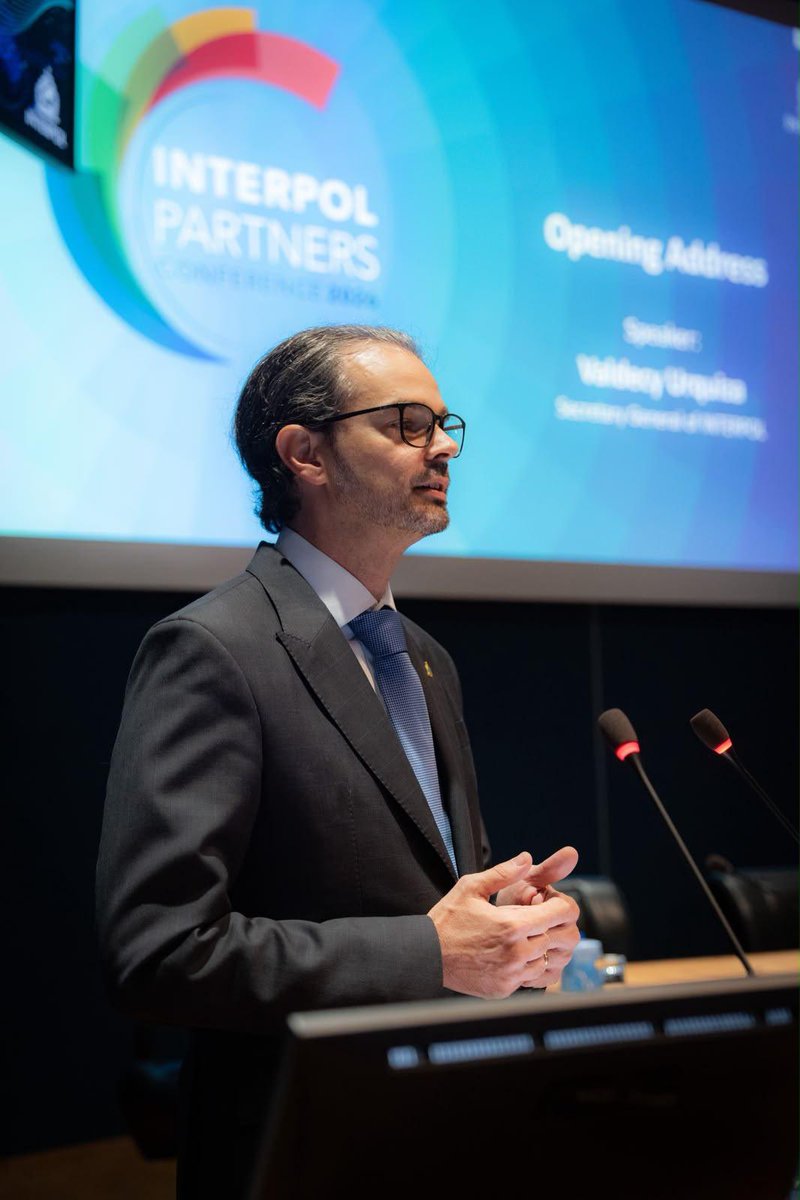
Senior police officials are gathering in Toledo 🇪🇸 this week for INTERPOL’s 53rd European Regional Conference.
Over two days, delegates will examine how criminal networks are exploiting security gaps in the real and virtual words. This includes the increased use of crime-as-a-service and scam centres, facilitating fraud and financial crime on an unprecedented scale.
The high-level event was opened by:
🔵 Valdecy Urquiza, INTERPOL Secretary General
🔵 Lucas Philippe, INTERPOL President
🔵 Aina Calvo Sastre, Spain’s Secretary of State for Security
--
Altos cargos de la policía se reúnen esta semana en Toledo 🇪🇸 para la 53A Conferencia Regional Europea de INTERPOL.
Durante dos días, los delegados examinarán cómo las redes criminales están explotando brechas de seguridad en el mundo real y virtual. Esto incluye el creciente uso del “crimen como servicio” y de centros de estafa, que facilitan el fraude y los delitos financieros a una escala sin precedentes.
El acto de alto nivel fue inaugurado por:
🔵 Valdecy Urquiza, @INTERPOL_SG
🔵 Lucas Philippe, Presidente de INTERPOL
🔵 Aina Calvo Sastre, Secretaria de Estado de Seguridad de España
Delighted to be in Toledo, Spain 🇪🇸 for our European Regional Conference.
Looking forward to important exchanges on evolving crime threats and the collective action needed to tackle them to keep our communities safe.
Another victim has been given back her name – thanks to members of the public and the Identify Me campaign.
This identification, 25 years after the 16-year-old victim was found in Germany, again proves that cold cases don’t always stay that way. INTERPOL remains committed to supporting our member countries in identifying the other unknown women and restoring their dignity.
Her name was Diana S.
She was 16 when her lifeless body was found floating in the River Main in Frankfurt nearly 25 years ago.
German authorities have announced the arrest of a suspect following her identification. The suspect, a 67-year-old German citizen – and the victim’s father – has been placed in pre-trial detention on suspicion of murder.
In October 2024 the case was added to Identify Me, an international campaign coordinated by INTERPOL.
Several tips from the public led investigators to pursue new leads, ultimately resulting in the arrest on 12 May 2026 by the Hessian State Criminal Police Office, acting on the initiative of the Public Prosecutor’s Office in Frankfurt am Main.
Investigations remain ongoing and no further details will be disclosed at this stage, but the campaign continues.
Read more ➡️����https://t.co/BZu0X9HEQH
A warm welcome to Jordan 🇯🇴 as the newest member of the INTERPOL Global Academy Network.
The agreement I signed with Director of Public Security Major General Dr Abeidallah A Maaitah, with INTERPOL President Lucas Philippe in attendance, makes Jordan the 27th member – and fourth from the Middle East and North Africa region.
Bringing its experience and expertise in counter-terrorism, combating drug and weapons trafficking, as well as border security, Jordan’s membership will significantly contribute to this law enforcement learning platform.
Pleased to meet with United Nations Police Adviser Commissioner Faisal Shahkar during his visit to @INTERPOL_HQ.
With a common objective of protecting communities through effective policing, it was an opportunity to explore practical avenues to strengthen cooperation with @UNPOL at the operational and institutional levels.
Organized crime generates billions in illicit profits, yet 99 per cent of criminal assets remain unrecovered.
INTERPOL's Silver Notice is changing this – with over USD 40 million in assets traced or identified in less than 18 months.
🇧🇷 My meeting with Andrei Augusto Passos Rodrigues, Director-General of the Brazilian @policiafederal, helped identify additional areas to build on the successes achieved so far.
Effectively tackling organized crime means targeting their financial foundations.
——————
O crime organizado gera bilhões em lucros ilícitos, mas 99% dos bens criminosos permanecem irrecuperáveis.
O Alerta Prata da INTERPOL está mudando essa realidade – com mais de US$ 40 milhões em ativos rastreados ou identificados em menos de 18 meses.
🇧🇷 O meu encontro com Andrei Augusto Passos Rodrigues, Diretor-Geral da @policiafederal brasileira, identificou áreas adicionais para ampliar os sucessos alcançados até o momento.
Combater o crime organizado de forma eficaz significa atacar suas bases financeiras.
🇮🇹 With Italy at the forefront of the global fight against transnational crime, Minister of Interior @Piantedosim's visit to @INTERPOL_HQ was an opportunity to discuss further avenues for cooperation.
Italy has been the driving force behind two key INTERPOL initiatives; I-CAN, disrupting the ’Ndrangheta - one of the most extensive and powerful criminal organizations in the world - and the Silver Notice, targeting assets linked to criminal activities.
Discussions with the delegation, which included Prefect Raffaele Grassi, Deputy Director General of Public Security, was also an opportunity to hear about Italy’s current security priorities and operational goals.
The visit underscores the productive and ongoing collaboration between Italy and INTERPOL in enhancing global safety.
——————
🇮🇹 Con l’Italia in prima linea nella lotta globale contro la criminalità transnazionale, la visita del Ministro dell’Interno Matteo Piantedosi al quartier generale dell’INTERPOL è stata un’occasione per discutere ulteriori modalità di cooperazione.
L’Italia è stata la forza trainante di due iniziative chiave dell’INTERPOL: I-CAN, volta a smantellare la ‘Ndrangheta, una delle organizzazioni criminali più estese e potenti al mondo, e la Silver Notice, che mira a individuare e neutralizzare i beni legati ad attività criminali.
L’incontro con la delegazione, che comprendeva il Prefetto Raffaele Grassi, Vice Direttore Generale della Pubblica Sicurezza, ha offerto anche l’opportunità di approfondire le attuali priorità di sicurezza e gli obiettivi operativi dell’Italia. La visita sottolinea la proficua e continua collaborazione tra l’Italia e l’INTERPOL per il rafforzamento della sicurezza globale.
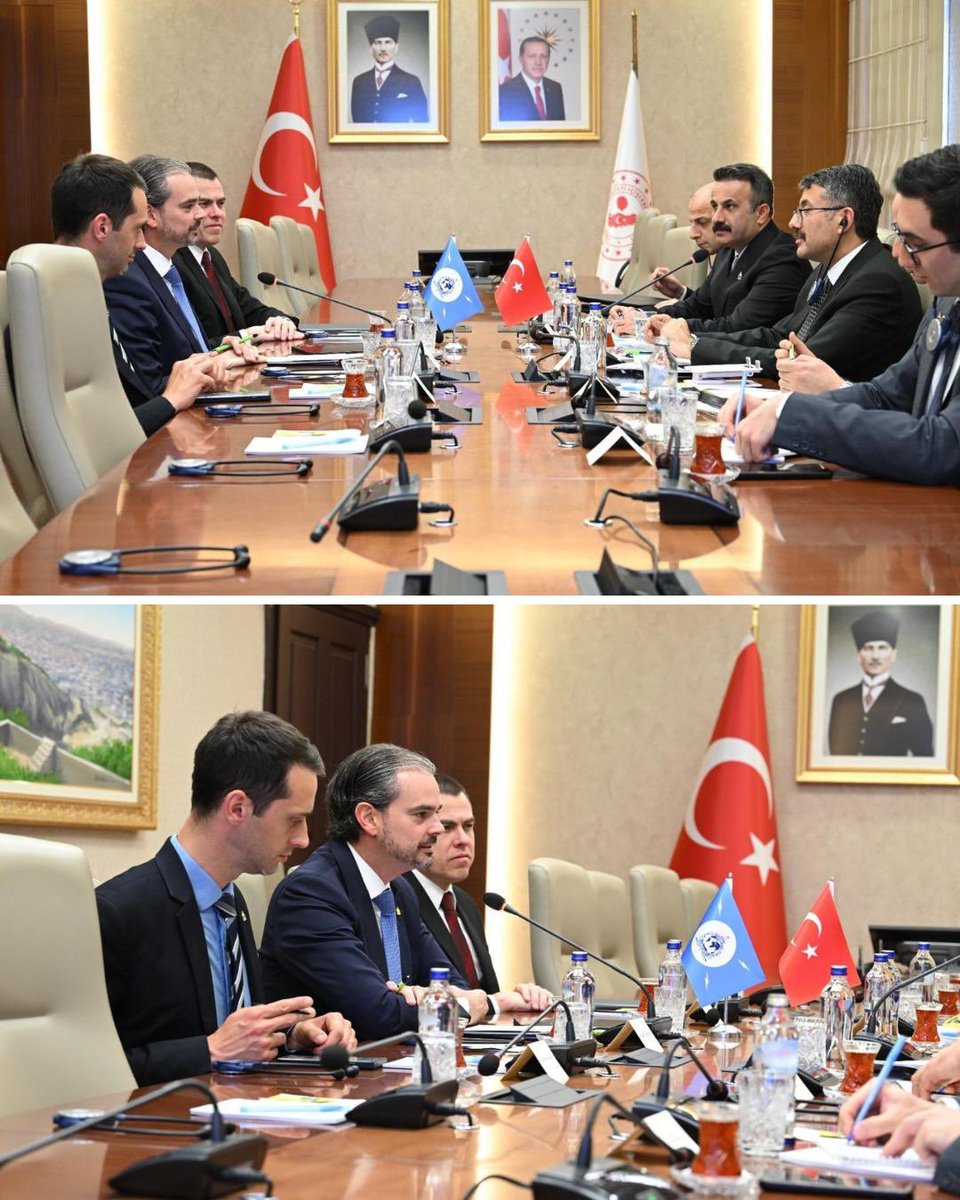
I had the pleasure of visiting Türkiye 🇹🇷 this week to strengthen our international police cooperation efforts.
I was pleased to meet with the new head of the Turkish National Police, Director General of Security Ali Fidan and Deputy Minister of Interior Ali Çelik to discuss our joint commitment to combating transnational organized crime networks.
The opportunity to visit the INTERPOL National Central Bureau (NCB) in Ankara and speak with the officers working there was also a highlight. NCBs are the critical links between police across our member countries.
Türkiye ranks among our top countries for contributing law enforcement data – providing a strong foundation for identifying links that would otherwise remain undetected across borders.
A powerful example of this was through our Identify Me campaign, when a Russian citizen who died in Spain in 2005 was successfully identified 20 years later through a fingerprint match with a national database in Türkiye.
Together, we continue to build the connections that keep communities safe worldwide.
My sincere thanks to Executive Committee Delegate for Europe Mustafa Serkan Sabanca, and all my Turkish hosts, for the warm welcome and constructive discussions.
A productive visit from Vice President and Minister of Interior of the Republic of Serbia, Ivica Dačić to INTERPOL headquarters.
Our discussions focused on how INTERPOL can better support Serbia in addressing its most pressing transnational organized crime threats, particularly in combating drug trafficking.
It was also an opportunity to brief the Vice President and his delegation on key INTERPOL operations and activities as well as explore areas where we can strengthen our joint response to evolving criminal threats.
My thanks to Ireland’s Minister for Justice, Home Affairs and Migration Jim O’Callaghan and An Garda Síochána Commissioner Justin Kelly, for the warm welcome and productive discussions in Dublin.
It was Ireland who provided the first Director of INTERPOL’s Financial Crime and Anti-Corruption Centre when it launched – and continues to send highly experienced and professional police officers to work in a range of crime areas at our General Secretariat headquarters in Lyon.
Our meeting was an opportunity for me to underline INTERPOL’s continued commitment for enhanced engagement with Ireland on combating transnational organized crime. It was also a real pleasure to meet with colleagues working at INTERPOL’s National Central Bureau in Dublin and learn more about their daily activities.
During my mission to Ireland, I was also honoured to address the European Anti-Financial Crime Summit, at a time when the fight against financial crime has never been more urgent.
What's striking is how these crimes have evolved - investment fraud, business email compromise and scam centres are now sophisticated, cross-border operations that exploit AI, identity theft and vulnerable populations, including refugees.
Our response must be equally global and coordinated.
Through initiatives like I-GRIP, since 2024 INTERPOL has supported member countries in more than 1,500 transnational fraud cases in lost assets valued at USD 1.1 billion.
And through our Silver Notice pilot we are now helping law enforcement target criminal assets and profits rather than just suspects.
But law enforcement cannot win this alone. The private sector sits at the centre of this threat, and practical cooperation is what makes recovery possible.
The tools exist. The partnerships are forming. What matters now is sustaining the momentum.
This case marks the first time a suspect has been arrested following an identification through the Identify Me campaign. It represents a major milestone and a powerful example of the impact this initiative can achieve.
To the families still waiting for answers: we remain fully committed to supporting investigations that not only restore identities to victims, but also generate new leads and bring those responsible to justice.
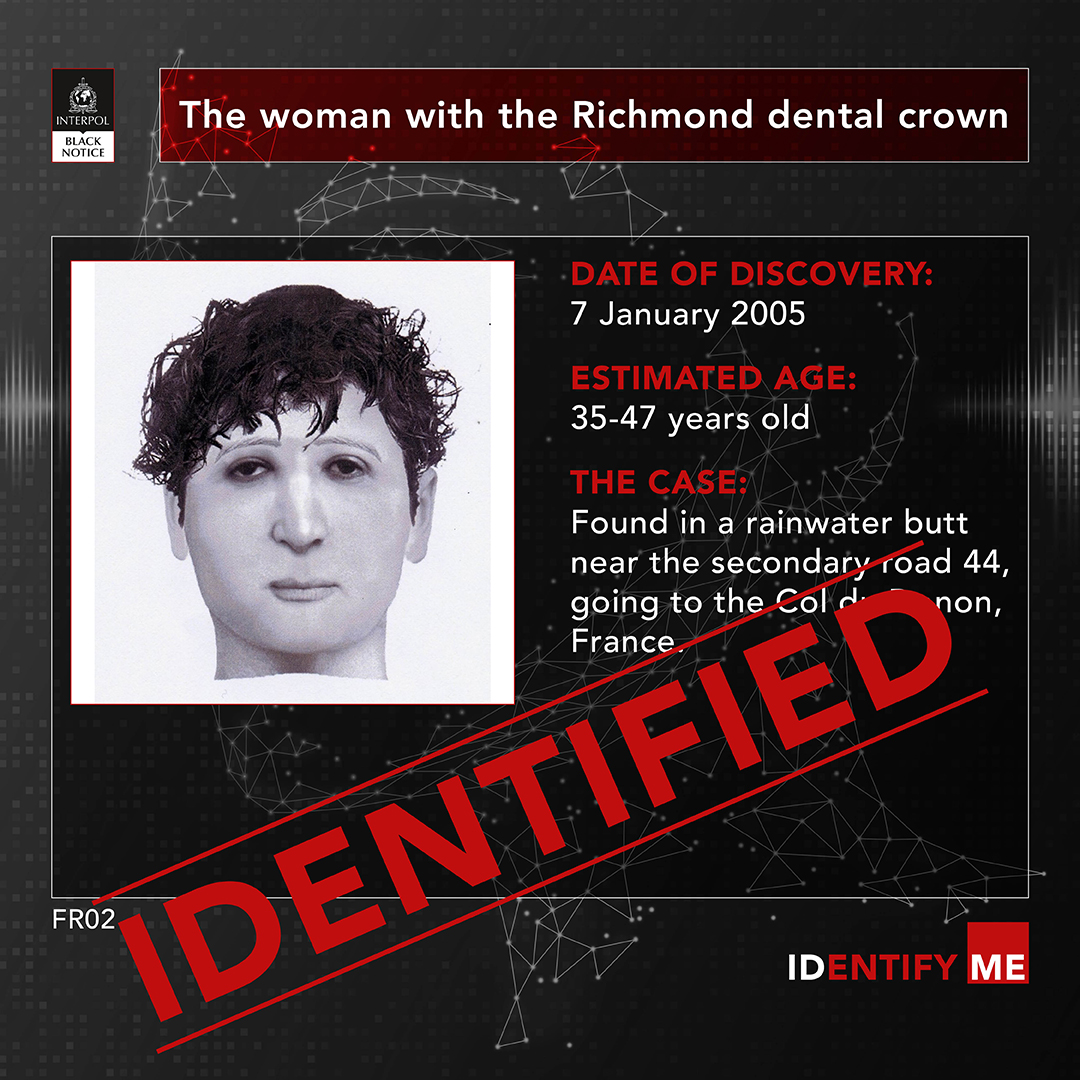
Her name was Hakima Boukerouis.
Her remains were found in a rainwater collector in the French village of Saint-Quirin. She is believed to have died between September and October 2004.
Thanks to DNA familial searching, French authorities have now confirmed her identity and arrested a suspect linked to her death.
This case marks the fifth successful identification linked to #IdentifyMe — a public appeal for information on cold cases. The initiative also provides an opportunity for investigators to review and update case files, with renewed calls for international cooperation and sharing of forensic information.
Read more ➡️🔗: https://t.co/sDvJOPamud