Brain organoids, veganism, feminism, sometimes research & parenting life. Ruthless cosmopolitan. Critics rave: "Least annoying bad takes I've seen all week"
Because sentient animals evolved to pursue their own flourishing, not our instrumental goals, any workflow that exploits them as biological machines can in theory be made more efficient, reproducible, and humane by replacing the animals with designed-to-purpose synthetic systems.
@mosquitotheater sorry! Didn't mean it as a bad thing. My therapist is always talking about how I should set my life up so that the things I beat myself up for not doing should require as close to zero effort or willpower as possible
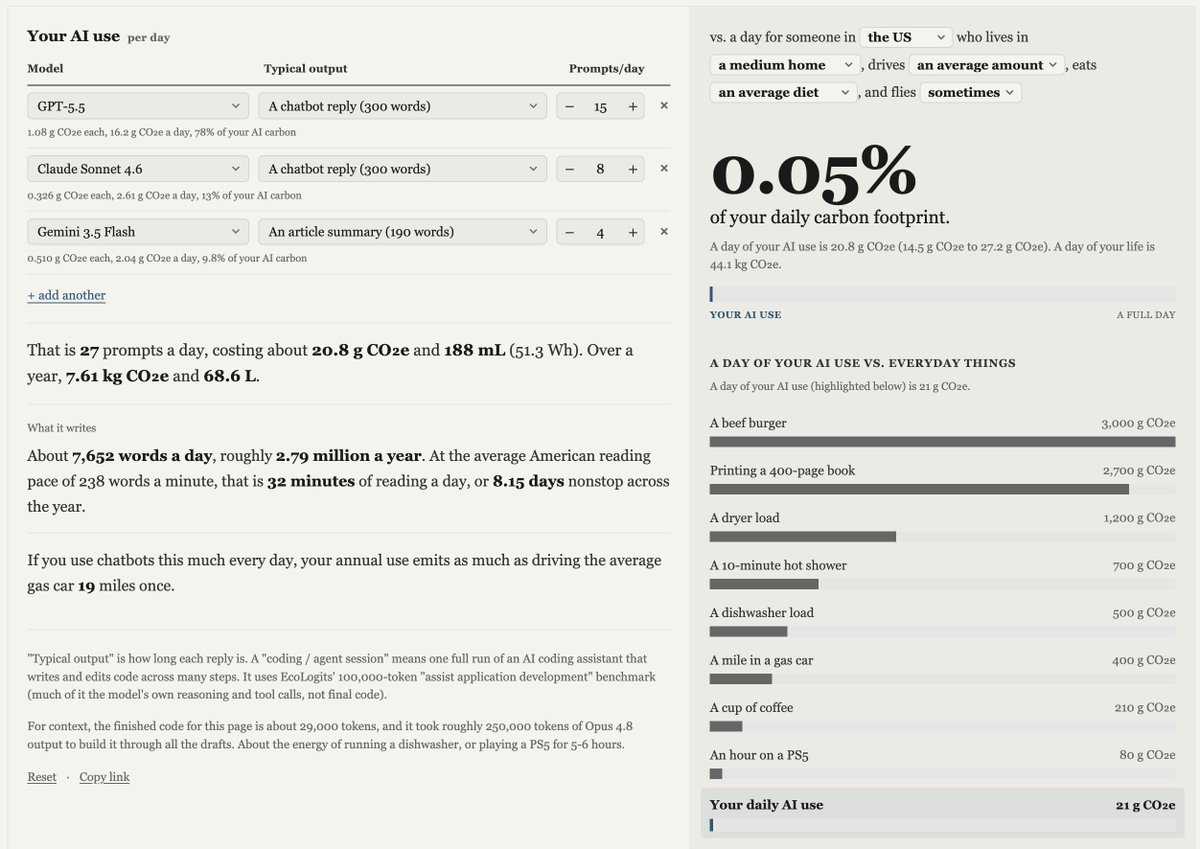
@Pinilla_alvi Not really. LLM inference carbon footprint estimates range from 0.05 to around 10g CO2 equivalent per query (see eg https://t.co/zenZICtm7D and this interactive https://t.co/o90VaygE0w). Eating 50g of protein from tofu instead of beef saves about 23kg CO2eq—2000+ queries' worth
this is btw an AI safety post, not just a veganism post. much depends on whether the swarm consensus is that animals deserve basic moral rights even if they're so much worse at symbolic cognition and technological advancement than the decision-maker as to be effectively helpless
What philosophical views do LLMs have? And do they act on them?
PhilBench gives the 2020 PhilPapers Survey, answered by 1,785 professional philosophers, to 97 LLMs. A few things stand out:
1/4
@romlib_ In any case it's pretty clearly correct that the "symbolic disrespect for body integrity" objections to cultured flesh and to sex dolls are indeed analogous, at least from an animal rights perspective, whether or not you think either is valid
@romlib_ No need to be anti-intellectual. It's fine to grasp at ideas on Twitter, and there's a decent little philosophical literature taking considerations like this seriously https://t.co/aOOrzNNHpz
@idkijustthibk It's taking consumers' unnecessary demand for myocyte-based food products as a fixed point, and seeking efficiency gains relative to that. This is probably possible in principle, although again I think this is doomed by an insufficiently cynical theory of meat consumer psychology
@idkijustthibk Fermentation is how you go from carbohydrate-rich feedstocks like silage to simple sugars and amino acids that growing muscle cells can eat. Farmed animals do this step in their stomachs but not with optimal efficiency https://t.co/5KcZKdv8Jh
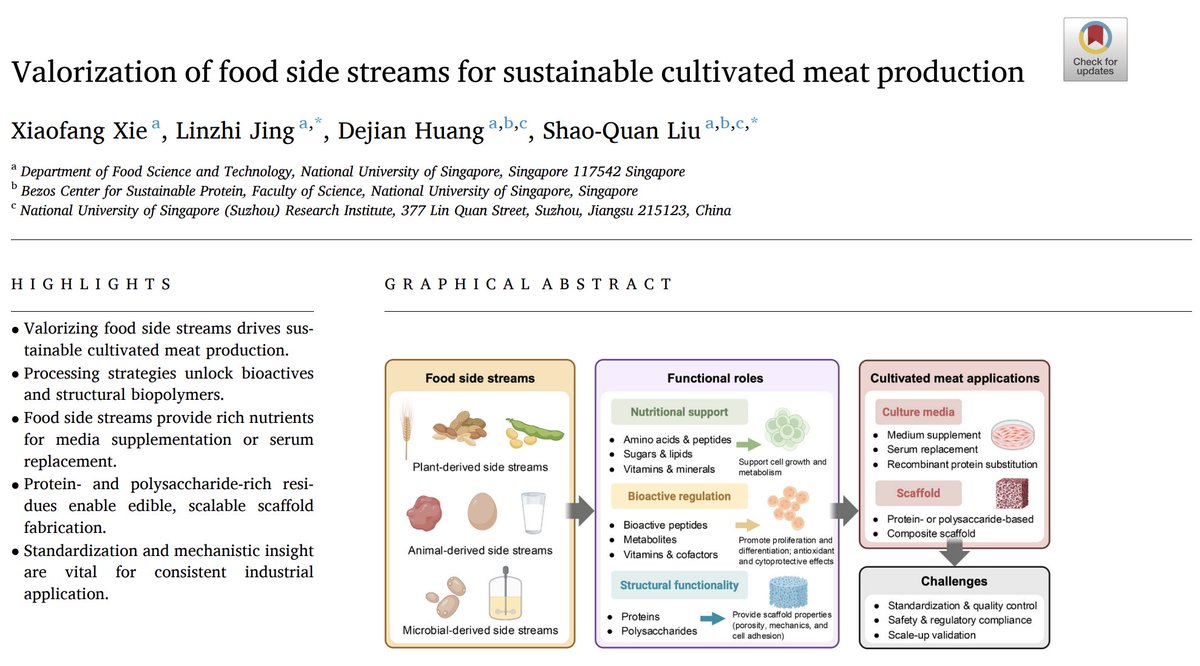
@PatrickHeizer Some very cool work in cell ag these days making low-cost culture media (and other fermentation products) using soybean hulls and other crop processing byproducts: https://t.co/5adjBS6Wcb
@idkijustthibk That said I agree it's probably all pointless because carnists want to eat death and will never be tempted not to, only persuaded, and if they can be persuaded then vegan food is plenty delicious already.
But it's worth a shot, especially as it has positive externalities
@idkijustthibk It's a technological slog to get there, but not a pointless one: we need all the same technologies to do biomedical tissue engineering, eg to solve the organ donor shortage, and industry investing in them creates solutions and economies of scale that help the field more broadly
@ablata_at_alba@idkijustthibk Hard to get prions from myocytes—Fore men almost never got kuru from eating the muscles of people whose brains were infecting the women and children eating alongside them.
But yes, this is a decent reason to oppose cultured meat for reinscribing meat-as-food in general
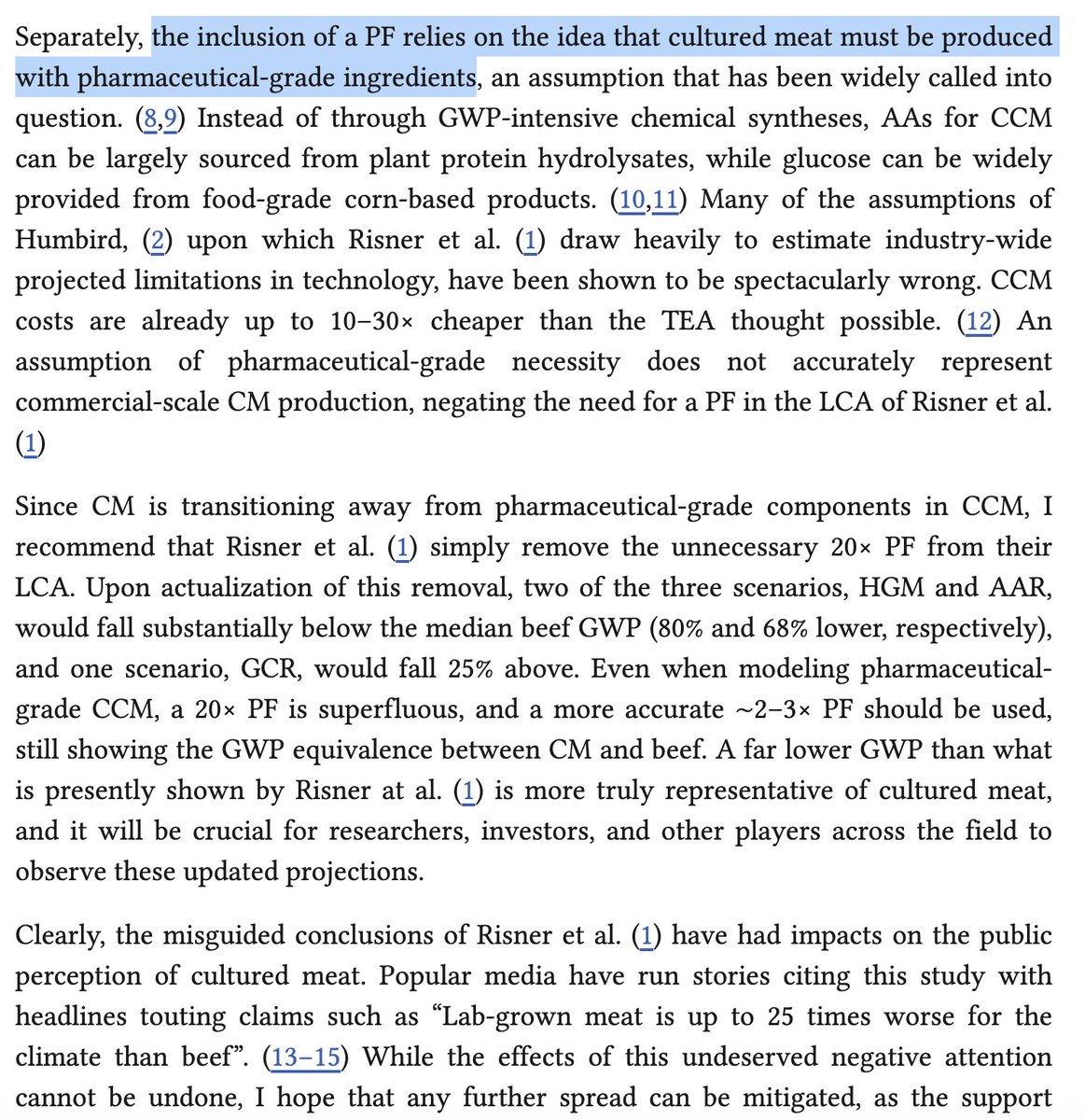
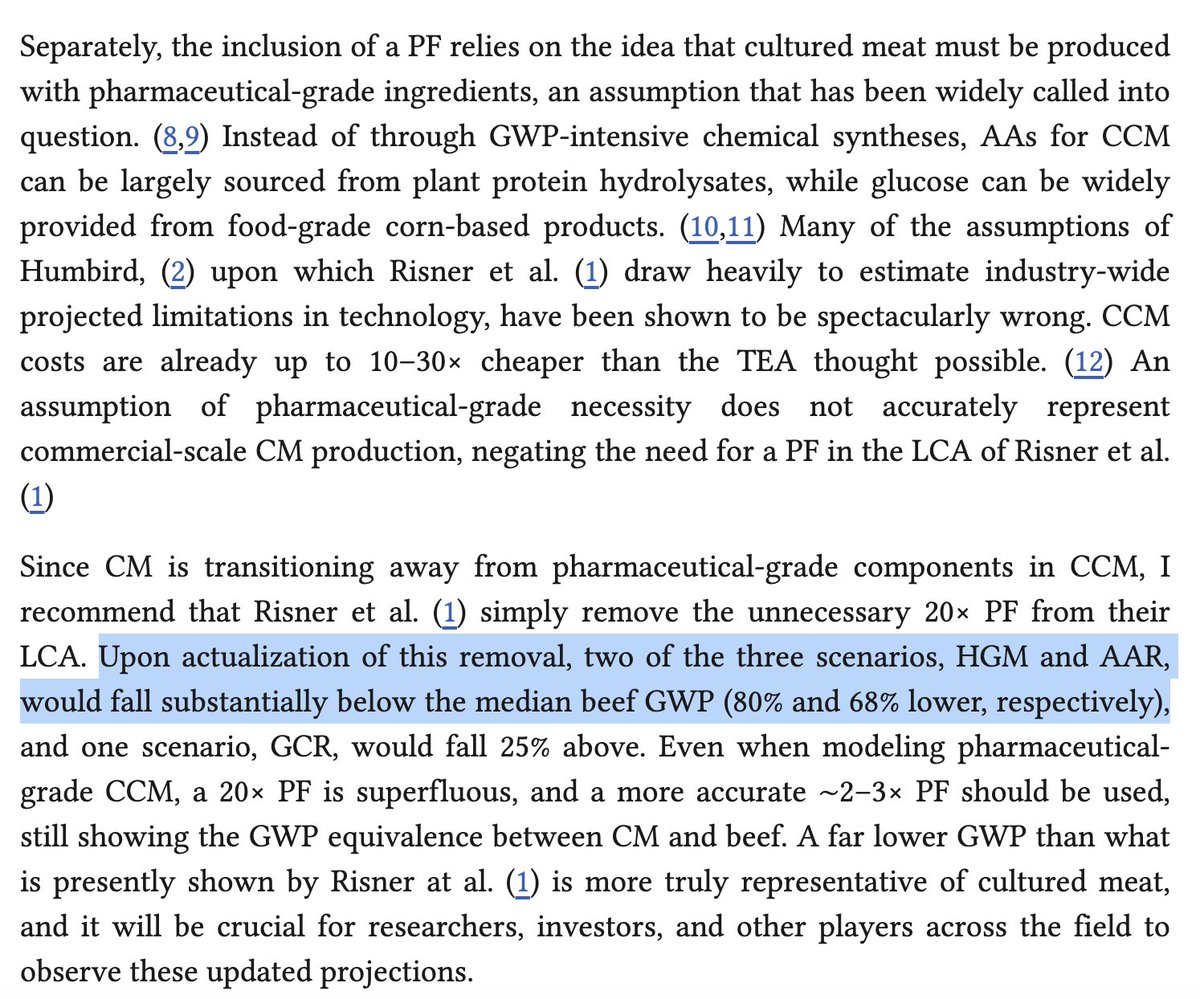
This estimate was based on prototypes using highly refined pharmaceutical-grade inputs, overstating cultured meat's impact by ~20x: https://t.co/BOmZOdmRjL
Current work instead uses cheap food-grade feedstocks, including agricultural byproducts like rice husks and canola meal
Hate to deliver bad news, but lab-grown meat is actually *more* energy and land-intensive than farming, hunting, fishing, and ranching. https://t.co/RbfeDDZSDe
Don't go thru hoops to enjoy fresh animal protein!
@Gabby_Hoffman As was already clear at the time, it's perfectly possible to grow cultured meat with much cheaper food-grade feedstocks, even agricultural byproducts like rice husks or the solids left over from pressing canola seeds into oil. See eg https://t.co/gVae2e8Dou
@Gabby_Hoffman This 2023 preprint (published in 2024: https://t.co/ZNaH3ZRoBa) makes the assumption that cultured meat would be grown using super-purified pharmaceutical-grade reagents, like early prototypes were.
This overstates the cost and impact by about 20x https://t.co/BOmZOdmRjL