I haven’t gotten such kind of support before
Not even from the main stream media where I did several interviews related to kidney failure
Kenyans on Twitter have decided to stand with me, give me hope and encourage me to keep fighting ❤️
Phone number:0795526072 (Mary Githinji)
Paybill:891300
Account:142489
Mchanga Link: https://t.co/wT3y4hQvcp
#SaveMaryWanjiku
There’s a reason they won’t push this as Grand Coalition, because they know very well this is the kind of coalition that has the potential to serve Kenyans, not their interests.
A Maraga, Omtatah and Sifuna led government has the potential to right so many wrongs in this country. That is exactly why the conversation will quickly shift to who can bring votes, who has numbers and who is “electable”, not because they care about Kenya but because they need politicians they can control and who will protect the very system that has looted this country for decades.
This idea that we need Person A, B or C because they will “bring votes” needs to end.
Go out there and campaign for the candidate you believe in, talk to your family, talk to your cousins, talk to your grandparents, form groups, have conversations, convince people… this is how democracies are won.
No one has a monopoly on votes in this country. As someone once said, THE VOTER IS THE KINGMAKER!!
Why are we waiting for the same political class that helped ruin this country to tell us which direction Kenya should take? Until we understand that the opposition is not a group of wealthy politicians fighting each other but you, the people, demanding better leadership, we will keep surrendering our power to those who have never had our interests at heart.
WANTAM!!
Day 8 of #RemindThem
Amputated as a result of a gunshot wound, a shot fired by William Ruto's killer militia.
His crime? Only asking to be heard.
#RutoMustGo
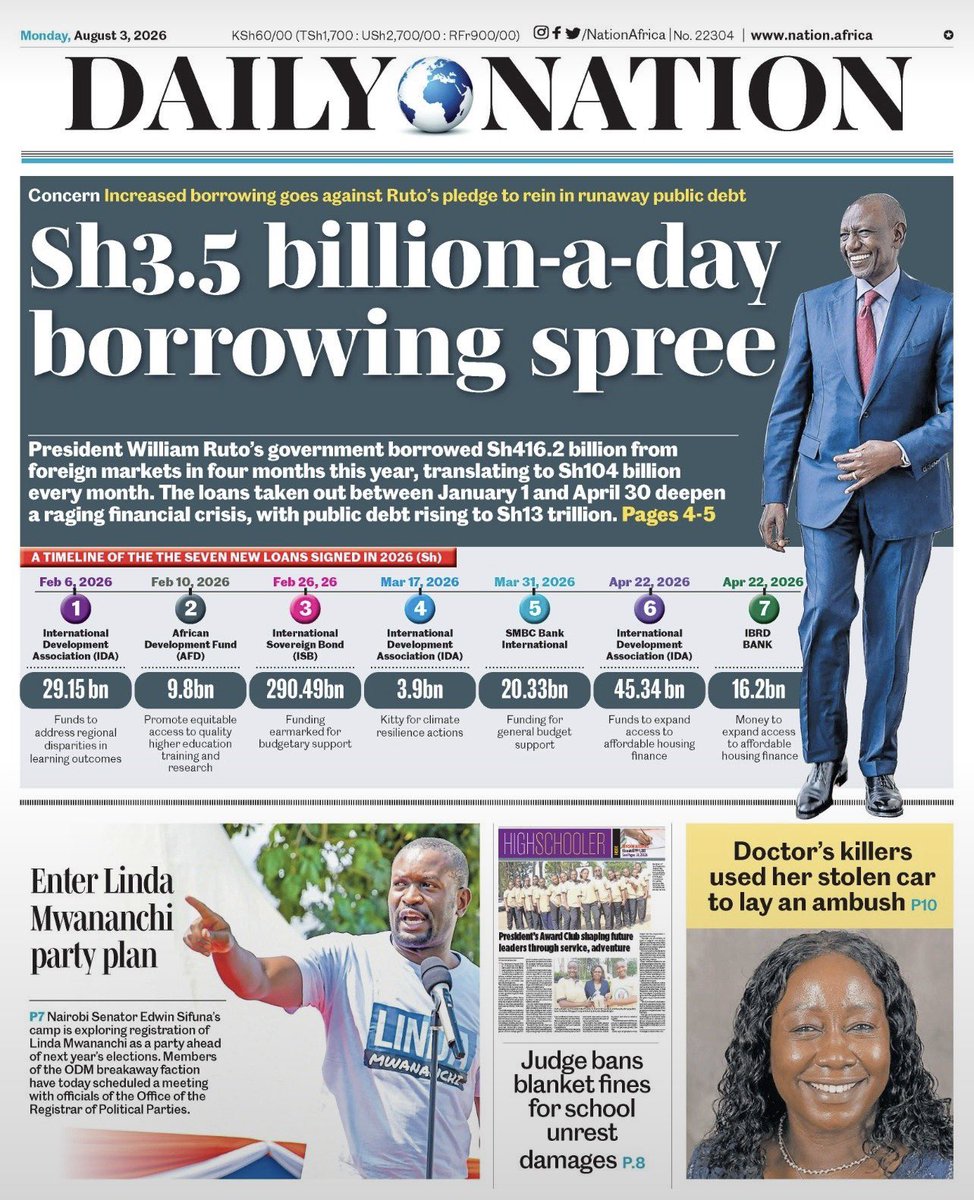
Kenya’s Ksh 12.8 Trillion debt trap cannot be ignored.71% of our revenues go directly 2 debt servicing,to pay off loans that Kenyans never saw or approved.ANY loan that BYPASSED Parliament is #odiousdebt.If it didn't benefit the people,the people shouldn't pay it back #DeniBandia
They need us, we don't need them.
It's our power, we can take it back.
Long Live The Revolution.
To Victory Always.
A slave that does not revolt, does not deserve pity.
Watching Ruto speak about investor confidence, economic recovery and booming opportunities sometimes feels like watching The Truman Show, where one man lives inside a carefully manufactured world and everyone surrounding him helps keep the illusion alive.
Truman wakes up each morning believing his peaceful town is real, never knowing that the houses, roads, weather, news and people around him are all part of a giant television production controlled from behind the scenes.
Ruto appears to wake up inside a similar political production, where advisers arrive with attractive charts, ministers praise economic growth, bloggers celebrate imaginary achievements and officials assure him that Kenyans are finally enjoying the fruits of his policies.
Outside that carefully managed set, businesses are closing, workers are losing jobs, traders are being buried under taxes and people who once supported entire families are now borrowing money for food, rent and school fees.
In Truman’s world, his wife, best friend, neighbours and colleagues are actors who know the truth but continue playing their roles, smiling at him and repeating reassuring lines whenever he begins suspecting that something is wrong.
Ruto has Cabinet Secretaries, economic advisers, governors, MPs and government propagandists doing exactly that, constantly telling him the economy is performing well, even when almost every Kenyan knows someone whose life has collapsed under his government.
Whenever Truman attempts to escape his artificial town, the producers create traffic jams, accidents, storms and frightening warnings meant to push him back into the comfortable lie they have built around him.
Whenever Kenyans challenge Ruto’s economic story, his government produces another excuse involving global conditions, past governments, dishonest traders, lazy young people or citizens who supposedly cannot recognise the opportunities surrounding them.
The illusion begins collapsing when Truman notices a studio light falling from the sky, people repeating the same movements and a radio station accidentally describing his exact location as he drives through town.
Ruto’s falling studio lights are the empty shops, auctioned homes, unpaid salaries, struggling schools, closed businesses and formerly comfortable Kenyans who have suddenly been reduced to begging relatives and friends for survival.
The clearest sign that the set is collapsing is that the economic success Ruto describes cannot be found anywhere outside government speeches, political rallies, State House dinners and businesses owned by people close to his administration.
The only people who appear to recognise this booming economy are Ruto, his friends, government contractors and officials whose salaries, allowances, tenders and lifestyles are protected by the same taxpayers being told to tighten their belts.
In The Truman Show, millions watching from outside understand that Truman’s world is fake, but the man living at the centre of it remains trapped inside the story created for him by people benefiting from the production.
That is Ruto’s Kenya today, a giant political studio where those surrounding the President keep reading from the investor-confidence script, even as the real country outside the cameras becomes poorer, angrier and more desperate.
The question is whether Ruto genuinely believes the production around him, or whether he knows the economy is collapsing for ordinary Kenyans and simply expects everyone to keep acting until the final credits roll.