Every year, governments collect taxes from their citizens. But where does all the money actually go?
Follow the journey of a single £/$/€ 100 bill across four countries: the UK, the US, France and Italy.
Using publicly available government data, we break down what every '100 in tax' funds, department by department, and what that share looks like across all taxpayers.
Play at: https://t.co/kL0aWHVs8l
@Logos_network@ip3studio
Grateful for this opportunity to speak to @carlrodrigues about what is important in local context:
> Sovereignty beyond just money
> Building your 'tribe'
> Local efforts like Logos London Circle
> The role of dark forests and safe spaces, and where technology matters
> Getting involved
The UK’s debt interest today is 58% higher than 2021 records. Optimistic projections say that we’ll hit £130 billion by 2030.
More than 12% of taxpayer money funds past decisions, not our present needs.
We are 39 million taxpayers in the UK. Only 4% of our yearly tax contributions reach the British civic space (libraries, parks, culture, environment).
Do you still think this doesn’t affect you or your community? Ignoring the problem won’t make the problem go away…
https://t.co/xu21gA65Xe
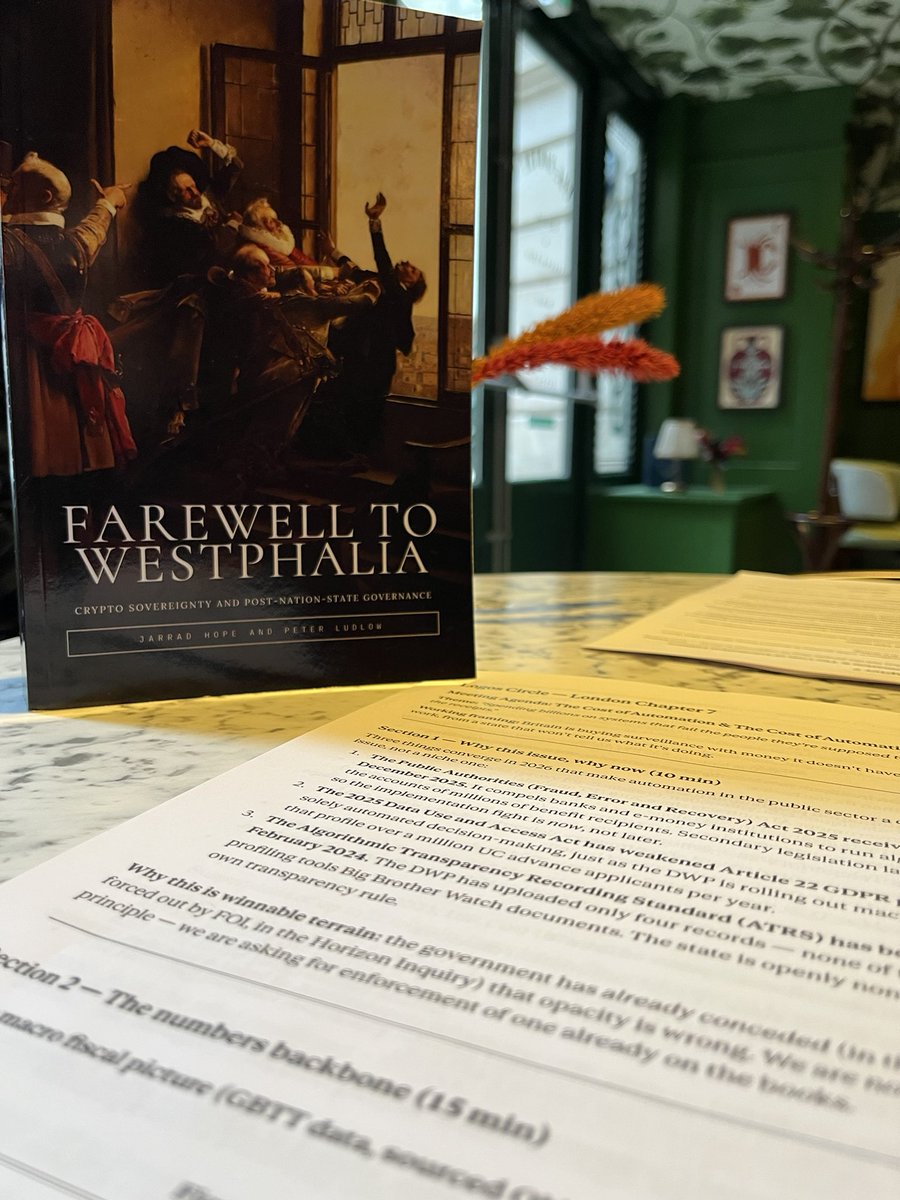
Britain is buying surveillance with tax payers money, on rails that don't work, from a state that won't tell us what it's doing.
Insights from @GreatBritishTT@UKDecline data and @BigBrotherWatch’s “Suspicion by Design” report.
Snapshot from last night’s Logos London circle - The Cost of Automation and the Cost of Automation Failure.
Privacy is a necessity.
Transparency is excellent for verifying system integrity but catastrophic for protecting individual safety.
Onchain fingerprint permanence, economic exploitation, AI-accelerated de-anonymisation - all becomes a threat to freedom and personal safety.
Any resemblance to the Breakfast Club is purely coincidental.
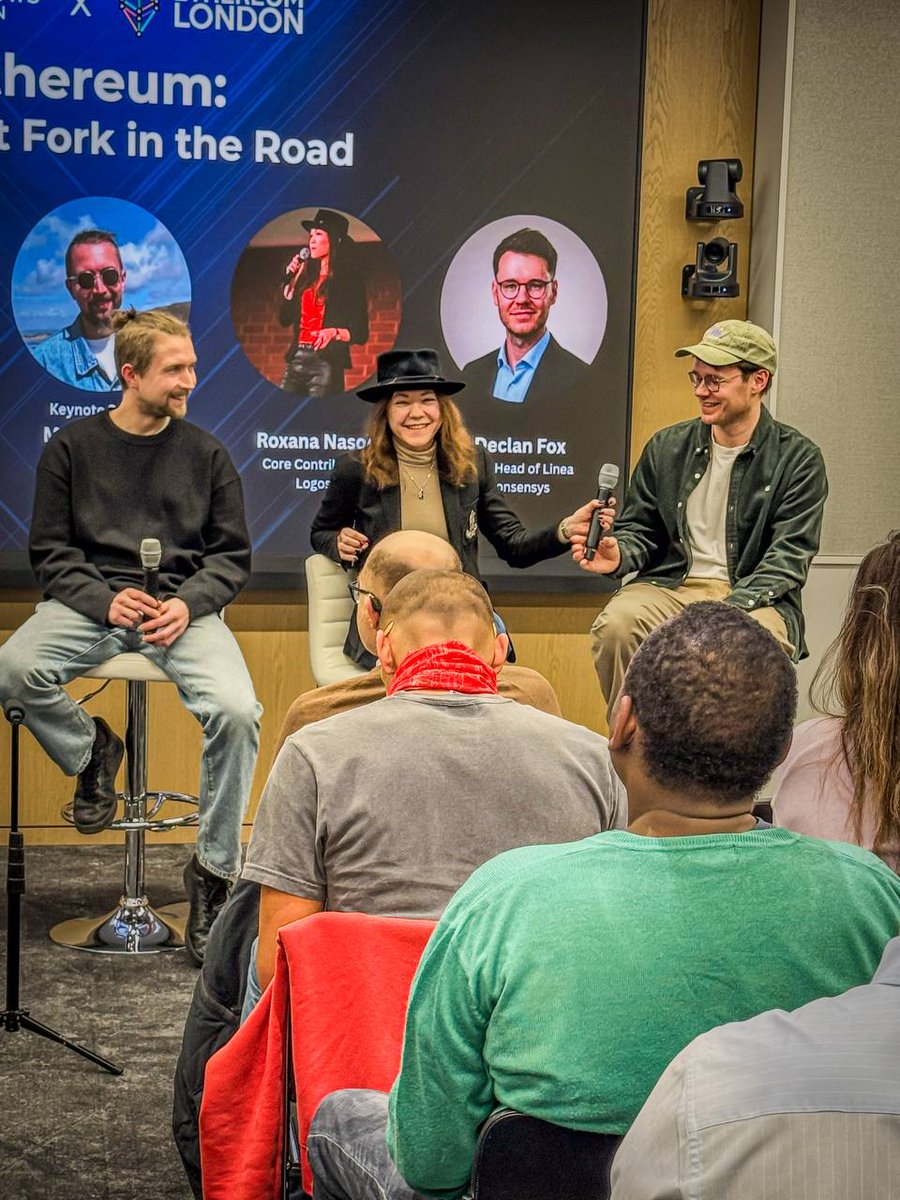
London maxxing last night. Thanks for hosting us @CML_LDN & Ade (podcast host). Great questions from the participants, hope to chat more next time. 🙏
Thanks to fellow panelists James Kev Michael and @DeclanFox14
What’s next for Ethereum?
After last night, one thing is clear, the future isn’t a straight line.
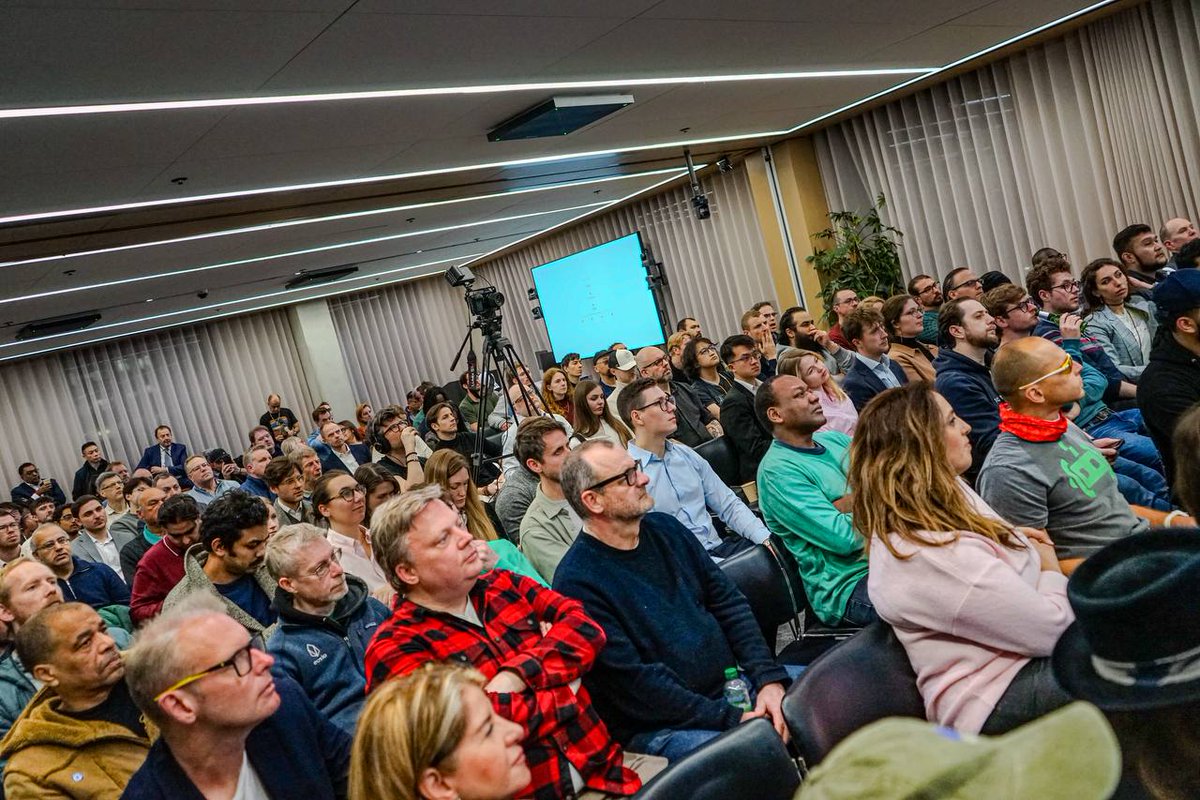
Huge thank you to everyone who joined our CML x @ETHLDN special edition.
We kicked things off with a series of sharp lightning talks, breaking down zkEVMs, post-quantum signatures, and Ethereum’s evolution from then → now → next.
Then we moved into a fireside chat, unpacking the bigger questions around Ethereum’s roadmap, protocol ossification, and long-term resilience.
Massive thanks to our speakers:
@DeclanFox14, @roxananasoi, @monsieur_kus, @kevaundray, @james_zaki for the amazing insight you brought to the room.
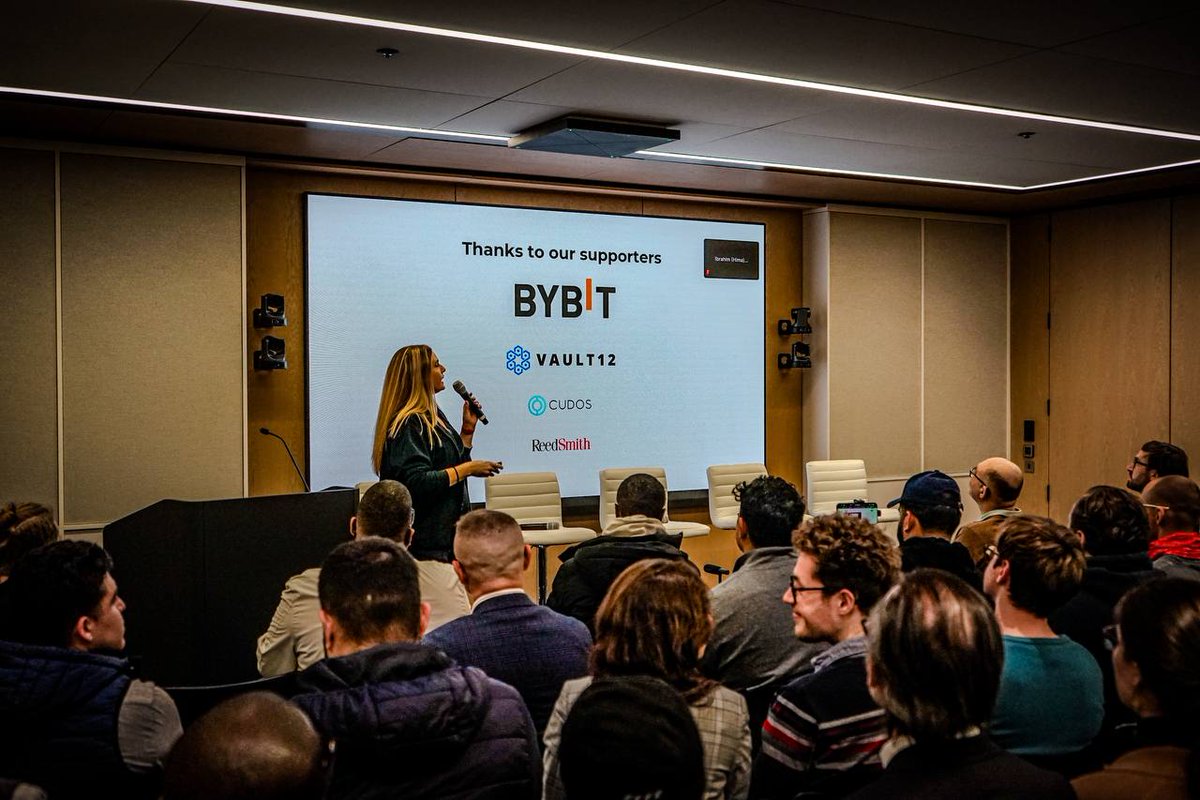
Thank you to our co-host @ETHLDN and our sponsors @Bybit_Official, @vault12, @CUDOS_, @reedsmithllp, your support makes this possible.
And of course, thank you to the entire CML team and everyone who showed up.
Now over to you:
Where do you think Ethereum is heading next?
I expected a dire essay but it’s surprisingly uplifting.
This part resonates deeply:
“[…] The bottleneck is no longer UX. It’s intent. Given that we can put this in anyone’s hands, what are we choosing to build? Who are we choosing to serve?”
https://t.co/0xlIj6aLEK
Funny and sad how privacy debates today resemble (comedian) John Cleese’s observation from 1987 about extremism: people aren't just choosing sides, they're looking for a feeling of moral certainty (feeling righteous).
It’s tempting to simplify privacy into black-and-white terms: either you're pro-privacy (the good guy), or an ignorant to privacy (the villain). While sacrificing nuance for self-righteousness, and creating a fake clarity.
Privacy is messy. Helping people to understand the invisible threats around us is a journey. Privacy-enhancing tech and tooling aren't simple or user-friendly.
And so, perhaps it's time to acknowledge the difficult trade-offs, and navigate between 'absolute privacy' and 'absolute transparency'. Nailing this dialogue with real solutions is where real progress happens.
@pierrepinna@web3privacy@matrixdotorg@ipfconline1
Another year. Another reminder that we occupy our minds with noise, and forget about the chaos that's coming for all of us.
In this world where even our own thoughts are owned by an algorithm, the fight for privacy is very much still relevant!
There's this disparity between tech and systems adopting the tech that hinders progress, preventing us from advancing as humanity.
I've seen it first hand in healthcare and finance.
The tech is always faster than the adoption.
Software code is clean.
Legal code is messy.
@Kieranleehill@ProjectEurope_ Throwing in the UK, notable for: DeepMind (AI), Rolls Royce (engines), ARM (processors), Darktrace (cyber), The Sage Group (software), Oxford Nanopore (biotech), Dyson (consumer tech), etc.
@grok did a great job at finding some of the top European companies, as well. 👏
SBF strategy: run an absolute scam but hedge occasionally into AI startups because the narrative among Silicon Valley techies is all around effective altruism and well, "safe AI" and "AI alignment" just fit the bill.
All eyes on OpenAI. Meanwhile Menlo Ventures, one of the oldest VC firms in Silicon Valley announces closing of $1.35 billion in new capital to be invested in Artificial Intelligence, via its flagship venture fund (Menlo XVI), Menlo Inflection III fund & affiliated funds.
The recent developments with OpenAI's governance and management have clearly sent ripples through the tech-sphere. We're seeing major PR stunts unfolded, highlighting intricate power plays among tech giants. This move, seen by insiders as a strategic display of power, hints at potential upheavals in corporate boardrooms. (wink wink)
What we can immediately grasp is that the central figure in this dramaplay appears to be leveraging their influence to prove a point about their strength and backing in the industry.
While long-term implications of this move are yet to be fully understood, it's crystal clear that two outcomes were at play here:
a) The worst-case scenario involving a complete acquisition by a major player like Microsoft.
b) The best outcome seeing a reshuffling of board members, altering the power dynamics within the company.
Competitors, notably Google and Elon Musk, can be crowned indirect beneficiaries of this situation. The instability showcased by one company often spells opportunity for its rivals. In Tech, where market dynamics are constantly shifting, such instances of perceived weakness can be a boon for competitors.
This also sheds light on the underlying tensions in transformative AI. Previously thought to be a straightforward rivalry between Elon Musk and OpenAI, the scenario has revealed deeper grudges and complex relationships. Something to watch in the months to follow...
In terms of market dominance, especially in cloud computing, Google is now emerging as a significant force. With its cloud services potentially surpassing those of Amazon Web Services (AWS), Google is steady-fast solidifying its position. The performance of its AI and cloud products, like Bard, are an emphasis on its growing influence and technological prowess.
As the story continues, the AI industry remains a landscape of relentless innovation and fierce competition. The recent events are a reminder of the ever-changing dynamics and the ongoing power and influence struggles among global tech giants, signaling a period of significant change.
Rant over.