Undergraduates were the first group to spread genetic variants of SARS-CoV-2 during the pandemic, according to a mega-analysis of more than 85,000 viral genomes
https://t.co/bvfUt1Jujw
Calgary 🇨🇦 stopped fluoridating its water in 2011.
By 2018/19, tooth decay in chidren went up.
Removing had no health benefits
Calgary has now put it back.
@sciencepolicy Je suis extrêmement heureux et honoré d'avoir reçu le Prix Trailblazer 2026 dans la catégorie « Politique d'innovation » ! Merci à tous mes étudiants et collègues qui ont soutenu mon travail.
@sciencepolicy I am incredibly pleased and honoured to have received the 2026 Trailblazer Award in Innovation Policy! Thank you to all my students and colleagues who supported my work.
New from me at the @wef: AI is only half the solution to economic growth, the other half depends on how governments support science. https://t.co/3S2XZdXpEz
@mcgillu
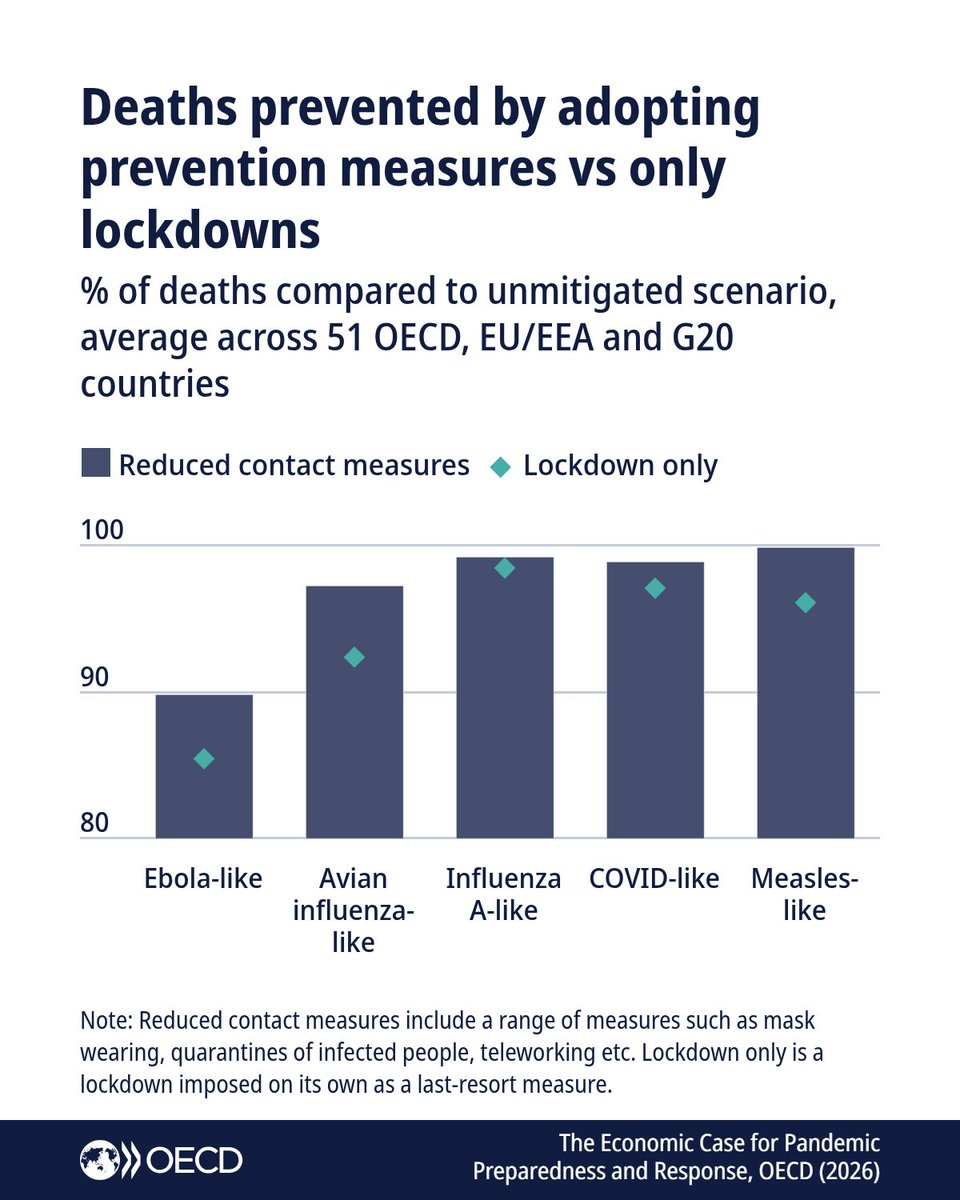
Pandemic preparedness pays off. New OECD analysis across 51 countries finds that acting early could prevent vast majority of deaths while limiting economic damage.
Relying on lockdowns as a last resort could see GDP fall by up to 28.9%.
Read more: https://t.co/p7oIHNiWVd
MIT published a brutally honest report on what AI is doing to students.
A committee of professors and students spent five months studying how AI changed learning on campus, and the findings read like a warning to every university on the planet.
Study groups are disappearing. Office hours are emptying out. Problem sets and take-home exams no longer prove anything, because AI can produce credible solutions to almost any written assignment in the undergraduate curriculum. Students who lean on chatbots lose mastery and confidence, and some slip into what the report calls cognitive surrender, reaching for AI at the first hint of struggle.
The numbers are rough. 46 percent of surveyed MIT undergrads use LLMs daily. 90 percent worry about their own overreliance. Undergrads who feel AI makes them replaceable now outnumber those who feel it makes them capable.
The committee's answer surprised me. They refused to fight AI with surveillance. The report calls AI detectors unreliable, says lockdown browsers feel like spying, and warns that policing students builds a classroom atmosphere of mutual distrust.
Instead, MIT wants to rebuild education around the things AI can't replace. That means oral exams, semester portfolios, in-person project work, and a required social component in every subject. The report even floats the idea of rethinking grades entirely, since without a GPA to optimize, much of the incentive to cheat with AI evaporates.
The committee warns professors against replacing undergrad research assistants with AI agents just because they're cheaper, because a university exists to grow people, not output.
The most famous tech school on earth admitted the machines broke its way of teaching. Its answer is more humans, not more software.
No idea how common this is, but moving to Canada gives these US manufacturers:
1. Cheaper input costs (no US tariffs)
2. Better access to foreign markets (thanks to Canada's FTAs & retaliation against US exports)
3. No consumer boycotts
@BBCWorld Shrug. US legacy automakers are in terminal decline anyways. Next move for Canada: eliminate patent protections for US pharmaceuticals added in past free trade deals. Saves approximately $10 billion a year for Canada.
Canada is at a crossroads in the development of its life sciences sector, and Ottawa's oversight is evident. By ignoring the crucial infrastructure needed for idea generation and innovation, the government risks stifling the vibrant potential that resides within our borders.
A thriving life sciences industry requires not only robust research and development initiatives but also a seamless pipeline that connects these innovations to domestic companies ready to bring them to market. Instead, we find ourselves relying heavily on foreign entities, which limits our ability to leverage homegrown talent and ideas.
The consequences of this approach are far-reaching, impacting not only economic growth but also our national capacity for innovation and self-sufficiency. Ottawa must recognize the urgency of investing in a strong, internal idea-generation and commercialization framework if Canada is to assert itself as a leader in the global life sciences arena.
Strategic policy changes and increased funding for domestic R&D can energize our life sciences sector and reduce dependency on international players. Canada's potential is immense, but without decisive action, it remains untapped—like a beating heart cut off from vital resources.
The latest from the Globe's business commentary, by E. Richard Gold: https://t.co/MRABpNDLAu
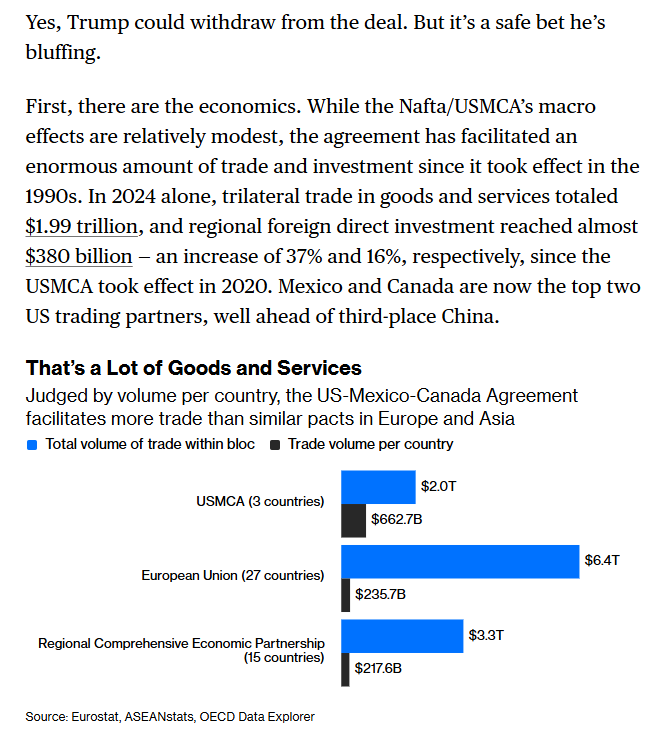
Tomorrow's the deadline for the US, Canada, & Mexico to renew USMCA (NAFTA); it'll likely be missed.
As my new @opinion piece explains, this is annoying but not catastrophic: the deal's too important to blow up - and even "Tariff Man" Trump knows it.
🎁: https://t.co/VgKymhNCKJ
This should be a warning shot for all middle powers:
- Your access to frontier AI systems is not guaranteed.
- You need to build and pool your leverage to secure access.
- A failure to do so is a threat to your R&D, economic and defensive competitiveness
@JimboStanford + fact that #CUSMA is not up for renewal, per chapter 34, until 2036. While the countries could renew now for an additional 16 years, there is no need to do so. If the US wants out, its only option is to withdraw completely, leaving Can & Mexico to continue free trade without it.
@Reuters While the countries can renew beyond 2036, they need not do so now. If President Trump does not renew, then the next administration or the one after that will.
@Reuters There is no need to renew #CUSMA now. It is in effect until 2036 unless a party withdraws on 6 months notice. If the US were to do so, it would lose free trade with both Mexico and Canada while the later continue free trade.