The Institute of Peace and Conflict Studies aims to develop an alternative and independent framework for peace and security studies in the Asia Pacific
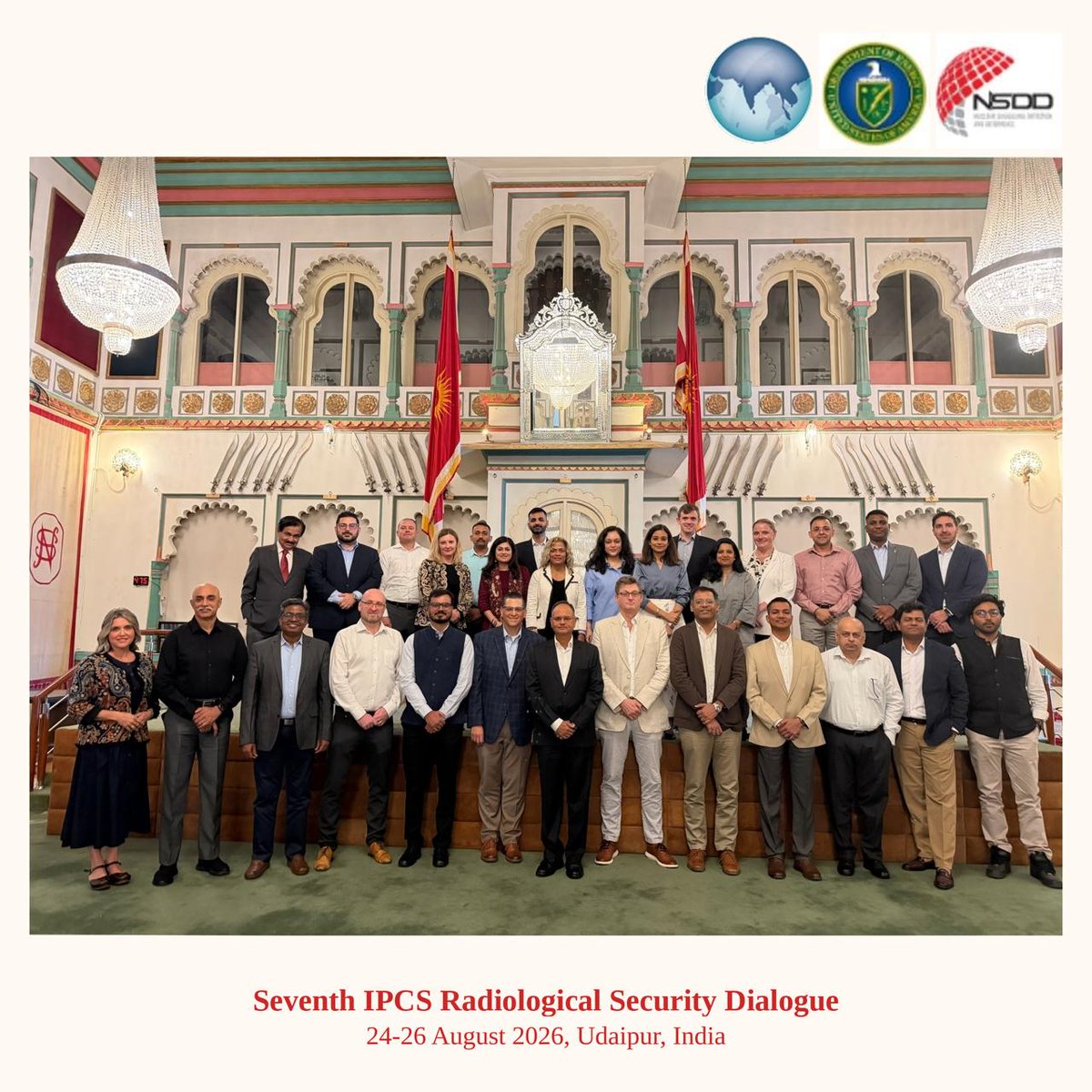
IPCS was delighted to host the 7th iteration of its Annual 🇮🇳-🇺🇸 Track 1.5 Radiological Security Dialogue on 24-26 August in Udaipur, India.
RSD's primary objective is to advance scholarly and practitioner understanding of radiological and nuclear (R/N) security.
#IPCSCommentary | “The midterm verdict shifts the balance of leverage in Washington more than it shifts its India policy.”
In view of the #USmidterm result, Ashutosh Nagda identifies the potential impact areas that India should keep an eye on.
Read: https://t.co/UDBux2w590
#IPCSArchives | 'The Legal Ramifications of Political Rhetoric: Genocide in Russia’s Invasion of Ukraine'
In light of the #ICJ's ruling on genocide in #Myanmar, read Shivangi Seth's 2022 piece on why allegations of genocide are difficult to prove.
https://t.co/t18y5DjwEa
The India–Europe Resilience Forum #IERF, set up in 2025, is a collaboration between IPCS, the Hanns Seidel Foundation India, @CSR_India & the Centre for Educational & Social Studies/@ChanakyaUni.
It aims to foster 🇮🇳🇪🇺dialogue on consequential policy issues.
@Asia_HSF
#IPCSPublication | ‘Is India-EU Tech Cooperation Overrated?’
This Policy Brief, authored by @Tapan_Bh_, examines strategic cooperation between India, EU & EU member states on
1️⃣ Defence
2️⃣ Clean energy transition, energy security & climate change.
Read: https://t.co/9uxPNwnMhC
This Policy Brief derives insight from an IPCS-HSF policy debate, ‘This House Believes India–EU Tech Cooperation is Overrated’ held in Munich on 12 Feb 2026, under the #IERF banner. The debate contextualised cooperation in current geopolitics & asked how intent can become action.
IPCS and @HSSde hosted a policy debate under the India-Europe Resilience Forum #IERF titled, “This House Believes India-EU Tech Cooperation is Overrated” on 12 February in Munich, Germany.
This closed-door policy debate examined assumptions underpinning 🇮🇳–🇪🇺 tech cooperation.
#IPCSCommentary | "India and Brazil do not need ideological affinity to be strategic partners."
Dr Marianna Albuquerque writes on why the elections were consequential for #Brazil and on the outcome’s foreign policy implications.
Read: https://t.co/7BPJU0XrFY
IPCS would like to thank Amb Rakesh Sood, Dr Manpreet Sethi, and Lt Gen DS Hooda for their initial observations on the themes of ‘language and narratives’, ‘emerging tech’, and ‘perceptions of adversarial intent’ in driving crisis behaviour.
@rakeshnms@manpreetsethi01@GenHooda
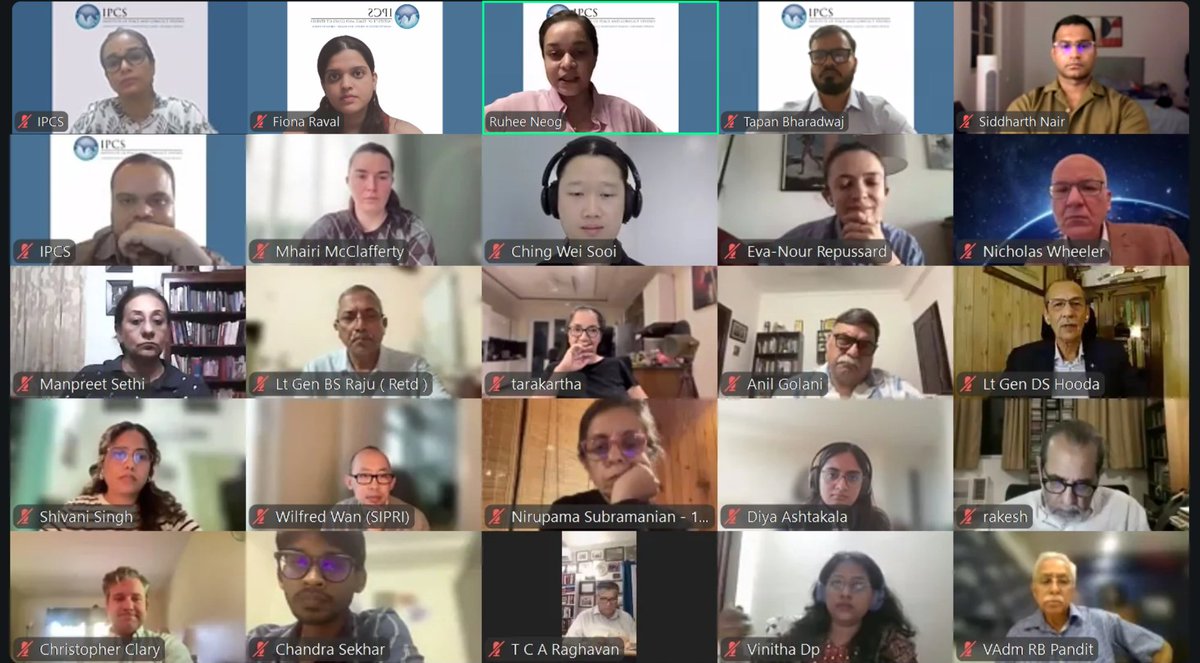
IPCS co-hosted a virtual roundtable on ‘Drivers of Escalation and Restraint in India-Pakistan Crises’ with @BASIC_int on 9 October.
The discussion explored how intent and perception shape crisis dynamics and decision-making.
We are grateful to Dr @tca_raghavan, Member, IPCS Governing Council, for his opening remarks on the purpose and logic of #Track2 diplomacy.
IPCS’ Fiona Raval opened the roundtable with scene-setting remarks & Dr Muneer Ahmed closed with key takeaways, with Ruhee Neog moderating.
#IPCSCommentary | "The military and the EAOs share a history of distrust which have flustered previous peace processes as well."
Fiona Raval (@only_fions) analyses why peace proposals by Myanmar's regime are unlikely to find any takers in the opposition.
https://t.co/k12G8pLU5O
#IPCSPublication | 'Deconstructing the Monolith: A Functional Typology of Non-State Actors in Pakistan'
Bhaavika Khanijow argues moving beyond the catch-all tag of terrorism & instead typologises non-state actors to understand violence in a region.
Read: https://t.co/zQNceBtWnY
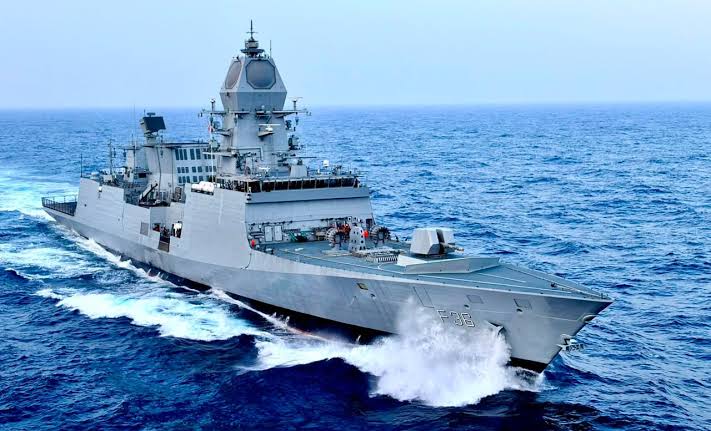
#IPCSCommentary | "As such, current Indian littoral warfare capabilities are about deterrence and defence, not manoeuvre."
@SiddharthAnilN1 argues that articulating a littoral manoeuvre in doctrine is necessary for India’s naval edge in the #IndianOcean.
https://t.co/Zqcb7BdcsA
Dr Muneer Ahmed was nominated as the 2026 GIBSA Visiting Fellow, representing IPCS at @SWPBerlin from 15 July-15 September. Among others, his research focused on instability in West Asia and its impact on🇮🇳.
This annual Fellowship was launched in 2019 and is supported by @HSSde.
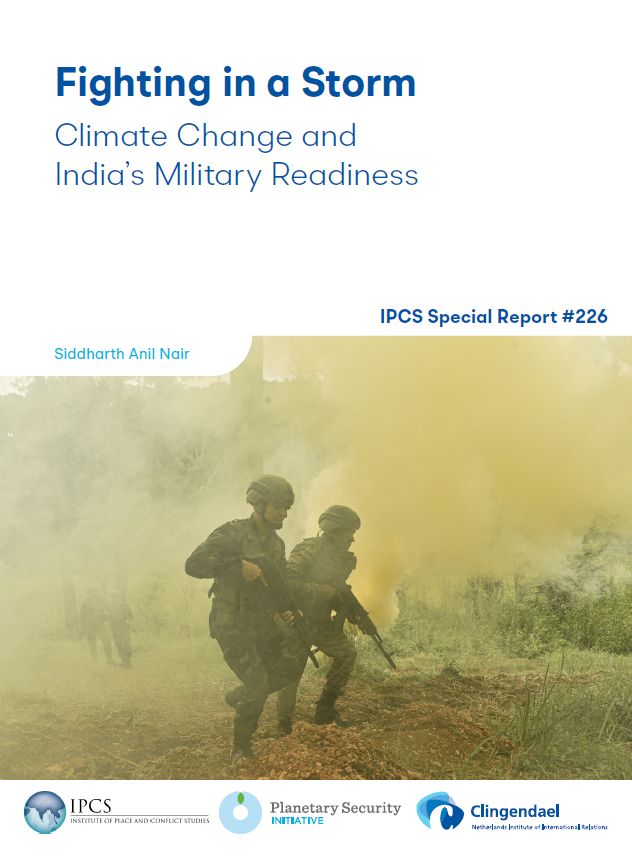
'Climate Will Change How India Fights Its Wars'
Argues former Researcher, @SiddharthAnilN1, in his latest piece.
Read:https://t.co/zM0DSTtkB5
The piece derives from Siddharth's work with IPCS' project on #ClimateSecurity, mainly his #SpecialReport.
Read:https://t.co/5Kgt5T3nsd
In his report, @SiddharthAnilN1 identifies factors shaping 🇮🇳's military readiness and how climate change affects them. He also outlines the state of institutional discourse on climate security within the Indian military.
Read the full report here: https://t.co/RuMhpGSABw
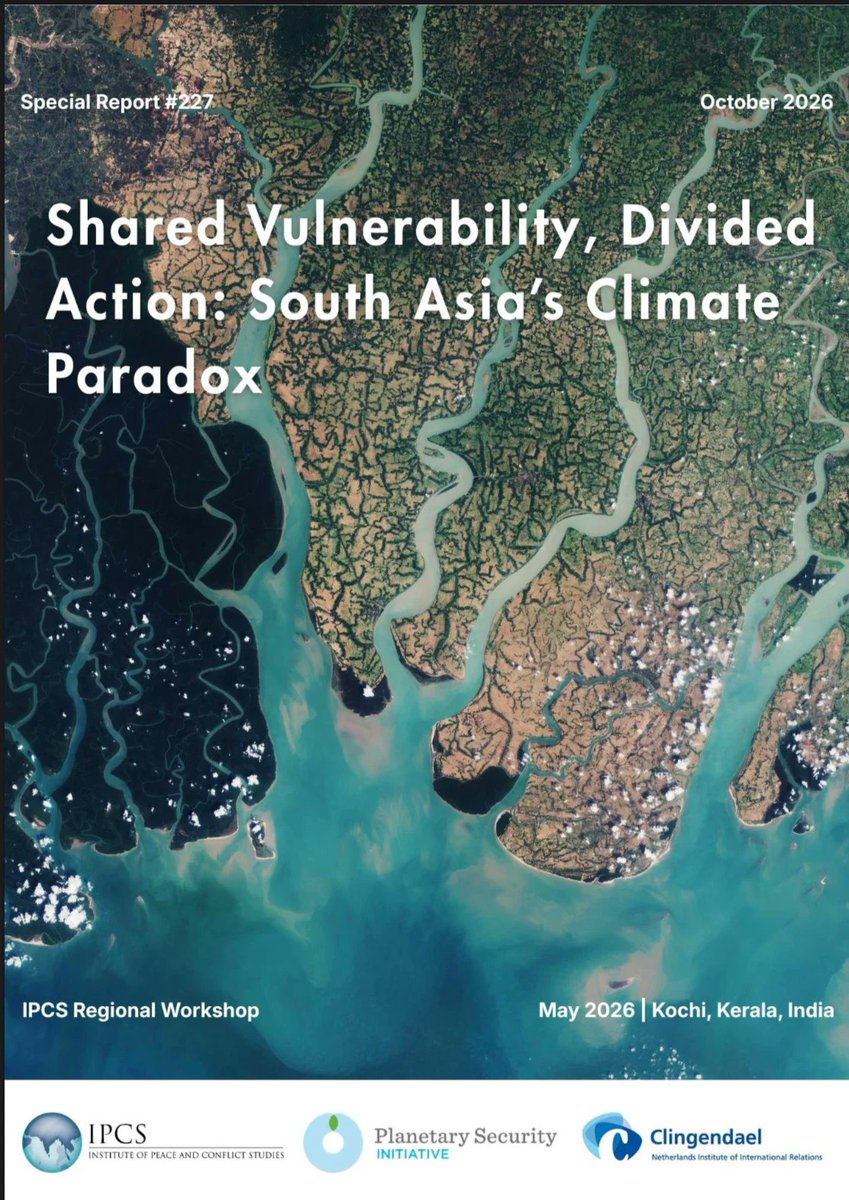
🌏 Can climate change become a catalyst for regional cooperation in South Asia?
A report by @IPCSNewDelhi and @Clingendaelorg explores how climate change interacts with geopolitics and shapes regional priorities in South Asia.
👉 Read our summary here: https://t.co/OZfGMw4ciG
#IPCSCommentary | "AfD’s foreign policy is an unresolved argument between an Atlanticist viewpoint and a Eurasian one, held together by nationalistic priority."
@nagdashutosh explains AfD's foreign policy stance in light of its recent electoral surge.
https://t.co/DiPvkv5cqV
This report is based on the discussions of a Track 1.5 Workshop on Climate Change and Geopolitics in South Asia hosted by IPCS in May 2026 in Kochi.
The report and workshop follow years of work on the security implications of climate change conducted by IPCS & @Clingendaelorg.
#IPCSPublication
IPCS' latest #SpecialReport offers 9 observations that South Asian decision-makers could use to evaluate whether new institutional designs are able to respond to the demands of climate change while accommodating regional realities.
Read: https://t.co/jEUILQtpJu
While climate change is increasingly recognised as a shared regional concern, the political and institutional conditions necessary to address it collectively are limited.
While the gap cannot be resolved, it must certainly be acknowledged, and where possible, reconciled.