polyBART: A Chemical Linguist for Polymer Property Prediction and Generative Design
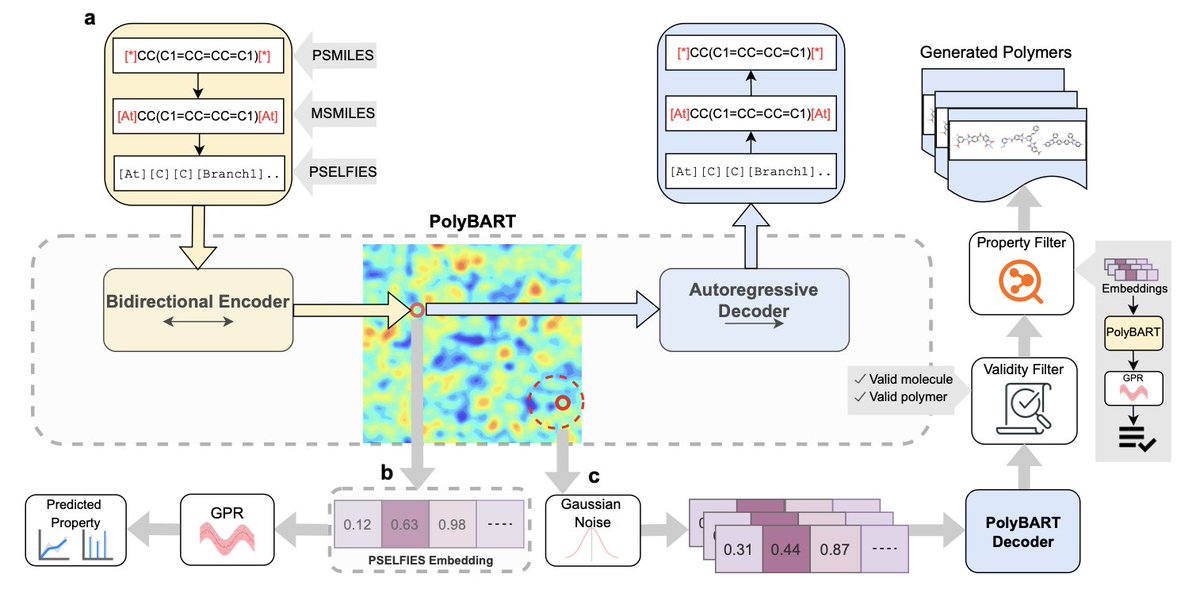
1. polyBART is a new polymer foundation model developed using a novel polymer representation called PSELFIES. This model leverages existing molecular language models to predict and generate polymers for specific applications.
2. PSELFIES ensures 100% syntactic validity in polymer strings, making it compatible with molecular language models. This allows polyBART to solve both forward (property prediction) and inverse (generative design) problems in polymer informatics.
3. The model achieves state-of-the-art results in predicting polymer properties, such as thermal and electronic characteristics, and can generate new polymer structures tailored to specific property requirements.
4. polyBART's predictive power was validated through experiments, including the first successful synthesis and testing of a polymer designed by a language model, confirming the accuracy of predictions for thermal properties.
5. A key innovation of polyBART is its generative capability. The model can generate novel polymers conditioned on desired properties, such as high thermal stability or specific electronic characteristics, opening up new avenues for polymer design.
6. The model is also able to generate polymers with synthetic accessibility in mind, filtering out compounds that would be difficult or impossible to synthesize.
7. Experimental synthesis of a polymer predicted by polyBART validated its predictions, particularly in terms of thermal stability, demonstrating the model's potential to drive real-world polymer design.
8. polyBART represents a major step forward in the use of machine learning for polymer informatics, combining property prediction and generative design into a unified framework.
📜Paper: https://t.co/APb2harM55
#polymerdesign #AIinMaterials #machinelearning #materialsengineering #polymerinformatics
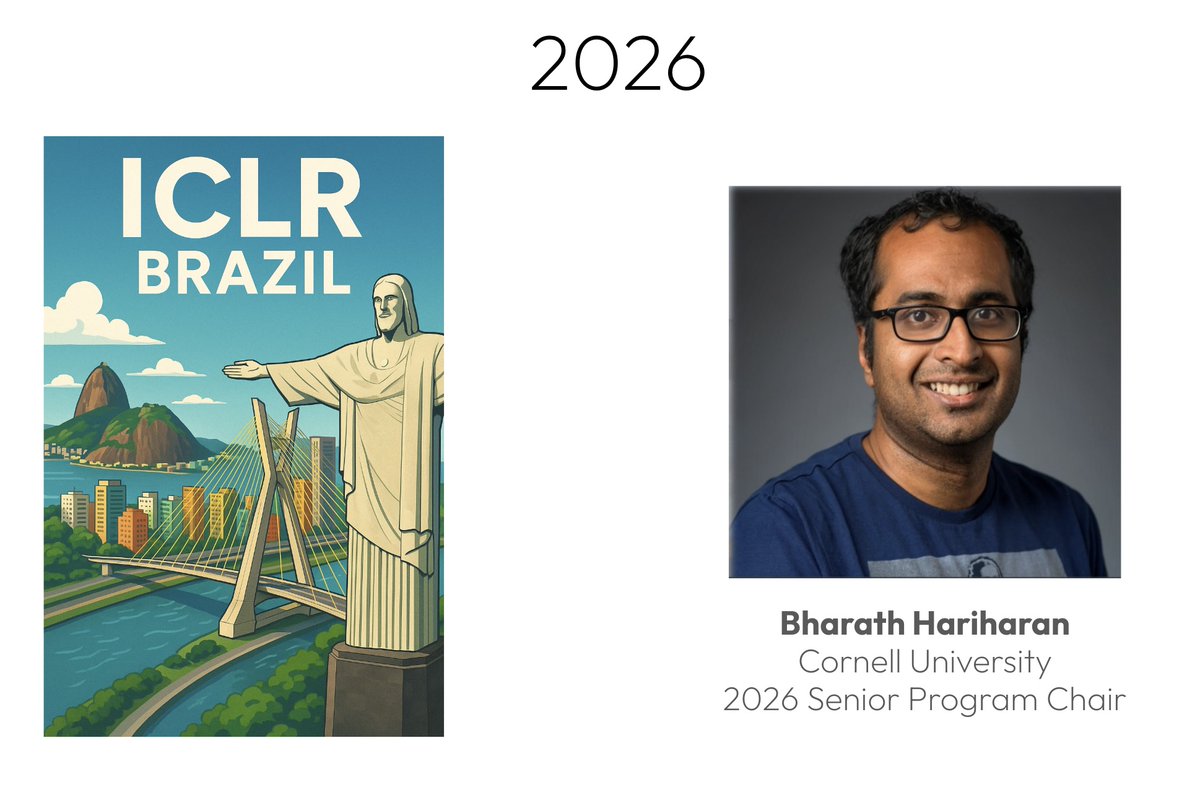
That's a wrap for #ICLR2025! See you all next year in Brazil! Please all welcome @BharathHarihar3 as the new Senior Program Chair! (With @cvondrick continuing on as General Chair.)
🔊 Join the Turing-Roche Translational Science Methods Club: Multimodal Data Integration on 23rd May, 3.30pm-5pm BST, to learn about integrating multimodal data in medical applications and using Python's Captum for neuroimaging analysis.
Register via https://t.co/NGsdGxNUcR.
@NLRG_ Please see if the following papers help
1. https://t.co/yAgxS5PUrC
2. https://t.co/TnSNscWFSV
3. https://t.co/NUDS0yQFgp
4. https://t.co/Xkc1P2dRwX
5. https://t.co/oOt933UmxN
6. https://t.co/st6MhojKtg
The “Women in Machine Learning and Robotics Luncheon” is happening tomorrow (Nov 10th) at 12:15 GMT! Join us for this social event to celebrate women researchers at #CoRL2021 which will also include a short panel with Dorsa Sadigh (@DorsaSadigh) and Chelsea Finn (@chelseabfinn).
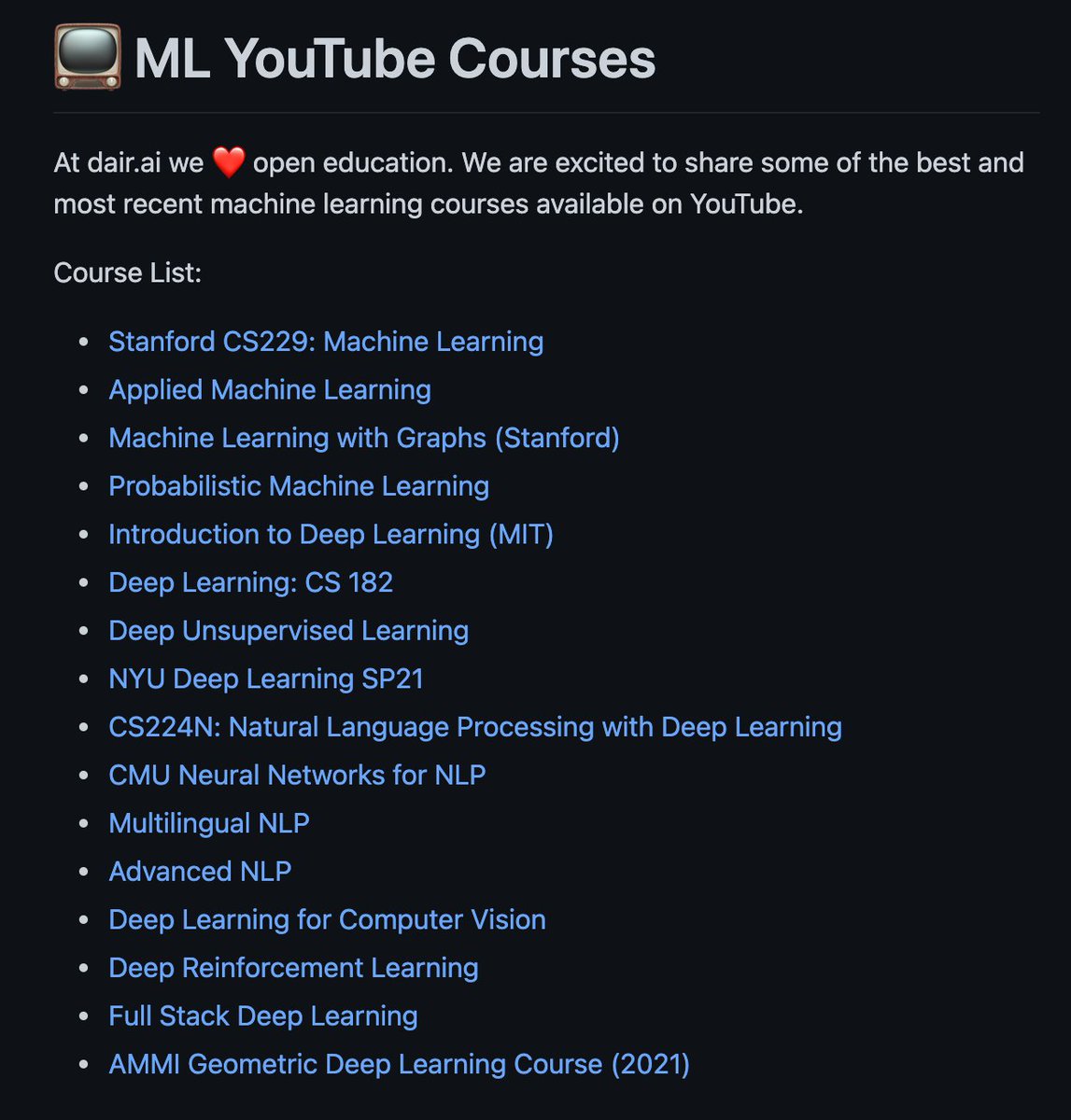
🎓 ML YouTube Courses 🎓
In case you missed it, I maintain a highly-curated collection of some of the best and latest machine learning courses available on YouTube. So much good free content to get started with or to catch up on.
https://t.co/C1Aw41PMEm
Applications are now open to participate in this year’s Women in Machine Learning (#WiML2021) Workshop cohosted with @NeurIPSConf as a volunteer, social host, or poster mentor/mentee!
To be considered, please fill out this form before November 5, 2021: https://t.co/MciUNv1WnF.
With Qiskit Runtime, application research and development is getting easier. The IBM Quantum Challenge Fall 2021 this year has an application theme. I recommend all of you to participate! Registration: https://t.co/lK21Ch728u
Who's up for the IBM #Quantum fall challenge? 🙋🍂
Join us on a 10-day challenge (Oct 27 - Nov 5), in collaboration with @UTokyo_News + @KeioGlobal University, to learn about the industry applications of quantum computing. https://t.co/GHAwK8vjza