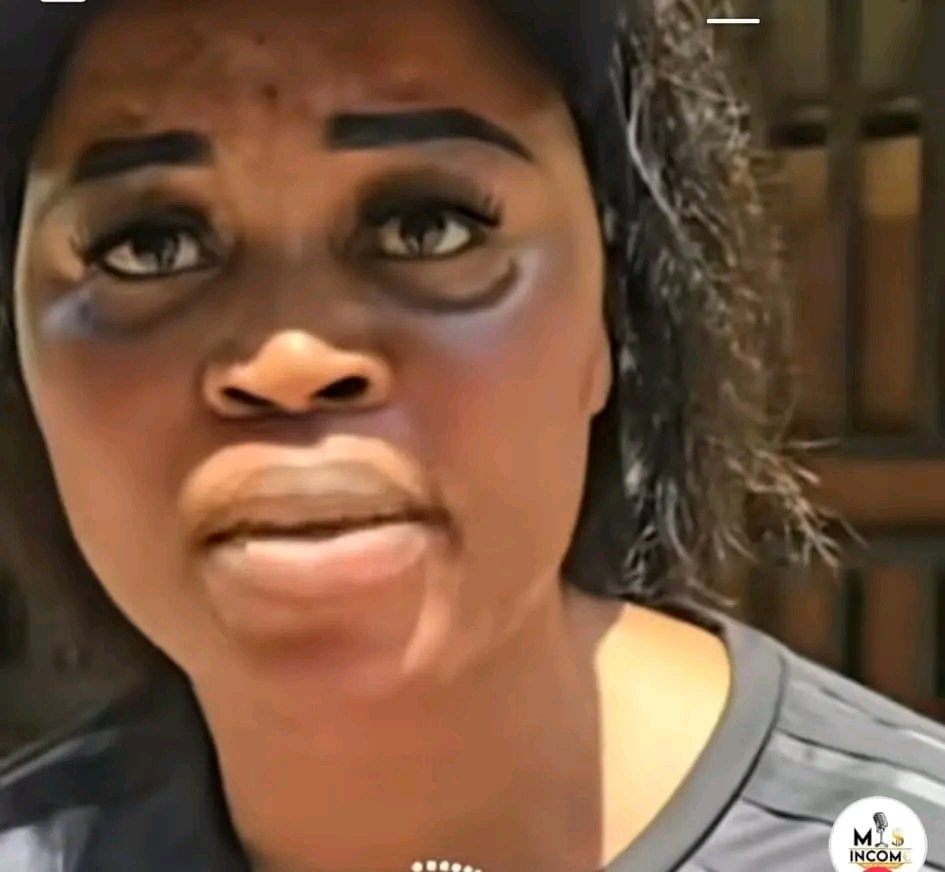
When they threatened to shoot her, she said something I never could have imagined 🥺🥺🥺🥺she said "I died long time ago when I was Raped by 8 Foreigners and only 2 were arrested.
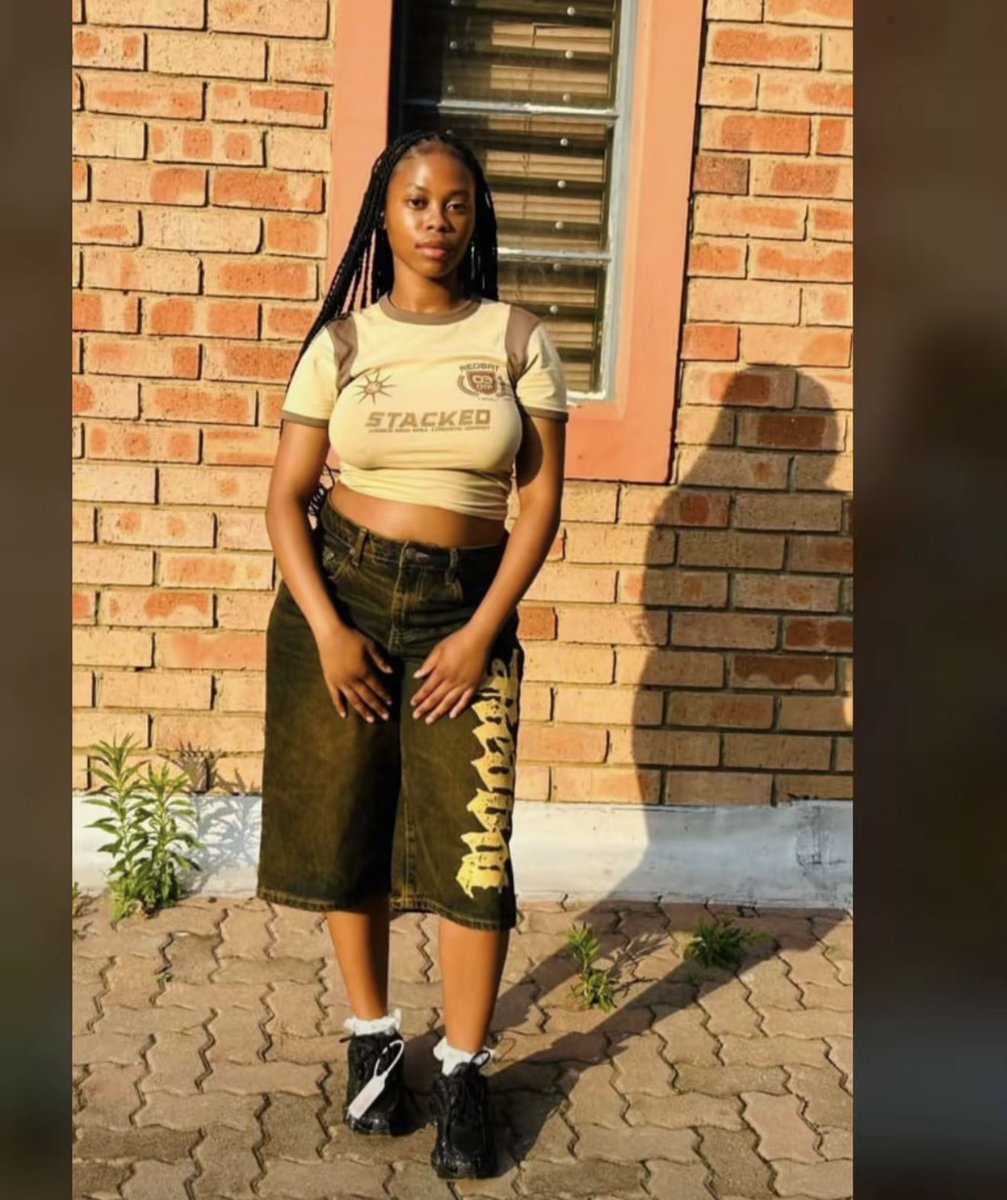
If this appears on Your Timeline Kindly Repost! Pontsho Molokomme (18) was last seen ko Winnie Mandela, Zone 6, Thembisa on 8th August 2026. Anyone with information about Pontsho Molokomme’s whereabouts is urged to contact the family or Thembisa Police Station immediately.
@HomeAffairsSA@CAOKZN
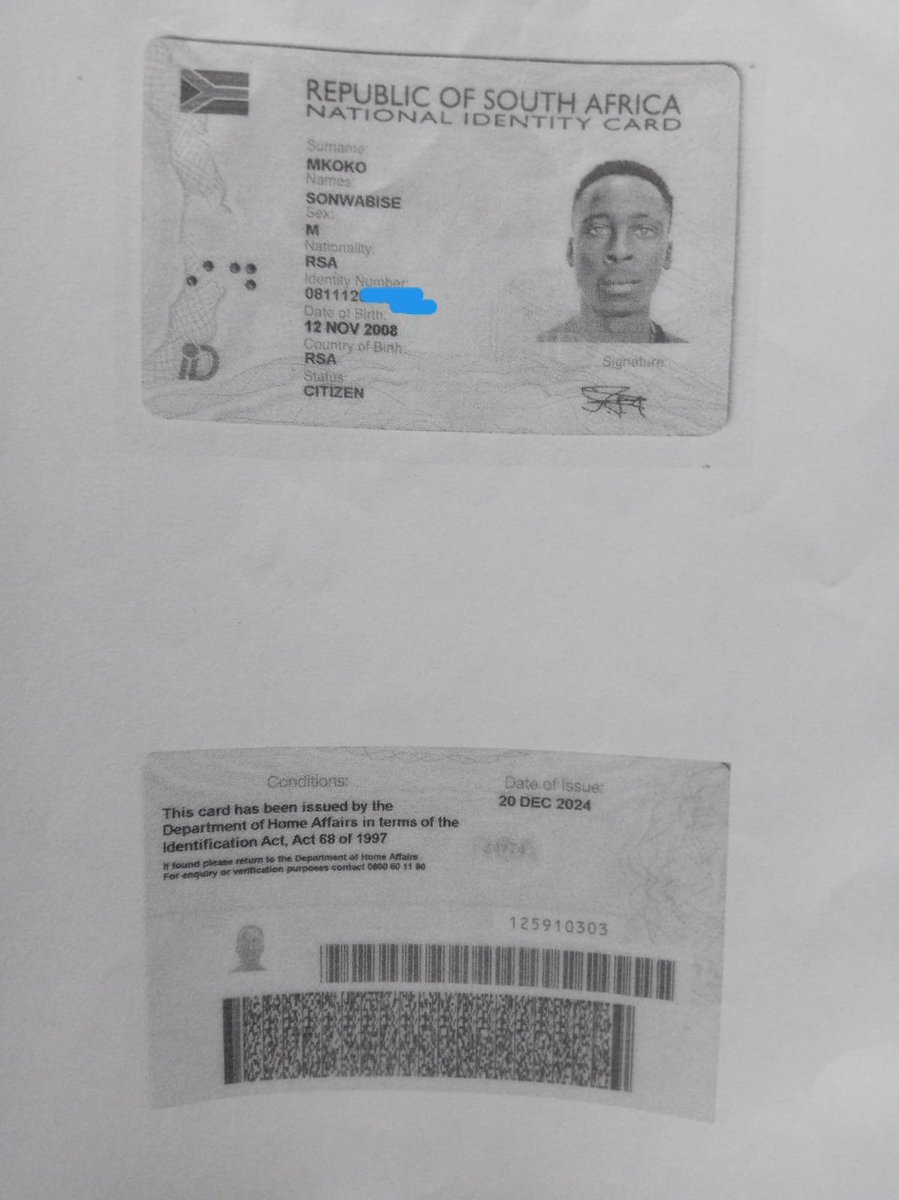
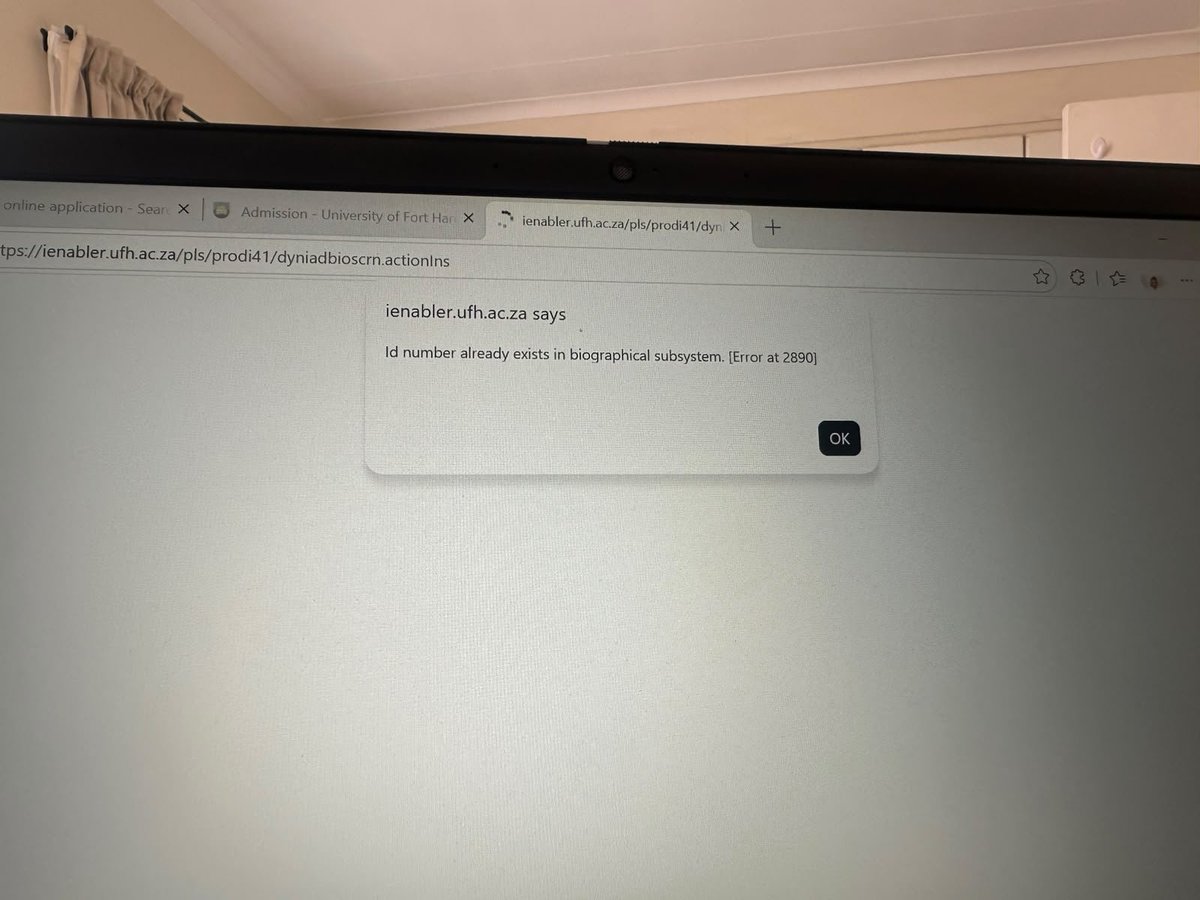
Please explain how is this Siyabonga Luyanda Bennedict Zulu sharing the same ID number as my son he has even applied for NSFAS and awaiting for financial aid using my son's ID number? 😳
FINAL GIVEAWAY 🏆
The biggest match in football is here... and we've got BIG prizes up for grabs! 🔥
🎁 Stand a chance to WIN:
📱 Huawei Mate 50 Pro ⌚ Huawei Smartwatch 👕 Argentina Soccer Jersey
To enter:
✅ Like this post
✅ Repost this post
✅ Comment your Spain 🇪🇸 vs Argentina 🇦🇷 score prediction.
Drop your full-time score prediction below and you could be walking away with one of these incredible prizes! ⚽🏆
T&Cs Apply.
🚨 26 Finals Giveaway 🚨
Think you know how tonight's 3rd Place and 4th Place Playoff will end? 🇫🇷 x 🏴
To enter:
✅ Like this post
✅ Repost this post
✅ Comment your score prediction for tonight's match between France and England
You could walk away with a Huawei Mate 50 Pro or a Huawei Smartwatch! 📱⌚
⏰ Competition ends 18 July at 11PM
📢 Winners announced 19 July at 11AM
Terms and conditions apply.https://t.co/ifPBJ6W4o1
🚨R18 BILLION of Public Servants' Pensions TORCHED😭
Public Investment Corporation (PIC)'s Isibaya Fund turned R18.223 billion into ZERO. Total wipeout (-100% IRR) across 23 companies. Teachers, nurses & police pensions gambled away.
How did this happen? Who monitors these investments? Why have we heard of only a handful of these companies among these 23?
our porous borders are not just an immigration issue, they are a public health time bomb. Professor Salim Abdool Karim has warned that it is "only a matter of time" before Ebola reaches South Africa from the DRC. He is right. We have daily flights from the epicentre. We have uncontrolled movement across our land borders. And we have no system to screen, track, or contain what enters with every traveller.
This is not xenophobia. This is epidemiology. Disease does not care about passports. It does not care about Pan-Africanism. It moves with people fast, silently, lethally. The DRC outbreak has already recorded over 830 confirmed cases and 196 deaths. Uganda has 19 cases. The virus is spreading. And our borders remain as sieve-like as ever.
Now imagine, just imagine an Ebola case arrives in Alexandra, in Khayelitsha, in Diepsloot. Overcrowded clinics. Poor sanitation. Limited testing. Weak surveillance. The virus would spread like wildfire. And who would suffer most? Not the wealthy in suburbs or our useless politicians . Not the officials in parliament. The poor. The townships. The very people our government claims to protect and serve. They would bear the brunt not because they are weak, but because we are unprepared.
We have seen this before. COVID-19 exposed our fragility. We locked down, we scrambled, we begged for vaccines. But we did not fix the root cause, our inability to control who enters our country. We did not build the systems to detect, isolate, and respond. We did not invest in our own health sovereignty. We relied on the West and when Trump dismantled USAID, the void was immediate. No logistics. No supplies. No intelligence.
Abdool Karim is right, in every battle, intelligence is key. We have none. We have hand-written records in DRC hospitals while the world moves to AI. We have no electronic tracking. No rapid response. No border health screening. We are sitting ducks in the name of pro Africanism.
This is not about hating foreigners. This is about protecting our people. Every illegal immigrant who crosses our border without a health certificate is a potential carrier. Every unregulated flight is a risk. Every leaky port is a vulnerability.
We demand action. We demand border health units. We demand screening for all entrants. We demand investment in our own vaccine and treatment capacity. We demand that our government takes this threat seriously not with speeches, but with systems that will protect the ordinary South Africans.
Because if we wait for the first case, it will be too late. The poor will die. The system will collapse. And we will have no one to blame but ourselves. Secure the borders. Protect the people. That is not xenophobia. That is survival. And we just can’t apologise for it.
https://t.co/IIBUeVDiD2
🎥 Group A (Ghanaians repatriated)
South Africans are right - A Ghanaian 🇬🇭
A Ghanaian (Minister of God) states South Africans are right fighting against what is happening in their country by foreigners. He mentions foreigners are
-Hijacking buildings
-Drug pushers
-Breachment of amenities (electricity , water ) ….
#SouthAfrica #Ghana #Africa #SA #updates #News #Africannews #GH
🇬🇭🌍🇿🇦🌍🇬🇭🌍🇿🇦🌍🇬🇭🌍🇿🇦🌍🇬🇭🌍🇿🇦
Dear Zimbabwe, it’s time for a brutal conversation about xenophobia in South Africa
By Maynard Manyowa 10 Apr 2022
Maynard Manyowa is a Zimbabwean journalist and documentary filmmaker based in Manchester, England. He is married to Boipelo Manyowa, a South African journalist who has recently written against xenophobia.
Maybe it is time that we, as Zimbabweans, remind ourselves that South Africa is treating us better than we ever treat(ed) immigrants.
Nobody wants to, nor can they, freely state that Zimbabwean immigrants in South Africa do not help their own cause. Saying this would likely be interpreted as support for violence and whip up a wave of cancellations.
When Zimbabwe first achieved independence in 1980, it really was heaven on Earth. Its currency was strong and the country was self-sufficient. Malawians, Zambians and South Africans flocked to Zimbabwe to work as roadside vendors and in mines, to take advantage of the education system, as well as flee from the racist apartheid government.
But Zimbabwe and its government at the time were hostile. Malawians and Zambians were called MaBwidi, a derogatory term that describes foreigners as halfwits. The government conducted raid after raid in townships, often asking people to repeat local street lingo – fully aware that Malawian folk would do so with a hilarious accent.
Those who failed were bundled into trucks and deported. Those who remained were made half citizens by the government.
At that time, naturalised Zimbabweans from Malawi and Zambia were not allowed to vote, and their identity documents were engraved with a huge capital “A”, designating them as “Aliens”. This practice remained up until Robert Mugabe was removed from power.
But, at the same time, Mozambique was engaged in a brutal civil war and a number of Mozambicans, many of whom speak Zimbabwe’s main language, Shona, crossed into the country seeking refuge. The government rounded them up and put them in refugee camps, while several others were sent back, by force, to Mozambique, where they were executed by rebel forces.
To this day, in and around the township, derogatory jokes about Malawians, Zambians and Mozambicans are exchanged at barbecues.
How we, as Zimbabweans, treated other Africans at the time was wrong, and it must not escape history or dialogue.
South Africa treats refugees better than any other African country
Over the years, as conflict has ravaged Africa, many people have fled their homes in Congo, Somalia, Ethiopia, the Central African Republic, Burundi and other countries. Those who found their way to Zimbabwe were put in refugee camps, where they remain to this day. Countries like Malawi, Uganda and Zambia also have refugee camps for asylum seekers.
Now, I mention this because, when millions of Zimbabweans rightly fled the violence in 2008, the South African government responded by giving them special permits and allowed those who didn’t apply to integrate with communities.
In Malawi, as we speak, the government is calling on all refugees who left camps and integrated with communities to return to the camps or face action. Zimbabwe keeps refugees in camps, while Kenya wants to close its camps and send refugees back to conflict zones.
South Africa is not driving foreigners into camps, but nobody wants to talk about this. And ignoring such gestures of goodwill upsets and offends a country that has been very hospitable to refugees, economic or otherwise.
One would struggle to find a country today that allows millions of people to simply show up and integrate into communities. To that end, South Africa is a haven for refugees from all walks of life.
At the same time, we cannot escape the reality that illegal immigrants commit crime in South Africa. People avoid talking about it, but the stats are there. In 2017, there were 11,842 foreigners in South African prisons, 918 for murder and 454 for rape.