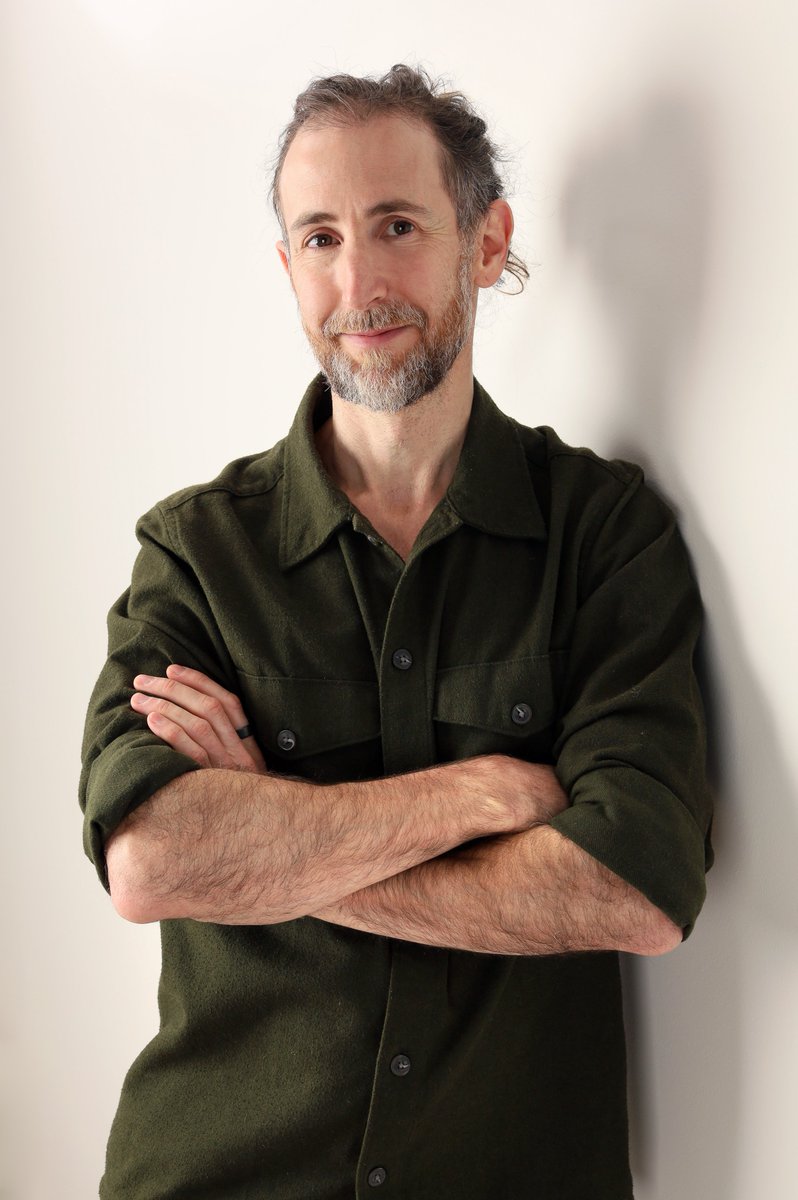
Hi, I’m Peter, and I’d love to share my journey and how it might help you.
Chronic illness robs millions of an active, fulfilling life.
I was one of them.
Here’s how illness took everything from me—and what I found on the path to healing.
At age 30 I worked internationally in high-pressure jobs, had two kids and ran a business. I was active in outdoor sports and fitness.
Then, one day, I could barely walk or even speak above a whisper. I developed a long list of symptoms including POTS, PEM, swollen glands, bad sleep, bad digestion, hypersensitive to stimuli, brain fog and more. Within days I was bedridden.
Doctors ran the standard tests—all clear.
I was prescribed anti-depressants and sent on my way.
I didn’t take them. I knew I wasn’t depressed.
My world fell apart. I couldn’t work or support my family. My partner moved away with our children and I was forced to sell our home.
For months doctors dismissed me, telling me I just needed a holiday before I finally got a diagnosis of ME/CFS and was told simply to join a support group.
Desperate, I tried everything—mainstream, alternative, very alternative. Every expert had a different answer. Most were dead ends. Some gave temporary relief. None gave me my life back.
After years of struggle I realised no one was coming to save me and I stopped the exhausting search for a cure.
I gave up the constant battle and started slowly working with my body, piecing together the puzzle. I applied a combination of approaches patiently and consistently, adjusting them as my condition evolved.
It wasn’t easy, but over time I regained an active life.
I ski, hike, travel, work, and most importantly, I’m present for my kids.
I won’t say I’m back to my old life—but I’ve built a new one. I continue to take good care of my health and keep growing in strength.
I’m no longer a competitive workaholic thriving on adrenaline and stress. I’m more in tune with my body and have a different set of priorities.
I live free from the fear of a crash or relapse.
But I haven’t forgotten the suffering, frustration and helplessness of watching life and loved ones pass me by.
At my lowest point, I made a promise to myself:
If I recover, I will do my best to help others.
I’m not a doctor, and I don’t claim to have a cure, a miracle fix, or a one-size-fits-all program. Everyone’s experience with chronic illness is unique and deserves respect. I’m not here to proclaim or prescribe.
But I do know what it’s like to be dismissed, trapped in your own body, and losing hope.
There should be a medical cure—but since there isn’t yet, I had to take a different approach. I stopped chasing treatments and started focusing on what my body truly needed to heal. Recovery wasn’t about finding ‘the one thing’—it was about creating a systematic, personalised approach that worked with my body.
Now, I’m helping others uncover their own unique path to healing. I integrate strategies that address physical dysfunction while supporting the body in shifting into its natural healing state.
The approach involves a deep dive into key areas:
✅ Nutrition & gut health
✅ Inflammation & immune function
✅ Mitochondria & energy metabolism
✅ Nervous system regulation
✅ Cognitive function & brain fog
✅ Environmental factors
This isn’t about quick fixes or temporary relief. It’s about building a foundation for lasting recovery. It’s the guidance I wish I’d had when I was ill—the kind of structured, personalised approach that can make all the difference.
In this process, we:
✅ Shorten the time and energy spent on getting well
✅ Reduce symptom severity and regain stability
✅ Greatly improve quality of life and restore a sense of normalcy
✅ Deepen the understanding of the disease mechanisms and remove hidden barriers to healing
✅ Optimise the environment to support recovery and long-term resilience
If you’re ready for a new way forward and would like to know more. Book a free call today:
https://t.co/soB9H9l3mn
I wish you healing and happiness whichever path you take.
Peter
Time to get to work? Admirable. But honestly and respectfully, perhaps it's actually time for deep rest.
Perhaps it's time to let go of that highly driven nature that's likely driving further symptoms.
Perhaps you may do better to save yourself before you try to save others.
Said with kindness🕊️
This perspective is interesting, and I completely agree that “just push harder” is unhelpful and damaging.
I wonder, though, is it really helpful to separate physiology from psychology so starkly?
The immune system, nervous system, and mitochondria all interact, and chronic fatigue seems to involve feedback between these systems.
Also, if viral persistence were the whole story, why do some people clear viral markers but still experience dysregulation, especially of the ANS?
I guess my takeaway is that there’s probably more nuance here — physiology, psychology, and nervous system regulation all seem inseparable in how this condition plays out.
One of the hardest things about ME/CFS is watching your life fall apart. Feeling your body betray you. Facing loss, isolation, misunderstanding.
Nothing can truly prepare you, and support is scarce. On a cultural and societal level, we are simply not equipped for this illness.
The physical and emotional aspects go hand in hand. Supporting the body, mind and nervous system can help the body slowly find balance.
There’s no secret cure. No single supplement. But I offer real support, guided by experience, exploring small steps that make a difference.
If you want to talk, follow and DM me for a free discovery call.
https://t.co/tHX2nkAxKR
#MECFS
Good question ;)
...and honestly there isn’t a simple answer. There’s no single cure, and recovery wasn’t linear for me.
What helped most was understanding that ME/CFS is a state where the body is stuck in survival mode. I focused first on the nervous system. Getting my body into a safer, more regulated state where healing could actually happen. This may sound simple but is actually an in depth process with many factors.
A framework that helped for me was the Cell Danger Response theory (Dr Robert Naviaux), which helps make sense of why the body is stuck and why pushing through doesn’t work. From there, recovery was about reducing threat, pacing very carefully, regulating stress responses, improving sleep, supporting metabolism and immunity, and slowly rebuilding capacity without triggering crashes.
It took time, patience, and a lot of trial and error. Progress was gradual rather than dramatic. Over time my baseline improved until I could live a full life again.
Even now, it’s something I manage rather than ignore. I stay mindful of stress, overexertion, and nervous system overload. I take care of my diet and sleep.
If you want, I’m happy to share more specific things that helped me, but it really depends on your symptoms, severity, and circumstances. Everyone’s ME/CFS looks a bit different.
You've touched on some real findings, but I think it pushes the conclusions a bit further than the evidence allows.
It’s true that large studies often show a U-shaped link between sleep duration and health, with lowest risk around 6–7 hours. But these studies are observational, so they can’t tell us that 6.5 hours is optimal or that longer sleep is harmful.
One issue is reverse causation: people who sleep longer often do so because of underlying health issues, inflammation, or poor sleep quality. In that case, long sleep is more of a signal than a cause.
The idea that 8–9 hours of sleep directly drives inflammation or hormonal problems also seems less clear-cut. Those biological changes may increase sleep need rather than result from it.
People often say that ME/CFS causes “DAMAGE.”
It can feel that way — like something in your body is broken beyond repair.
But biologically speaking, there’s little evidence of permanent damage.
The problem is dysfunction. 🧵
@SattarHs I find it encouraging when on rare occasions an affirmative echo returns from the void. Thank you for being that echo today.
Wishing you the best also.
🕊️
Thank you. Yes, it's a tricky business trying to "offer help" in this space. It's a mine field!
I can only ever speak from my own experience, and if it resonates with someone else and they find use in applying it, then I'm happy.
Genuinely, I hope a medical treatment does become available. But in the meantime, I believe there is meaningful work to be done in the realm of the psyche and it's connection the the nervous system and every aspect of our body and wellbeing.
@SattarHs Yes and understandably, many patience are triggered easily due to trauma from medical gaslighting and hence prone to project and react to the topic.
Exactly. For patients to examine their mindset, psychology and beliefs does not imply that you are "admitting" that the illness is psychological. I do not say it is psychological. I say the door to healing often starts there. At least, it plays a major role. It is also one area where we have agency.
I appreciate that many have tried with little success. But there are those who rule it out altogether.
The subject needs to be approached with nuance rather than black and white thinking. The separation of body and mind only exists conceptually. In reality there is no separation.
Hi, thanks for your valuable comments here. I see things similarly. I feel frustrated at times to see so many suffer while waiting for a pill. I understand most have tried many things. But they often reach the conclusion that they know it all and have tried everything. My own healing was possible through always staying open and curious.
And a gentle reminder:
Some days, even the smallest action is too much.
On those days, it’s okay to do nothing — truly.
There will be bad days, bad weeks, even bad months.
None of this is a failure, and none of it erases your progress.
Hold space for yourself without judgment.
Your worth isn’t measured by what you can do on any given day.
And even if it doesn’t feel like it sometimes — don’t lose hope.
🕊️
#mecfs #chronicillness #longcovid
A Biohacker Morning Routine… adapted for people with ME/CFS.
Many with ME/CFS can’t do the things people claim make you “healthier.”
Cold plunges, workouts, breathwork, sunrise walks — for many, even attempting these would trigger a crash.
But here’s the reframe:
🌱 You can often build momentum and wellbeing through tiny, accessible versions of these habits — scaled to your capacity and done with pacing.
Here’s how a typical “optimal morning routine” can look when adapted for ME/CFS ⬇️
The core message:
✨ Your scaled-down version is just as valid as the “biohacker” version.
For someone with ME/CFS, a cold face wash is the cold plunge.
A stretch in bed is the morning workout.
Seconds of sunlight are the sunrise routine.
This isn’t about comparing to healthy people or pushing yourself.
It’s about honouring your body while still giving yourself ways to feel progress, agency and positive self-esteem.