We’re counting down the days until the product launch. Holders and users who have submitted applications meeting certain criteria will be able to access the product during our beta testing phase.
Also, an important announcement regarding who is behind the Initial Pons Offering will be made at that time.
Everything is set. Get ready for the launch.
Pons v2 testnet has been successfully tested. Preparations for the product launch are well underway.
An IPO meta is coming soon to Pons. Powered by Pons.
$IPO Is Not a Governance Token. It Is a Rebuilt Market Structure With a Rights Layer Attached.
Most people call $IPO a governance token because that is the easiest label available. It is the wrong one. What $IPO actually represents is a rebuilt token launch mechanism, Initial Pons Offering, with a set of holder rights sitting on top of it. Understanding the rights without understanding the product underneath them is understanding half the picture.
The Problem This Actually Solves
Every memecoin launchpad promises fairness. Almost none deliver it. The dominant model today lets a token trade from block one on an internal bonding curve, and once its market cap crosses a threshold, it graduates and liquidity migrates to an external DEX pool. That migration gap is often just seconds long. It is also the single most exploited moment in the entire process.
Bots position transactions to land in the first blocks after a new pool opens, buying ahead of retail flow and dumping once price moves. Liquidity fragments between the old curve and the new pool, which worsens pricing exactly when a token needs stability. Migration is not always verifiably atomic, which opens room for mismanaged funds. And a preset bonding curve was never actually pricing real demand in the first place. It is a formula, not a reflection of what buyers are willing to pay. None of this is a bug in any one component. It is a consequence of sequencing: token creation, pricing, and listing happening as three separate, observable, attackable events.
One Atomic Transaction
Initial Pons Offering removes the sequencing entirely rather than patching individual exploits. The process runs in four stages. Submission and verification, where creators submit a token's name, symbol, supply, and social links, and a duplication check runs against existing tokens to reduce impersonation risk before anything goes live. Subscription, a defined window with a stated price band where investors commit funds, but nothing executes until the window closes. Price discovery and pro-rata allocation, where a smart contract calculates a clearing price from aggregate demand and distributes allocation proportionally, with a per-wallet cap so no single actor can dominate the raise. And atomic listing, the core mechanism: subscription close triggers one transaction that mints the final supply, initializes the pool, deposits liquidity, and distributes tokens to every subscriber, all at once.
There is no window between sold and tradeable. That is the entire design premise. A gap that does not exist cannot be exploited.
Why This Only Works on Uniswap v4
This is not portable to any exchange. It depends on features that only exist in Uniswap v4. Hooks let custom logic attach to specific points in a pool's lifecycle, before and after a swap, before and after liquidity changes, which is what allows subscription, minting, pool initialization, and distribution to all happen inside one transaction. Because that logic runs at the protocol level rather than the interface level, anti-bot protections like per-wallet caps apply to every interaction with the pool, whether it comes through a front-end button or a direct contract call. A singleton architecture, where all pools are tracked as internal accounting entries in a single contract instead of separate deployments, combined with flash accounting that nets balance changes across an entire transaction, keeps the gas cost of this multi-step bundling manageable. Custom fee logic on top of that runs a decaying fee schedule after listing, elevated at first to reduce instant dumping, tapering down over time. None of this was practically buildable on earlier AMM architecture. It is specific to what v4 makes possible.
What Holding $IPO Actually Gets You
$IPO carries defined rights inside this system, not vague promises attached to a ticker.
Anyone holding $IPO gets a fee discount on new token subscriptions launched through the platform. No conditions beyond holding the token. Holders with a qualifying position ahead of a subscription round also get priority allocation when that round ends up oversubscribed, meaning wallets that committed early are not competing on equal footing with wallets that only showed up once demand had already spiked. Governance rights let holders vote on protocol parameters, including fee structure and the verification criteria applied to listed tokens. Real authority, though it is the least differentiated right on this list. Plenty of tokens hand out a vote.
Then there is the dividend vault, and this is where holding $IPO stops being a one time bet and becomes an ongoing claim. A portion of every protocol fee gets routed into it continuously. Eligible holders draw from it on an ongoing basis, with value denominated in $IPO as well as select tokenized assets available through Pons infrastructure, including tokenized equities. Eligibility is capped at holders with 1% or more of total supply. Below that line, the vault does not pay out to you. That threshold was set specifically to reward genuinely committed positions rather than spreading value across every wallet that briefly touched the token. It is a defensible design choice. It is also an exclusionary one. Most holders of most tokens do not sit at 1% of supply, and this vault was built for the minority who do.
Where the Token and the Product Meet
$IPO's own fair launch has already happened on Pons, which means the token itself went through the model it now represents rather than a separate, more conventional process.
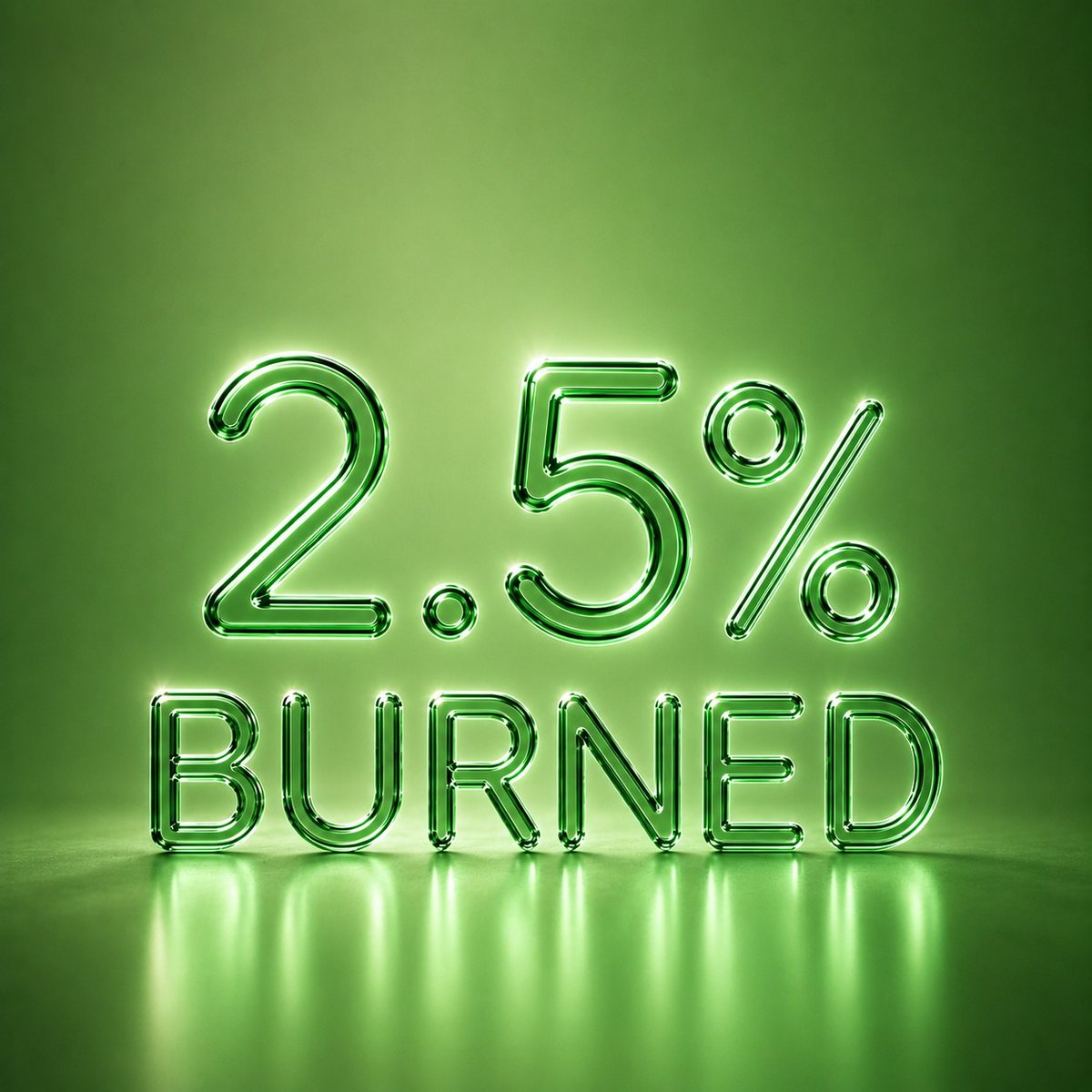
Supply has already been reduced independently of any of this. 2.5% of total $IPO supply has been burned, verifiable on the Pons website, with further burns planned toward a total of up to 10%. That is a supply-side commitment sitting alongside the rights structure, checkable rather than promised.
Product go-live for Initial Pons Offering is confirmed to follow the Pons V2 launch. The vault and the fee structure that funds it activate at that same migration point, tied together by design, not by scheduling convenience. The broader rollout runs in four phases: audits and testnet deployment, go-live synchronized with Pons V2, creator onboarding alongside a public analytics dashboard, and eventual governance activation transferring protocol parameter control to a DAO. Website updates, the whitepaper, and official data on the team will be published as that launch gets closer.
What This Actually Adds Up To
Strip away the framing and there are two things happening at once, tied to the same token. A launch mechanism that closes the specific gap graduated bonding curves leave open, verified through architecture rather than marketing language. And a rights structure funded by that mechanism, where a discount, priority allocation, and a vote are open to any holder, and the deepest right, a standing claim on protocol revenue, is not.
This is a high-risk category of asset, and none of this guarantees an outcome. The real test comes at go-live: whether the atomic listing model performs as designed under real trading conditions, and how many current holders actually clear the 1% threshold once the vault activates. For most people holding $IPO today, that second question has nothing to do with governance at all.
I'm back.
We are awaiting details from the @X team to better understand what happened.
In case it wasn't clear, Robinhood has not issued any coins or tokens. Stay safe out there.