A state, federal, & business partnership that promotes employment & wellness for adults w mental illnesses. Tweets do not reflect govt policy or endorsement.
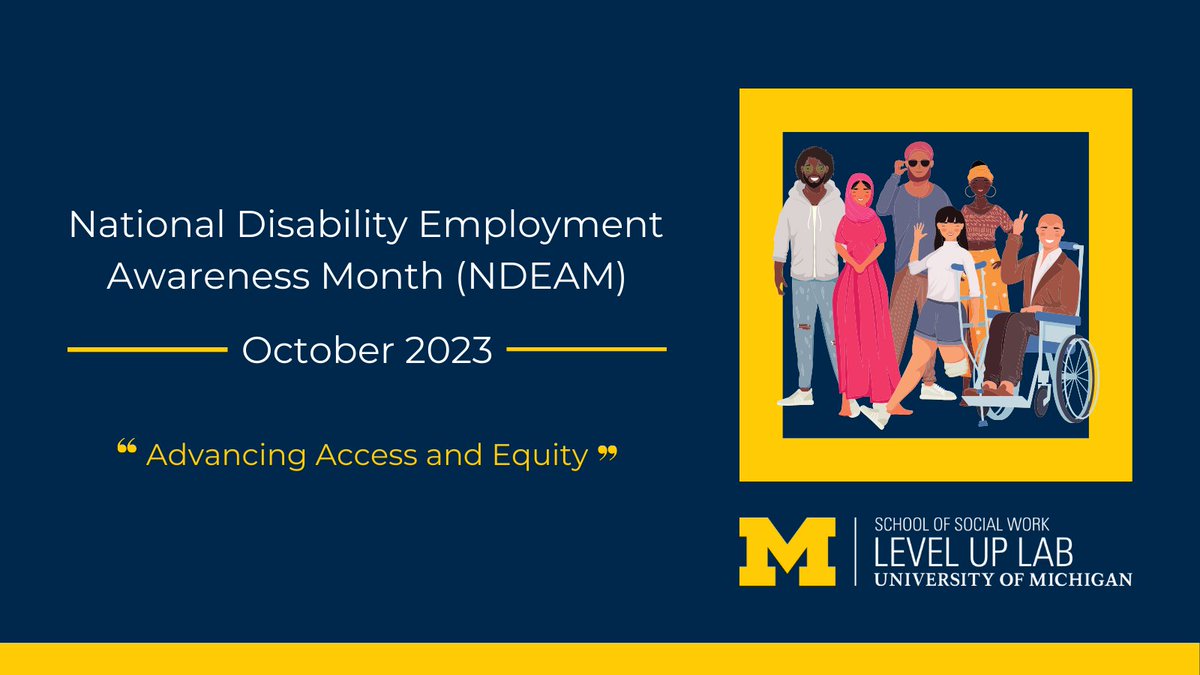
October is National Disability Employment Awareness Month #NDEAM and this year marks the 50th anniversary for the Federal Rehabilitation Act of 1973. This year's theme of 'Advancing Access and Equity' echo's our mission & ongoing work. To learn more go to https://t.co/T6M2bY7Q2t
Also when thinking about next steps @TalkMHResearch, we’re intrigued by the disability concept of “crip time," offering diverse ways to think about time usage. The lived experience of disability could/should have a profound impact on business culture. https://t.co/nlvN7pStMf
What is the future of employment research for ppl with psych disabilities? We need to innovative around new services, directly informed by the needs of people with psych disabilities, involve peers at all levels, and conduct randomized trials to demonstrate effectiveness.
@TalkMHResearch@UICHealthRRTC Yes, for sure this is a major issue! Hopefully, the federal income-driven student debt repayment plan will relieve some/part of this burden for young people. https://t.co/GPYTUO9lN4
We agree with the important point about adapting IPS supported employment to include educational supports for young adults, along with the need for more research on this model. Our @UICHealthRRTC also provides a policy infographic on integrating IPS & SEd: https://t.co/A9Ld1y7R8q
@TalkMHResearch@UICHealthRRTC Absolutely! And, as a society, we need to address another social determinant in this area, which is the crushing student debt that too many young people are facing. It's a major barrier to independence and quality of life, and it can certainly worsen mental and physical health.
@TalkMHResearch Thanks for sharing this resource from Healthy People 2030! We agree that healthy choices alone won't eliminate disparities. We need to assess & take action on embedded barriers to success, including racism, discrimination, lack of access to opportunities, and many others.
Thanks @TalkMHResearch for a great disability employment research Chat! Sally, I'm wondering if you could reflect on the social determinants of employment (like the SDOH)? It's not uncommon to find that one's mental health is not the biggest barrier to getting & keeping work.
Stigma, prejudice and discrimination in the workplace are real and difficult barriers for people with psych disabilities. Have you seen evidence of stigmatizing words, actions, behaviors in your workplace?
@TalkMHResearch This is fabulous! We’ve used photovoice in our research, too, and it is powerful. Not only the images themselves, but how people describe them, offer much insight into people’s lived experiences.
I like WHO's concept of Decent Work, encompassing opportunities for productive work at a fair income, security in the workplace, better prospects for personal development & social integration, freedom for workers to organize, & equity at work among other things.
Continuing our #TwitterChat, we need to continue to innovate in order to help people find not just “a job tomorrow” but “Decent Work”, as defined by the World Health Organization: https://t.co/fZDFynT786
@TalkMHResearch Thanks for sharing this awesome repository! Visit our IL IPS website for additional resources that promote employment for people with psychiatric disabilities! https://t.co/i1L7NqHnjR
@kelsi_martha@TalkMHResearch Great question & responses! Our @UICHealthRRTC offers a free online toolkit on the various ways peer support specialists are involved in delivering employment services: https://t.co/su5CRHnGXC
Glad to be back for Week 2 of our September slo-mo Chat! This week, we’ll be talking about innovations in disability employment research & also how to support young people with lived experience as they develop pathways to school & work. Join us & share your questions/ideas!