We are pleased to announce the completion of the first customer engagement of VEIL™ through a POC engagement with Pivotly! Matthew Guruge, CRO at Pivotly, shared:
"Before working with the VEIL team, we were facing two major technical barriers: inference speed and model accuracy. Processing a blueprint could take hours, and the object detection results still needed improvement.
Working with VEIL, we saw exactly the improvements we needed. The solution reduced inference time from hours to seconds, with most blueprints processing in roughly 3 to 5 seconds and even especially large blueprints completing in under a minute. The team also improved our object detection scores by approximately 5 to 8 percentage points.
These improvements removed key performance barriers standing between us and a market-ready product. VEIL delivered practical, production-ready solutions that materially advanced our platform, and we would recommend VEIL to any company solving complex applied AI problems where accuracy, speed and production viability matter."
Read the full news release here: https://t.co/FHogl3YI0A
In August, the U.S Department of the Treasury announced the launch of the Quantum-Readiness Task Force.
The Task Force brings together government officials, financial institutions, market infrastructure operators, and technology providers to help accelerate the U.S. financial sector's transition to quantum-safe technology.
Quantum computing has the potential to transform science and technology, but it also poses a long-term cybersecurity challenge because future quantum systems could break many of the cryptographic tools that protect financial data, payment systems, digital identities, and market infrastructure.
In today's world, keeping data safe is becoming an incredibly difficult task.
Our CEO Husam Fezzani provides insight into the challenges enterprises face when trying to balance privacy, innovation, security, and regulatory compliance.
Hear from Husam Fezzani, our newly appointed CEO, as he shares more about his new role and his vision for IQT.
Prior to joining IQT, he spent nearly 30 years at HSBC, one of the world’s largest financial institutions, where he led large-scale technology initiatives and international teams across Canada, the United States, the United Kingdom, India, China and Hong Kong.
Today, we are thrilled to share that Husam Fezzani has been appointed as our new CEO.
Bringing nearly three decades of experience from HSBC, spanning global banking and financial services, enterprise technology transformation, engineering and operations, Mr. Fezzani will lead the Company’s corporate strategy, operations and commercial growth, with a focus on expanding IQT’s work with organizations adopting AI at scale.
"I am excited to take on the role of CEO at an important stage in IQT’s development. Enterprises are moving rapidly to adopt artificial intelligence, but doing so at scale requires a new generation of infrastructure capable of addressing security, privacy, trust and the realities of complex enterprise environments. IQT has assembled technologies with the potential to address some of these critical challenges. I look forward to working with our team, partners and shareholders to translate that technology into commercial solutions and build a meaningful enterprise technology company," adds Mr. Fezzani.
Read the press release: https://t.co/X40euHsmJH
Harvest Now, Decrypt Later (HNDL) is an attack method in which bad actors collect encrypted information, store it long-term, and wait for technology to advance enough to make current encryption and security measures obsolete or easier to crack. They can then decrypt and use the information they collected.
This type of attack does not require hackers to break encryption immediately. Instead, they wait until quantum computing could make decryption feasible.
HNDL is very difficult to detect and almost impossible to reverse because once encrypted data has been harvested, organizations cannot "unharvest" it.
Unlike encryption, VEIL™ doesn't hide raw data. Instead, it transforms it into a mathematically transformed, irreversible representation that contains only the information needed for the task.
Integrated Quantum Technologies is building the trust layer for a new era of AI, providing the foundation to secure, accelerate and scale intelligence.
We bring together leading researchers, engineers and strategists to develop technologies that address the security, privacy and trust challenges emerging alongside AI.
What happens to sensitive data as AI becomes part of everyday business? This question is becoming harder to ignore.
Integrated Quantum Technologies was featured in TechRound, discussing VEIL™ and our approach to helping organizations use sensitive data without exposing it.
The article looks at how we’re building a trust layer into AI infrastructure, making data protection simple and easy to implement.
https://t.co/3N0zChUd6h
For years, encryption has been the "go-to" for enterprises to keep their data safe. In today's world, that is no longer enough.
Encryption hides your data from bad actors, but hidden is not "gone". When you hide data, it can still be found.
With our architecture VEIL™, data is not hidden. In place of raw data, what’s used is a mathematically transformed and irreversible representation containing only the information needed for the task.
Nothing to decrypt. Nothing to be found.
AI and Machine Learning pipelines are exposed to vulnerabilities at every stage, making them increasingly fragile and at risk.
At Integrated Quantum, we close that gap.
Our AI data security solution VEIL™ removes sensitive data before it ever has a chance of being exposed.
No sensitive data in transit.
No sensitive data at rest.
Nothing valuable for an attack to steal.
How Integrated Quantum is rising to tackle enterprises' biggest challenge: building the trust layer for AI, reported on by @GritDaily
https://t.co/ZFn1NFJfqi
At Integrated Quantum, we empower organizations with quantum-resilient data protection, privacy-preserving model practices, and advanced compression — enabling AI that's faster, more reliable, and infinitely scalable.
We're the foundation of a new era in AI, built to secure, accelerate, and scale intelligence. Our VEIL™ architecture redefines how intelligence is protected, setting new standards for performance, trust, and scalability.
Each breakthrough reinforces our position at the intersection of AI, privacy-preserving innovation, and quantum resilience.
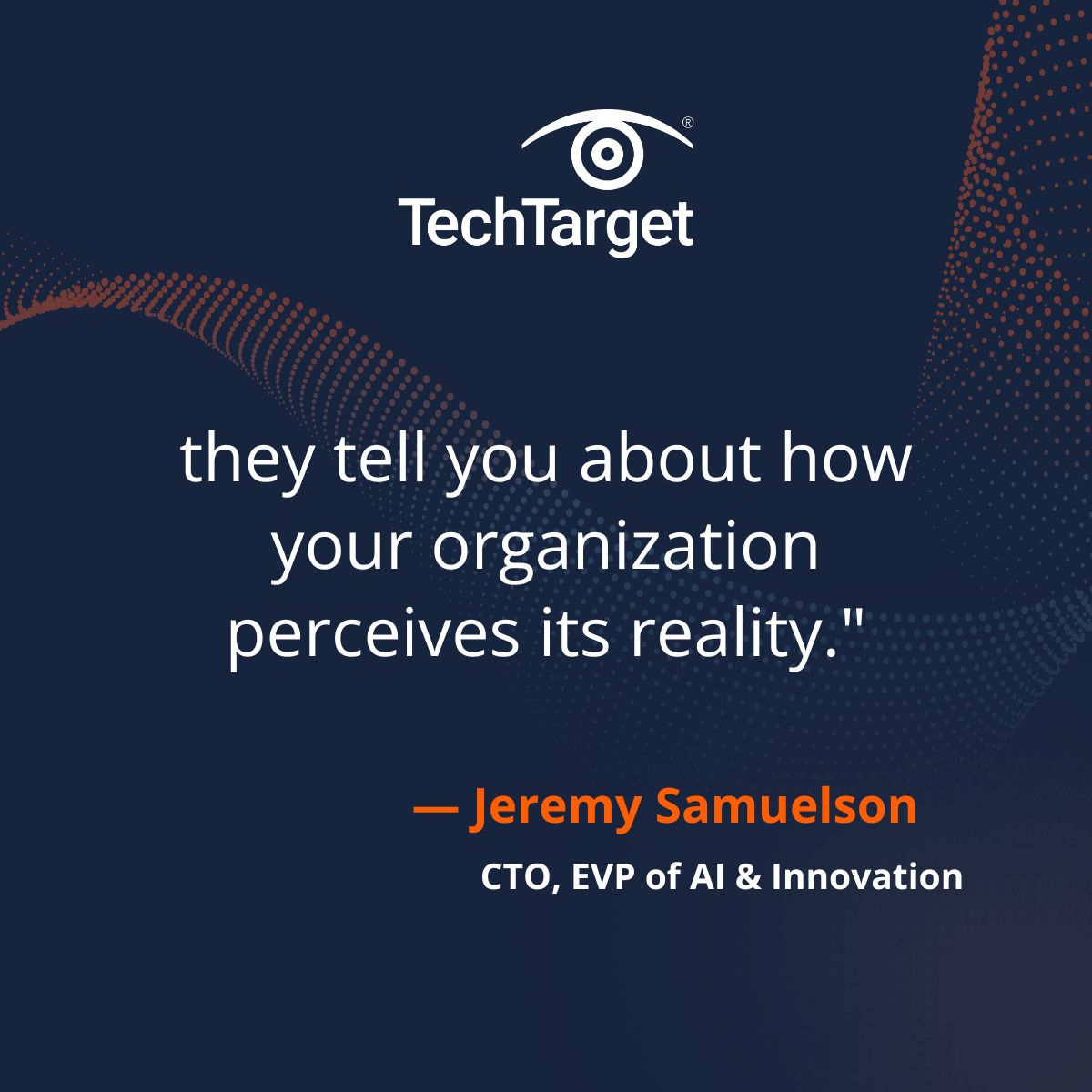
Jeremy Samuelson, CTO and EVP of AI and Innovation shares his thoughts on The Pitfalls of Unsupervised AI with @TechTargetNews:
"Unsupervised models don't necessarily tell you about reality, they tell you about how your organization perceives its reality."
Read the full article here: https://t.co/CdUFyojRpp
This summer, Canada announced the new National Artificial Intelligence Strategy: AI for All.
Canada isn’t just an AI pioneer; it’s also a historical epicentre for innovations like quantum computing.
From early hardware pioneers like @dwavequantum to research hubs at Waterloo’s Institute for Quantum Computing, Canada has a long history of research and innovation. It has also introduced national strategies and targeted funding, while participating as a founding member of the Global Partnership on Artificial Intelligence (GPAI), which is focused on ethical development.
Our AI data security solution VEIL™ featured in @vantechjournal
VEIL™ bridges the gap between performance and safety, allowing companies to unlock the full value of their data.
Read the piece here: https://t.co/rYcsfJ968t
What is Invisible AI?
"Invisible AI" refers to the machine learning quietly working behind the scenes: detecting fraud and assessing credit applications, supporting hospital diagnostics and scheduling, strengthening cybersecurity, and powering the personalized recommendations you receive every day.
It shapes decisions and experiences without announcing itself.
Much like the electricity running through your walls, it's quietly powering many of the systems you rely on.
Last week, our CTO, Jeremy Samuelson, joined @MelissaABill on the Business Roundup Podcast for a conversation about the hidden role of AI in the economy.
They discussed the role of "Invisible AI," why organizations need data to train AI and ML models, and why the next wave of AI is about building trustworthy systems, not just smarter models.
Listen to the podcast on your favourite platform:
Apple podcast: https://t.co/kGc9y7KNqy
Spotify podcast: https://t.co/wbnwNvGK7X
Heart podcast: https://t.co/NKxEdZAkug
The Business RoundUp:https://t.co/2TK1TUC7jI
We're proud to share that our CTO and EVP of AI & Innovation, Jeremy Samuelson, has been welcomed to the Forbes Technology Council (@ForbesTechCncl), an invitation-only community of senior technology leaders.
Samuelson's appointment reflects his leadership in AI, cybersecurity and enterprise technology, as well as his commitment to advancing thoughtful conversations around responsible AI and the future of enterprise innovation.
Congratulations, Jeremy, on this well-deserved recognition.
Read the full announcement: https://t.co/3bk4rwngTq
How is VEIL different from traditional privacy-preserving approaches? Our CTO answers this question in a recent interview on Nasdaq Trade Talks:
“VEIL or the vector encoded information layer, is actually a completely different approach to how we’re protecting data so the core focus for how we protect data typically is an encryption, which is still, I would say, absolutely core. It’s kind of the backbone of how we protect most data, especially data at rest. What we found at Integrated Quantum is that once you actually have a purpose, right, that you have some reason to send out somewhere, that purpose can actually inform a number of different ways to protect the data so we are actually using several non-encryption modes of protection.”
- Jeremy Samuelson, CTO at Integrated Quantum Technologies
Does data exposure have to be inevitable? No. Our CTO, Jeremy Samuelson, explains why in a recent piece for @TheAIJournal1.
Traditional privacy-preserving approaches are valuable. The issue is that they often treat raw data exposure as the starting point.
"The hard part is deploying at enterprise scale without sending raw sensitive data into places it does not need to be. That is the problem VEIL“ was designed to address," says Samuelson.
Read the full article here:
https://t.co/4Wz7FbJ4RD